Strong demand keeps pressure on prices
Kazakhstan's economy is expanding faster than it can sustainably supply goods and services, an International Monetary Fund official has warned, even as inflation eases and construction and manufacturing support growth. The IMF forecasts economic growth of 4.4% in 2026, while average inflation is expected to remain at 10.3%, more than twice the National Bank's 5% target.
Contents
- Strong demand keeps pressure on prices
- Why growth can become overheating
- Inflation is falling, but the target is still distant
- What the forecasts say through 2031
- Government spending adds another balancing task
- Investment rises as external balances swing
- Regional resilience has different sources
- Skills and export markets are part of the response
- Key Points
Roberto Cardarelli, assistant director of the IMF's Middle East and Central Asia Department, said signs of overheating persisted in Kazakhstan, Azerbaijan, Uzbekistan and the Kyrgyz Republic. Speaking at a presentation of the Fund's regional economic outlook, he was responding to a question about whether its January assessment of overheating in Kazakhstan still applied.
Cardarelli described the pressure coming from spending by households, businesses and government:
"Of course, demand is there, and demand exceeds what the economy can sustain," Cardarelli said.
Kazakhstan's economy grew by 4.2% in January through September, with construction and manufacturing providing much of the momentum. Annual inflation slowed to 9.2% in October. Those figures capture the central challenge: production is rising and price increases are easing, yet demand remains strong enough to keep inflation above the central bank's goal.
Cardarelli said Kazakhstan's inflation performance compared favorably with that of many neighboring countries. He also said governments across the region were taking steps to bring growth closer to a sustainable pace. For households, the immediate issue is whether wages and other income can keep up with prices while the economy adjusts.
Why growth can become overheating
Potential growth means the pace at which an economy can expand without creating extra inflation. It depends on practical limits, including the number of available workers, their skills, factory capacity, transport connections and how efficiently businesses operate.
Kazakhstan can record strong growth and still face shortages in parts of its economy. When buyers want more homes, materials, transport or other services than businesses can readily provide, prices can rise. Increasing output helps, but building a factory or training workers takes longer than increasing spending.
The IMF's warning concerns that gap between demand and supply. A sustainable expansion requires production capacity to grow alongside spending. Otherwise, part of the extra money circulating through the economy is absorbed by higher prices.
Construction and manufacturing matter because they can expand capacity as well as generate immediate activity. Their contribution to growth in the first nine months of 2026 shows that Kazakhstan's expansion extends beyond oil. How much those industries can produce, and how quickly, will help determine whether demand can be met without continued pressure on prices.
Inflation is falling, but the target is still distant
Kazakhstan's October inflation rate of 9.2% was 4.2 percentage points above the National Bank's 5% target. A household buying the same collection of goods and services as a year earlier would, on average, face a substantially higher bill.
The IMF expects average inflation to fall from 11.4% in 2025 to 10.3% in 2026, then gradually reach 5% by 2031. The October reading measures the change in prices over the preceding 12 months, while the IMF's annual forecast reflects average prices across the year. The two measures describe different periods.
Slower inflation means prices are rising more slowly. Families would still need to adjust to a higher price level, even if the pace of increases continues to decline. The projected move from 10.3% to 5% would approximately halve the annual rate of price growth over the forecast period.
The National Bank expects economic growth of 4.5% to 5.5% in 2026, compared with the IMF's 4.4% forecast. Both outlooks point to continued expansion, although the central bank anticipates a stronger result. The policy challenge is to preserve productive investment and employment while reducing the excess demand that keeps prices rising.
What the forecasts say through 2031
The IMF's October 2026 World Economic Outlook projects that real GDP growth will accelerate from 4.4% in 2026 to 4.9% in 2027, before moderating to approximately 3.5% to 3.8% a year through 2031. Real GDP measures changes in production after allowing for price increases.
Nominal GDP, which measures the economy's value at current prices, is projected to rise from $397.9 billion in 2026 to $553.4 billion in 2031. That is an increase of $155.5 billion, or about 39%. Nominal GDP can rise because production increases, prices rise or the exchange rate changes.
The IMF also projects nominal GDP per person of $19,311 in 2026, compared with $15,006 in 2025, rising to $25,539 by 2031. GDP per person divides national output by the population. Household incomes depend on how earnings from that activity are distributed through wages, business income and other channels.
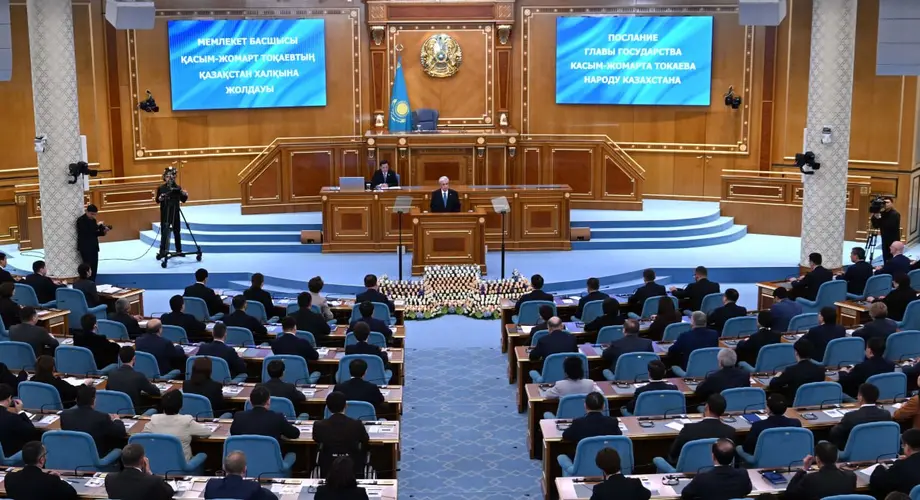
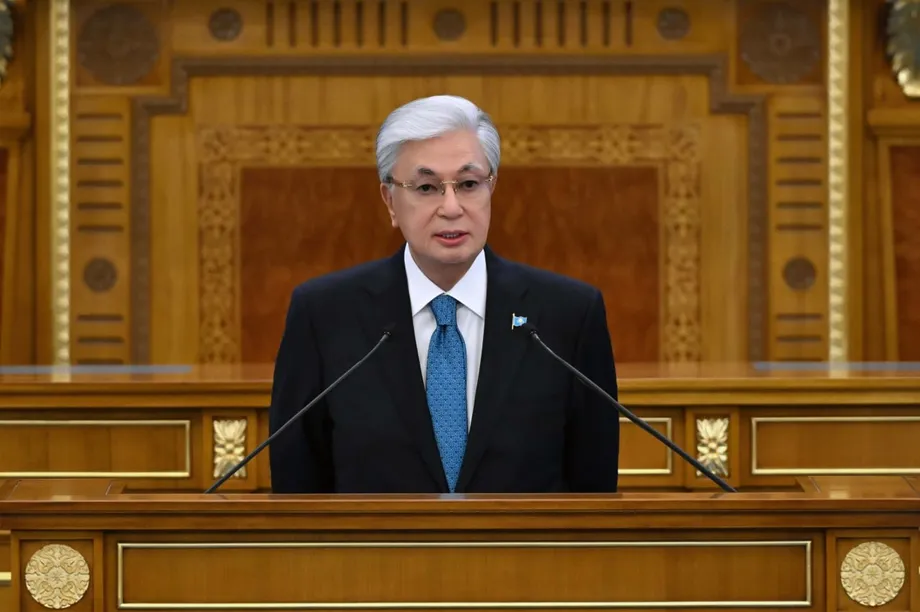
President Kassym-Jomart Tokayev referred to the IMF's projections in his recent state of the nation address, saying Kazakhstan was expected to rank among the world's 50 largest economies by GDP. The unemployment rate is forecast to edge down from 4.6% in 2025 to 4.3% in 2031, a decline of 0.3 percentage points.
The main dates and periods behind the assessment are:
- January 2026: The IMF assessed Kazakhstan's economy as overheating.
- January through September 2026: Kazakhstan recorded economic growth of 4.2%.
- October 13, 2026: The IMF released its World Economic Outlook.
- October 22, 2026: The IMF published its Regional Economic Outlook for the Middle East and Central Asia.
- October 2026: Kazakhstan's annual inflation slowed to 9.2%.
- 2027: The IMF forecasts Kazakhstan's real GDP growth at 4.9%.
Government spending adds another balancing task
Kazakhstan's government is projected to spend more than it receives throughout the forecast period. The IMF expects revenue of 37.3 trillion tenge in 2026 and expenditure of 39.3 trillion tenge, leaving a deficit of approximately 2 trillion tenge.
That gap is equivalent to about 5.1% of projected spending. A deficit means the government needs financing to cover the difference between its income and expenditure. The IMF projects that the annual gap could widen to 5.7 trillion tenge by 2031, almost three times the 2026 amount.
Public debt is forecast to rise from 45.9 trillion tenge in 2026 to 93.9 trillion tenge in 2031. Its projected share of GDP increases from 23.8% to approximately 29.8%, a rise of six percentage points. The debt ratio compares what the government owes with the size of the economy supporting it.
Government spending also influences demand. Spending that draws on scarce workers, materials or services can add to price pressure, while effective investment can expand future production. IMF recommendations presented with the regional outlook included preserving budget reserves and improving the efficiency of expenditure.
Those priorities matter together. Reserves give governments resources to respond when revenues weaken or unexpected costs arise. Better spending decisions can help public money deliver more useful infrastructure and services without requiring the same increase in expenditure.
Investment rises as external balances swing
Investment is forecast to increase from 28.4% of GDP in 2026 to 32.2% by 2031, a gain of 3.8 percentage points. Investment includes spending on assets such as buildings, machinery and equipment that support future production.
Higher investment can help address the supply limits behind overheating. The result depends on what gets built, whether businesses can find skilled workers and whether new capacity produces goods and services that customers need. Construction itself also creates immediate demand for labor and materials before a project begins operating.
Kazakhstan's current account is projected to move from a deficit of $12.5 billion in 2025 to a surplus of $2.2 billion in 2026, an improvement of $14.7 billion. The current account records trade in goods and services, income flows and transfers between residents and the rest of the world.
The IMF expects deficits to return from 2027 and potentially reach $16 billion by 2031. A current account deficit means the country pays out more through those transactions than it receives, requiring financing from other international flows. Alongside rising investment, that forecast makes access to external financing another part of Kazakhstan's economic outlook.
Regional resilience has different sources
Cardarelli said economies across the Caucasus and Central Asia had shown resilience to external shocks. Conflict in the Middle East had disrupted logistics and energy supplies, affecting production and trade, yet economic activity across the region continued to expand.
Kazakhstan and Azerbaijan experienced a modest decline in oil export volumes during the first half of 2026, according to Cardarelli, although export volumes remained high. Kazakhstan's growth in construction and manufacturing helped sustain activity during that period.
The Kyrgyz Republic and Tajikistan received support from rising remittances, the money that people working abroad send home. Those transfers helped maintain domestic demand by giving recipient households more money to spend.
Oil exports and remittances connect the region to different outside forces. Export earnings depend on overseas demand, prices and transport routes. Remittances depend partly on employment and earnings in the countries where migrants work. The regional outlook therefore places weight on reducing exposure to external disruptions while preserving growth.
The IMF expects regional inflation to decline gradually and regional GDP growth to slow to around 5% in 2027. That regional projection sits alongside its separate forecast of 4.9% growth for Kazakhstan.
Skills and export markets are part of the response
Florian Misch, a senior economist in the IMF's European Department, argued that education and workforce training could support exports at a lower cost than subsidies to exporting industries. Skilled employees make it easier for businesses to open production lines and increase output, he explained.
The proposal connects directly to Kazakhstan's capacity problem. A business may have customers and money for machinery but still struggle to expand without trained workers. Improving skills can help firms produce more rather than compete for the same limited pool of employees.
IMF recommendations also included expanding exports and reaching new markets. More customers abroad can support production, while a broader range of markets can reduce dependence on a small number of destinations. Budget discipline, effective investment and workforce development address different parts of the same challenge: sustaining growth while bringing inflation down.
The forecasts extend to 2031, but Cardarelli's remarks did not set a date when Kazakhstan's overheating would end. The nearer benchmarks are the IMF's forecast of 4.9% growth in 2027 and the path toward 5% inflation by 2031. For households and businesses, progress will depend on whether greater production and stronger purchasing power can develop together.
Key Points
- The IMF says Kazakhstan's demand continues to exceed the economy's sustainable capacity.
- GDP grew by 4.2% in January through September 2026, supported by construction and manufacturing.
- October inflation slowed to 9.2%, compared with the National Bank's 5% target.
- The IMF forecasts growth of 4.4% in 2026 and 4.9% in 2027.
- Government spending is projected to exceed revenue through 2031, with public debt rising.
- Investment is forecast to reach 32.2% of GDP by 2031, while current account deficits are expected to return from 2027.
- The IMF recommends preserving budget reserves, improving spending efficiency and strengthening skills and exports.