A distant shipping crisis reaches Nepali households
Nepal faces two pressures from the Strait of Hormuz crisis: higher bills for imported fuel and uncertainty over Gulf earnings that help families pay those bills. Gulf countries sent Nepal Rs673 billion in remittances in fiscal 2024/25, while the country depends on India for all its refined petroleum products and cooking gas.
Contents
- A distant shipping crisis reaches Nepali households
- How the conflict disrupted the route
- More crossings still come at a steep price
- Why Nepal feels the shock through India
- Gas shortages can reach farms and factories
- Gulf wages support Nepal's spending power
- Trade and tourism add further exposure
- Financial reserves offer breathing room
- Hydropower offers a response inside Nepal
- Immediate protection and a slower recovery
- Key Points
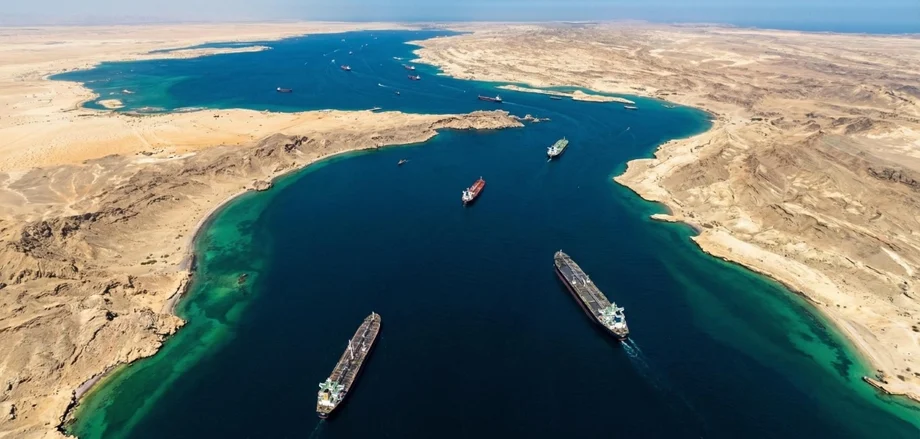
Shipping through the passage between Iran and Oman remains far below normal. The UK Maritime Trade Operations centre recorded 325 transits between October 29 and November 4, 2026, up from 277 the previous week but still about 65 percent below levels before the war. Freight charges have soared even as some oil exports recover through alternative routes.
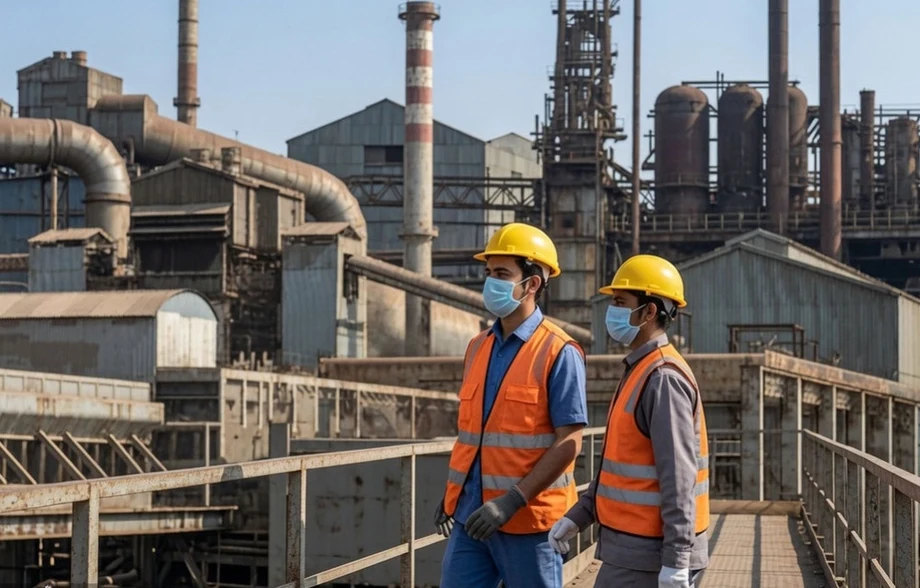
For Nepal, the consequences extend from buses and kitchens to farms, factories and overseas employment. More expensive diesel raises delivery costs. Disrupted fertiliser shipments threaten planting schedules. Lost wages in the Gulf would leave affected households with less money just as daily necessities become more expensive.
The World Bank's April 8 Nepal Development Update projected growth of 2.3 percent in fiscal 2025/26, compared with 4.6 percent in 2024/25. It attributed the slowdown to the Middle East conflict and continuing effects of Nepal's September 2025 unrest. Services faced particular pressure from weaker tourism, higher transport costs and disrupted supplies.
November's continuing shipping attacks leave Nepal confronting an expensive energy market, while the safety and incomes of nearly two million Nepali workers across the Gulf remain a major concern.
How the conflict disrupted the route
The United States and Israel attacked Iran on February 28, 2026. Iran subsequently restricted passage through Hormuz, while the United States imposed a naval blockade on Iranian ports. Attempts to reduce hostilities have failed to secure lasting commercial access.
Before the war, approximately 20 million barrels of crude oil and petroleum products passed through Hormuz daily. The route also carries liquefied natural gas, or LNG, particularly from Qatar. LNG is natural gas cooled into liquid so that ships can carry it over long distances.
- February 28: US and Israeli attacks on Iran began the war.
- March: The International Energy Agency described the disruption as the largest in global oil market history. Its 32 member countries agreed to release 400 million barrels from emergency reserves.
- April to August: An April ceasefire and June agreement failed to secure lasting stability; the agreement expired in August.
- November 3: The IEA released its Global Gas Security Review 2026, warning of tight LNG supplies through winter 2026/27.
- November 6: UK maritime authorities published figures showing traffic remained substantially below normal.
- November 10: South Korea's Cabinet approved a proposed expansion of naval operations near Oman, subject to parliamentary approval.
Indirect US and Iranian talks mediated by Qatar have focused on reopening the passage, the blockade and oil export restrictions. Nuclear activities, sanctions and regional security remain unresolved.
More crossings still come at a steep price
Shipping insecurity continues to injure crews. India's shipping minister, Sarbananda Sonowal, said a projectile struck a tanker registered in Liberia, injuring four crew members, including an Indian national. The other 18 crew members were safe. Iran's Revolutionary Guard separately said three tankers had caught fire; whether the vessel identified by India was among them was unclear.
US Central Command said it had helped Gulf countries export 1.5 billion barrels through Hormuz since the summer. Its protection efforts have allowed trade to continue, but shipping companies still face expensive journeys.
Energy and macroeconomics specialist Dalga Khatinoglu cited OPEC figures showing freight rates for large tankers travelling from the Middle East to East Asia rising from $3.18 per barrel at the beginning of 2026 to $37.13 at the end of October. That is almost twelve times the earlier rate, adding $33.95 to the transport charge per barrel.
Khatinoglu said regional crude exports across all routes had largely recovered, sometimes exceeding levels before the war during September and October. Saudi Arabia's pipeline to Yanbu on the Red Sea and the UAE's pipeline to Fujairah provide routes outside Hormuz. Refined petroleum exports, however, had fallen from about 6.2 million barrels daily to roughly half that amount.
Brent crude traded at $91.71 per barrel in a November market update. The Nepal Economic Forum described a rebound above $90 after earlier diplomatic relief had brought prices back towards $70. Buyers therefore face both expensive oil and much higher delivery costs.
Military activity around the route is also widening. South Korea's proposed naval mission expansion would add a patrol aircraft, mine equipment and 75 personnel, taking its deployment to 395. Iran warned against involvement in efforts to reopen the waterway.
Why Nepal feels the shock through India
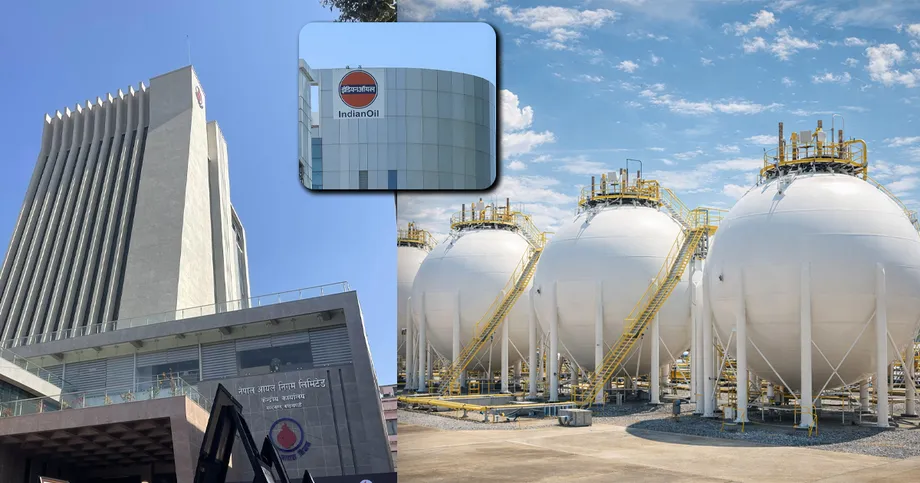
Nepal buys refined petroleum products and liquefied petroleum gas, or LPG, from India. Indian refineries process imported crude into fuels such as petrol and diesel. Disruption to their supply costs can therefore reach Nepal even without a direct Nepali oil shipment from the Gulf.
The World Bank's April assessment estimated that about 40 percent of India's crude oil and gas imports passed through Hormuz. India's exposure varies by fuel: an October estimate using Kpler shipping data put the Hormuz share of Indian LNG imports at around 60 percent.
Nepal Oil Corporation Managing Director Chandika Bhatta said Indian pipeline deliveries remained regular and sufficient when concerns produced queues at petrol stations. He urged consumers against storing fuel in jerrycans because of fire risks. Continued deliveries provide immediate reassurance, while international prices still affect future purchase costs.
Nepal's storage leaves limited room for a prolonged interruption. The World Bank estimated petrol and diesel storage sufficient for around 13 days of demand and aviation fuel for about 10 days, with still less cover for LPG. Nepal's Economic Survey 2025/26 put total petroleum storage capacity at 102,281 kilolitres by mid-March, equivalent to approximately 16 days of average demand.
The World Bank figures describe coverage for particular fuels, while the Economic Survey calculates coverage from total capacity. Actual protection during a disruption depends on how much fuel is in those tanks and which products consumers need.
Gas shortages can reach farms and factories
The IEA's November 3 gas review estimated that LNG loadings from Qatar and the UAE fell by more than 60 billion cubic metres between March and October compared with the same period a year earlier. Additional production elsewhere limited the worldwide LNG production decline to around 20 billion cubic metres.
Khatinoglu's assessment put Qatar and UAE exports around 10 percent below levels before the war as of September. His September comparison describes conditions at that stage of the recovery; the IEA measures losses accumulated over eight months.
India imported a record 2.7 million tonnes of LNG in October, an increase of 17.4 percent from a year earlier, while its dependence on imports approached 52 percent as domestic production weakened. Petroleum Minister Hardeep Singh Puri said household piped gas, compressed natural gas and fertiliser requirements were being prioritised.
LNG and Nepal's cooking LPG are different fuels. Nepal's exposure to LNG disruption includes the cost of Indian manufacturing and fertiliser production, while LPG supplies have their own purchasing and distribution arrangements.
The IEA projects a winter LNG supply decline of around nine billion cubic metres if Hormuz begins reopening progressively in January 2027. Restrictions continuing through March could increase that loss to around 20 billion cubic metres. Those scenarios make the coming winter an important period for replacement cargoes and supply management.
Gulf wages support Nepal's spending power
About 1.9 million Nepalis work across the Gulf. Roughly 450,000 of the approximately 700,000 people leaving Nepal annually for foreign employment head there. Over five years, 2.28 million of 3.74 million labour approvals, about 61 percent, were issued for Gulf or West Asian destinations.
Gulf remittances of Rs673 billion represented about 39.5 percent of Nepal's Rs1.702 trillion total in fiscal 2024/25. In the first six months of 2025/26, the region contributed Rs422 billion out of Rs1.03 trillion, approximately 41 percent.
Ram Sharan Kharel, head of Nepal Rastra Bank's Economic Research Department, warned that instability could affect these earnings and opportunities for additional workers. Trade specialist Rabi Shankar Saiju called for preparations to protect workers and organise evacuation if necessary.
Labour migration specialist Keshav Basyal identifies wage delays, cancelled contracts and unpaid leave as risks, especially in construction and services. His assessment considers a scenario in which 20 percent of Nepali workers in the Gulf lose employment or face unpaid leave. Applied to 1.9 million workers, that would involve approximately 380,000 people.
No consolidated figure for Nepali job losses across the Gulf has been given. The practical concern for families is whether wages continue arriving on time, whether departing workers can begin their contracts and whether returning workers can find employment in Nepal.
Trade and tourism add further exposure
Nepal imported Rs50.31 billion in goods from Gulf countries and exported Rs3.45 billion in fiscal 2024/25. During the first seven months of 2025/26, imports already reached Rs48.76 billion, around 97 percent of the previous full year's value, while exports stood at Rs1.64 billion.
The UAE supplied more than Rs37 billion in precious metals and copper products during those seven months. Qatar supplied over Rs2.5 billion in chemical fertiliser. Saudi polymers support plastics, packaging and pipe production, while gypsum from Oman supplies cement manufacturers.
Delayed inputs can interrupt production even when factories have electricity and employees ready to work. Fertiliser arriving after the planting season is especially costly for farmers because agricultural schedules leave little room to recover lost time.
Nepal Tourism Board figures recorded 20,504 visitors from Gulf countries in the previous fiscal year, approximately 1.8 percent of 1,158,459 arrivals. Disrupted Gulf air services can also complicate journeys for travellers connecting through the region.
Financial reserves offer breathing room
Nepal Rastra Bank's September 2026 assessment put foreign exchange reserves at a level sufficient to cover more than 18 months of goods and services imports. These reserves provide foreign currency for international payments. Physical fuel storage provides supplies inside Nepal; keeping both adequate is essential during an extended disruption.
The crisis can increase foreign currency spending through costlier imports while weakening earnings from remittances and tourism. Households experience the same pressure on a smaller scale when living costs rise and overseas income becomes uncertain.
The IMF's 2026 assessment modelled an adverse oil shock, with prices 25 percent above its baseline in fiscal 2025/26 and about 90 percent above in 2026/27. Under those assumptions, growth in 2026/27 could be 1.7 percentage points lower, inflation more than three percentage points above the central bank's target, and output over the longer term about 2.5 percent below baseline.
Those figures describe a stress scenario. The World Bank's April outlook projected growth averaging 4.4 percent over fiscal 2026/27 and 2027/28, supported by reconstruction, hydropower expansion and consumption linked to the 2027 subnational elections. A longer conflict would put that recovery under pressure.
Hydropower offers a response inside Nepal
The Nepal Economic Forum's energy policy analysis argues that Nepal should use hydropower to reduce fuel dependence and support domestic production. Author Madhu K Marasini, a veteran public servant with experience in finance and international trade, cites potential of around 83,000 megawatts, including approximately 43,000 megawatts considered economically viable.
Nepal's annual electricity use per person is around 400 kilowatt hours, according to the analysis. That low consumption leaves considerable scope for electric cooking, irrigation, transport and industrial equipment, provided consumers receive dependable connections and can afford appliances.
Marasini proposes using electricity for mineral and agricultural processing, fertiliser production, data centres and manufacturing, alongside exports to India and Bangladesh. His argument connects two vulnerabilities: imported energy raises production costs, while limited domestic employment sends workers abroad.
Electric buses and cooking appliances could directly replace some diesel and LPG consumption. Stronger transmission lines, distribution networks and storage would help make electricity available when and where households and businesses need it, including during seasonal changes in hydropower output.
The analysis recommends finance from the Green Climate Fund, Climate Investment Funds, Global Environment Facility and Adaptation Fund, alongside development partners and green bonds. These are proposed funding routes; projects still require financing arrangements, construction and reliable operation.
Immediate protection and a slower recovery
Nepal's immediate choices concern fuel stocks, worker safety and assistance for households facing higher prices. Larger storage facilities require regular replenishment and clear emergency distribution plans. Embassies need arrangements for worker support, evacuation and access to unpaid wages.
The IMF recommends temporary assistance directed towards affected consumers rather than broad fuel subsidies. Targeted support for poorer households and essential services would limit the budget cost while protecting people with the least room to absorb higher expenses.
David Sislen, the World Bank division director for Maldives, Nepal and Sri Lanka, linked stronger domestic employment to improvements in investment conditions:
To achieve this, Nepal must improve the business environment, develop foundational infrastructure, mobilize private finance, and support priority sectors such as tourism, the IT sector, and agribusiness.
A lasting agreement on Hormuz would help lower shipping risks, but repairs, insurance decisions and replenishing stocks would take time. For Nepal, the immediate task is keeping supplies and household incomes secure. The longer task is using domestic electricity and employment to reduce exposure to the next disruption.
Key Points
- Hormuz traffic rose to 325 transits in the week ending November 4, but remained about 65 percent below normal.
- Nepal depends on India for refined petroleum and LPG, with limited domestic fuel storage.
- Gulf countries supplied roughly two fifths of Nepal's remittances in recent periods.
- Fertiliser, manufacturing inputs, aviation and tourism face disruption alongside fuel supplies.
- The IEA warns that LNG supply pressure could continue through winter 2026/27.
- Hydropower, electric transport, reliable distribution and worker protection are central options for reducing Nepal's exposure.