A June 2024 agreement connects Alibaba to Speedmatrix
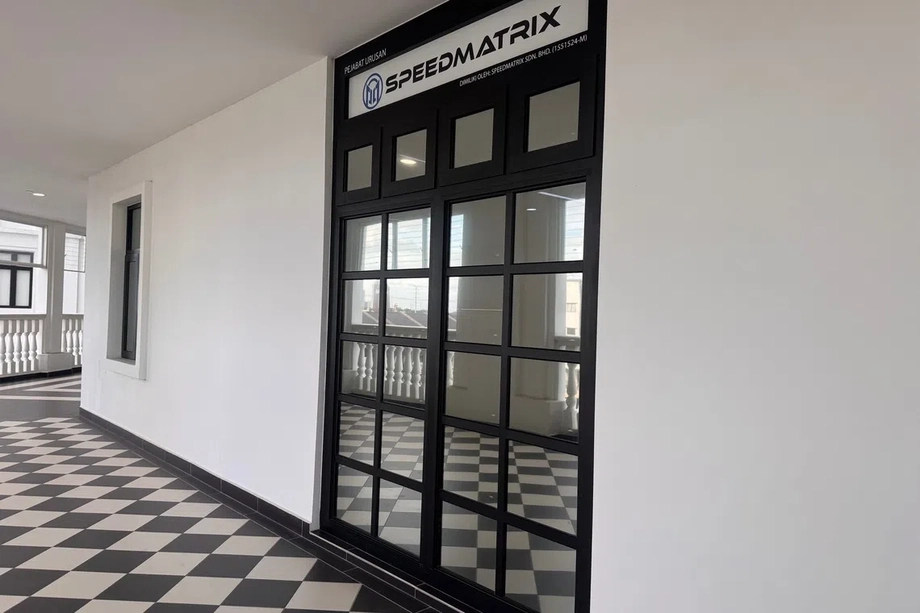
Alibaba-owned Apex Enterprise Solutions secured rights over equipment and other assets belonging to Malaysian cloud company Speedmatrix under an agreement dated June 18, 2024, placing a documented financial connection at the centre of scrutiny over billions of dollars in Nvidia chip purchases.
Contents
- A June 2024 agreement connects Alibaba to Speedmatrix
- What the Alibaba connection contains
- A balance sheet grows almost 90 times larger
- Seven subsidiaries and a Johor expansion
- Singapore traces declarations and destinations
- Alice Huang's case and the ownership trail
- Malaysia separates domestic use from re-export
- Remote computing becomes a second policy fight
- Megaspeed promises an inventory and legal review
- Key Points
Malaysian corporate records showed the arrangement remained active on November 11, 2026. Speedmatrix is a subsidiary of Singapore's Megaspeed International, which faces investigations into suspected breaches of Singapore law and possible violations of US restrictions on advanced artificial intelligence chips.
The agreement gave Apex security over specified IT and network equipment, intellectual property and related rights if Speedmatrix failed to meet certain contractual obligations. In simple terms, Speedmatrix pledged assets that Apex could claim against if those obligations went unmet.
Singapore's Ministry of Home Affairs supplied the clearest official account of the investigation in its November 12 statement. Police and customs began investigating Megaspeed and others in February 2025 over suspected false declarations concerning server purchases. Investigators are examining whether servers exported through Singapore to Malaysia subsequently went elsewhere, contrary to declarations made in Singapore.
Malaysia, meanwhile, is considering requiring proposed data centres to disclose their operators, locations and intended imports of graphics processing units, or GPUs. These processors perform many calculations at once, making them central to training and running AI systems.
The developments connect three parts of the same business: financing expensive hardware, moving it across borders and renting out its computing power. Different rules govern each activity, and authorities in Singapore, Malaysia and the United States are examining different aspects of the trade.
What the Alibaba connection contains
Apex was incorporated in Singapore in July 2023 and is registered at Lazada One on Bras Basah Road, a building leased by Alibaba and its Southeast Asian shopping business, Lazada Group. Corporate records identify Cloud Intelligence (Cayman) Holding as its immediate parent and Alibaba Group Holding as its ultimate parent.
Apex described its business as "providing procurement activities" in audited accounts for the year ended March 31, 2025. Those accounts reportedly showed about US$4.15 billion in prepayments and receivables, supported by approximately US$4.2 billion in loans from related companies. Receivables are amounts a company expects others to pay; prepayments are money paid before goods or services arrive.
US short seller Culper Research alleged in May that Alibaba may have channelled billions of dollars through Apex to finance Megaspeed's Nvidia purchases. Its proposed financing chain ran from Alibaba to Apex, then through Megaspeed to overseas subsidiaries. Culper held a financial position that would benefit if Nvidia's share price fell.
The funding source behind Megaspeed's approximately US$2.7 billion in refundable deposits remains undisclosed, as do the full terms and value of the Apex agreement. Megaspeed recorded those deposits in December 2024, while Apex's figures cover a financial year ending in March 2025.
Alibaba was also reportedly a major customer of Megaspeed's Southeast Asian cloud operation. Alibaba and Megaspeed did not answer questions about their commercial relationship or whether it continued during the investigations. Apex's auditor, PwC, declined to comment because the matter concerned a client.
A balance sheet grows almost 90 times larger
Megaspeed's assets increased from US$32.9 million in 2023 to almost US$3 billion in 2024, roughly a ninetyfold expansion. Revenue reached approximately US$294.3 million, while the company recorded an after tax loss of about US$20 million.
Its liabilities also approached US$3 billion. Reported account entries included approximately US$2.7 billion in refundable deposits received and US$2.9 billion owed by subsidiaries. Equity, the amount left after subtracting liabilities from assets, was negative by around US$10 million.
Speedmatrix owed Megaspeed approximately US$1.6 billion and spent about US$1.9 billion on equipment in 2024. The Malaysian subsidiary recorded revenue of RM522.3 million and a loss of RM103.2 million that year. Together, these figures describe a business buying costly computing infrastructure while still losing money.
Trade records have generated several estimates of the hardware involved. Purchases associated with Megaspeed and Speedmatrix were reported at US$4.8 billion, including equipment acquired between June 2024 and February 2026; a broader allegation put Nvidia chips moved through the network to Chinese companies at at least US$7.5 billion. The first figure concerns purchases, while the larger figure concerns alleged movements through the network.
Seven subsidiaries and a Johor expansion
Megaspeed's latest publicly available financial statements, for 2024, list seven subsidiaries across five overseas markets. Three are in Malaysia: Speedmatrix, Megaspeed International Sdn Bhd and MSFusion. The first two were described as providers of cloud hosting services.
MSFusion was classified as dormant at the end of 2024. In August 2025, it agreed to buy 52.5 acres in Kota Tinggi, Johor, for RM263.2 million for a proposed data centre. It later settled RM225.9 million in overdue payments after receiving a default notice from the seller, Crescendo Corp.
Megaspeed also owned 99.99 percent of Megaspeed (Thailand) and 99 percent of PT Megaspeed International Indonesia, both cloud hosting businesses. Its remaining two subsidiaries, in Australia and the United States, were wholly owned.
Speedmatrix and the Indonesian subsidiary were the largest recipients of Megaspeed shipments recorded by corporate intelligence platform Sayari. The latest shipment recorded there was an Nvidia baseboard for powerful GPUs arriving at Speedmatrix on November 18, 2025. A baseboard connects processors and other components inside a computing system.
Indonesian customs data through June 2026 reportedly contained 242 transactions involving three suppliers and four buyers connected to the business. One import was described as an Nvidia H100 GPU module. Megaspeed also reportedly operated data centres at Johor's Sedenak Tech Park, while allegations of onward shipments concern facilities belonging to Shanghai Century Litong in China.
Singapore traces declarations and destinations
Singapore's Ministry of Home Affairs said the police and customs investigation began independently in February 2025. Although police publicly confirmed the Megaspeed inquiry in October that year, the ministry said it had not been initiated at the request of a foreign government.
The servers under examination had passed through Singapore to Malaysia without entering the Singapore market. Police needed records from suppliers and other jurisdictions to establish their subsequent destinations and compare those movements with declarations made in Singapore.
US server supplier Supermicro provided limited cooperation, according to the ministry. Singapore police and the Attorney-General's Chambers raised the issue with US authorities on July 7, 2025. From September 2025, police repeatedly sought help from the US Department of Justice and FBI to obtain the company's cooperation.
The ministry said a voluntary inspection by the US Commerce Department's Bureau of Industry and Security at Megaspeed on June 24, 2025, was Singapore's first awareness of US interest in the company and Alice Huang. US authorities reportedly began investigating Megaspeed in late 2024.
Singapore said investigations into Megaspeed and six other individuals remained ongoing. None of those six individuals had been in Singapore since the investigation began. The ministry also said four individuals and four companies were charged between February 2025 and July 2026 with offences including fraud by false representation over server purchases, carrying potential prison terms of up to 20 years each.
Alice Huang's case and the ownership trail
Alice Huang, also known as Huang Le, was investigated because of her role as Megaspeed's former chief executive, chairperson and a key controller, the ministry said. Singapore described her as a Hong Kong resident who was not based in the country and said she was not investigated for espionage.
In February 2026, police and prosecutors concluded there was insufficient evidence to establish that she had committed offences concerning the possible inaccurate declarations under investigation. Police separately assessed that she knowingly supplied inaccurate information to downplay her role in Megaspeed. She received a stern warning and was barred from re-entering Singapore.
Her passport, impounded after an interview on June 24, 2025, was returned on February 26, 2026. She left Singapore that day.
Megaspeed began in 2015 as 7Road International, linked to a Chinese gaming business, and adopted its current name in March 2023. Huang held a senior corporate role during 2023 before ownership passed to Singapore company Swiftdata later that year. Swiftdata holds all 10 million Megaspeed shares, and Tan Yong Pong is listed as sole director of both companies.
Swiftdata's registered address at Midview City appeared to be occupied by an interior design firm during a November 11 visit. The firm's co-founder said it had operated there for more than four years and did not know Swiftdata or Megaspeed. Corporate records listed Khloe Ng Wei Shi as secretary of both Swiftdata and Megaspeed, as well as the interior design business.
The corporate inquiries gained wider attention after US intelligence allegations concerning Alice Huang and her relationship with Nvidia chief executive Jensen Huang became public on October 29. China rejected the spying allegation. Jensen Huang acknowledged an affair on November 8 and was reported to have resigned on November 12.
Malaysia separates domestic use from re-export
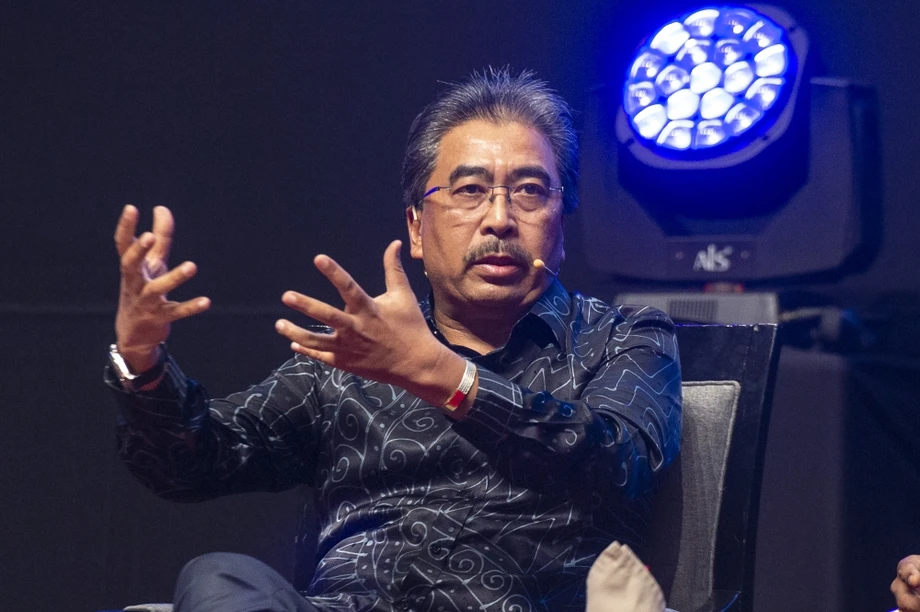
Malaysia's Investment, Trade and Industry Minister Johari Abdul Ghani said his ministry had not opened an investigation into Speedmatrix because it had received no evidence of a Malaysian law violation. On November 12, he also said authorities would examine possible breaches involving the re-export of GPUs and were prepared to assist an investigation.
Johari said Malaysia had received no formal request from foreign authorities concerning Speedmatrix. Credible evidence or a formal request would be assessed under Malaysian law and procedures.
The minister explained that buying processors for use in a company's own Malaysian data centre was different from sending them onward in breach of export restrictions. He said Malaysia must prevent its territory from being used for illegal transactions.
Malaysia introduced controls on exports of powerful AI chips of US origin in 2025. Its proposed data centre legislation would require disclosure of operators, sites and intended GPU import volumes, giving authorities more information about who plans to use the equipment and where.
The country attracted a reported US$94 billion in data centre investment between 2021 and mid-2026. In a separate October seizure at Kuala Lumpur International Airport, customs authorities intercepted 30 servers worth US$12.1 million that had been declared as electronic components. Authorities did not identify their countries of origin and destination.
Remote computing becomes a second policy fight
Chinese companies can obtain computing power without bringing the physical chips into China by renting access to servers overseas. A developer sends work over a network, the foreign data centre processes it, and the results return electronically.
Physical shipments and remote access therefore present different regulatory questions. US restrictions cover exports of certain advanced processors to China, while overseas cloud services have allowed Chinese customers to use powerful chips located elsewhere.
Ja Ian Chong, a political science expert at the National University of Singapore, described the attraction of the region for Chinese technology businesses:
Chinese firms can access data centers in Singapore and Malaysia—and their computing capacity—without having to import restricted semiconductors.
Chinese AI companies and smaller laboratories have reportedly approached overseas computing providers about reserving capacity amid concern that Washington could tighten those arrangements. A major Chinese cloud provider has also discussed securing capacity abroad.
The Remote Access Security Act would authorise the US Commerce Department to regulate remote access to restricted technology through cloud services. The House of Representatives passed the bill in January by 369 votes to 22, and it awaits Senate action. No Senate vote date was given.
For data centre operators, such a change could affect which customers they can serve even when their equipment stays in Malaysia or Indonesia. For Chinese developers, it could reduce access to processors used to build and operate advanced AI models.
Megaspeed promises an inventory and legal review
Megaspeed has denied illegally diverting chips to China. It has said inspections and reviews involving the US Bureau of Industry and Security, Malaysia's trade ministry and Nvidia found no evidence of illicit transfers.
On November 12, chairman and chief executive James Tan Yong Pong said the company had retained an American law firm to conduct a comprehensive inventory of its GPUs and independently verify its export control practices. An inventory would account for the hardware the company holds and its locations.
Tan also set out the company's position on cooperation with US authorities:
Compliance is a fundamental priority for the company, and Megaspeed is committed to working constructively and transparently with the US government.
Nvidia said it blocked sales to Megaspeed in June 2025, while trade records reportedly showed approximately US$787 million in imports of newer Nvidia technology that November. Jensen Huang had described Nvidia's dealings with Megaspeed on October 29 as "normal and not unusual" and said the company checked whether chips were illegally sent to China.
Nvidia's board opened its own investigation into whether Huang had been targeted by a foreign intelligence operation. Huang was also reported to have been asked to brief US House committees behind closed doors on November 18. The immediate work for investigators remains concrete: follow payments, reconcile declarations with shipping records and establish where the servers are operating.
Key Points
- Speedmatrix pledged equipment and related assets to Alibaba-owned Apex under a June 18, 2024 agreement that remained active on November 11, 2026.
- Megaspeed's assets rose from US$32.9 million in 2023 to almost US$3 billion in 2024.
- Singapore's investigation began in February 2025 and concerns suspected false declarations and possible onward routing of servers from Malaysia.
- Alice Huang received a stern warning for knowingly inaccurate information and was barred from re-entering Singapore. Investigations into Megaspeed and six others continue.
- Malaysia has not opened a Speedmatrix investigation but says it will assess evidence of unlawful re-exports and is considering new data centre disclosures.
- Megaspeed denies illegal transfers and has hired a US law firm to inventory its GPUs and review compliance.
- A US bill regulating remote access to restricted technology awaits Senate action.