Jobs and growth targets put Malaysia's AI plans to the test
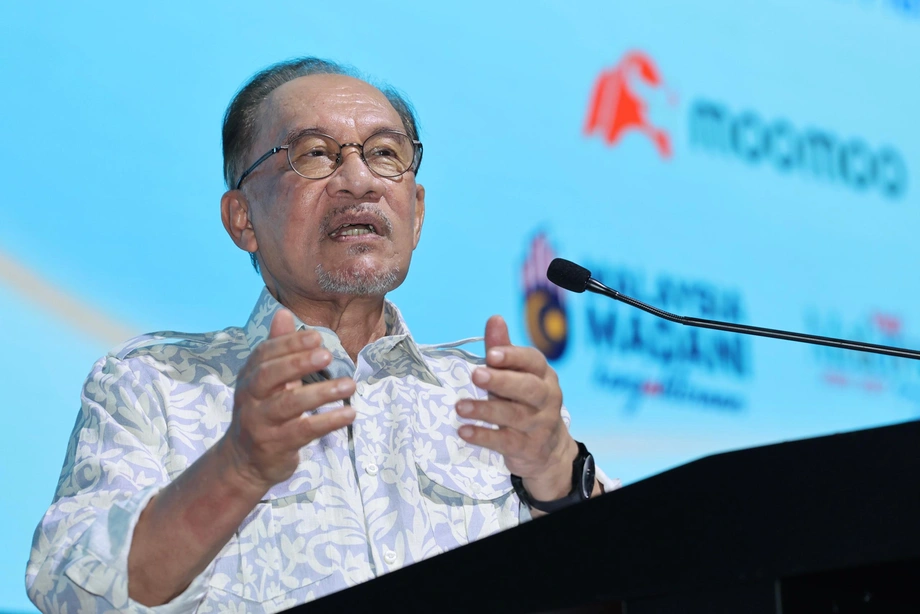
Malaysia is targeting up to 300,000 new jobs linked to artificial intelligence and an additional 1.2 percentage points of economic growth by 2030, Prime Minister Anwar Ibrahim said on November 11, 2026, as the country climbed to 27th among 70 economies in the IMD World Digital and AI Ranking.
Contents
- Jobs and growth targets put Malaysia's AI plans to the test
- What changed in the global ranking?
- How AI is expected to add to economic growth
- Healthcare, cities and public services go first
- Support for 4,000 businesses sits within a much larger goal
- Training must reach beyond AI specialists
- Subscriptions, courses and schools widen access
- The wider digital plan reaches beyond AI
- The milestones between now and 2030
- Key Points
The employment and growth targets appear in the government's AI Nation 2030 strategy. A government action plan fact sheet gives a wider ambition of 300,000 to 500,000 new jobs and annual additional growth of 0.8 to 1.2 percentage points, worth roughly RM13 billion to RM20 billion a year. Anwar's statement and the full strategy document use the 300,000 jobs figure.
Under Budget 2027, Anwar said RM30 million would be provided through the Malaysia Digital Economy Corporation (MDEC) to help 4,000 micro, small and medium enterprises adopt AI and automate operations. The allocation also supports training and certification for 5,000 AI professionals and another 100,000 free AI subscriptions for young people.
Those measures connect a national economic ambition with practical steps for businesses and workers. Small companies are being offered help to use the technology, professionals are being offered training, and young people are being given access to applications.
Malaysia's official strategy also identifies gaps that could slow delivery: too few people with advanced AI skills, difficulty bringing private investment into projects, and weak routes for turning research into products that customers buy. The central task is to turn stronger digital performance into useful services, productive businesses and employment.
What changed in the global ranking?
Malaysia rose seven places from 34th in 2025 to 27th in the IMD World Digital and AI Ranking (WDAIR) 2026. It became the second highest ranked economy in the Association of Southeast Asian Nations, behind Singapore.
Anwar, who shared the results through Facebook, highlighted a rise of 21 places to 14th globally for AI adoption and an improvement of 10 places to 28th for efficiency. Malaysia placed 12th for implementation of its national AI strategy.
The International Institute for Management Development assessment covers 70 economies using 88 criteria across five factors: governance, technology and infrastructure, efficiency, workforce development, and values. Its scope extends beyond the availability of AI applications to the conditions needed to use digital technology effectively.
Malaysia also ranked 18th for workforce development, second for science graduates, fifth for venture capital, sixth for exports of advanced technology products and eighth for AI investment incentives. Venture capital is investment in young businesses with potential to grow, often before they earn steady profits.
Anwar attributed the gains to the government's economic reform and digitalisation agenda. The results give Malaysia a stronger starting position as it seeks to expand AI use across companies and public services.
How AI is expected to add to economic growth
AI Nation 2030 sets out 28 national initiatives, divided equally between 14 sector programmes called Impact Engines and 14 shared support programmes called Foundation Enablers. The government's full action plan connects these programmes to jobs, economic growth and a target of reaching the top 10 in recognised global AI indices by 2030.
Gross domestic product, or GDP, measures the value of goods and services produced in an economy. An additional 1.2 percentage points means adding 1.2 points to the growth rate. For example, a hypothetical growth rate of 4% would become 5.2% with that contribution.
The sector programmes cover areas including manufacturing, oil and gas, power utilities, healthcare, education, agriculture and food, cities, and public services. The shared programmes provide capabilities those sectors need, such as skilled workers, research, data, computing resources, investment and governance.
The economic approach is to help organisations produce more value with the resources they have. For businesses, the plan includes automation of administrative work and customer services. For government, it focuses on better service delivery and decisions supported by data.
Healthcare, cities and public services go first
Healthcare, AI cities and public services are the three initial priorities in the plan's Ignite phase. The government selected them as projects through which people could experience practical benefits early in the programme.
Healthcare initiatives aim to help prevent disease, improve diagnosis and support clinical discovery. AI city initiatives focus on urban mobility and living conditions. Public service projects aim to change how people interact with government.
The plan requires these early projects to benefit a broad share of the population, deliver measurable results within two years and use assets directly controlled by the public sector, such as government data or infrastructure. That gives ministries a more direct role in getting the first projects running.
Government deployment also brings responsibilities over personal information and the decisions supported by technology. Fabian Bigar, secretary general of the Ministry of Digital, described the required approach on the government's AI Nation 2030 website:
Within government, AI must be applied to augment human capabilities, improve service delivery and support better decision-making, while safeguarding privacy, security and public trust.
Support for 4,000 businesses sits within a much larger goal
MDEC's Budget 2027 support for 4,000 businesses is one step towards the action plan's broader ambition to give 1.5 million micro, small and medium enterprises scalable access to AI. The plan says these businesses represent approximately 84.4% of all businesses.
The 4,000 businesses amount to about 0.27% of the 1.5 million enterprises covered by the wider access ambition. The two measures describe different levels of support: direct assistance under the budget programme and access to tools across a much larger business population.
Small firms face three barriers identified in the plan: a shortage of skilled people, limited budgets and uncertainty about where to begin. The proposed response builds on the Business Digitalisation Initiative, putting affordable AI tools into platforms businesses already use, alongside training and advice.
The programme is intended to progress from practical solutions matched to individual businesses towards shared toolkits and, eventually, an AI marketplace with vetted services, including products from Malaysian providers. The budget announcement did not specify the funding split between business support, professional training and subscriptions, or application dates and eligibility rules.
Training must reach beyond AI specialists
The 5,000 professional training and certification places announced by Anwar form part of a wider skills agenda. The Ministry of Digital said in October that it aimed to produce 200,000 people with AI skills by strengthening AI Malaysia Bhd.
The action plan sets a nearer milestone of building an initial group of people with expert AI skills by 2028, followed by expansion to meet national demand by 2030. It also proposes retraining for Malaysians whose jobs are at risk or changing, so they can move into occupations that use AI and create more value.
AI skills can involve different levels of ability. A specialist may develop or adapt a system, while another worker needs to use its outputs effectively in a particular occupation. Malaysia's plan links general AI literacy with specialist expertise and knowledge of how industries operate.
The government's AI Nation framework says the country still lacks sufficient depth in advanced talent. Malaysia's second place for science graduates therefore sits alongside a specific need to build more specialised capabilities and connect research with business demand.
Digital Minister Gobind Singh Deo described the purpose of the programme on the government website:
AI Nation 2030 reflects Malaysia's commitment to move from aspiration to execution in building a strong and sustainable AI ecosystem.
Subscriptions, courses and schools widen access
The additional 100,000 free AI subscriptions are intended to broaden access, particularly among young people. The Ministry of Digital's October account of Budget 2027 named ChatGPT among the popular applications covered by the initiative.
The Digital Rakyat Platform also offers Malaysians free access to more than 16,000 digital courses and Professional Certificates through Coursera. Together, application access and structured learning give people different ways to develop digital skills.
More than 300 pondok schools, traditional Islamic religious schools, are due to receive devices and digital skills training for teachers and students through cooperation between the Department of Islamic Development Malaysia and MDEC.
Budget 2027 also provides an extension of two years to the DE Rantau Nomad Pass for eligible existing holders who have reached its maximum duration of two years. The measure allows those holders to continue living in Malaysia while working remotely, alongside the government's efforts to develop local talent.
The wider digital plan reaches beyond AI
Prime Minister Anwar unveiled the Malaysia Digital Action Plan 2030, or MD2030, on June 29, 2026. The Ministry of Digital's launch statement sets targets for the digital economy to contribute 30% of GDP and provide 500,000 jobs of high economic value by 2030.
The 500,000 digital economy jobs cover a broader field than the AI strategy's 300,000 jobs target. Both sit within Malaysia's effort to move from mainly consuming technology towards creating local digital products and services.
MD2030 also targets RM4.5 billion in public sector savings from government digitalisation and seeks to make 95% of government services available online from beginning to end. For a person using a service, that would mean being able to complete the process digitally rather than going online for just one stage.
The plan has seven strategic areas: government, economy, infrastructure, talent, society, trust and security, and innovation. It aligns digital policy with the Thirteenth Malaysia Plan and the MADANI Economy framework, while updating the direction of the Malaysia Digital Economy Blueprint and National Fourth Industrial Revolution Policy.
Budget 2027 places the digital measures within a total package of RM510 billion. That comprises RM459.8 billion in government allocations, RM25 billion from government linked investment companies, RM11 billion in joint public and private investment, and RM14.2 billion from federal statutory bodies and companies incorporated under the Minister of Finance.
The milestones between now and 2030
Malaysia's AI programme builds on the AI Roadmap 2021–2025, its first structured national AI framework. That earlier phase focused on governance, research, infrastructure, talent and wider familiarity with the technology. The new plan moves towards deployment across multiple sectors.
The National AI Office leads the AI action plan, while MDEC supports business adoption and a Regional AI Growth Zone. The Ministry of Digital coordinates the wider effort through cooperation among ministries, agencies and private companies.
- 2021–2025: The AI Roadmap establishes Malaysia's first structured national AI framework.
- June 29, 2026: Anwar unveils MD2030 and its economic and public service targets.
- October 2026: The Ministry of Digital outlines Budget 2027 measures covering AI skills, businesses, subscriptions and schools.
- November 11, 2026: Anwar announces Malaysia's rise to 27th in the IMD ranking and restates the jobs and growth goals.
- 2028: The fact sheet sets an interim target of top 20 global AI readiness; the full plan also calls for an initial cohort of expert AI talent by this year.
- 2030: The government aims to reach the top 10 in recognised global AI indices and deliver the main employment, growth and digital service targets.
The early projects carry their own delivery test: measurable results within two years. Their progress will show how effectively Malaysia can connect public assets, skilled people and investment to services and business activity.
Key Points
- Anwar targets up to 300,000 new AI jobs and up to 1.2 additional percentage points of GDP growth by 2030.
- The government fact sheet gives a wider range of 300,000 to 500,000 jobs and annual additional growth of 0.8 to 1.2 percentage points.
- Malaysia rose from 34th to 27th among 70 economies in the IMD digital and AI ranking, placing second in ASEAN after Singapore.
- Budget 2027 provides RM30 million through MDEC for business adoption, professional training and additional AI subscriptions.
- Healthcare, cities and public services are the first priority projects, with measurable results required within two years.
- The wider digital plan targets a 30% GDP contribution, 500,000 digital economy jobs and 95% of government services available entirely online by 2030.