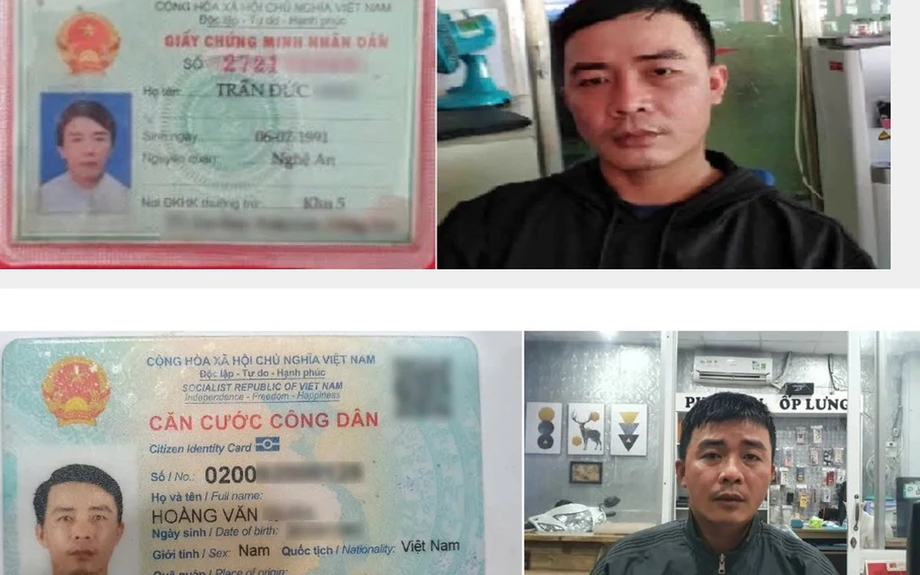
A suspect's photograph, another person's identity
Police in Dong Nai, Vietnam, have arrested a suspect accused of putting their own photograph on forged identity documents containing other people's personal details, then using those documents to sign contracts to buy goods in instalments. The case highlights how stolen identity information can leave someone facing repayment demands and a damaged credit history without ever applying for a loan.
Contents
- A suspect's photograph, another person's identity
- How a false identity becomes a financial contract
- Why identity checks have been difficult
- What has changed over time
- Can an innocent person be required to repay?
- What to request from the lender
- Correcting a credit record takes a separate request
- Earlier alerts can move the response forward
- Protecting documents before they are copied
- Key Points
Dong Nai police's cybersecurity division worked with Tan An commune police to make the arrest. Police identified consumer finance companies including FE Credit, Mcredit and Home Credit in their warning about the scheme. Investigators said the forged documents were used to prepare applications and enter purchase contracts intended to obtain assets through fraud.
The investigation is continuing. Police have not publicly specified the suspect's identity, the number of people impersonated, the value of the transactions or the arrest date.
For victims, the first warning can arrive long after a transaction: a payment reminder, a debt collection call or a rejected application for borrowing. Relatives and colleagues may also receive calls seeking to pressure the person whose details appear in the paperwork.
The practical problem has two parts. A person must challenge a transaction they say they never agreed to, while also seeking correction of any inaccurate credit information. Vietnam's legal protections, lenders' identity checks and newer credit inquiry alerts address different parts of that problem.
How a false identity becomes a financial contract
The Dong Nai method combined genuine personal information with a false document. CMND and CCCD are Vietnamese identity documents; their numbers and other identifying details help financial institutions connect an application to a particular person.
By placing their own photograph alongside someone else's details, an impersonator can present paperwork that appears to match the person applying while directing the resulting financial record toward the identity theft victim. With an instalment purchase, the applicant obtains goods while payments are spread over time.
Personal information can reach criminals through publicly posted identity photographs, images bought and sold online, deceptive links or people pretending to work for banks, finance companies or government agencies. Investigators in the Dong Nai case have not described which route supplied the information used by the suspect.
Vietnam's Cyber Emergency Response Team, VNCERT, and cybersecurity authorities have uncovered illegal distribution of identification information, including cases involving hundreds of millions of credit records offered on underground forums. Those records represent entries in datasets, which can contain repeated information about the same person.
A stolen identity image can also be used to attempt online loan applications, register SIM cards or create false accounts. That makes an exposed document useful beyond a single purchase or lender.
Why identity checks have been difficult
The ISEAS – Yusof Ishak Institute examined these weaknesses in its consumer finance study, published on August 24, 2021. Researchers interviewed 36 people in Hanoi and Ho Chi Minh City, including 14 banking and finance professionals and 22 borrowers.
The study described a black market for genuine and counterfeit identity documents, confusion associated with the transition from identification numbers containing nine digits to numbers containing 12, and limited sharing of information about fraudulent applicants between lenders.
A senior officer at the Credit Information Center, Vietnam's national credit bureau under the State Bank, described how different documents could be used to seek several loans:
borrowers may try to conceal their information by using different papers to try and apply for different loans
The researchers also documented difficulties verifying income, especially where people received wages in cash or worked without formal employment records. Lenders therefore faced two separate tasks: establishing who was applying and assessing whether that person could repay.
FE Credit was already using a fraud score to flag suspicious applications, including those involving false identification, the study said. It also used other scores to assess repayment risk. A fraud check looks for deception; a credit score estimates the likelihood that a borrower will repay. Both depend on the quality of the information entering the system.
What has changed over time
Vietnam's response has developed through identity infrastructure, public warnings, digital verification and data protection rules. The 2021 study described the Ministry of Public Security's work on a unified population database linked to identity cards containing 12 digits, a chip and a QR code.
Several dated developments show how the response has broadened:
- August 24, 2021: ISEAS published its research on identity verification, credit scoring and consumer lending.
- January 17, 2024: Ha Tinh provincial police warned about misuse of identity information for credit and false tax registrations.
- July 1, 2024: This date became the comparison point used in reported figures on fraud before and after banks adopted biometric matching.
- July 22, 2025: TrueMoney published guidance on loans obtained using another person's identity card, later updated on October 2, 2025.
- January 1, 2026: Vietnam's Personal Data Protection Law, No. 91/2025/QH15, took effect.
- October 24, 2026: Ca Mau provincial police advised residents to limit sharing sensitive photographs through messaging applications.
The Dong Nai investigation brings these concerns into a concrete setting: forged documents used to obtain goods through consumer finance contracts. Police have urged residents to monitor borrowing and transaction notices rather than wait for debt collection to reveal a problem.
Can an innocent person be required to repay?
Lawyer Dang Thi Thuy Huyen, of the Ho Chi Minh City Bar Association, said repayment responsibility does not arise automatically because someone's identity details appear in a loan application. The key issue is whether the person entered the transaction, authorized someone to act for them or otherwise has a legal obligation.
Huyen cited Article 117 of Vietnam's 2015 Civil Code, which includes voluntary participation among the conditions for a valid civil transaction. A person who did not enter a loan agreement, authorize it or intend to borrow has grounds to challenge demands based on an impersonator's application.
An inaccurate debt record can nevertheless cause immediate practical trouble. Lenders review borrowing and repayment histories when considering new applications. A disputed overdue loan may complicate efforts to finance a home, buy a vehicle or use other financial services until the record is investigated and corrected.
Lawyer Nguyen Minh Dang, of the Dong Nai Bar Association, said using another person's information or documents to obtain loans or goods through deception could lead to criminal responsibility, depending on the conduct, its seriousness and its consequences.
TrueMoney's identity misuse guidance also describes possible administrative fines of 40 million to 60 million dong and potential criminal proceedings. That range is presented as general guidance; the Dong Nai case remains under investigation, with any legal outcome dependent on the offences established.
What to request from the lender
A person who discovers an unfamiliar loan or instalment contract should contact the financial institution promptly through its published contact channels and report the suspected impersonation to the nearest police station. Dong Nai police recommend taking both steps so the transaction and the suspected crime can be examined.
TrueMoney advises preserving the details of the disputed borrowing, messages, emails, collection notices and relevant call records. It also recommends asking police for written confirmation that the report has been received and keeping a record of dealings with the lender.
The documents requested from the financial institution should help reconstruct how the transaction happened:
- The loan application and signed contract.
- The identity documents and verification records used to approve it.
- Photographs or video collected during electronic identity verification, often called eKYC.
- Disbursement records showing the recipient account, where money was transferred.
- Delivery or handover records where the transaction involved goods.
Electronic identity verification is the process of checking a customer remotely, rather than relying entirely on an encounter at a branch or sales counter. Its records can help investigators compare the person who applied with the person whose details were used.
TrueMoney also recommends asking the lender to pause the disputed loan and further interest or fees while it investigates. The victim should retain that request and the institution's response, along with the name of the staff member contacted and the date.
Correcting a credit record takes a separate request
Vietnam's Credit Information Center, commonly called CIC, holds information that lenders use to assess borrowing histories. Checking a personal credit report can help identify unfamiliar lenders, outstanding balances and overdue payments associated with an identity.
Huyen pointed to Clause 4, Article 19 of Circular 15/2023/TT-NHNN, which gives customers the right to request correction of inaccurate credit information. A request can be submitted to CIC, the relevant credit institution or a participating organization, with reasons and supporting documents.
A useful correction request brings together the disputed entry, the police report confirmation and evidence obtained from the lender. The contract investigation belongs with the financial institution and the competent authorities; CIC's role concerns the credit information recorded about the customer.
TrueMoney recommends keeping correspondence, collection notices, contracts and notes of telephone conversations together. Where a lender does not cooperate or the dispute becomes complex, its guidance advises seeking help from a lawyer or a consumer protection organization.
Earlier alerts can move the response forward
Vietnam Credit Information Joint Stock Company, known as PCB, has developed ID365 to notify customers when an affiliated financial institution checks their credit in connection with a loan. The system sends an email so the customer can recognize an unexpected inquiry and contact the institution.
The timing matters. A credit inquiry occurs during the application process, potentially giving a person a chance to raise an alarm before money is disbursed. A collection notice usually arrives after a contract has been created and payments have become due.
ID365's described coverage concerns inquiries by financial institutions affiliated with PCB. Consumers using alerts still need to monitor transaction notices and their credit information, as Dong Nai police recommend.
Reported figures following banks' adoption of biometric matching also show the scale of changes associated with stronger verification: the number of individual customers scammed and losing money fell 59%, while the number of individual accounts receiving fraudulent funds fell 52%, compared with before July 1, 2024. The figures measure different outcomes, one concerning people losing money and the other concerning accounts receiving it.
Biometric matching uses a physical characteristic, such as a face, to help verify identity. Credit inquiry alerts serve another purpose: telling the identity holder that an application process has begun. For consumers, receiving that warning early can mean dealing with a suspicious application rather than an overdue balance.
Protecting documents before they are copied
Ha Tinh provincial police's identity theft warning, published on January 17, 2024, advised residents to verify unexpected financial calls, messages and emails by contacting the institution through its officially published telephone number or email address. The warning also covered misuse of identity details for false tax registrations and borrowing arranged through social media.
Ca Mau provincial police subsequently advised limiting the sharing of six categories of sensitive images through applications such as Zalo and Messenger. They included identity documents, bank card and account information, authentication screens, airline bookings, financial or property documents, and transaction or balance screenshots.
For a legitimate request, residents should first establish who needs the document and which details are necessary. The advice includes concealing unnecessary identification numbers, QR codes, barcodes and card numbers, and sending only the required portion. An opaque covering is preferable to a translucent marker that leaves text visible.
Ca Mau police also recommended removing location information stored in photographs, reviewing old chats for document images and deleting copies once they are no longer needed. Sensitive files can be exposed when either participant's messaging account is taken over.
Impersonation can begin with an apparently routine administrative request. In Dak Po commune, Gia Lai, a person posing as a land administration official sought photographs of identity cards and land ownership documents under the pretext of processing paperwork.
Dong Nai police advise residents never to lend identity documents for someone else's transactions or disclose banking passwords and one time passwords, known as OTPs. They also warn against signing into cloud accounts supplied by strangers on personal devices. For someone already facing an unfamiliar debt, the immediate priorities are to contact the lender, preserve evidence and report the suspected fraud.
Key Points
- Dong Nai police arrested a suspect accused of combining their own photograph with other people's details on forged identity documents to obtain goods through instalment contracts.
- The investigation continues; police have not disclosed the number of victims or the value involved.
- Lawyer Dang Thi Thuy Huyen said repayment responsibility depends on participation, authorization or another legal basis, rather than identity details appearing in a file.
- Victims should request contracts, verification records and payment or delivery evidence, while reporting the suspected impersonation to police.
- Inaccurate credit information can be challenged through a correction request supported by documents.
- Credit inquiry alerts, verified contact channels and tighter control of document photographs can help people detect or prevent identity misuse earlier.