A return to Hyrule delivers Nintendo's fastest Switch 2 start
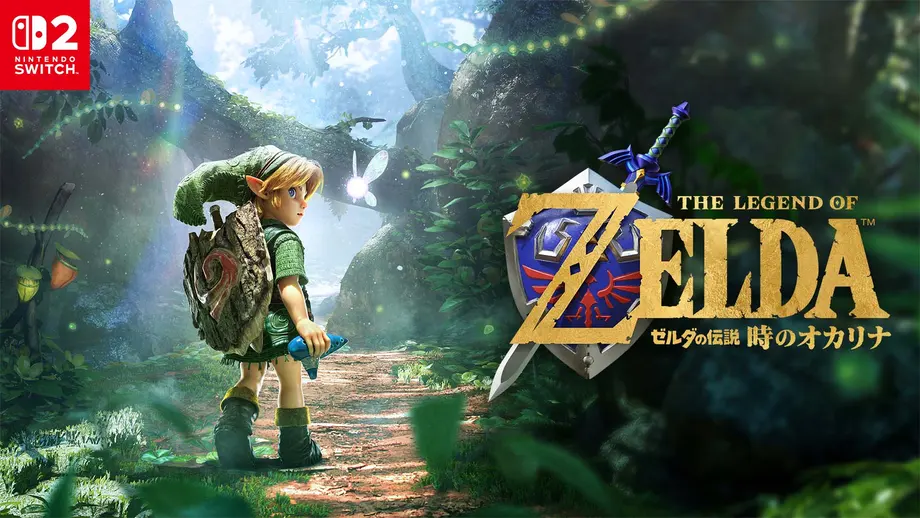
Nintendo's remake of The Legend of Zelda: Ocarina of Time sold more than 5.2 million copies worldwide in its first four days after launching on November 5, 2026, including 810,000 in Japan. The company announced the figures on November 11, making the adventure its biggest opening over four days for a Nintendo Switch 2 game.
Contents
- A return to Hyrule delivers Nintendo's fastest Switch 2 start
- How the launch compares with other Zelda games
- Britain adds a strong physical sales result
- What Nintendo rebuilt around the original adventure
- Why players are reporting shorter completion times
- Small control changes make a practical difference
- ZELDA NOTES works without a paid online subscription
- A holiday hit meets a tougher hardware market
- From the 1998 original to the next cinema release
- Key Points
The total includes packaged copies and digital downloads, according to Nintendo's sales announcement. The Kyoto company, led by president Shuntaro Furukawa, bases the record on its own research and specifically compares games that Nintendo published for Switch 2.
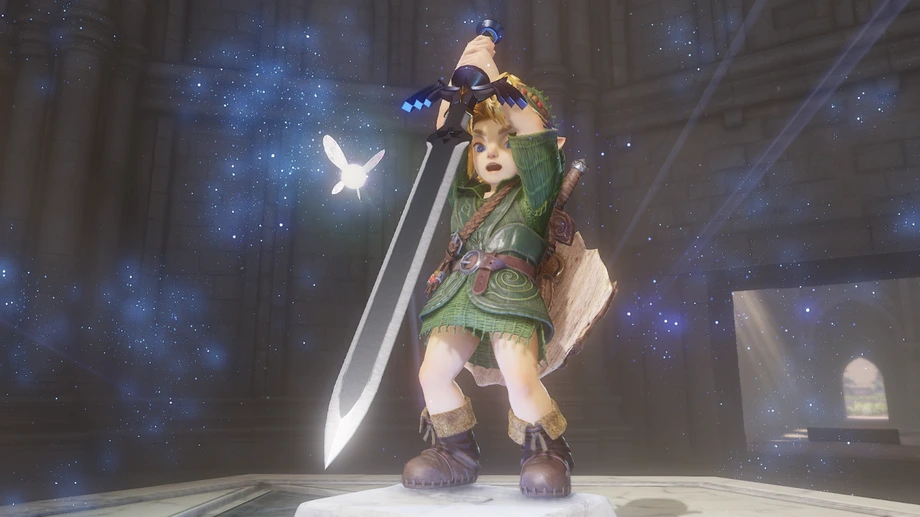
The release brings a game first launched on Nintendo 64 in 1998 to a newer generation of players, 28 years later. Nintendo has rebuilt its graphics and revised its controls while preserving the central adventure: Link moves between childhood and adulthood, using the different abilities and equipment available in each period to save Hyrule.
The commercial result arrives at a useful moment for Nintendo. Switch 2 hardware shipments have slowed, higher memory costs have contributed to rising console prices, and the company is entering the holiday shopping season with a demanding annual hardware target.
The remake's opening also shows how widely the game is selling beyond Japan. Using Nintendo's rounded figures, about 4.39 million copies were sold elsewhere. Japan accounted for approximately 15.6% of the worldwide total, or roughly one copy in every six.
How the launch compares with other Zelda games
Ocarina of Time has set a Switch 2 publishing record for Nintendo, while The Legend of Zelda: Tears of the Kingdom retains a much larger opening within the series. Released for the original Switch in May 2023, Tears of the Kingdom sold more than 10 million copies worldwide in three days, including 2.24 million in Japan.
The remake's opening total is about 52% of that worldwide figure, despite covering four days rather than three. Its Japanese total is approximately 36% of the earlier game's Japanese opening. Those figures place the new release below the exceptional launch of Tears of the Kingdom while still showing substantial demand for a rebuilt adventure.
The potential console audience was also different. The original Switch had reached approximately 125 million units when Tears of the Kingdom arrived. Switch 2 had reached 26.35 million shipments by September 30, 2026, before the Ocarina of Time release.
Nintendo's newest Zelda therefore arrived on a platform with roughly one fifth of the earlier console's distribution at the time of those launches. The comparison helps explain why both opening sales and the size of the console audience matter when assessing the remake's start.
Britain adds a strong physical sales result
British launch figures give another view of demand. Ocarina of Time recorded the second biggest opening week for packaged copies in Zelda series history in Britain, behind Tears of the Kingdom.
Its British opening was 35% above Breath of the Wild and approximately half that of Tears of the Kingdom. It also recorded the largest opening week for a packaged game in Britain during 2026, ahead of releases in the Resident Evil, Call of Duty and EA Sports FC series.
The British ranking counts boxed games, while Nintendo's worldwide announcement combines boxes and downloads. Together, the results show a strong retail launch in Britain alongside the broader global total. Nintendo has not published an exact British unit count in its announcement.
What Nintendo rebuilt around the original adventure
Link's journey still depends on two stages of his life. Childhood and adulthood give him different abilities and access to different equipment, so progressing means working out which version of Link can solve a particular problem. Players explore Hyrule, tackle puzzles inside dungeons and confront the forces threatening the kingdom.
Nintendo describes the release as a full remake, with graphics renewed for Switch 2 and substantial improvements to ease of play. The changes extend beyond sharper images: the game includes fully voiced cutscenes, revised character and location designs, freely controlled camera movement, jumping and dashing.
The revised movement and dungeons include changes to how familiar rooms teach players. In Kokiri Forest, reaching Link's first sword now requires a jump to a raised platform. A space that once taught players about camera positioning introduces a new movement skill instead.
Returning players also have the Hall of Fallen Foes, an activity that lets them challenge powerful enemies again. Expanded dialogue and orchestral music add to the presentation, while the main adventure retains its journey between two periods separated by seven years.
Why players are reporting shorter completion times
HowLongToBeat, a website that collects completion times submitted by players, lists an average of 17 hours for the remake's main story. Its figures rise to 21 hours for players who also complete some optional activities and 25.5 hours for those pursuing everything.
The equivalent averages for the Nintendo 64 original are 27 hours, 30.5 hours and 37.5 hours. That puts the remake's reported main story average 10 hours lower, a reduction of about 37%. The difference for completing everything is 12 hours.
Ocarina of Time 3D, the earlier Nintendo 3DS remake, sits at 25 hours for the main story, 31.5 hours with optional activities and 38.5 hours for completing everything. The Switch 2 version has the lowest reported average in all three categories.
Player submissions reflect different levels of familiarity and different approaches to exploration. Veterans who already know the puzzles can move quickly, and the new version gives everyone faster ways to travel and change equipment. A newcomer exploring conversations and optional details may spend longer than the listed average.
Small control changes make a practical difference
The Water Temple provides a concrete example of the remake's approach. Its revised walls make the space easier to understand, while equipment shortcuts let players switch the heavy boots more quickly. Those boots affect how Link moves through water, making convenient access particularly useful in this dungeon.
Item shortcuts and a quick menu reduce the time spent changing equipment elsewhere, too. Objects placed within dungeons help communicate the direction of travel while retaining puzzles built around the original mechanisms.
Dashing replaces the need to roll repeatedly just to move faster, and some areas now connect without a separate transition. These adjustments shorten routine actions throughout an adventure that asks players to cross the same world at different ages.
Nintendo also tested extra warp points, which would have allowed more instant travel, before removing them because they reduced discoveries along the route. The development choices behind the November 5 launch show the balance the remake seeks: quicker controls and clearer spaces, with journeys that still leave room for exploration.
ZELDA NOTES works without a paid online subscription
Nintendo's announcement confirms support for ZELDA NOTES, a companion service available through the Nintendo Switch App on smart devices. It provides functions intended to help players during the adventure.
The service requires a Nintendo Account, which is free to create. Nintendo explicitly says players can use ZELDA NOTES without subscribing to the paid Nintendo Switch Online service. For households considering the game, that separates access to these companion features from an ongoing online membership charge.
The listed functions include daily records, rumor quests, ocarina performance activities and an Ocarina of Time quiz. Gameplay guidance gives players another way to seek help when exploring Hyrule or working through its puzzles.
A launch update, version 1.1.1, enabled ZELDA NOTES support and addressed several gameplay problems. The service sits alongside the changes within the game itself, giving players both revised controls on the console and optional assistance through a phone.
A holiday hit meets a tougher hardware market
Ocarina of Time's opening sales have already exceeded the cumulative total for Donkey Kong Bananza. Mario Kart World remains ahead in total Switch 2 game sales, helped by its inclusion in a console launch bundle. Nintendo's September results put Mario Kart World at 16.48 million copies.
The remake also arrives with a reported Metacritic review score of 96 out of 100. Strong reviews and a familiar name give Nintendo a prominent game to sell during the holiday period, when families and other buyers often make console purchases.
Nintendo faces a more difficult hardware picture. Its September hardware results showed 6.49 million Switch 2 shipments during the first half of the financial year, against a target of 16.5 million for the year ending March 31, 2027. That leaves 10.01 million to ship during October through March.
Quarterly shipments had fallen from 3.82 million in April through June to 2.67 million in July through September, a decline of approximately 30%. Rising memory costs and higher retail prices add to the task of persuading households to buy the newer machine.
Zelda has helped Nintendo sell hardware before. Breath of the Wild arrived alongside the original Switch in March 2017 and helped attract players to that console. The new Ocarina of Time gives Switch 2 another major attraction, particularly for people who know the original game but have yet to buy the newer system. Nintendo's next hardware results will show how console shipments develop through the holiday period.
From the 1998 original to the next cinema release
The remake forms part of the Zelda series' 40th anniversary celebrations. Its launch connects an adventure from the Nintendo 64 era with Nintendo's current console business, while a live action film is scheduled to bring Zelda to cinemas on April 30, 2027.
The main dates trace that progression:
- 1998: Ocarina of Time launches on Nintendo 64.
- 2011: Ocarina of Time 3D brings an earlier remake to Nintendo 3DS.
- November 5, 2026: The full Switch 2 remake launches worldwide.
- November 11, 2026: Nintendo announces more than 5.2 million sales during the first four days.
- March 31, 2027: Nintendo's financial year ends, including its target of 16.5 million Switch 2 shipments.
- April 30, 2027: The live action Zelda film is scheduled for release.
Nintendo's immediate achievement is concrete: a game built around a familiar adventure has delivered its strongest opening over four days among the company's Switch 2 releases. The next commercial test comes through the holiday selling season, with both further game purchases and console demand in focus.
Key Points
- Nintendo says Ocarina of Time sold more than 5.2 million copies worldwide in four days, including 810,000 in Japan.
- The total includes packaged copies and downloads and sets a launch record for Switch 2 games published by Nintendo.
- The remake adds new graphics, voiced cutscenes, revised movement, equipment shortcuts and boss rematches.
- ZELDA NOTES requires a free Nintendo Account but no paid Nintendo Switch Online subscription.
- Reported main story completion averages 17 hours, compared with 27 hours for the original.
- The release arrives as Nintendo seeks 10.01 million more Switch 2 shipments by March 31, 2027, to meet its annual target.