Nintendo needs another 10 million consoles to meet its target
Nintendo Switch 2 reached 26.35 million units worldwide by September 30, 2026, but Nintendo's latest financial results put the focus on a tougher number: the 10.01 million consoles it must ship over the following six months to reach its annual target.
Contents
- Nintendo needs another 10 million consoles to meet its target
- How sharply did Switch 2 shipments slow?
- The holiday period carries more weight
- A record launch meets a different market
- Price increases and tariff refunds pull in different directions
- Games grow while hardware loses speed
- The original Switch still sells far more games
- Older favourites keep adding to record totals
- Digital sales and overseas customers shape earnings
- Key Points
The company reported 6.49 million Switch 2 units for the first half of its financial year ending March 31, 2027, and maintained its forecast of 16.5 million for the full year. Shipments in the July to September quarter were 2.67 million, down from 3.82 million in the preceding three months.
Games provided a stronger counterweight. Switch 2 software sales reached 73.21 million copies since launch, led by Mario Kart World's 16.48 million. The original Switch also remained a substantial business, reaching 157.20 million consoles and selling 65.73 million games during the first half of the current financial year.
Nintendo's results, announced November 5, show a company managing two different stages of its console business. Switch 2 needs more hardware buyers to sustain its expansion, while the original Switch continues selling games to an enormous audience built since March 2017.
The financial picture was mixed. Net profit rose 11% across the first half, but fell 29% in the July to September quarter to 73.5 billion yen. Nintendo kept its annual net profit forecast at 310 billion yen, leaving both its hardware and earnings targets dependent on the remaining six months.
How sharply did Switch 2 shipments slow?
Switch 2 shipments fell by 1.15 million units between the April to June and July to September quarters. Dividing that decline by the earlier quarter's 3.82 million gives a decrease of approximately 30.1%.
The first half also lagged the comparable period a year earlier, when Switch 2 was newly released. Nintendo shipped 6.49 million units this time, against nearly 10.4 million during the earlier period, a decline of 37.4%.
Nintendo's hardware totals count shipments to retailers and distributors. A console enters that tally when it moves into the sales network, while a customer purchase happens when someone buys it from a store. Retailer orders and stock levels therefore help determine the quarterly shipment figure alongside consumer demand.
The cumulative figures provide a useful check on the latest quarter. Subtracting the June total of 23.68 million from September's 26.35 million gives 2.67 million. A figure of 2.97 million was also cited for the quarter, but 2.67 million matches both that subtraction and the first half total of 6.49 million.
The holiday period carries more weight
Nintendo had completed approximately 39.3% of its annual hardware target by September 30. To reach 16.5 million by March 31, 2027, it needs another 10.01 million units, or an average of about 5 million in each of the two remaining quarters.
That required average is approximately 1.87 times the July to September pace. The October to December period includes the year end shopping season, making holiday orders especially important to the company's target.
A simple comparison shows the scale of the task. If each remaining quarter matched July to September's 2.67 million, Nintendo would finish the financial year at 11.83 million units. Even repeating the stronger April to June figure of 3.82 million twice would produce 14.13 million, below its maintained forecast.
Nintendo's next major software release could help attract buyers. A remake of The Legend of Zelda: Ocarina of Time was scheduled to begin releasing worldwide on November 5 as part of the series' 40th anniversary. By the eve of release, it had a Metacritic score of 96 out of 100. Its commercial contribution will appear in results covering the second half.
A record launch meets a different market
Switch 2 began selling on June 5, 2025, at a US launch price of $450. More than 3.5 million consoles were purchased worldwide in its first four days, the highest total for any Nintendo hardware over that opening period.
Doug Bowser, Nintendo of America's president and chief operating officer at launch, described the response in a company statement:
Fans around the world are showing their enthusiasm for Nintendo Switch 2 as an upgraded way to play at home and on the go,
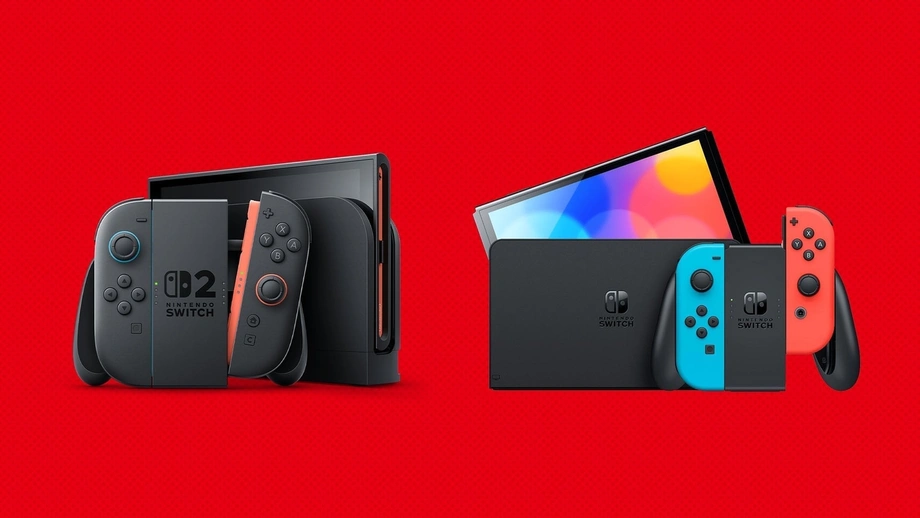
The console retained the original Switch's ability to work as a portable device or connect to a television. Its changes included a larger screen, improved graphics capabilities, updated Joy-Con controllers and Game Chat, which lets players communicate through a dedicated button.
Nintendo initially targeted 15 million units for the financial year ending in March 2026. The current 16.5 million target applies to the following financial year, ending March 2027. The key milestones show how quickly the system moved beyond its opening rush:
- June 5, 2025: Switch 2 launched, followed by more than 3.5 million customer purchases in four days.
- June 30, 2025: Shipments reached 5.82 million in its first financial quarter.
- December 31, 2025: The total exceeded 17 million, passing the Wii U's lifetime 13.56 million.
- September 30, 2026: Cumulative shipments reached 26.35 million.
- March 31, 2027: Nintendo's current financial year ends, with a target of 16.5 million units for that year.
Price increases and tariff refunds pull in different directions
Nintendo raised suggested retail prices for Switch 2 in Japan on May 25, 2026, followed by Europe, the United States and Canada on September 1. The company cited changes in market conditions and its global business outlook.
Rising memory chip costs, linked to demand from the artificial intelligence industry, have added pressure to electronics manufacturing. Memory is used by both game consoles and the computing equipment behind AI services. The precise contribution of prices, component costs and other factors to the latest shipment decline remains unconfirmed.
Nintendo also received a financial benefit from refunds of US tariffs imposed under the International Emergency Economic Powers Act, or IEEPA. The company described how those refunds affected its first quarter costs:
We recorded approximately 300 million U.S. dollars as a reduction of cost of sales in connection with refunds of IEEPA tariffs during the first quarter. The tariffs related to the refunds were primarily borne by the company rather than passed on to consumers through product prices
A reduction in cost of sales means Nintendo recorded a lower expense for the products it sold, helping profit. The company said steady game sales and tariff refunds supported a rise of nearly 50% in operating profit across the first half, even as lower hardware sales reduced revenue compared with a year earlier.
Games grow while hardware loses speed
Switch 2 sold 24.49 million software units during the first half, an increase of nearly 19% from the comparable period a year earlier. The July to September quarter contributed about 15 million copies, taking the lifetime total to 73.21 million.
Mario Kart World remained far ahead of the rest of the Switch 2 catalogue with 16.48 million copies. Its total increased by 1.09 million from June's 15.39 million, showing continued sales well beyond launch.
Donkey Kong Bananza ranked next at 5.05 million. Pokemon Legends: Z-A – Nintendo Switch 2 Edition and Pokemon Pokopia each stood at 4.04 million, although the Pokopia figure excluded Japan. Across the original Switch and Switch 2 editions, Pokemon Legends: Z-A reached 13.31 million.
Three other titles widened the group selling more than a million copies: Splatoon Raiders reached 2.42 million, Fire Emblem: Fortune's Weave sold 1.34 million, and Star Fox reached 1.17 million. Kirby Air Riders stood at 1.94 million.
Super Mario Party Jamboree – Nintendo Switch 2 Edition sold 1.28 million, with the combined total across its two console editions reaching 12.01 million. These figures show why games remain central to Nintendo's business as hardware shipments slow: an existing console owner can keep buying new releases without purchasing another machine.
The original Switch still sells far more games
The original Switch shipped 1.27 million consoles during the first half, including 610,000 in July to September. Its hardware business is much smaller than Switch 2's, but its software sales remain larger.
Original Switch software sold 65.73 million copies in the first half, compared with 24.49 million for Switch 2. That is about 2.7 times as many games. In the latest quarter alone, original Switch software reached 31.92 million, more than twice Switch 2's roughly 15 million.
Tomodachi Life: Living the Dream supplied one of the strongest individual performances, at approximately 8.8 million copies. The detailed sales listing put it at 8.83 million, while another stated total was 8.81 million. Rhythm Heaven Groove reached 2.89 million.
Nintendo said it would continue using the original Switch's installed base and extensive software catalogue to expand game sales and maintain engagement. The installed base means the consoles already in circulation, giving publishers a large potential audience for games without requiring those players to buy new hardware.
Older favourites keep adding to record totals
Mario Kart 8 Deluxe reached 72 million copies on the original Switch, up from 71.53 million at the end of June. Animal Crossing: New Horizons climbed to 50.63 million, while Super Smash Bros. Ultimate reached 38.50 million.
The Legend of Zelda: Breath of the Wild stood at 34.28 million and Super Mario Odyssey at 31.06 million. Pokemon Scarlet and Pokemon Violet together reached 28.66 million, followed by Pokemon Sword and Pokemon Shield at 27.36 million.
The Legend of Zelda: Tears of the Kingdom reached 22.90 million, Super Mario Party 21.39 million and New Super Mario Bros. U Deluxe 19.22 million. Original Switch software sales across its lifetime reached 1,593.87 million copies, or nearly 1.6 billion.
The hardware itself has now passed the Nintendo DS, which sold 154.02 million units. At 157.20 million, Switch leads it by 3.18 million and is Nintendo's bestselling console. It ranks second among all consoles, behind Sony's PlayStation 2, after previously passing PlayStation 4 and the combined Game Boy and Game Boy Color total.
Digital sales and overseas customers shape earnings
Digital sales represented 60.7% of Nintendo's combined Switch and Switch 2 software business during the first half, with the reported share rising by 6.2 percentage points from a year earlier. Downloads now account for the larger portion of that business.
Nintendo recorded sales of 966 billion yen for the period. Revenue outside Japan was 762.4 billion yen, or 78.9% of the total. That leaves 203.6 billion yen from Japan and shows how heavily the company depends on customers abroad.
The July to September net profit of 73.5 billion yen fell below the 82.2 billion yen expected in a survey of analysts. Nintendo nevertheless maintained its annual forecast of 310 billion yen, alongside the unchanged hardware target.
Software growth, a large audience on the original Switch and tariff refunds supported the first half. The remaining task is more demanding on hardware: Nintendo must ship 10.01 million additional Switch 2 consoles by March 31 while selling games across both generations.
Key Points
- Switch 2 reached 26.35 million cumulative units by September 30, 2026.
- Quarterly hardware shipments fell to 2.67 million from 3.82 million.
- Nintendo needs 10.01 million more units to meet its annual target of 16.5 million.
- Switch 2 lifetime software sales reached 73.21 million, led by Mario Kart World at 16.48 million.
- The original Switch reached 157.20 million consoles and sold 65.73 million games during the first half.
- Quarterly net profit fell 29%, but Nintendo maintained its annual profit forecast of 310 billion yen.