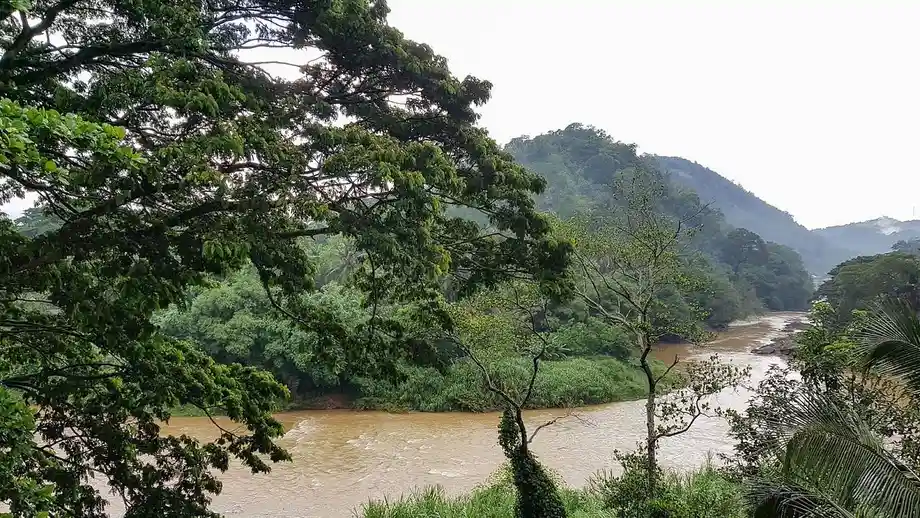
Putting forests, watersheds and coasts into economic decisions
Sri Lanka is considering a phased introduction of natural capital accounting in 2027, starting with upper watersheds and coastal and marine ecosystems, to help public investment decisions reflect the environmental resources that keep the economy working.
Contents
- Putting forests, watersheds and coasts into economic decisions
- What GDP leaves outside the picture
- How the UN accounting framework works
- Why the Mahaweli is a practical starting point
- What the tea and sediment models found
- From landscape evidence to investment
- What a 2027 introduction would require
- How the work has developed
- What international examples offer Sri Lanka
- Key Points
The proposal was discussed at a workshop organised by the Asian Development Bank (ADB) and the Centre for Poverty Analysis (CEPA) at the Marriott Hotel. It comes alongside work in the Mahaweli watershed where modelling suggests selective restoration could reduce sediment export by up to 700,000 tons annually, or 50%, while limiting losses from tea production to 150 million rupees.
The Mahaweli analysis has contributed to an agreement between the Sri Lankan government and ADB supporting a $200 million investment in the Upper Mahaweli Watershed. Together, the accounting proposal and the watershed study address a practical problem: development decisions need to count both what an investment produces and what happens to the natural systems supporting it.
Gross domestic product, or GDP, measures economic output. Natural capital accounting adds information about environmental assets, their condition and the benefits they provide. A forest, for example, can help hold soil in place and regulate water flowing towards farms, reservoirs and communities.
ADB Country Director for Sri Lanka Shannon Cowlin told the workshop that natural resources were fundamental to economic resilience, livelihoods and lasting development. Making their value visible, she said, could give policymakers and investors stronger evidence while protecting the environmental assets needed for future prosperity.
What GDP leaves outside the picture
GDP records production across the economy, but it does not systematically show whether forests, watersheds or coastal ecosystems are deteriorating as that production grows. A development project can generate income while also increasing erosion, weakening water security or reducing protection from flooding.
Those environmental changes carry economic costs. Soil washed away from an upstream farm can reduce fertility there and accumulate in a reservoir downstream. Damage to coastal ecosystems can affect fisheries and the protection available to communities along the shore.
Natural capital accounting brings such changes into a consistent statistical framework. It complements GDP by connecting economic activity with information about the resources and ecosystems that support it.
Dr. Herath Gunatilake, CEPA's senior adviser and a former director of ADB's Environment and Safeguards Division, told the workshop that approximately 75% of economic activity in developing Asia, valued at about $21 trillion, depends on nature. His presentation used that regional estimate to explain why environmental information belongs in economic planning.
For Sri Lanka, the immediate purpose would be to improve choices about public spending, resource allocation and land use. Decision makers could compare a project's expected benefits with changes to water regulation, erosion control, coastal protection or support for fisheries.
How the UN accounting framework works
The proposed approach draws on the United Nations System of Environmental-Economic Accounting. The UN Statistical Commission adopted its Ecosystem Accounting framework at its 52nd session in March 2021. The UN says ecosystem accounts have informed policy development in more than 34 countries.
The framework contains five core accounts, each answering a different part of the same question: what does nature contribute, and how is that contribution changing?
- Ecosystem extent records how much land or water is occupied by each ecosystem type.
- Ecosystem condition tracks characteristics that describe the health of those ecosystems.
- Physical service accounts measure benefits in physical units, such as quantities of sediment retained.
- Monetary service accounts express ecosystem benefits in money.
- Monetary asset accounts record ecosystem asset values and changes in those values.
Maps are central to the approach because the location of an ecosystem affects who benefits from it. The UN's explanation of the framework gives water filtration as an example:
For example, the beneficiaries of water filtration ecosystem services are likely located downstream of the ecosystem asset that provides that benefit.
That geographical connection is especially relevant to the Mahaweli. Decisions about land in the upper watershed can affect irrigation, electricity generation and water supplies much farther downstream.
Why the Mahaweli is a practical starting point
A Sri Lanka pilot factsheet published through Stanford's Natural Capital Project sets out plans to develop a watershed investment plan for the Mahaweli. Its focus is sediment retention: keeping soil from being washed into rivers and carried downstream.
The document connects watershed protection with new infrastructure intended to move water from the Mahaweli Basin to the northern dry zone. That infrastructure aims to increase agricultural production and provide clean drinking water to more than 350,000 people.
Erosion threatens several parts of that system at once. It removes productive soil from the land and deposits sediment in infrastructure used for irrigation and hydropower. Reservoirs gradually lose storage space as sediment accumulates, affecting their usefulness and increasing maintenance needs.
The pilot therefore proposes identifying where conservation would produce the greatest benefits at a reasonable cost while fitting local livelihoods. Candidate measures include agroforestry, which combines trees with farming, more sustainable tea cultivation and restoration.
The factsheet lists ADB, the University of Peradeniya, CEPA and Stanford's Natural Capital Project as partners. It also identifies World Bank watershed investments as a policy and investment opportunity and describes capacity development involving the International Water Management Institute.
What the tea and sediment models found
The Mahaweli analysis used the InVEST Sediment Delivery Ratio model to estimate where sediment originates and how much reaches waterways. A second tool, ROOT, compared combinations of restoration measures to find useful balances between environmental gains and economic costs.
Researchers examined three broad choices: retain existing tea plantations, convert all plantations to native forest, or adopt a selective approach that balances sediment reduction with the value of tea production.
Tea cultivation matters because it supports income and economic activity, while runoff from plantations can carry soil into downstream reservoirs. Converting land to forest can reduce that pressure, but it also involves restoration expenses and the loss of tea production.
The modelling found that selective restoration could cut sediment export by up to 700,000 tons a year, equivalent to a 50% reduction, with losses from tea production limited to 150 million rupees. Full conversion to forest would bring greater restoration costs and substantial forgone tea revenue.
Those figures describe a modelled choice between land uses. The 150 million rupees relates to losses from tea production, while restoration itself carries further costs. The practical finding is that the location of intervention matters: selected areas can deliver substantial sediment reductions while retaining more productive land.
ROOT generated a range of efficient combinations rather than a single answer for every purpose. In plain terms, it showed how much extra environmental benefit could be obtained for a given economic sacrifice, helping decision makers compare options.
From landscape evidence to investment
The Mahaweli work has already helped support the government and ADB agreement associated with $200 million in Upper Mahaweli investment. Sri Lanka also plans to incorporate natural capital accounting into a strategy for green growth that responds to climate risks.
The pilot factsheet identifies watershed investment, green bonds and climate finance as possible uses of its work. The wider analysis also discusses blue bonds, exchanges of debt for conservation commitments, carbon credits and payments for ecosystem services.
These mechanisms connect money to different environmental purposes. Green bonds raise borrowing for eligible environmental projects; blue bonds focus on water or marine objectives. Payments for ecosystem services can reward land managers for activities that benefit others, such as reducing sediment reaching downstream infrastructure.
For tea growers, recognising the cost of changing land use matters. Downstream water users may gain from better watershed protection, while upstream farmers bear costs or lose production. Accounting can help make both sides visible when investment and compensation arrangements are designed.
Sri Lanka's wider water investment programme provides a related context. ADB's November 2026 approval of water networks and reforms combined $200 million for infrastructure with $100 million for sector reforms. Its measures covered water resources, water safety, tariffs and utility finances, areas where the condition of the water source matters alongside treatment plants and pipes.
What a 2027 introduction would require
The workshop proposed beginning with selected upper catchments and coastal areas rather than attempting a complete national system immediately. A catchment is an area where rainfall drains towards a common river, reservoir or other outlet.
The first task would be to establish verifiable baselines showing ecosystem extent and condition. Officials would then measure services including water regulation, erosion control, coastal protection and support for fisheries, followed by regular updates.
Gunatilake identified political commitment, fragmented institutional responsibilities, limited data, technical capacity and consistent methods as major challenges. His review covered four decades of international development and application of natural capital accounting methods.
Common standards would allow information from different agencies to be combined. Environment, finance, planning and sector institutions would also need clear responsibilities for collecting data, checking it and using the results in budgets, project assessments and land use decisions.
ADB representatives Joseph Mariasingham and Sumit Pokhrel discussed accounting initiatives and investment that benefits nature. Dr. Shamen Vidanage outlined related work by the International Union for Conservation of Nature. Representatives of the Ministry of Environment, Department of Census and Statistics, UNDP and professional economic associations examined the institutional and technical groundwork.
The 2027 introduction remains a proposal. A final launch date, the full list of pilot locations and a schedule for publishing national accounts have not been announced.
How the work has developed
The proposed national approach builds on an international statistical framework and practical watershed work already under development. The main milestones show how those strands connect:
- March 2021: The UN Statistical Commission adopted SEEA Ecosystem Accounting.
- 2024: The Sri Lanka pilot factsheet set a target of establishing a shared vision for Mahaweli natural capital benefits and identifying investment opportunities.
- 19 February 2026: A project account described the Mahaweli modelling results and its contribution to an agreement supporting $200 million in investment.
- 2027: The workshop proposal envisages introducing natural capital accounting, initially concentrating on upper watersheds and coastal and marine ecosystems.
The Mahaweli pilot and the national accounting proposal serve connected purposes. The pilot compares investment choices in a particular watershed. National accounts would provide a repeatable way to track environmental assets and services across selected areas and, eventually, a wider programme.
For public authorities, that connection could turn a successful local analysis into information used regularly when deciding where to build, where to conserve and how to allocate funds.
What international examples offer Sri Lanka
The workshop examined China's Guangxi river basin, where development and ecological protection scenarios informed compensation for ecosystem services. It also considered Indonesia's use of environmental and economic accounts in modelling development with lower carbon emissions.
The UN framework gives further examples with direct relevance to Sri Lanka's priorities. Indonesia has used carbon accounts to assess changes in peatland ecosystems. South Africa's river extent and condition accounts informed its National Water and Sanitation Master Plan, while Uganda's species accounts demonstrated the economic importance of the indigenous Shea tree.
Each example connects a particular environmental asset to a practical policy choice. For Sri Lanka, the clearest current connection is between land management in the highlands and the performance of water and energy infrastructure downstream.
Regular accounts would give policymakers a way to track that relationship over time. The workshop's central task is to move from recognising nature's economic role to maintaining credible records that can guide actual spending and land management decisions.
Key Points
- Sri Lanka is considering a phased introduction of natural capital accounting in 2027, starting with upper watersheds and coastal and marine ecosystems.
- The approach would complement GDP with records of ecosystem extent, condition, services and asset values.
- Mahaweli modelling found selective restoration could reduce sediment export by up to 700,000 tons annually, or 50%, while limiting tea production losses to 150 million rupees.
- The watershed analysis contributed to an agreement supporting $200 million in Upper Mahaweli investment.
- Implementation would require reliable baselines, common methods, trained staff and data sharing across government institutions.