Twenty five turbines are already feeding the grid
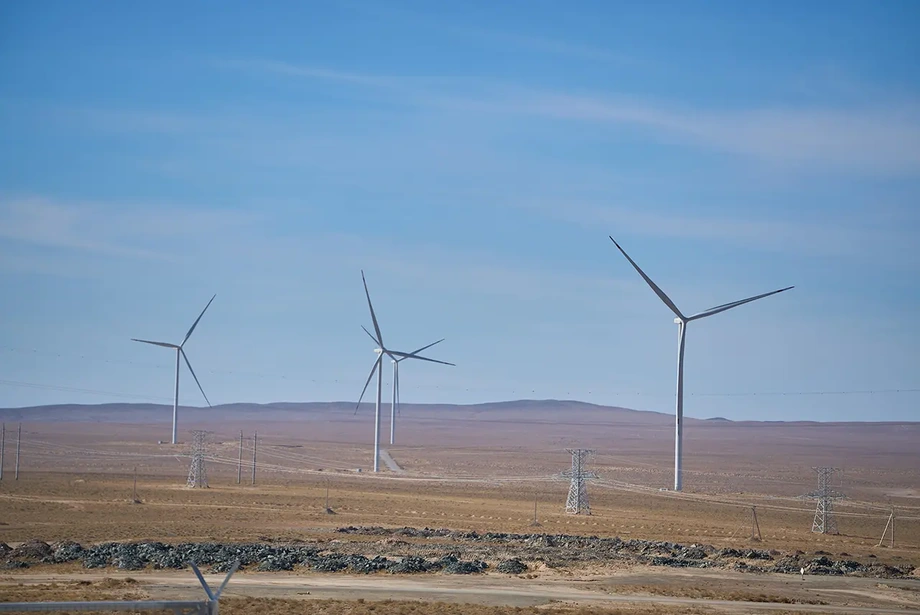
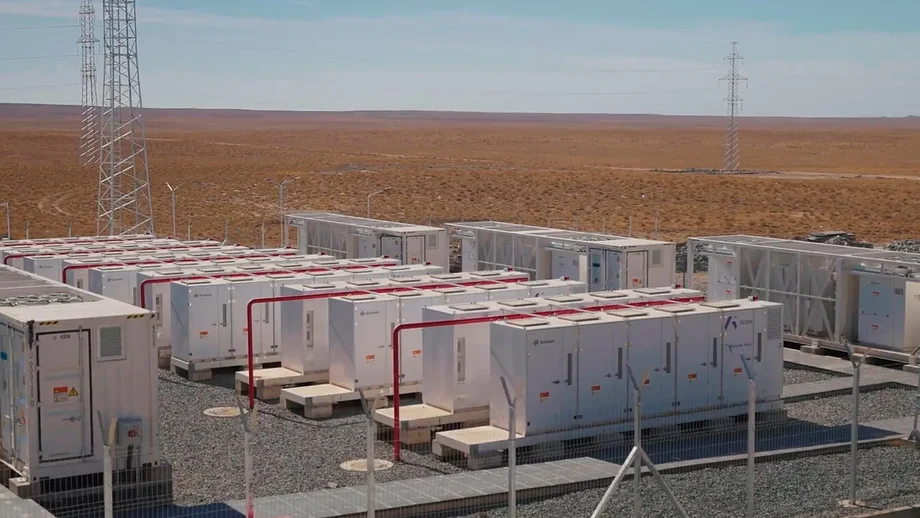
Uzbekistan's €232 million Nukus 2 wind and battery project is approaching full operation, with 25 of its 26 turbines already generating electricity and its battery system undergoing safety tests. Developer ACWA aims to finish commissioning the batteries by the end of November 2026, completing a facility that combines 200 megawatts of wind generation with 100 megawatt-hours of electricity storage.
Contents
- Twenty five turbines are already feeding the grid
- How much electricity will the batteries provide?
- A mountain site connected to the national network
- What the turbines are expected to generate
- A contract lasting 25 years supports the investment
- From the tender award to battery commissioning
- Construction employment will give way to a smaller workforce
- Land compensation covers 39 affected households
- Wildlife protection continues after construction
- Key Points
The project in Karakalpakstan, an autonomous republic in northwestern Uzbekistan, is described by the Asian Development Bank (ADB) as Central Asia's first wind power facility combined with large battery storage. Project director Sardorbek Makhmudov estimates that, once fully operational, it could supply the electricity needs of more than 300,000 people.
Construction was reported to be 94.2% complete in an update dated 26 October. Makhmudov said generation began in August, while the batteries require staged testing because of additional safety and fire protection requirements. The year of those two progress milestones was not specified.
The final work matters beyond the construction site. Wind turbines produce electricity when the wind blows; batteries can hold some electricity until consumers need it. At Nukus 2, the storage system is intended to support the grid when wind generation falls, demand rises or other power facilities stop supplying electricity.
How much electricity will the batteries provide?
Nukus 2's two main capacity figures describe different things. The wind farm's 200 megawatts measure the rate at which it can generate electricity. The battery's 100 megawatt-hours measure the amount of electricity it can store.
Makhmudov estimates that the batteries could supply electricity for three to four hours, depending on demand and how much power is drawn. A battery runs down faster when it supplies more power, much as a water tank empties faster through a wider outlet.
Using the stated storage capacity, 100 megawatt-hours spread evenly over four hours would average 25 megawatts before operating limits and energy losses. Over three hours, it would average about 33 megawatts. The duration therefore depends on the level of support the grid needs.
The ADB's environmental assessment summary gives the batteries a specific role: storing electricity during periods of lower demand, providing operating reserves and helping stabilize grid frequency. Frequency is the rhythm of an alternating current electricity system, which operators keep steady by balancing electricity supply and use.
The assessment also identifies wind variability, icing and snow accumulation as conditions that can reduce turbine output. The battery is designed to help cover those shortfalls and alleviate power outages in Beruniy district.
A mountain site connected to the national network
Nukus 2 occupies the Karatau mountain region in Beruniy and Qorao'zak districts. Its electricity will reach consumers through new transmission infrastructure, changes to an existing switching station and a connection to the Beruniy grid substation.
The ADB assessment describes an approximately 44 kilometre transmission route operating at 220 kilovolts, with two circuits. It also lists an internal line measuring 14.5 kilometres from the wind farm substation to the existing Nukus 1 switching station, plus another line measuring 1.5 kilometres from the battery facility.
The Asian Infrastructure Investment Bank (AIIB), in its project approval summary, describes two double circuit transmission lines measuring 42 kilometres and an expansion of the 220 kilovolt switching station. The ADB assessment describes the main connection as one double circuit route of approximately 44 kilometres.
The route links two different landscapes. Roughly its northern half crosses natural desert habitat before it enters the irrigated farmland of the Amu Darya floodplain. The Beruniy substation sits just inside the buffer zone of the Lower Amu Darya biosphere reserve, making the transmission connection an important part of the project's environmental management.
What the turbines are expected to generate
The wind farm is expected to produce nearly 728,000 megawatt-hours annually, according to ADB figures. That is about 1,995 megawatt-hours per day when averaged across a year, although actual production will vary with wind conditions and equipment availability.
For comparison, a facility producing 200 megawatts continuously for all 8,760 hours of a year would generate 1,752,000 megawatt-hours. Nukus 2's forecast is approximately 42% of that amount. This ratio, commonly called a capacity factor, expresses expected generation against continuous operation at the stated capacity.
The environmental assessment specifies 26 Envision EN 182-8.0MW turbines. Each has a hub 138 metres above the ground and a rotor diameter of 182 metres. Their listed operating wind speeds range from 3 metres per second, when generation begins, to a shutdown threshold of 25 metres per second.
The assessment lists each turbine model at 8 megawatts, while the project documents consistently describe the development as a 200 megawatt wind farm. The turbine design lifetime is 25 years, matching the duration of the project's electricity purchase agreement.
A contract lasting 25 years supports the investment
ACWA Power Beruniy Wind FE LLC, the local project company established by Saudi developer ACWA, is responsible for the facility. Its power purchase and project agreement was signed on 28 March 2024 following a competitive tender, with the National Electric Grid of Uzbekistan as the electricity buyer.
The agreement gives the project a buyer for its wind generation over 25 years. For a development requiring substantial spending before electricity sales begin, a contract of that length provides the commercial basis for construction and borrowing.
AIIB approved $75 million in financing on 15 April 2025 under project number 000905. The bank classifies the loan as nonsovereign financing, meaning it finances the project company rather than lending directly to the government.
ADB and a fund it administers signed a loan package worth approximately €46 million in September 2025. Other lenders include Dutch development bank FMO, Standard Chartered and Saudi EXIM. ADB also provided a credit guarantee backed by the government, intended to reduce financial risks and encourage competition during bidding.
ADB project portfolio manager Abdullatif Matkarimov said the bank supports around ten wind and solar projects in Uzbekistan, with its involvement beginning with an earlier development in Navoi. Nukus 2 adds storage and grid support to that investment in renewable generation.
From the tender award to battery commissioning
The project documents trace development from the tender award in December 2023 through contracts, community consultations and financing. The remaining completion target concerns the battery system, while most turbines are already supplying electricity.
- 20 December 2023: ACWA received the project award.
- 28 March 2024: The power purchase and project agreement and grid service agreement were signed.
- 24 and 25 April 2024: Public hearings took place in five local communities.
- 25 February 2025: Disclosure of the land acquisition and livelihood restoration plan to communities began.
- 15 April 2025: AIIB approved $75 million in financing.
- September 2025: ADB and its administered fund signed their loan package.
- End of November 2026: ACWA aims to complete battery commissioning.
Commissioning involves checking that equipment and its controls work safely together before full operation. For Nukus 2's batteries, Makhmudov identified fire protection and safety requirements as reasons for conducting the tests in stages.
Construction employment will give way to a smaller workforce
Between 750 and 800 people worked on the project during construction, including more than 400 local workers and specialists, according to Makhmudov. The environmental assessment had projected a peak construction workforce of 500.
POWERCHINA - SINOHYDRO is identified in the assessment as the engineering, procurement and construction contractor. Accommodation arrangements included existing facilities at Nukus 1, accommodation at the Nukus 2 construction site and possible stays in guest houses or hotels in nearby villages.
Project social manager Tarana Jafarova said recruitment from surrounding communities was intended to support local incomes and livelihoods. Construction also creates demand for concrete, aggregate, food and everyday supplies, which the assessment identifies as opportunities for local businesses.
Once construction ends, staffing is expected to fall to 10 to 15 permanent employees and up to five temporary employees. Most operating positions will require technical skills, while security and support work is expected to provide some local employment. The lasting employment opportunity is therefore much smaller than the construction workforce.
Land compensation covers 39 affected households
AIIB's assessment says the wind farm and transmission infrastructure require approximately 103 hectares of land acquisition and will affect 39 households. Six households are associated with the wind farm area and 33 with the transmission line. No households are expected to move from their homes.
Land access still affects livelihoods. Tower foundations occupy land permanently, construction restricts access to some grazing areas, and safety zones around transmission lines place limits on certain activities and structures. Farming can continue within parts of those zones under local law.
AIIB classifies 25 of the 39 affected households as vulnerable. The livelihood restoration programme provides for eligible households and groups, including women, young people and people with disabilities, to receive support alongside compensation.
The ADB assessment identifies six informal herders whose access to fenced construction areas would be temporarily restricted. They are expected to resume grazing after construction outside the permanent facility footprints. Compensation for anticipated impacts is to be paid before those impacts occur, with additional provisions for unexpected damage.
Jafarova described procedures for complaints and compensation. AIIB says the project grievance mechanism accepts anonymous complaints, including those concerning land and assets. Community information is to be available in Uzbek and Karakalpak as well as English, with a separate complaints process for workers.
Wildlife protection continues after construction
Environmental assessments identify risks from turbine collisions, bird electrocution near transmission equipment, habitat disturbance and construction activity. AIIB lists 36 Priority Biodiversity Features, meaning species identified for particular attention in project planning and protection.
Bukhara Red Deer and Common Crane triggered critical habitat requirements, which bring specific conservation duties. The ADB assessment says Bukhara Red Deer were not observed during its survey, while baseline surveys recorded 40 Central Asian tortoises in the wind farm area.
The assessment proposes bird flight diverters to make power lines more visible, electrical equipment designed to reduce risks to birds of prey, and monitoring for bird and bat deaths around turbines and transmission lines. Its collision model estimated approximately 8.72 Eurasian kestrel collisions and 4.21 Common Crane collisions annually under the stated avoidance assumptions.
Those estimates give the monitoring programme practical targets to check once the facility operates. The biodiversity plan calls for changes to protective measures, including conservation offsets, if specified thresholds are exceeded. Offsets are conservation actions intended to compensate for biodiversity losses associated with the project.
AIIB requires environmental and social monitoring reports every six months during construction and operation. For communities near the project, full operation will bring a shift from construction work to continued oversight of electricity supply, land restoration, compensation and wildlife protection.
Key Points
- Nukus 2 combines 200 megawatts of wind generation with 100 megawatt-hours of battery storage in western Uzbekistan.
- Twenty five of its 26 turbines are generating electricity; ACWA targets the end of November 2026 for completing battery commissioning.
- The €232 million project is expected to generate nearly 728,000 megawatt-hours annually.
- A contract signed on 28 March 2024 provides for electricity purchases by the National Electric Grid of Uzbekistan over 25 years.
- AIIB approved $75 million in financing, while ADB and an administered fund signed a package worth approximately €46 million.
- Land acquisition affects 39 households without requiring residents to move from their homes.
- Compensation, livelihood support and wildlife monitoring remain obligations as the project enters full operation.