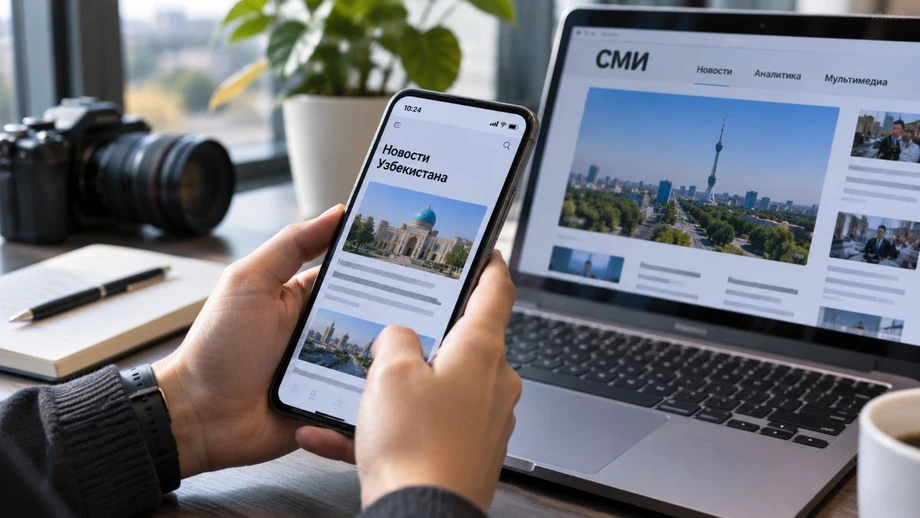
A growing media market faces demands for greater freedom
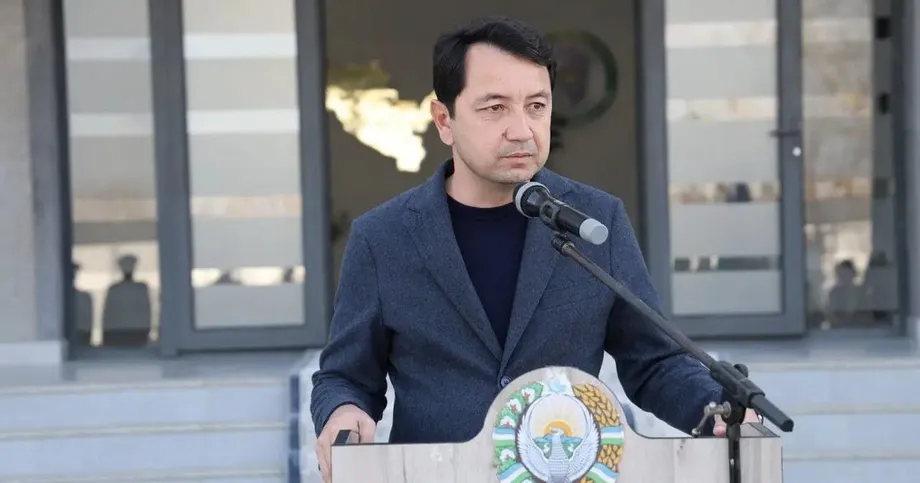
Privately owned outlets account for 67% of Uzbekistan's nearly 2,700 media organisations, presidential press secretary Sherzod Asadov said at the third Uzbekistan-Russia Media Forum in Tashkent on November 9, 2026. His announcement followed a national survey in which 56.5% of respondents called for stronger legal guarantees of freedom of speech to improve media independence.
Contents
- A growing media market faces demands for greater freedom
- Who owns Uzbekistan's media?
- Why the press freedom score fell despite a higher ranking
- Telegram leads for news, television for trust
- Audiences want stronger rights and more useful reporting
- False information drives support for greater oversight
- What Uzbekistan and Russia proposed
- More content, books and a national visual archive
- Key Points
Asadov put internet coverage at 94% and said active consumers of internet content had risen from 14.7 million in 2017 to more than 32.7 million. That is an increase of more than 18 million, taking the audience to over twice its earlier size.
Uzbekistan's expanding media market operates alongside persistent restrictions on journalism. Reporters Without Borders (RSF) placed the country 147th among 180 countries and territories in its 2026 World Press Freedom Index, citing censorship, surveillance and pressure on independent outlets.
The National Study of Media Consumption in Uzbekistan adds a detailed picture of what audiences want. Alongside stronger speech protections, respondents sought better journalist training, more independent platforms and greater attention to prices, employment and everyday problems. Many also supported stronger government oversight of information reliability.
Three developments now sit together: more media organisations, a much larger digital audience and public demand for both greater independence and tighter action against false information. For journalists, the practical issues include access to information, protection from interference and enough funding to investigate matters that affect readers.
Who owns Uzbekistan's media?
Asadov linked the growth of private media to changes in legislation, government support and benefits for media businesses. The number of registered outlets increased from 2,004 in 2022 to 2,277 in 2024, a rise of 273, or about 13.6%. The private share was estimated at roughly 70% in 2024, compared with the newly announced 67%.
AidData, a research laboratory at William & Mary's Global Research Institute, examined the people and institutions behind leading outlets in its media ownership profile. Its findings describe the landscape as of 2021, using the most recent information available at the time.
AidData found that the Uzbek government directly owned nine leading outlets and that most privately held outlets in its study belonged to political elites connected to the government. Ownership was more varied online, where it identified Kun.uz, Qalampir.uz and Xabar.uz as outlets founded by journalists that contributed critical coverage, including reporting on corruption.
The profile also described an obstacle to public scrutiny: Uzbekistan's Law on Mass Media required shareholder information to be reported, but that information was not public. Readers therefore had limited ability to see who ultimately controlled an outlet. Editorial independence means that journalists can make reporting decisions without owners or officials dictating what they publish.
Several dates help explain how the current picture developed:
- 2017: Uzbekistan had 14.7 million active consumers of internet content, according to Asadov.
- 2021: AidData's ownership research documented extensive state ownership and political connections among leading outlets.
- 2022 to 2024: Registered media organisations increased from 2,004 to 2,277.
- August 2025: The Center for the Production of Content for Mass Media was established.
- September 8 to 19, 2026: Researchers interviewed 1,411 adults for the national media consumption study.
- November 2, 2026: The study's findings were presented in Tashkent.
- November 9, 2026: Asadov outlined media growth and cooperation proposals at the Uzbekistan-Russia forum.
Why the press freedom score fell despite a higher ranking
RSF's Uzbekistan country assessment gives the country a 2026 score of 34.95, down from 35.24 in 2025. Its ranking nevertheless improved from 148th to 147th. The score measures conditions within the country, while the ranking places it relative to others.
Political, legal and sociocultural indicators deteriorated, while economic and safety indicators improved slightly. Uzbekistan ranked close to Kyrgyzstan, at 146th, and Kazakhstan, at 149th. Eastern Europe and Central Asia remained the index's second lowest region.
RSF says criticism of those in power remains difficult and that some online publications avoid official media registration because they face prosecution and heavy fines. It also identifies restrictions on foreign funding and reduced support from the United States Agency for International Development as pressures on independent journalism.
RSF states that Uzbekistan has no private television network, while AidData's historical ownership mapping lists private shareholders in several leading television channels. Asadov's 67% figure covers the media sector as a whole. The assessments present different descriptions of television ownership, alongside a shared account of strong political influence.
Journalist safety remains a central concern in RSF's assessment. It cites Otabek Sattoryi, founder of the Xalq Fikri YouTube channel, who received a prison sentence of six and a half years in May 2021 on charges RSF describes as fabricated. The organisation says reporters covering his trial faced physical attacks or criminal proceedings.
Telegram leads for news, television for trust
The national media study, published through the EU Delegation to Uzbekistan, surveyed adults in all 14 regions through interviews at their homes. Urban residents made up 53.9% of participants and rural residents 46.1%.
The project brought together the Public Foundation for the Support and Development of National Mass Media, the EU Delegation, the presidential administration's content production centre and the Ijtimoiy Fikr public opinion research centre. Its findings show audiences using several channels rather than relying on a single medium.
Telegram channels supplied news to 51.6% of respondents, ahead of television at 44.6% and social media at 41.6%. Among people aged 18 to 24, Telegram reached 66.2% as a news source, while social media reached 54.4%.
Television retained a substantial advantage in trust: 44.3% named it their most trusted source, compared with 11.3% for Telegram and 7.4% for news websites. Television's trust figure was almost four times Telegram's. Respondents frequently chose digital sources for speed, with 48.6% citing fast delivery as a reason for their choice.
Telegram messenger use reached 86.1%, while 67.5% watched television content. Among respondents older than 55, 77.4% used television for news. These separate figures describe different activities: using a messaging app, watching programmes and seeking news.
Audiences want stronger rights and more useful reporting
Stronger legal guarantees for freedom of speech were the most frequently selected measure for improving media independence, chosen by 56.5% of respondents. Better professional training attracted 30.7%, and development of independent media platforms and private news agencies attracted 25.9%. Participants could select up to three measures.
Respondents also wanted better access to international news and tougher penalties for obstructing journalists. Support for independent platforms and private agencies was higher among young adults, at 32.4%, than among older respondents, at 17.2%.
The public assessment of existing conditions was divided. While 49.7% rated freedom of speech and media independence highly, 45.2% identified restrictions on some topics. Those answers sit alongside specific complaints about access: 30.6% cited insufficient transparency in government bodies, and 27.4% cited limited opportunities for journalists to obtain information.
Readers and viewers wanted more coverage of practical concerns. Information about prices, income, employment and social support was considered insufficient by 41.3%; everyday public problems were cited by 40.6%. Health information and explanations of laws and citizens' rights also appeared among the gaps.
For print and online journalism, 31.8% wanted more open discussion of social problems, 29.1% wanted deeper analysis, 20.6% wanted investigative reporting and 20.1% wanted more fact checking. These preferences point to a demand for reporting that explains why problems happen and examines the decisions behind them.
Television audiences had different complaints. Repetitive subject matter troubled 36.8%, repeated programmes 36.2% and excessive advertising 29.1%. Newsrooms face a concrete editorial task: producing fresh reporting about household concerns while earning the trust that television already commands.
False information drives support for greater oversight
Fake news was the most pressing media problem for 46.6% of respondents. YouTube and video blogs were associated with false information by 50.1%, Telegram by 44% and social media by 38.4%. Television was named by 5.4%.
Only 25.1% said they always checked information, while 13.3% said they never did. Among people older than 55, the share who never checked reached 23.3%. Some 17.7% said they could not independently distinguish false information from truth.
The survey found 77.4% supported stronger liability for media outlets spreading unreliable information, while 75.9% supported state oversight of information reliability. Support for stronger speech guarantees therefore exists alongside broad support for tougher controls on false information.
RSF's concerns about censorship and restrictive laws make the design of those controls consequential for working journalists. Audiences want protection from deception, while also asking for access to information and reporting on subjects that officials may find uncomfortable.
Asadov said fake content and deepfakes were doubling annually. Deepfakes are artificial audio, images or video that can make someone appear to say or do something that never happened. He also said an Uzbek educational platform addressing disinformation had trained 11,000 young professionals.
What Uzbekistan and Russia proposed
The Uzbekistan National News Agency and Russia's TASS news agency organised the Tashkent forum. Asadov proposed structured journalist internships, joint journalism schools and shared educational platforms, alongside common fact checking standards.
Asadov, speaking as Uzbekistan's presidential press secretary, framed false information as a concern for relations between the two countries:
"Information attacks and fake news must not become a source of mistrust and disagreement between our countries and peoples," Asadov said.
The cooperation proposals also covered digital platforms, artificial intelligence and Big Data, a term for analysing large collections of information. Asadov called for more regular contact between editorial teams, journalists and bloggers.
AidData's historical study provides context for those proposals. It found that six of 11 Russian state media outlets it tracked had a physical presence in Uzbekistan in 2021. That presence included local offices, broadcasting infrastructure and distribution through cable packages. The study also identified potential channels for Russian influence through ownership and political relationships.
The forum programme included four panel sessions, a seminar on information security in cyberspace and child protection, and negotiations between businesses. The national media study's next stage was to provide training for journalists, press service staff and bloggers in six regions. No dates were given for those sessions or for launching the proposed joint schools and shared platforms.
More content, books and a national visual archive
Asadov also presented figures on Uzbekistan's publishing industry. He said production volume had doubled during the year, with 15,000 book titles published and combined circulation exceeding 60 million copies.
The Content Center produced more than 26,000 media products during the year, attracting nearly 2 billion views, according to the figures presented at the forum. Its first year of operation, beginning in August 2025, was also described as producing more than 30,000 items with over 2 billion views.
Uzbekistan launched its National Media Bank in 2026, which Asadov described as the first national platform of its kind in Central Asia. The online archive provides public access to tens of thousands of photographs and videos about the country.
The archive expands access to visual material, while the survey identifies a parallel demand for original reporting, investigations and a wider range of views. Producing large quantities of content and answering those editorial demands are distinct tasks for the growing industry.
Uzbekistan's next practical tests lie in the work audiences have already requested: explaining prices and employment, obtaining answers from public bodies, investigating social problems and giving journalists room to publish their findings. The ownership figures describe the scale of the market; those daily conditions shape what its audiences receive.
Key Points
- Asadov said private outlets account for 67% of Uzbekistan's nearly 2,700 media organisations.
- Internet coverage reached 94%, while active internet content consumers exceeded 32.7 million, according to Asadov.
- Uzbekistan ranked 147th in RSF's 2026 index, but its score fell from 35.24 to 34.95.
- A national survey found 56.5% wanted stronger legal guarantees for freedom of speech.
- Telegram led as a news source at 51.6%, while television led in trust at 44.3%.
- Audiences wanted more reporting on prices, employment, social support and everyday problems.
- Uzbekistan proposed cooperation with Russia on journalist training, fact checking and digital technology.