Only One Company Had Completed a Buyback Before Removal
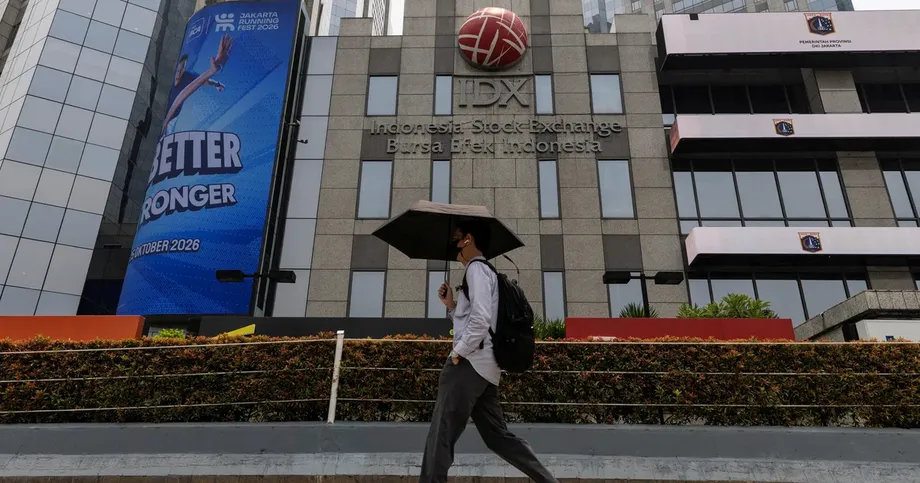
The Indonesia Stock Exchange removed 18 companies from its listings on November 10, 2026, after seven were declared bankrupt and 11 spent more than 50 months under trading suspension. A day before the removal, the exchange said only two had disclosed plans to buy back public shares, and only PT Polaris Investama Tbk (PLAS) had carried out purchases from investors who registered.
Contents
- Only One Company Had Completed a Buyback Before Removal
- Why the Exchange Removed the Companies
- The People Behind Seven Companies
- Corporate Stakes Range From Majorities to Smaller Holdings
- Public Investors Hold Large Portions of Several Companies
- Long Suspensions Preceded the November Deadline
- Buyback Duties Continue After Delisting
- When Controllers Can Be Required to Pay
- Sritex Combines the Largest Valuation With a Jobs Debate
- Debt Payments and Public Reporting Still Apply
- Key Points
The ownership records reveal who stands behind the companies leaving the exchange. Market ownership data identifies ultimate beneficial owners for seven of the 18, including Iwan Setiawan at textile manufacturer PT Sri Rejeki Isman Tbk (SRIL), known as Sritex. Other records identify corporate shareholders or show shares spread widely among public investors.
For shareholders, the immediate issue is whether and when they can receive money for investments that have often been impossible to sell through normal exchange trading for years. Public investors held 39.89% of Sritex, 86.675% of PT Envy Technologies Indonesia Tbk (ENVY) and 78.78% of PT Limas Indonesia Makmur Tbk (LMAS), according to RTI Business data.
Delisting removes a company's securities from the exchange. Share buybacks, in which a company or another responsible party purchases investors' shares, provide a possible exit. The exchange says that obligation continues after removal, while companies retaining public company status must continue disclosures and reporting to Indonesia's Financial Services Authority, or OJK.
Why the Exchange Removed the Companies
The exchange based its decision on Exchange Regulation No. I-N on Delisting and Relisting. The process followed an announcement dated April 10, 2026, with final decisions recorded in notices Peng-DEL-00003/BEI.PP1/11-2026, Peng-DEL-00005/BEI.PP2/11-2026 and Peng-DEL-00004/BEI.PP3/11-2026.
The rule provides three grounds for removal: financial or legal conditions that seriously damage business continuity without adequate signs of recovery; failure to meet listing requirements; or trading suspension lasting at least 24 months. The grounds appear in provisions III.1.3.1, III.1.3.2 and III.1.3.3, respectively.
The seven companies in the bankruptcy group were PT Cowell Development Tbk (COWL), PT Mitra Pemuda Tbk (MTRA), Sritex, PT Sunindo Adipersada Tbk (TOYS), PT Sejahtera Bintang Abadi Textile Tbk (SBAT), PT Tianrong Chemicals Industry Tbk (TDPM) and PT Omni Inovasi Indonesia Tbk (TELE).
The other 11 were PT Eureka Prima Jakarta Tbk (LCGP), PT Sugih Energy Tbk (SUGI), PT Marga Abhinaya Abadi Tbk (MABA), Limas Indonesia Makmur, PT Northcliff Citranusa Indonesia Tbk (SKYB), Envy Technologies Indonesia, PT Golden Plantation Tbk (GOLL), Polaris Investama, PT Triwira Insanlestari Tbk (TRIL), PT Nusantara Inti Corpora Tbk (UNIT) and PT Jaya Bersama Indo Tbk (DUCK).
Those 11 had been suspended for more than 50 months, over twice the rule's minimum of 24 months. During a suspension, exchange trading is halted. For their investors, November 10 formalised removal after a long period without normal access to the market.
The People Behind Seven Companies
An ultimate beneficial owner is the person at the end of an ownership or control chain. A company may hold shares directly while an individual ultimately controls that company. The two names can therefore appear at different levels of the same ownership structure.
The ownership data identifies the following people behind seven departing companies:
- Northcliff Citranusa Indonesia (SKYB): Sugiono Wiyono Sugialam.
- Envy Technologies Indonesia (ENVY): Dato' Sri Mohd Sopiyan Bin Mohd Rashdi.
- Sri Rejeki Isman (SRIL): Iwan Setiawan.
- Sunindo Adipersada (TOYS): Iwan Tirtha, with a stated holding of 28.86%.
- Cowell Development (COWL): Budi Hadidjaja.
- Triwira Insanlestari (TRIL): Suganda Setiadikurnia.
- Omni Inovasi Indonesia (TELE): Hengky Setiawan and Welly Setiawan.
An earlier ownership tally identified detailed beneficial owner information for only SKYB and ENVY; the broader tally names seven companies. For the remaining companies, the records chiefly identify direct shareholders, institutional holders or public ownership.
The seven represent about 39% of the 18 companies. Knowing the person behind a corporate ownership chain matters because OJK rules allow buyback responsibility to extend to a company's controller in specified circumstances.
Corporate Stakes Range From Majorities to Smaller Holdings
Three companies had especially concentrated ownership. PT Mitra Ditosam Indonesia held 77.14% of Mitra Pemuda, PT Jom Prawarsa Indonesia held 76.42% of Golden Plantation, and DH Corporation Ltd held 72.51% of Tianrong Chemicals Industry. Each stake exceeded half of the company's shares.
Other named holdings were smaller: Lenovo Worldwide Corporation held 21.78% of Nusantara Inti Corpora, Asiaciti Trust Singapore Pte. Ltd held 11.52% of Sugih Energy, and JAM Pidsus held 16.62% of Marga Abhinaya Abadi. Tan Heng Lok held 34.48% of Sejahtera Bintang Abadi Textile.
A shareholder's percentage describes its direct stake. Control also depends on voting rights, ownership arrangements and how the remaining shares are distributed. A majority stake gives its holder a different position from an 11.52% holding in a company with many other owners.
Sritex illustrates the layers. Huddleston Indonesia held about 12.07 billion shares, or 59.03%, while Iwan Setiawan was identified as the ultimate beneficial owner. The corporate shareholder and the person behind the ownership chain appear separately in the records.
Public Investors Hold Large Portions of Several Companies
Public ownership reached 86.99% at Jaya Bersama Indo. Fidelity Funds held 9.88% and was identified as the largest holder within that public portion. At Limas Indonesia Makmur, public investors held 78.78%, while Suparman Tjahaja held 7.46%.
Eureka Prima Jakarta's largest named shareholders were Asuransi Jiwa IFG with 8.7% and Asabri with 7.3%. Polaris Investama was also described as predominantly publicly owned, with UBS AG London holding the largest stated stake at 8.49%.
RTI Business figures show the scale of the public holdings elsewhere. Envy Technologies Indonesia had 1,560,140,900 shares held by public investors, equivalent to 86.675%. Sejahtera Bintang Abadi Textile had 2,448,771,079 public shares, or 51.521%, and Limas Indonesia Makmur had 620,686,725 public shares.
Envy combines a named ultimate beneficial owner with a very large public shareholding. Beneficial ownership and public ownership measure different things: one traces the people behind control, while the other describes how shares are distributed. Both are relevant when identifying who must organise a buyback and how many investors may need an exit.
Long Suspensions Preceded the November Deadline
Polaris Investama had the longest suspension among the departing companies, beginning on December 27, 2018. By delisting, its shares had been suspended for almost eight years. Golden Plantation followed on January 30, 2019, while Eureka Prima Jakarta and Triwira Insanlestari were suspended on May 2, 2019.
Sugih Energy's suspension began on July 1, 2019. Marga Abhinaya Abadi and Northcliff Citranusa Indonesia had been suspended since February 2020. The exchange says it issues warnings about potential delisting after six months of suspension and repeats them every six months.
The main dates in the removal and buyback process were:
- April 10, 2026: The exchange issued the announcement underlying the planned removal.
- May 10, 2026: Deadline for disclosure of buyback plans.
- May 11 to November 9, 2026: The scheduled buyback period.
- November 9, 2026: The exchange said two companies had disclosed plans and Polaris had implemented purchases.
- November 10, 2026: Delisting took effect for all 18 companies.
Polaris also had the longest listing history in the group, having joined the exchange on March 16, 2001. Sunindo Adipersada had the shortest, having listed on August 6, 2020. The removal therefore covered companies with widely different lengths of time on the market.
Buyback Duties Continue After Delisting
Saidu Solihin, the exchange's director of company assessment, said on November 9 that Polaris had purchased shares from public investors who registered during its buyback period. Sixteen companies had yet to disclose plans. Two out of 18 amounts to about 11%, leaving most companies without a disclosed plan at that point.
Saidu said companies remain responsible for buybacks after delisting and can carry them out outside the exchange. He expressed that obligation in Indonesian:
Sesuai dengan ketentuan yang berlaku, meskipun sudah delisting, perusahaan tetap memiliki kewajiban buyback dan dapat melakukan buyback di luar Bursa,
The exchange said it would keep requesting progress updates and explanations of difficulties, then act within its powers and coordinate with OJK where obligations remained unmet. It would consider each company's circumstances and permitted alternatives, including purchases by an eligible third party.
Neither the two disclosed plans nor Polaris's purchases provide a complete picture of the money returned to investors across all 18 companies. The exchange did not give a total for completed payments or a new common completion date for outstanding buybacks. Investors still holding shares therefore depend on the arrangements and follow through at each company.
When Controllers Can Be Required to Pay
OJK Regulation No. 45 of 2024 on the Development and Strengthening of Issuers and Public Companies sets out the buyback framework. Article 8 requires a company whose shares are being delisted by an exchange board decision to buy back all shares held by public shareholders.
The obligation can fall on the controller in specified circumstances. These include failure to hold annual shareholder meetings for the preceding two years, failure to submit periodic reports for the preceding two years, or capital market violations involving the controller.
The regulation requires buybacks to begin no later than 30 days after the exchange publicly announces its delisting decision. Disclosure must precede implementation. If the company or controller cannot carry out the purchases, another party may do so, while responsibility remains with the company and controller under Article 8(7).
Article 9 allows OJK to order buybacks and public disclosure when the responsible parties miss the required timetable. Plans must state the schedule, price, duration and purchase method, plus the appointed securities company's identity if transactions take place through the exchange. The stated objective includes reducing the number of shareholders to fewer than 50.
The ownership records consequently have a practical role beyond identifying wealthy individuals or large institutions. They help explain which entities sit between public investors and the people who may bear responsibility under the rules.
Sritex Combines the Largest Valuation With a Jobs Debate
Sritex was the largest company in the group by its stated market capitalisation of Rp2.99 trillion, ahead of Tianrong Chemicals Industry at Rp1.25 trillion and Sugih Energy at Rp1.24 trillion. Market capitalisation multiplies a share price by the number of outstanding shares. For these suspended companies, the figures reflect historical prices.
Public investors held 8,158,734,000 Sritex shares, or 39.89%. Using the last recorded price of Rp146, that holding had a historical value of about Rp1.19 trillion. Investor Lo Kheng Hong held approximately 209.34 million shares, or 1.02%, worth about Rp30.56 billion at that price. The amount investors receive through a buyback depends on its stated terms and execution.
Sritex's other named shareholders included Chesney with 4.52%, Grafton Capital Resources with 4.40%, Cassell with 3.59% and Bank Kiatnakin Phatra with 2.14%. Elsewhere, historical prices put public holdings in Tianrong at about Rp342.72 billion, Envy at Rp78 million multiplied by 1,000, or Rp78 billion, and Limas at Rp31.03 billion.
Sritex also sits within a debate about employment in the textile industry. Danantara chief operating officer Dony Oskaria said on October 26 that the investment body was considering acquiring existing textile factories or building new facilities. He described Sritex as a possible acquisition option to preserve production and prevent large job losses, alongside changes to its business model.
Dony described options under study, with no completed acquisition or agreed investment terms announced. Factory operations, employment and shareholder buybacks involve different decisions, even when they concern the same company. Sritex's history began with H.M. Lukminto's Sri Redjeki trading business in Solo's Pasar Klewer in 1966, followed by its first factory in 1968 and the adoption of the Sri Rejeki Isman name in 1978.
Debt Payments and Public Reporting Still Apply
The exchange said the removal also covers listed debt securities and sukuk issued by the companies. Sukuk are securities structured under Islamic finance principles. Interest and principal payments remain payable under the relevant trustee agreements, which set out obligations to the holders.
Companies cease to have duties arising specifically from exchange listing once delisting takes effect. Those retaining public company status must still consider public shareholders' interests, make required disclosures and report to OJK. Any future return to the exchange must follow the applicable listing rules.
The concrete task now is to complete outstanding buybacks, maintain required disclosures and meet financial obligations. Across companies with controlling corporate stakes and those dominated by public investors, removing a ticker from the exchange leaves those responsibilities in place.
Key Points
- The Indonesia Stock Exchange delisted 18 companies on November 10, 2026: seven in the bankruptcy group and 11 suspended for more than 50 months.
- Ownership data identifies ultimate beneficial owners for seven companies, alongside corporate holdings and large public stakes elsewhere.
- By November 9, only two companies had disclosed buyback plans; Polaris Investama had purchased shares from registered participants.
- Buyback obligations continue after delisting, and controllers can be responsible in circumstances specified by OJK rules.
- Sritex public investors held 39.89%, valued at about Rp1.19 trillion using its historical share price of Rp146.
- Debt payments and applicable public company reporting duties continue after removal from the exchange.