Chips and servers drive a third consecutive monthly record
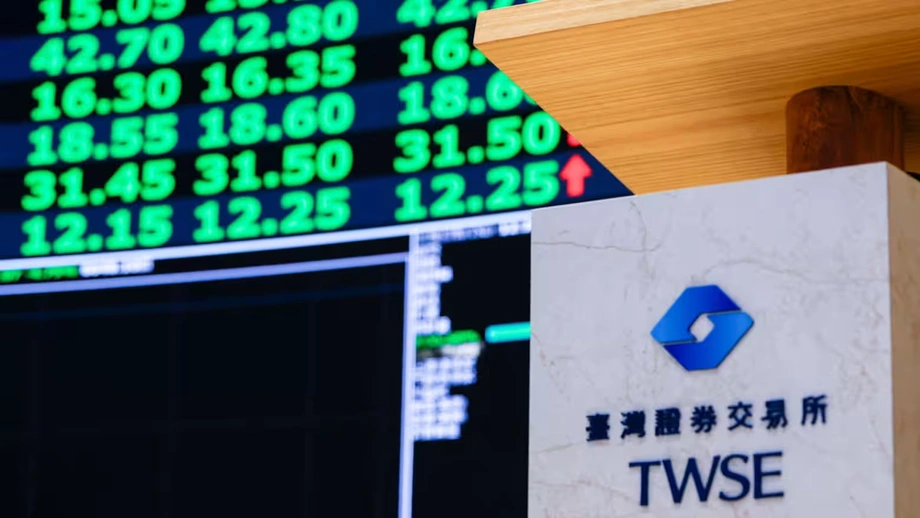
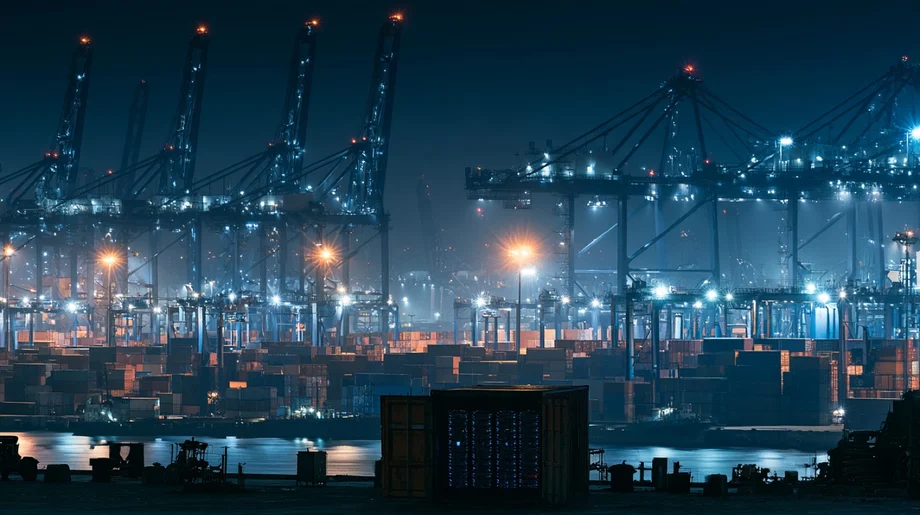
Taiwan exported US$96.76 billion worth of goods in October 2026, up 58.9% from a year earlier, as spending on artificial intelligence infrastructure pushed shipments of computers, communications equipment and electronic components to new highs. Those two technology categories generated US$80.28 billion, or 83% of the total.
Contents
- Chips and servers drive a third consecutive monthly record
- What is behind the technology surge?
- Growth spreads beyond electronics, though textiles fall
- The United States takes a larger share
- Europe and Japan also reach monthly highs
- Record imports reveal the cost of supplying the boom
- A larger surplus accompanies stronger domestic investment
- Can annual exports pass US$900 billion?
- The dates that frame the next update
- Key Points
The Ministry of Finance's preliminary customs figures, released on November 9, showed records across exports, imports and the trade surplus. Imports climbed 75.1% to US$68.89 billion, while the surplus reached US$27.88 billion, up 29.4%. A trade surplus means Taiwan sold more goods abroad than it bought from other economies.
October was the third consecutive month to set an export value record and the 36th consecutive month of growth compared with a year earlier. Exports exceeded September's US$87.22 billion by US$9.54 billion, or 10.9%, and crossed US$90 billion for the first time.
The result also surpassed both market expectations and the ministry's own prediction. Economists had expected export growth of 50%, while the ministry had forecast 40% to 44%. Actual growth beat the upper end of that official range by 14.9 percentage points.
For manufacturers, the figures show demand extending across several stages of production: advanced chips, finished servers, networking equipment and the machinery used to expand factories. For Taiwan's economy, they also show how much its current expansion depends on technology investment by customers abroad.
What is behind the technology surge?
Information, communications and audiovisual exports reached US$47.60 billion, up 72.9% from October 2025. The category, which includes servers, accounted for 49.2% of all exports, almost half the monthly total.
Electronic component exports rose 61.4% to US$32.68 billion. Integrated circuits supplied most of that amount, reaching US$31.17 billion, up 63%. An integrated circuit is a chip containing tiny electronic components that process, store or control information.
Tsai Mei-na, director of the Ministry of Finance's Department of Statistics, identified record export values for both servers and graphics cards. Shipments of storage devices, switches and routers also recorded increases of more than 100%. Switches and routers move information between computers and networks, making them part of the infrastructure needed to connect large groups of servers.
AI services require powerful computers to process enormous amounts of information. Their expansion creates demand for processors, memory, storage and networking equipment together. Taiwan supplies several of those parts, allowing the same investment cycle to support multiple export industries.
TSMC, the world's largest producer of advanced chips used in AI applications, supplies Nvidia, Apple and other major technology companies. Tsai also pointed to expanded domestic capacity for advanced chip production and tight memory supplies as factors supporting electronic component exports.
Higher export prices contributed to the increase in shipment values alongside stronger demand. Tsai described a combination of greater component use, more demanding product specifications, tight electronics production capacity and the arrival of new consumer products before the holiday shopping season.
Growth spreads beyond electronics, though textiles fall
Ten of Taiwan's 11 main export categories increased in October. Textiles were the only category to decline, showing that the expansion reached beyond chips and computers even as technology accounted for most export earnings.
Machinery exports rose 35.5% to US$2.88 billion, supported by semiconductor production equipment. Base metals and related products also reached US$2.88 billion, up 35.7%. Mineral product exports increased 71.6%, with oil prices helping lift their value.
Traditional industry exports grew 25.7% in October. Across January through October, those industries exported US$155.47 billion, up 12.6%. Their cumulative export value was the highest for that period in four years, while the growth rate was the strongest in five years.
The contrast with total export growth of 47.7% over the first 10 months shows the different speeds of expansion. Traditional manufacturers were gaining sales, but their growth was much slower than the national total dominated by technology products.
The United States takes a larger share
The United States remained Taiwan's largest export market in October, buying a record US$32.93 billion in goods. Shipments increased 55.9% from a year earlier and represented 34% of the monthly total.
China and Hong Kong together purchased US$20.44 billion, up 42.9%. Exports to the Association of Southeast Asian Nations, known as ASEAN, increased faster, rising 83.8% to US$18.46 billion.
The shift was also visible across the first 10 months. Exports to the United States reached US$240.71 billion, up 58.8%, while China and Hong Kong bought US$180.53 billion, up 30%. The American market accounted for 31.7% of Taiwan's exports, its highest share in 36 years. China and Hong Kong's combined share fell to 23.8%, the lowest in 27 years.
That left the United States 7.9 percentage points ahead of China and Hong Kong in Taiwan's export mix. Sales to both markets increased in dollar terms, but American purchases grew much faster.
ASEAN bought US$152.41 billion in goods over January through October, up 56.1%, and accounted for a record 20.1% of exports for the period. Together, the United States, China and Hong Kong, and ASEAN purchased US$573.65 billion, about 75.7% of Taiwan's total exports.
Europe and Japan also reach monthly highs
Europe purchased a record US$5.95 billion in Taiwanese goods in October, up 46% from a year earlier. Shipments to Japan reached a record US$3.67 billion, an increase of 49.6%.
Growth in both destinations accelerated from September, when exports to Europe rose 20.6% and those to Japan increased 13.4%. Taiwan's exports to Europe over the first 10 months reached US$48.13 billion, up 48.5%.
The United States followed a different pattern. Its October increase of 55.9% was slower than September's 106.2%. Taiwan therefore achieved a larger monthly export total even as annual growth in its biggest destination cooled.
Across all markets, annual export growth eased from September's 60.9% to October's 58.9%. The dollar value shipped still rose to a new record because the growth percentage compares each month with its own level a year earlier.
Record imports reveal the cost of supplying the boom
Taiwan's US$68.89 billion import bill was also a monthly record. Its 75.1% annual increase exceeded economists' forecast of 54.5% and accelerated from September's 51.7%.
Agricultural and industrial raw material imports reached US$45.83 billion, up 74%. Capital equipment imports, including machinery businesses use to produce goods, climbed 110% to US$16.34 billion. Together, those categories accounted for US$62.17 billion, about 90.2% of total imports.
Electronic parts imports increased 109.3%, while imports of information and communications technology products rose 126.4%. Tsai attributed the wider import surge to the international division of work in AI production, stronger demand for materials needed to fulfil export orders and higher raw material prices.
South Korea became Taiwan's largest import source for the first time, moving ahead of China and Hong Kong combined and supplying 18.9% of October imports. Tsai connected the change to the complementary roles of Taiwanese and South Korean manufacturers, alongside surging memory demand and prices.
The relationship helps explain why an export boom can also bring a sharp increase in imports. Taiwanese factories buy components and equipment from overseas to build the products they later sell abroad. South Korea's own October chip export surge included US$56.44 billion in semiconductor shipments, illustrating the scale of the same regional technology investment cycle.
A larger surplus accompanies stronger domestic investment
October's trade surplus increased by US$4.25 billion from September's US$23.63 billion to US$27.88 billion. It also exceeded the market forecast of US$25.6 billion.
Across January through October, Taiwan exported US$758.29 billion in goods, up 47.7%, and imported US$569.76 billion, up 44.6%. The ministry reported a cumulative surplus of US$188.54 billion, an increase of 57.7%.
The factory investment visible in equipment imports follows Taiwan's third quarter economic expansion of 14.36%. That preliminary GDP estimate showed real capital formation growing 26.36% and private consumption rising 5.37%, connecting the export boom with investment and household spending at home.
Businesses were also receiving a large volume of new work before October's shipments. September's record export orders reached US$114.21 billion, up 62.4%. Orders record business booked by companies, while customs exports measure goods shipped from Taiwan, so the two series track different stages of commercial activity.
Taiwan's technology boom has also been accompanied by a weaker response in its currency: the expansion had not lifted the Taiwan dollar. Export earnings, domestic activity and currency movements have therefore followed different patterns during the same period.
Can annual exports pass US$900 billion?
The Finance Ministry forecast November exports of US$94.2 billion to US$96.7 billion, representing annual growth of 47% to 51%. It cited continued AI infrastructure investment and the holiday shopping season as support for the final quarter.
Taiwan would need another US$141.71 billion in November and December combined to reach US$900 billion for the year. That is an average of about US$70.86 billion a month, below both October's total and the ministry's November forecast.
Tsai expected annual exports to exceed US$900 billion and surpass Japan for the first time since the postwar era. Taiwan's exports had exceeded Japan's in every month of the first nine months except February, creating a cumulative lead of US$74.3 billion.
The ministry also projected Taiwan would finish seventh or eighth among the world's merchandise exporters, above its previous best ranking of ninth during 1984 through 1987. During the first eight months of 2026, Taiwan trailed China, the United States, Germany, the Netherlands, Hong Kong and South Korea.
The annual total and final global ranking were still forecasts. Tsai argued that continued AI development and Taiwan's competitive position in the supply chain would support its role despite geopolitical competition and possible changes in where companies manufacture goods.
The dates that frame the next update
October's figures were preliminary. The next trade release was scheduled for December 9, when November's results would provide the next check on the ministry's forecast.
The recent sequence shows how orders, domestic production and shipments have developed:
- September 2026: merchandise exports reached US$87.22 billion, while export orders hit US$114.21 billion.
- October 30: Taiwan released a preliminary estimate of 14.36% economic growth for the third quarter.
- November 9: the Finance Ministry published October exports of US$96.76 billion and imports of US$68.89 billion.
- December 9: the next trade release was due, covering November.
November's results will show whether shipments remain near October's record and whether imports of components, materials and equipment continue growing at their rapid pace. Those purchases are a concrete part of how Taiwanese manufacturers prepare to meet customer demand.
Key Points
- October exports reached a record US$96.76 billion, up 58.9%, marking 36 consecutive months of annual growth.
- Information, communications and audiovisual products plus electronic components supplied 83% of exports.
- The United States bought US$32.93 billion in goods, remaining Taiwan's largest export market.
- Imports rose 75.1% to US$68.89 billion, with South Korea becoming the largest supplier.
- The monthly trade surplus reached a record US$27.88 billion.
- The ministry expected annual exports above US$900 billion and forecast November shipments of US$94.2 billion to US$96.7 billion.
- The figures were preliminary, with the next release scheduled for December 9.