A new application with billions in exports at stake
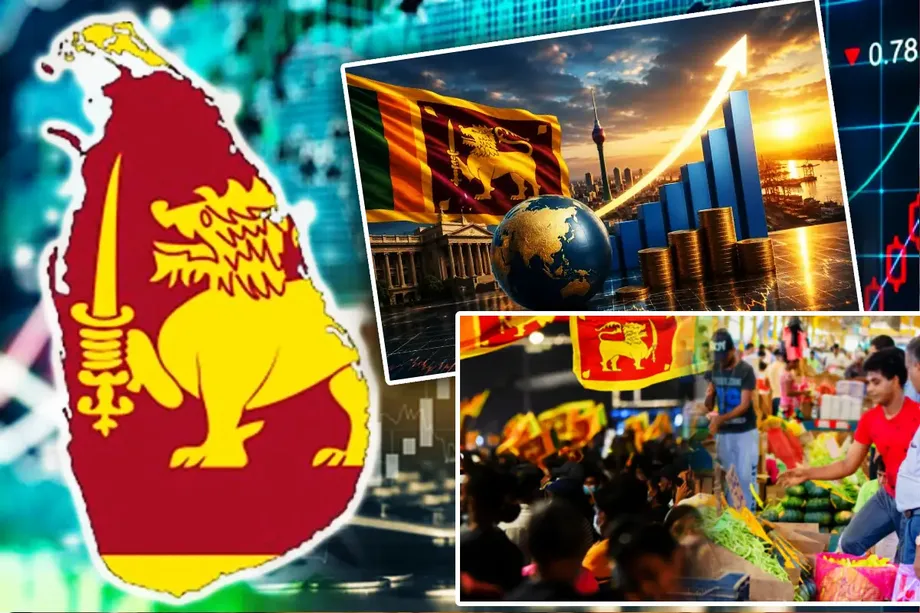
Sri Lanka's apparel industry has backed the Government's plan to reapply for European Union trade preferences under a framework scheduled to run from 1 January 2027 to 31 December 2036. Existing beneficiaries would have until 31 December 2028 to complete the transition, giving Sri Lanka a defined window to seek continued access while meeting tougher requirements on rights, environmental protection and governance.
Contents
- A new application with billions in exports at stake
- What GSP+ does for exporters
- The dates that matter
- How much of Sri Lanka's trade is exposed?
- Competition is already putting pressure on sales
- The revised requirements reach beyond treaty signatures
- Why domestic laws matter to the application
- Exporters had called for action before the timetable emerged
- Keeping access while seeking a broader trade relationship
- Key Points
The Joint Apparel Association Forum (JAAF) welcomed the commitment after Deputy Minister of Finance and Planning Anil Jayantha Fernando outlined the application timetable in Parliament on 5 November 2026. Responding to Opposition MP Ravi Karunanayake under Standing Order 27(2), Fernando said Sri Lanka intended to apply between the start of 2027 and the end of 2028.
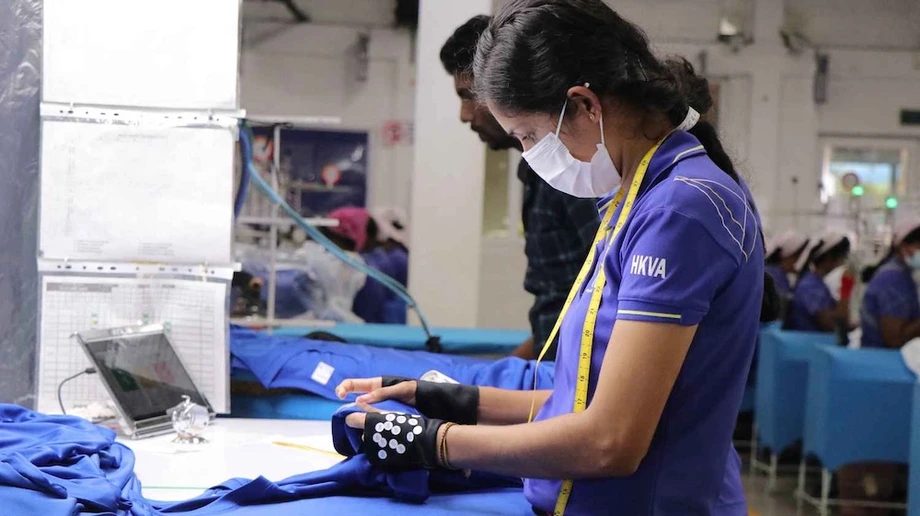
For an industry that exported more than US$5 billion in apparel in 2025, the decision reaches beyond customs paperwork. Preferential access helps Sri Lankan clothing compete in Europe and supports the livelihoods of hundreds of thousands of workers and their families. JAAF also supports exploring other arrangements that could secure access to the European market over a longer period.
JAAF, the organisation representing the apparel industry, set out the economic stakes in its statement welcoming the Government's decision:
Continued access is vital to the industry and to the wider economy,
The Government's immediate task is to prepare a successful application. Its broader task is to connect trade policy with domestic reforms and investment decisions, while factories face competition from Asian suppliers whose sales to Europe are growing. A transition period gives officials time to prepare, but approval will depend on meeting the revised conditions.
What GSP+ does for exporters
The Generalised Scheme of Preferences Plus, usually called GSP+, removes customs duties on eligible goods from qualifying developing countries. Customs duties are taxes charged when goods enter a market. Removing them can help an exporter offer a more competitive price or preserve income that would otherwise be squeezed by those taxes.
The arrangement suspends duties on products covering approximately 66% of EU tariff lines, subject to specified exceptions. A tariff line is a product category in the customs system. This means the benefit covers about two thirds of those categories, rather than two thirds of the value of every country's exports.
GSP+ is a concession granted by the EU without requiring a matching package of tariff cuts from the beneficiary. In exchange, participating countries accept obligations covering human rights, labour rights, environmental protection and good governance. Sri Lanka's application therefore involves national laws and their enforcement as well as the commercial interests of its exporters.
The dates that matter
Fernando's parliamentary explanation sets out a transition rather than an immediate end to existing preferences when the new framework begins. Current beneficiaries would continue on existing terms during the transition through the end of 2028 while seeking approval under the revised system.
The present EU GSP Regulation No. 978/2012 was originally due to expire at the end of 2023 and was extended through 31 December 2027 while replacement rules were being developed. The Government's November timetable describes the planned introduction of the new framework in January 2027 and a later deadline for existing GSP+ beneficiaries to reapply.
- 26 April 2025: Apparel exporters publicly urged timely policy changes ahead of a stricter review.
- 5 November 2026: Fernando outlined Sri Lanka's intended application window in Parliament.
- 1 January 2027: The revised EU framework is scheduled to begin.
- 31 December 2028: The transition period for existing beneficiaries is scheduled to end.
- 31 December 2036: The new framework is scheduled to conclude.
The Government has identified the application window but has not announced an exact submission date. Completing the process within that window is central to JAAF's call for a smooth and timely application.
How much of Sri Lanka's trade is exposed?
JAAF put apparel exports in 2025 at more than US$5 billion, representing about 32% of total export earnings of US$17.25 billion and more than half of industrial exports. Using its stated percentage and total gives roughly US$5.52 billion, consistent with the association's description of apparel earnings exceeding US$5 billion.
The association said the EU accounted for 24% of Sri Lanka's merchandise exports. Figures accompanying the parliamentary announcement described apparel as more than 40% of merchandise exports and the EU as taking a little over 30% of apparel shipments. These percentages use different totals: all export earnings, merchandise exports and apparel exports. Readers need those categories to understand the size of the industry's exposure.
JAAF describes Europe as its largest market. Its concern is therefore concentrated in a destination where losing preferential treatment could affect pricing, orders and factory planning. The association said combining continued GSP+ access with work on longer term arrangements would give exporters and investors greater confidence to plan ahead.
Competition is already putting pressure on sales
Sri Lanka shipped US$705 million in apparel to the EU during the first half of 2026, an 8% decline. Over the same period, EU apparel imports from China rose 5%, while those from Vietnam increased 9%.
The difference amounts to a gap of 13 percentage points between Sri Lanka's growth rate and China's, and 17 percentage points between Sri Lanka and Vietnam. Sri Lanka was losing sales while two major competitors were expanding theirs. Keeping a tariff advantage matters in that setting, even as exporters also need to win orders on quality, delivery and the products they make.
EU Ambassador to Sri Lanka and the Maldives Carmen Moreno has also pointed to a changing regional trade environment. Speaking at the Sri Lankan-German Business Forum 2026 in Colombo, she cited the EU's recently concluded trade agreement with Indonesia and continuing negotiations with Thailand and Malaysia. Those developments place Sri Lanka's application within a wider competition for access to European buyers.
The revised requirements reach beyond treaty signatures
The current GSP+ arrangement is tied to 27 international conventions. Fernando's account of the revised framework puts the requirement at 32 conventions, covering human rights, labour rights, environmental protection, climate change and good governance. The change adds five conventions to the commitments associated with the present scheme.
Applicants would have to ratify the relevant conventions, put them into practice and meet reporting obligations. Ratification means formally agreeing to a treaty. Implementation means making its protections work through laws, institutions and everyday decisions. Applicants must also submit an action plan explaining how they intend to carry out those commitments.
EU monitoring would include discussions with governments and other stakeholders, visits to beneficiary countries, and consideration of information from the International Labour Organization, the United Nations and civil society organisations. Findings would appear every three years in a joint report from the European Commission and the EU's foreign policy leadership to the European Parliament and Council.
Eligibility also includes a test of limited export diversification. The seven largest sections of eligible goods must account for more than 75% of the EU's imports covered by GSP from the applicant country over three years. In simple terms, the test looks at whether a country's eligible exports to Europe are concentrated in a relatively narrow range of goods.
Why domestic laws matter to the application
JAAF has warned that the Government's proposed anti-terror Bill could obstruct the application because of concerns about its breadth and limited judicial oversight. The association supports having a counterterrorism law, while arguing that its provisions must be compatible with the international commitments attached to GSP+.
The Government's reform programme includes repealing the Prevention of Terrorism Act and amending the Online Safety Act. For the apparel industry, the substance of those changes matters because the EU's assessment covers national governance and rights protections, extending beyond conditions inside factories.
JAAF said the industry was ready to contribute by maintaining standards in its own operations. The association described that commitment in its statement:
We will continue to uphold high standards of labour practice, environmental stewardship, and good governance, which are the values at the heart of the scheme and of our industry's reputation with global buyers,
The practical work therefore falls to both government and industry. Officials must address legislation, enforcement and treaty reporting, while exporters can support the application with evidence about working conditions, environmental practices and production.
Exporters had called for action before the timetable emerged
Sri Lanka Apparel Exporters Association Chairperson Rajitha Jayasuriya was already urging policy action in April 2025. At that stage, she described Sri Lanka as eligible under the existing framework until 2027 and warned that the next assessment would focus more closely on practical progress.
Jayasuriya said the industry's reputation for ethical and sustainable manufacturing needed support from national policies. Explaining what exporters expected from the next review, she said:
Under the upcoming scheme, all beneficiary countries will be required to reapply, and the EU is expected to take a more rigorous approach, evaluating not just formal commitments, but also practical progress in aligning with evolving trade and governance standards,
The exporters association pledged to provide industry data and analysis to support the Government's application. Its earlier intervention and JAAF's latest statement point to the same priority: beginning policy preparation early enough for exporters to plan production and investment with confidence.
Keeping access while seeking a broader trade relationship
The Government is also examining deeper economic cooperation or a possible trade agreement with the EU. GSP+ provides a route to continued preferential access now, while a negotiated agreement would offer a different basis for the relationship. The revised framework provides for a country to leave GSP+ if it obtains an agreement granting preferential market access.
Countries would also leave if they move above the World Bank's low income or lower middle income categories for three consecutive years. GSP+ beneficiaries would remain outside the separate mechanism that removes preferences from particular product groups under Standard GSP. For Sri Lanka, planning beyond the next application is therefore part of preparing for future changes in eligibility.
Moreno has urged Sri Lanka to use preferential access more fully. She said GSP+ had helped exports, especially apparel, but had delivered mixed results in advancing broader industrial development. She put manufacturing at around 25% of GDP and pointed to opportunities in agricultural processing and smaller businesses, including exporters she had visited with fewer than 40 employees.
At the Colombo business forum, Moreno made a direct appeal to Sri Lanka:
GSP+ is an opportunity. Use it fully. Apply for it,
The National Export Development Plan aims to raise exports to US$36 billion by 2030. Compared with the US$17.25 billion total cited for 2025, that target requires an increase of US$18.75 billion, or about 109%. Retaining European preferences would support an existing export base; reaching the target would also require much greater sales across the economy.
Key Points
- Sri Lanka plans to reapply for EU GSP+ between 1 January 2027 and 31 December 2028.
- The revised framework is scheduled to run through 31 December 2036 and requires commitments to 32 international conventions.
- JAAF backs the application and the exploration of longer term trade arrangements with Europe.
- Apparel exports exceeded US$5 billion in 2025, while shipments to the EU fell 8% to US$705 million in the first half of 2026.
- Industry concerns include the proposed anti-terror Bill, practical implementation of international commitments and growing competition from Asian suppliers.
- The Government has not announced an exact application submission date.