ByteDance's biggest challenger to Douyin is a drama app
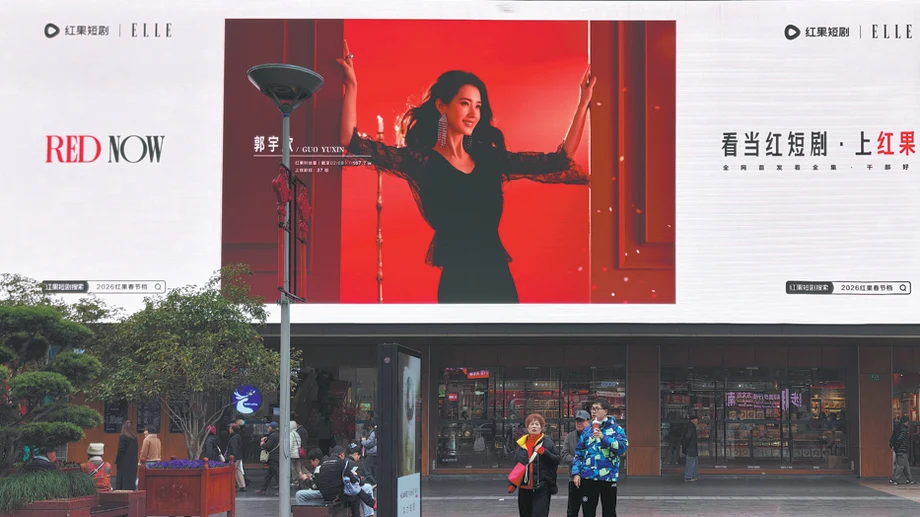
Hongguo Free Short Drama reached 430 million monthly users in September 2026, moving ahead of ByteDance's artificial intelligence assistant Doubao and becoming the company's second largest app by audience. QuestMobile's China Mobile Internet Autumn Report put Doubao at 419 million users and Douyin at 1.029 billion.
Contents
- ByteDance's biggest challenger to Douyin is a drama app
- A mature internet market turns toward longer visits
- Short dramas lead the growth in viewing time
- How a few minutes become a whole evening
- WeChat changes the competition beyond standalone apps
- AI makes production cheaper, but creators still face bills
- Free viewing creates a different earnings problem
- Overseas growth brings users faster than spending
- Viewing controls and content rules enter the next phase
- Key Points
The gap between Hongguo and Doubao was 11 million users, or about 2.6% of Doubao's audience. Hongguo's monthly audience grew 81.8% from a year earlier, giving ByteDance another enormous destination for viewers alongside its main short video platform.
The change in ranking captures a larger shift in China's internet economy. Short dramas, which tell continuing stories through episodes lasting just a few minutes, are taking a growing share of people's time even as the country's mobile internet population barely expands.
QuestMobile calculated that short drama apps added 13.329 billion hours of viewing time in September compared with the same month a year earlier. Generative AI apps added 978 million hours. The increase for short dramas was therefore about 13.6 times the increase for AI apps.
ByteDance had not confirmed the user figures by publication of the initial coverage. The measurements come from QuestMobile, a market research company, rather than a company disclosure.
A mature internet market turns toward longer visits
China had 1.281 billion monthly mobile internet users in September, up 0.9% from a year earlier. Average monthly usage per person rose much faster, increasing 6.5% to 189.8 hours. Across September's 30 days, that works out to about six hours and 20 minutes a day.
Technology companies are competing within almost the same enormous population. Tencent reached 1.280 billion users across its services, ByteDance reached 1.259 billion and Alibaba reached 1.258 billion, according to QuestMobile's company figures, which count overlapping users only once within each group.
Only 22 million users separated Tencent from Alibaba, less than 2% of China's mobile internet audience. With so little distance between the largest groups, persuading existing users to return more often or stay longer becomes a central business goal.
ByteDance's internal rankings show how quickly that contest can change. A year earlier, its three largest apps were Douyin, the news service Jinri Toutiao and Douyin Lite. In September 2026, Hongguo and Doubao occupied the second and third positions. Entertainment and AI assistance had moved into places previously held by news and another version of Douyin.
Short dramas lead the growth in viewing time
Short video apps added 5.717 billion hours of usage in September compared with a year earlier, placing them behind short dramas but ahead of generative AI. Traditional online video services lost 1.38 billion hours during the same period.
Short dramas and short videos together accounted for 111.5% of the net increase in mobile internet usage time. Their share exceeded 100% because losses in other categories reduced the final total. In simple terms, the two growing categories added more hours than the internet gained after those losses were subtracted.
QuestMobile also found that short drama apps associated with Douyin and Kuaishou expanded without a decline in users of their corresponding short video platforms. People can use both services, watching a promotional clip in one app and continuing the story in another.
Hongguo's expansion sits within a rapid change across the category. QuestMobile said the short drama video audience grew from 10 million to 400 million in less than three years, with a compound annual growth rate of 443.1%. A compound rate describes growth building on the previous period's larger base.
The commercial market is expanding too. iiMedia Consulting put China's microdrama market at 50.44 billion yuan in 2024 and 67.79 billion yuan in 2025, with a projection of 79.33 billion yuan for 2026. Those figures imply growth of about 34.4% in 2025 and a further 17% in 2026, a larger market growing at a slower pace.
How a few minutes become a whole evening
Hongguo's appeal combines short episodes, continuing suspense and free access supported by advertising. Viewers can begin without paying for each episode, although some content involves watching an advertisement to unlock more of the story.
Writers describe a production process built around quickly giving viewers a reason to continue. A betrayal, an unexpected identity or an unresolved injustice can appear before much background is explained. Each new episode can delay the resolution while introducing another conflict.
One viewer, identified by the pseudonym Yang Meng, described watching while eating, travelling on the subway and lying in bed. During two months after downloading Hongguo, she frequently stayed awake until one or two in the morning. She eventually deleted the app.
Zhelin, founder of Wenhua Qianyi, argues that suspense alone cannot explain Hongguo's growth because competing platforms use similar devices. His account places more weight on the combination of available stories, production support and personalised recommendations.
ByteDance's services connect several parts of that process. Producers can find stories on Tomato Novel, use tools such as Jimeng and Jianying to make and edit footage, and distribute finished work through Douyin and Hongguo. Readers may follow a novel into its screen adaptation, while viewers may return to the book to discover what happens next.
WeChat changes the competition beyond standalone apps
Hongguo's nearest competitors include services that viewers can open inside another app. Green Bubble Short Drama, also known as Lvpaopao, reached 156 million monthly users through WeChat in September, up from 143 million in August.
A mini program is a service that runs inside a larger app, removing the need to download a separate application. For a drama distributor, that provides access to people already using WeChat and its video services. Hongguo's standalone audience was still about 2.8 times Green Bubble's September audience.
Descriptions of Green Bubble's launch differ: some place its arrival at the end of September, while the more detailed account records a July renaming and 143 million users in August. The September audience figure is consistent across the coverage.
Smaller standalone platforms face a tougher contest. Hippo Theater had 30.8 million monthly users in September, down 40.3% from a year earlier. Lianqu Short Drama, a mini program, reached 75.17 million, while Ceylon Theater reached 45.67 million.
Kuaishou's Xifan Free Short Drama reached 8.34 million monthly active users, up 123.9%. Rapid percentage growth can still leave a service far behind Hongguo in audience size. QuestMobile described unstable traffic and short operating lives for many drama apps and mini programs outside the leading group.
AI makes production cheaper, but creators still face bills
AI is becoming part of the drama business as well as a competing category of apps. Production teams use it to create characters, generate scenes and assemble animated dramas. More than a dozen overseas short drama apps have introduced dedicated channels for AI comic dramas, while overseas apps in that category have more than 150 million active users.
Hongguo's separate comic drama service also grew rapidly, although its September audience is recorded inconsistently. The detailed audience breakdowns give Hongguo Free Comic Drama 78.83 million monthly users, while another account gives 7.883 million. Both describe an increase of roughly 269 times from a year earlier.
Production examples show why companies are interested. Qixiang Culture in Zhengzhou said its cost per drama fell from 300,000 yuan to 50,000 yuan. Another production estimate put a drama lasting 120 minutes at 15,000 yuan, made by a team of five in a week.
Creators still need scripts, consistent character designs, settings, editing and promotion. One aspiring producer, identified by the pseudonym Wang Lei, paid 7,000 yuan for an annual AI creation subscription but had not finished or distributed his first drama when interviewed. Preparing the visual assets took more work than he expected.
The financial pressure was already visible in the AI production squeeze: DataEye figures put active AI short drama production companies at 698 in the first quarter of 2026, down from 1,216. Chinese Online also told investors that AI short dramas and video generation accounted for 55% of domestic AI token consumption, showing how cheaper production can still generate a substantial computing bill.
Free viewing creates a different earnings problem
Hongguo connects audience attention to advertising revenue and payments to content producers. The viewer avoids paying for each episode, while the production team depends on its contract and the income the work generates.
Writers can receive a single payment that transfers their rights, a share of later revenue, or an initial payment followed by further distributions once earnings pass an agreed amount. Two writers whose stories become equally popular can therefore receive different sums.
Studios also choose projects partly according to where they can earn money. A producer identified by the pseudonym Zhang Feng said his company's work earned more on Douyin and Green Bubble than on some other outlets, making suitability for several platforms a consideration before production.
Wang Xiaohong, director of the online video research center at the Communication University of China, described a change in what platforms must compete on:
The industry is moving from a phase driven mainly by the scale dividend of rapid user growth toward one in which content quality and value creation would matter more. The competition used to be about traffic. Now it is about quality.
For producers, that means securing repeat audiences while keeping production, promotion and tool costs below the income a drama can earn. A platform's hundreds of millions of users leave individual teams with very different financial results.
Overseas growth brings users faster than spending
Around 10 Chinese companies have established short drama platforms overseas. Their expansion increasingly involves stories created for local audiences rather than simply translating Chinese productions.
PineDrama launched in the United States and Brazil in January 2026, offering free viewing and initially carrying no advertising. Within nine months, it exceeded 100 million cumulative downloads and reached 7 million daily users. Sensor Tower figures attributed 82% of its downloads through July to Indonesia and Brazil.
Southeast Asia supplied 32% of global short drama app downloads in the first quarter but only 9% of purchases inside the apps. The United States supplied 37% of those purchases. The contrast helps explain why a large audience and a large paying audience can develop in different places.
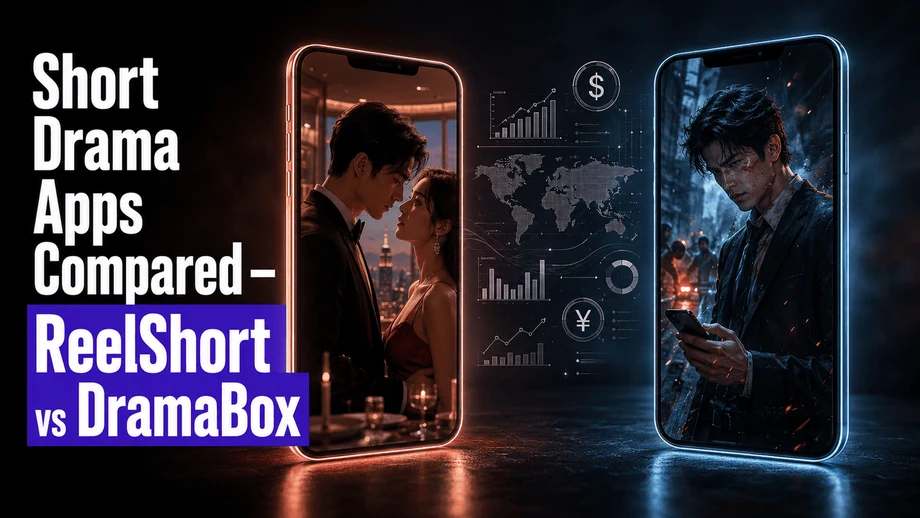
Free apps increased their share of viewing time from 15% to 83% over five quarters. Paid services nevertheless retained much of the spending, with ReelShort and DramaBox together accounting for about half of estimated overseas revenue of $3.6 billion in 2026. Free platforms must turn their growing viewing time into sufficient advertising income to sustain production.
Viewing controls and content rules enter the next phase
Hongguo is changing some of the mechanisms surrounding continued viewing. An October 21 announcement set out a phased removal of its coin feature, ending access for newly activated users from November 1 and scheduling its removal for everyone by December 31. Rest and sleep reminders are also being extended to more users.
China's National Radio and Television Administration introduced dedicated microdrama rules through the Measures for the Development of Microdramas, effective September 1, 2026. The framework sorts productions by budget and subject, with productions in the highest category requiring provincial review and a distribution licence before broadcast. It also includes restrictions on algorithms that encourage addiction.
Hongguo removed 20,426 dramas described as low quality or too similar to other works on October 27. For studios, the combination of content review, audience retention and changing platform incentives affects which projects they can distribute and earn from.
The main dates show audience growth and platform changes advancing together:
- September 2026: Hongguo reached 430 million monthly users, ahead of Doubao's 419 million.
- October 21: Hongguo announced the phased removal of its coin feature.
- October 27: Hongguo removed 20,426 dramas described as low quality or repetitive.
- November 1: Newly activated users stopped receiving the coin feature.
- November 3: QuestMobile's autumn findings were released; a longer report text carries a November 9 date.
- December 31: Hongguo's deadline for removing the coin feature for all users.
Key Points
- Hongguo reached 430 million monthly users in September 2026, becoming ByteDance's second largest app after Douyin.
- Short drama apps added 13.329 billion usage hours compared with a year earlier, about 13.6 times the increase for generative AI apps.
- China's mobile internet audience grew just 0.9%, while average usage time per person increased 6.5%.
- WeChat's Green Bubble reached 156 million monthly users, widening competition beyond standalone drama apps.
- AI tools are reducing some production costs, while contracts, computing bills and promotion expenses shape creators' earnings.
- Hongguo plans to remove its coin feature for all users by December 31 and is expanding rest and sleep reminders.