A 10 minute ride back to the forest
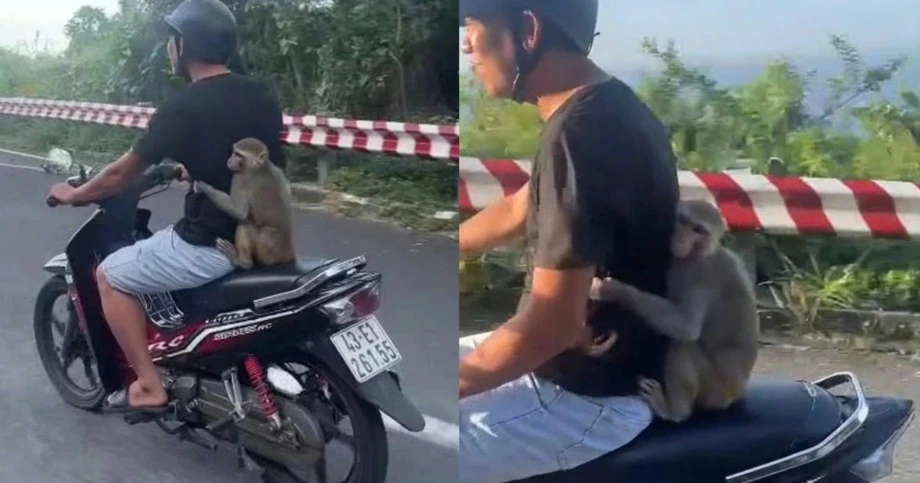
A wild monkey attacked by two dogs near Linh Ung Pagoda on Vietnam's Son Tra Peninsula clung to a motorcyclist during a journey of about 10 minutes before being released into the forest. The rescue on November 3 drew widespread attention after Chau Ngoc Duy, a resident of Son Tra ward in Da Nang, posted a video on November 6.
Contents
- A 10 minute ride back to the forest
- What happened near Linh Ung Pagoda?
- Five places where feeding draws monkeys toward people
- Why a snack can change a monkey's routine
- Patrols target busy hours and weekends
- A reported 70% reduction in monkeys on roads
- Tour operators and rubbish collection are part of the response
- Officials seek clearer rules for enforcement
- Key Points
Duy said the monkey suffered a minor bite wound with a small amount of bleeding. He had been travelling to work at a resort on the peninsula when he encountered the dogs attacking the animal near land used by local people to grow plants.
The clip, lasting just over 20 seconds, shows the monkey sitting behind him, holding tightly around his body and remaining almost motionless. The footage attracted millions of interactions and prompted speculation about why a wild animal appeared so comfortable riding with a person.
Duy's explanation was more immediate: the monkey had just escaped an attack and was frightened. His decision to return it to the forest has also brought attention to a continuing problem on Son Tra, where people feeding wild monkeys draw them toward roads, vehicles and busy visitor areas.
What happened near Linh Ung Pagoda?
Duy said he stopped his motorcycle and drove the dogs away after seeing the monkey in distress. The animal then sought refuge on him and his vehicle. Worried that the dogs would attack again if he left it nearby, he took it toward the forest around his workplace.
Chau Ngoc Duy, the motorcyclist who posted the video, described why he took the monkey away. His words, translated from Vietnamese, were:
The monkey belongs in the forest, so I picked it up, put it on the motorcycle and took it back to the forest to release it.
Duy regularly encounters monkeys around his workplace, where many live. Even so, he was surprised that this animal held on to him and stayed in the same position throughout the journey. He attributed its behaviour to fear after the dogs chased and bit it.
The events unfolded over two dates:
- November 3: Duy encountered the attack near Linh Ung Pagoda, drove the dogs away and carried the monkey by motorcycle to a forest area, where he released it.
- November 6: Duy posted the short video on social media, drawing widespread attention to the encounter.
No veterinary assessment or subsequent update on the monkey's condition was given. Duy described the wound as minor and said the animal was released after the ride.
Five places where feeding draws monkeys toward people
Son Tra's management authorities had already identified repeated contact between visitors and wild monkeys along the peninsula's tourism routes. An official feeding advisory, published on Da Nang's tourism portal on August 24, 2024, described about five locations where people regularly gave monkeys food.
The locations were a mushroom farm area on Le Van Luong Road, Mieu Doi shrine, the slope below the road before Linh Ung Pagoda, the pagoda grounds and the landscaped area in front of the InterContinental resort. Together, they show how feeding was occurring at several stopping points along a route used by visitors.
The Son Tra Peninsula and Da Nang Tourism Beaches Management Board said monkeys frequently came into the pagoda grounds and onto roads between the Le Van Luong and Hoang Sa junction and the resort to find food. Visitors brought fruit, sweets and packaged snacks, often approaching the animals to play with them or take photographs.
Linh Ung Pagoda therefore appears in both the rescue account and the authorities' work to reduce feeding. The dog attack happened near a place where officials were already trying to limit encounters between monkeys and visitors.
Why a snack can change a monkey's routine
The management board warns that regular feeding changes how monkeys look for food. An animal that repeatedly receives something to eat from a person has a reason to return to the same roadside, vehicle or visitor area.
Over time, monkeys can become accustomed to food supplied by people and spend less effort finding it in the forest. Authorities also warn that unsuitable foods, including sweets and packaged products, can harm their health. Their advice covers fruit as well as processed snacks: the request is to stop feeding wild animals altogether.
People face risks during these encounters too. Monkeys accustomed to receiving food may approach closely, grab it or become aggressive when they do not get it. Bites and other attacks are among the dangers identified by the management board.
The monkey in Duy's video approached him after a dog attack, according to his account. The wider management concern involves repeated feeding that brings animals toward people day after day. Both situations put wild animals in close contact with human activity, but the immediate reasons for those encounters are different.
Patrols target busy hours and weekends
Phan Minh Hai, deputy head of the Son Tra Peninsula and Da Nang Tourism Beaches Management Board, said staff work with Son Tra ward authorities to patrol roads and remind visitors not to feed monkeys. Busy visitor periods receive extra attention.
The patrol schedule includes 7:30 a.m. to 10:30 a.m. and 3 p.m. to 5 p.m., with additional activity at weekends. The board has also established a volunteer group whose Vietnamese name translates as the Son Tra Monkey Protection Squad, supporting staff at locations where feeding occurs.
Eleven information boards explain the harm caused by feeding monkeys and other wildlife. Other measures include prohibition signs, roadside banners, loudspeaker messages and displays of pictures at events along the coast. These efforts take the warning beyond the places where staff can stand and speak to visitors directly.
Hai said the work has produced uneven results. Some visitors continue to lure monkeys closer for photographs, videos and interaction despite the signs. Crowds at popular attractions make it harder for staff to stop every incident.
A reported 70% reduction in monkeys on roads
Nguyen Qua, deputy director of the Son Tra ward Public Service Provision Centre, said the number of monkeys coming onto roads had fallen by about 70% after staff increased public reminders and intervention at feeding locations.
The centre maintains patrols in both the morning and afternoon, coordinating with other local bodies to detect and stop feeding. Qua said it would continue working with the peninsula management board and ward police.
A reduction of 70% would mean roughly 30 roadside appearances remaining for every 100 previously observed, if counted on the same basis. Qua did not provide the original count, the observation period or the counting method, so the figure is best understood as the centre's reported assessment of the change.
Hai's description of uneven progress adds useful detail to that assessment: fewer monkeys may be coming onto roads while feeding still persists at particular locations and during busy periods. Staff are continuing to focus on places where violations recur.
Tour operators and rubbish collection are part of the response
The management board has asked travel companies, tourism associations, guides and transport providers to tell visitors not to feed wildlife. Schools and local authorities are also being asked to help prevent feeding during visits by pupils, students and residents.
The request matters before a trip begins. Visitors who arrive carrying fruit or snacks specifically for monkeys may already expect a close encounter. Guides, drivers and organisers can pass on the restrictions before groups reach the pagoda or stop along forest roads.
Cleanups address another source of food. The board has called on community groups, clubs, volunteers, residents and tourists to remove rubbish from roads and stopping places. Its regular Clean up Son Tra programme forms part of that effort.
Food left behind can keep attracting monkeys even after visitors have gone. Removing it supports the same practical goal as asking people to stop handing food to animals: reducing the reasons for monkeys to gather around human activity.
Officials seek clearer rules for enforcement
The August 2024 advisory said the management board had asked relevant agencies to consider penalties for feeding monkeys. Hai has since described plans to review the legal basis for action and make the responsibilities and powers of participating agencies clearer.
His proposed work also includes management plans for locations with a high risk of repeated feeding, greater use of technology for monitoring and regular public information campaigns. The measures described centre on prevention, reminders and coordination, alongside work on the rules for handling violations.
For visitors, the board's instruction is straightforward: do not provide food to wild animals, including fruit and packaged snacks. For the agencies involved, the task includes deciding who can intervene, what action they can take and how different teams will work together.
Duy's encounter ended with the monkey back in the forest. The continuing work along Son Tra's roads aims to reduce the repeated close contact that draws wild animals into visitor spaces, while keeping the peninsula accessible to people.
Key Points
- Chau Ngoc Duy said he rescued a monkey from two dogs near Linh Ung Pagoda on November 3 and released it after a motorcycle ride of about 10 minutes.
- The monkey had a minor bite wound with a small amount of bleeding, according to Duy.
- A video posted on November 6 showed the animal sitting behind him and holding tightly around his body.
- An official advisory identified about five regular feeding locations along Son Tra's tourism route.
- Authorities use patrols, volunteers, 11 information boards and cleanups to discourage feeding and remove food waste.
- A Son Tra ward official reported about 70% fewer monkeys coming onto roads after increased intervention, without giving detailed counts or a measurement period.
- The management board is seeking clearer enforcement arrangements while urging all visitors to stop feeding wildlife.