Five years to move beyond vehicle assembly
Pakistan is proposing $6 billion in automotive exports over five years, compared with about $200 million in the last fiscal year, under a policy that ties manufacturer incentives to overseas sales and domestic production. Announced in Islamabad on November 7, 2026, the package also promises gradual reductions in vehicle costs, tax concessions for electric vehicles and tighter consumer protections.
Contents
- Five years to move beyond vehicle assembly
- Export rebates would come with manufacturing conditions
- How the government plans to bring prices down
- Three proposed tax rates for electric vehicles
- Who would pay for the incentives?
- Larger loans and support for charging stations
- Booking payments, audits and 45 safety standards
- Parts makers warn of pressure on domestic jobs
- How the proposal reached the cabinet stage
- Key Points
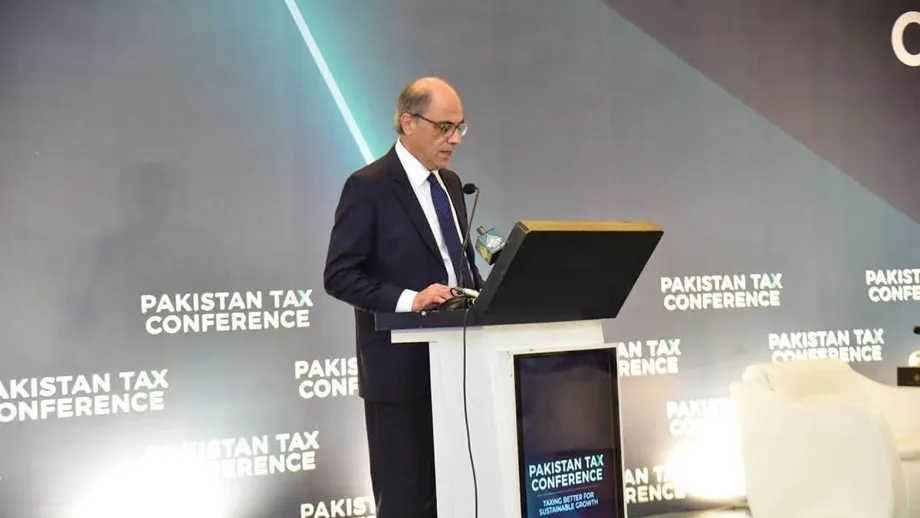
Prime Minister Shehbaz Sharif has approved the final draft, which still requires Federal Cabinet consideration and formal approval. Haroon Akhtar Khan, the prime minister's adviser on industries and production, presented the proposals alongside Information Minister Attaullah Tarar. The proposed electric vehicle sales tax concessions also require International Monetary Fund approval.
The export target would require annual sales abroad averaging $1.2 billion, six times the approximately $200 million recorded in the last fiscal year. Spread evenly across five years, exports at the recent annual level would total $1 billion, compared with the government's proposed $6 billion goal.
Akhtar said the government wanted to change an industry that has relied heavily on protection from imports while delivering limited export growth. Most automotive exports currently consist of parts rather than finished vehicles made by local assemblers.
Akhtar, explaining why the government wants stronger conditions attached to support for manufacturers, said:
We have been making policies for 10 years, but our exports have not increased,
The policy rests on six priorities: affordability, exports, local production, vehicle safety, electric mobility and transparency. Its central bargain is that manufacturers would receive help to lower costs and sell abroad, while facing penalties if they fail to meet production and export requirements.
Export rebates would come with manufacturing conditions
Manufacturers meeting the policy's conditions would receive a 5 percent rebate through the Drawback of Local Taxes and Levies scheme, known as DLTL. The government also proposes an additional 10 percent incentive linked to annual export growth.
A drawback refunds eligible taxes or levies associated with producing goods for export. The additional incentive is tied to increased export performance, making growth in overseas sales part of the proposed reward system.
Akhtar said companies would have to meet both export and local manufacturing targets to qualify for rebates. Manufacturers missing their obligations would face penalties, and failure to meet domestic production requirements would also cost them export support.
Localisation means making more of a vehicle and its components inside Pakistan. The government wants manufacturers to develop domestic suppliers rather than depend mainly on imported finished vehicles or assembly kits. That would give Pakistani businesses more work producing the parts that go into each vehicle.
Tarar, the information minister, linked that requirement directly to investment and employment:
Unless vehicles are manufactured locally and exports begin, the country will not reap the full benefits of this sector in terms of investment and employment,
The proposal therefore asks manufacturers to pursue two changes together: sell more outside Pakistan and keep more production activity inside the country. Export receipts would bring in foreign currency, while domestic component production would retain more manufacturing income locally.
How the government plans to bring prices down
Import duties on automotive raw materials, components and completely knocked down kits would fall gradually over five years. These kits contain parts shipped into Pakistan for assembly. Akhtar also described reductions affecting completely built vehicles, meaning finished vehicles imported ready for sale.
The National Tariff Policy provides the broader approach: reduce the cost of imported materials and intermediate goods so manufacturers can produce finished products more cheaply. For buyers, the government's intended result is lower showroom prices, particularly outside the luxury segment.
Vehicles with engines below 1,300cc are a particular priority for Shehbaz Sharif, according to Akhtar. Engine capacity, measured in cubic centimetres, describes the size of a petrol or diesel engine. Smaller vehicles are central to the policy's stated focus on middle income and lower income households.
The announcement follows the October draft price proposals, when preliminary industry estimates suggested reductions exceeding 20 percent for some models. Those estimates depended on vehicle technology and tax treatment. The November announcement promised gradual reductions rather than a confirmed schedule of new retail prices.
Akhtar said luxury vehicles would not receive the same price benefits. The government has yet to publish the detailed tariff schedule, company targets, penalty amounts or an implementation date. Those details will determine how quickly the proposals reach factories and dealerships.
Three proposed tax rates for electric vehicles
Qualifying electric vehicles priced below $50,000 would receive different sales tax rates depending on their technology. The proposed structure is:
- 1 percent for fully electric vehicles.
- 6 percent for range extended electric vehicles.
- 9 percent for plug-in hybrids.
Fully electric vehicles run on batteries charged with electricity. Range extended electric vehicles use an electric motor for propulsion and carry an engine that generates electricity to extend driving distance. Plug-in hybrids combine a battery that can be charged externally with an engine that can also help power the vehicle.
Qualifying vehicles below the price threshold would also be exempt from federal excise duty, withholding tax and capital value tax. More expensive electric vehicles would remain under the normal tax regime.
Akhtar, referring to the proposed sales tax concessions and Pakistan's economic reform programme, said:
This is subject to the approval of the IMF,
Pakistan's programme with the lender requires fiscal discipline and stronger revenue collection. Reducing taxes on one category of vehicles therefore creates a budget question: how to encourage electric transport while maintaining government income.
The policy treats hybrids and range extended vehicles as part of a transition towards fully electric transport. Its stated target is for electric vehicles to account for 30 percent of new vehicles by 2030.
Who would pay for the incentives?
An automotive development levy on vehicles powered by internal combustion engines above 1,000cc would help finance the package. Vehicles with engines of 1,000cc or less would be exempt, according to Akhtar.
Tarar also said ordinary petrol vehicles below 1,000cc would remain outside the proposed changes affecting that segment. The levy exemption and the affordability priority use different engine limits: the exemption reaches 1,000cc, while the prime minister's price reduction focus covers vehicles below 1,300cc.
Revenue from the levy would support electric vehicle incentives, export rebates, research and development, and local automotive parts manufacturers. Akhtar said the government was seeking a neutral revenue effect, collecting money from larger conventional vehicles to fund concessions elsewhere.
The policy's funding design matters to motorists as well as manufacturers. Buyers of qualifying electric vehicles would receive tax support, while buyers of conventional vehicles above the exemption threshold would help finance it through the levy.
Tarar argued that reducing petroleum imports could ease pressure on both the economy and household finances. International oil price increases raise Pakistan's import bill and expose consumers to higher fuel costs. Electric transport would shift some travel away from that dependence.
Larger loans and support for charging stations
Electric vehicle financing would rise from Rs3 million to Rs10 million, while repayment periods would extend from three years to five. The proposed ceiling is more than three times the current amount cited at the announcement, allowing eligible buyers to borrow a larger share of a vehicle's price.
A longer repayment period spreads the principal across more instalments. A household's actual monthly payment would also depend on the amount borrowed and the lender's interest rate and conditions.
Charging equipment would receive a proposed sales tax rate of 1 percent and exemption from customs duty. The government also plans financial support to bridge the gap between the cost of establishing charging stations and their initial commercial returns.
Charging businesses face a practical problem during the early stages of adoption: too few electric vehicles can mean too few paying customers. Drivers, meanwhile, need confidence that charging is available before they buy. The proposed support would help stations operate while demand develops.
Electric motorcycles and scooters are another major focus. Akhtar cited sales of 240,000 electric two wheelers in fiscal 2025/26, compared with 60,000 in fiscal 2024/25, following the New Energy Vehicle Policy 2025-30. Those figures represent a fourfold increase.
Tarar highlighted growing use of electric scooters by girls and women travelling to schools, colleges and offices. He also pointed to potential carbon credit benefits. Carbon credits can give a financial value to qualifying reductions in emissions, although access depends on the rules of the relevant programme.
Booking payments, audits and 45 safety standards
Manufacturers would be prohibited from collecting more than 20 percent of a vehicle's price as an advance booking payment. For a vehicle priced at Rs5 million, that would limit the initial booking payment to Rs1 million.
The government presented the cap as part of its response to excessive advance demands and additional charges commonly called on-money. Third party audits would also be introduced to improve accountability and transparency.
Vehicle safety would be addressed through 45 additional standards based on the United Nations WP.29 framework. WP.29 is the international forum through which countries develop common vehicle regulations. The proposed standards would cover locally manufactured vehicles and imported used vehicles.
Akhtar cited defective brakes, tyre failures and nonfunctional seat belts among the safety problems the government wants to address, particularly in imported used vehicles. These measures would add obligations concerning the condition and safety of vehicles alongside the policy's production and export requirements.
For consumers, the package therefore reaches beyond the purchase price. It would limit how much money manufacturers can demand at booking and expand the standards vehicles must meet.
Parts makers warn of pressure on domestic jobs
The Pakistan Association of Automotive Parts and Accessories Manufacturers urged the prime minister on October 24 to review the draft Auto Policy 2026-31. The association warned that lower duties on finished vehicles and automotive parts, together with concessions for new energy vehicles, could damage domestic manufacturing and employment.
The disagreement exposes a practical tension within the policy. Cheaper imported materials can reduce production costs, and cheaper finished imports can increase competition. Domestic suppliers, however, may lose business when imported components become more attractive to assemblers.
Mandatory local production targets are the government's proposed response. By tying rebates to domestic manufacturing, it wants manufacturers to use the tariff changes to become more competitive while continuing to develop Pakistani suppliers.
Pakistan's market now includes 16 car or sport utility vehicle manufacturers and about 100 manufacturers of motorcycles and other vehicles with two wheels, according to Akhtar. Established Japanese brands, including Suzuki, Toyota and Honda, face growing competition from Chinese manufacturers and businesses offering electric vehicles and different hybrid technologies.
Tarar criticised decades of protection through high import duties, saying the support had failed to produce the expected progress in innovation, added value and vehicle quality. The new proposal would replace some of that protection with lower tariffs and more explicit production obligations.
How the proposal reached the cabinet stage
Officials said stakeholder consultations, technical data and comparisons with policies in other countries shaped the final draft. The process has also drawn objections from parts suppliers concerned about the pace and scope of tariff reductions.
- October 20, 2026: Shehbaz Sharif approved an earlier draft for further consultation and review, according to the parts manufacturers association's chairman.
- October 22: Preliminary price estimates outlined possible savings for several vehicle categories as the draft remained under review.
- October 24: The parts manufacturers association urged the prime minister to reconsider provisions it said threatened domestic production and jobs.
- November 7: Akhtar and Tarar presented the proposals in Islamabad after the prime minister approved the final draft for submission to the Federal Cabinet.
The next step is cabinet consideration, followed by the formal measures needed to put the policy into effect. For manufacturers, the decisive rules will be the tariff reductions and the production targets attached to incentives. For households, the practical results will appear in vehicle prices, borrowing terms, charging access and booking conditions.
Key Points
- Pakistan proposes $6 billion in cumulative automotive exports over five years, against about $200 million in the last fiscal year.
- Export rebates would depend on manufacturers meeting overseas sales and local production targets.
- Proposed electric vehicle sales tax rates are 1 percent, 6 percent and 9 percent, depending on technology and subject to IMF approval.
- A levy on conventional vehicles above 1,000cc would help fund incentives and industry support.
- Electric vehicle financing would rise to Rs10 million, with repayment periods extended to five years.
- The policy proposes a 20 percent booking payment cap, independent audits and 45 additional safety standards.
- The final draft still requires Federal Cabinet approval before implementation.