A seasonal journey draws attention across Sri Lanka
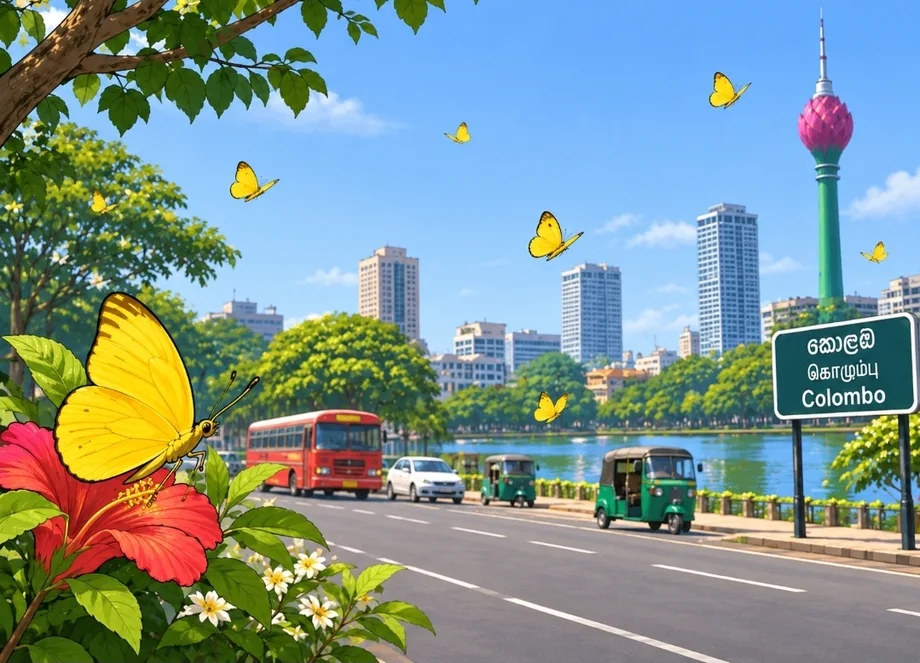
Thousands of yellow and white butterflies moving through Colombo, Galle and Ratnapura have brought a familiar natural cycle into public view. Research published in 2024 offers a striking explanation for such journeys: observations at 60 locations identified three main migration directions, including a route pointing from southeastern Sri Lanka towards the northwest.
Contents
- A seasonal journey draws attention across Sri Lanka
- Why rain brings butterflies into the skies
- What researchers recorded at 60 locations
- How long could the Kumana journey take?
- Why particular trees and roadside plants matter
- Why Sri Pada became part of the story
- Some butterflies also cross the sea
- Weather shapes flight, while disaster claims lack a scientific basis
- Why a spectacular swarm can accompany a longer decline
- Gardens and habitat restoration offer practical help
- Key Points
The study, involving Professor Kapila Dissanayake of Sabaragamuwa University, estimated that migrating Albatross butterflies fly at about 11 kilometres per hour. At that speed, a journey covering the roughly 280 kilometres between Kumana and Wilpattu national parks could take several days, depending on feeding stops and weather.
Videos and photographs of the latest movements have prompted questions about where the butterflies are going, whether they are travelling towards Sri Pada and whether their appearance signals dangerous weather. Butterfly specialists explain the spectacle through seasonal rainfall, fresh plant growth and a rise in breeding.
Lemon Emigrant, Mottled Emigrant, Lesser Albatross and Common Albatross butterflies are among the species associated with these movements. Their journeys connect places where caterpillars can feed, adults can find nectar and females can lay eggs.
Why rain brings butterflies into the skies
Sri Lanka's butterfly movements are closely linked to the monsoons and the periods between them. A field study by the University of Peradeniya's Department of Zoology identified a main migration period from October to December and a smaller movement during March and April.
Rain encourages plants to produce tender leaves. Those leaves feed caterpillars, which later develop into adult butterflies. When suitable plants become abundant, more butterflies can survive and reproduce, creating the large numbers that people notice crossing roads, gardens and towns.
Butterfly specialist Himesh Jayasinghe has explained that the southwest, northeast and intervening seasonal rains help trigger this breeding cycle. As butterfly numbers increase, competition grows for suitable places to lay eggs. Movement allows them to find fresh vegetation elsewhere, with winds helping shape their direction.
The former president of the Butterfly Conservation Society of Sri Lanka described how rain encourages thora plants to sprout in dry zone areas such as Anuradhapura and Polonnaruwa. Lemon Emigrant and Mottled Emigrant butterflies use these plants for breeding. She also described seeing both species flying from east to west through Borella in Colombo.
What researchers recorded at 60 locations
The research published in the scientific journal Taprobanica in 2024 examined Albatross butterfly movements observed between March 6 and April 1, 2023. Observers recorded flight direction and the average number of butterflies passing each location per minute.
Lakshman Kumara, secretary of the Butterfly Conservation and Research Group of Sri Lanka, described the sightings that prompted the coordinated effort:
We first observed a large group of butterflies swarming over Talawakele and Kandy on March 6, 2023.
Information gathered across 60 locations revealed three main directions: southeast to northwest, east to west in northern Sri Lanka, and north to south in the east. At Kebiliththa in Kumana National Park, several hundred Albatross butterflies were observed flying northwest, suggesting that the surrounding area could be a breeding location.
The research and earlier observations provide a timeline for understanding the latest spectacle:
- 1949: Butterfly specialist L.G.O. Woodhouse recorded 69 species taking part in migration.
- November 17, 2019: Accounts described a butterfly population boom, including Lemon Emigrants around Thanamalwila and sightings in Colombo.
- March 6 to April 1, 2023: Observers gathered the records used to map Albatross migration directions at 60 locations.
- 2024: The migration study was published in Taprobanica.
How long could the Kumana journey take?
Researchers estimated flight speed by timing how long 10 individual butterflies took to travel 10 metres at each observation location. Their average of about 11 kilometres per hour provided a way to calculate a possible journey time between Kumana and Wilpattu.
The direct distance through the central mountains is approximately 280 kilometres. A butterfly flying for eight hours, from 8 a.m. to 4 p.m., at the estimated average speed would cover 88 kilometres in a day. Dividing 280 by 88 gives slightly more than three days of travel.
Feeding stops, headwinds and other difficult weather would extend that schedule to four days or more, according to the researchers. The widely repeated description of a journey taking three to four days comes from this calculation, rather than continuous tracking of an individual butterfly between the two parks.
Wind and vegetation also help explain why people in different parts of the island see butterflies travelling in different directions. The northwest route was a major finding, alongside the other two directions recorded during the study.
Why particular trees and roadside plants matter
Butterflies need more than flowers. Adult butterflies commonly drink nectar, while caterpillars need the leaves of particular host plants. A host plant is a plant on which a butterfly lays eggs and its caterpillars can feed.
Albatross butterflies use weera trees, identified as Drypetes sepiaria. Emigrant butterflies use plants including thora and ehela. The availability of these plants helps determine where the next generation can grow.
Butterfly guidebook author and environmental researcher Rajika Gamage has linked the decline of the Mottled Emigrant to the loss of thora plants, including Cassia tora and related species. These plants once grew commonly along roadsides and in open spaces, providing breeding sites close to where people live.
Rainfall locally called Beli Thora Wessa supports the growth of vegetation associated with the migration cycle. When the right plants produce fresh leaves, butterflies gain breeding opportunities. When those plants disappear, a place with plenty of flowers may still offer little food for caterpillars.
Gamage has also noted that weera and ehela trees remain available in many places, including landscaped areas. Different butterfly species can therefore experience different fortunes, depending on which plants survive around them.
Why Sri Pada became part of the story
Sri Pada, also known as Adam's Peak and Samanala Kanda, or Butterfly Mountain, has a longstanding association with migrating butterflies. Historical sightings around the mountain between December and March overlapped with the pilgrimage season, helping connect butterfly movements with religious tradition.
Some butterflies gather at elevated landmarks such as Sri Pada and Kirigalpoththa to find mates. Scientists call this behaviour hill-topping. A summit acts as a meeting place where butterflies have a better chance of encountering a breeding partner.
Dissanayake has suggested that species historically associated with journeys towards Sri Pada may have been different from those dominating the recent Albatross observations, and that their populations may have dwindled. The 2023 observations primarily mapped movement towards the northwest, while earlier naturalists also described butterflies flying towards and up the mountain.
The seasonal calendar also varies across descriptions. The University of Peradeniya field study identified peaks in October to December and March to April; Gamage has described a broader December to May movement between northern and southern dry zones. Historical accounts recalled conspicuous clouds from February to April. Species, location and the period observed all matter when describing the migration.
Some butterflies also cross the sea
The latest yellow and white movements have been described by the former Butterfly Conservation Society president as migration within Sri Lanka. The island also lies along routes used by other butterflies travelling over the sea.
Crimson Rose butterflies have been recorded crossing the Gulf of Mannar from Dhanushkodi in India towards Mannar in Sri Lanka. These movements have been associated with monsoon winds and population increases after rain breaks a dry spell.
Butterfly specialist Michael van der Poorten has also described movements from Mannar westwards out to sea and from Trincomalee eastwards out to sea. Those observations show the range of directions that butterflies can take around the island's coasts.
Species composition can vary sharply from place to place. During the November 2019 boom, Gamage estimated that Lemon Emigrants accounted for about 70% of the butterflies he was observing around Thanamalwila. That local estimate gives a useful picture of one event; a comparable count for the latest sightings has not been published in the accounts describing them.
Weather shapes flight, while disaster claims lack a scientific basis
Butterflies respond to atmospheric pressure, humidity, temperature and wind. A shift in monsoon winds can alter the direction they travel, while rain changes the plants available for breeding and feeding.
Social media speculation has connected the latest swarms with a possible cyclone or another natural disaster. Predictions of disasters based on mass butterfly migration have no established scientific basis. The ecological explanation centres on rainfall, population growth, food and breeding sites.
The overlap can be easy to misunderstand. The transition between monsoons brings changing winds and rainfall, and cyclones can also develop during unsettled seasonal weather. Butterflies are active within that same changing environment, responding to conditions that affect their survival.
For residents watching streams of butterflies pass their homes, the immediate explanation is a seasonal movement of living animals seeking suitable conditions. Decisions about dangerous weather belong with meteorological forecasts and official warnings.
Why a spectacular swarm can accompany a longer decline
Gamage and other butterfly specialists describe a decline in both migration numbers and the variety of species involved compared with earlier decades. Historical accounts recalled large clouds of butterflies becoming much less conspicuous around the middle of the 1980s, with deforestation and pollution among the pressures identified.
Irregular rainfall creates another risk. If eggs hatch before host plants have produced enough suitable leaves, caterpillars can face a shortage of food. Climate change can disrupt the timing between rain, plant growth and breeding.
Invasive Guinea grass has spread into open areas where thora and other useful plants once grew. Its expansion can remove both places to lay eggs and flowering plants that feed adults. Lantana camara, known locally as gandapana, also spreads through disturbed habitats.
Lantana presents a more complicated picture because adult butterflies use its flowers for nectar. Gamage estimated that about 70 out of 100 butterfly photographs he examined showed butterflies feeding on such invasive flowers. His observation illustrates how adults can depend on flowers in an altered landscape while their caterpillars still need suitable host plants.
Large numbers in a particular season can follow a local breeding boom. Van der Poorten has described how butterfly populations can recover quickly when rain breaks a drought. The longer conservation concern is whether enough suitable habitat remains to support repeated generations and migrations.
Gardens and habitat restoration offer practical help
Gamage has encouraged residents to learn which butterflies occur in their area and grow the host plants those species need. A useful butterfly garden provides both leaves for caterpillars and nectar for adults, rather than flowers alone.
Habitat restoration proposals include controlling invasive plants, restoring native vegetation and protecting breeding areas from clearance. Replacing lost host plants matters especially in roadside spaces, gardens and other open areas where emigrant butterflies previously found places to reproduce.
Coordinated observations also have a practical role. The 2023 study drew together records from many locations, and Butterfly Conservation Society members were already sharing sightings for analysis during the 2019 boom. Recording species, direction, place and date can help researchers compare movements across seasons.
The latest spectacle brings those needs into view: rain starts a chain of plant growth and breeding, but the journey depends on suitable vegetation along the way. Protecting that vegetation supports both the butterflies people see today and the generations that follow.
Key Points
- Thousands of yellow and white butterflies have been seen moving through Colombo, Galle, Ratnapura and other areas.
- Seasonal rain encourages host plant growth and breeding, with major migration periods identified in October to December and March to April.
- A study published in 2024 used observations from 60 locations and identified three main migration directions.
- The estimated Kumana to Wilpattu journey covers about 280 kilometres and could take several days, depending on stops and weather.
- Hill-topping helps explain butterfly gatherings at elevated places such as Sri Pada.
- Disaster predictions based on butterfly swarms have no established scientific basis.
- Irregular rainfall, habitat loss and invasive plants threaten the plants butterflies need to reproduce.