A growth target tied to prices, jobs and housing
Vietnam's National Assembly approved a socioeconomic development plan for 2027 on November 7, 2026, setting targets of at least 10% economic growth, GDP per person of about $6,100 and consumer price inflation of around 4.5%. The plan also seeks to complete more than 176,000 homes for social housing, rental accommodation and workers during the year.
Contents
- A growth target tied to prices, jobs and housing
- What the main numbers mean
- How the plan developed and what comes next
- Keeping inflation under control while expanding credit
- Finding investment and making it count
- Different regions receive different growth goals
- Railways, airports and reliable energy
- Businesses and technology are expected to drive productivity
- Housing, schools and the test of daily life
- Key Points
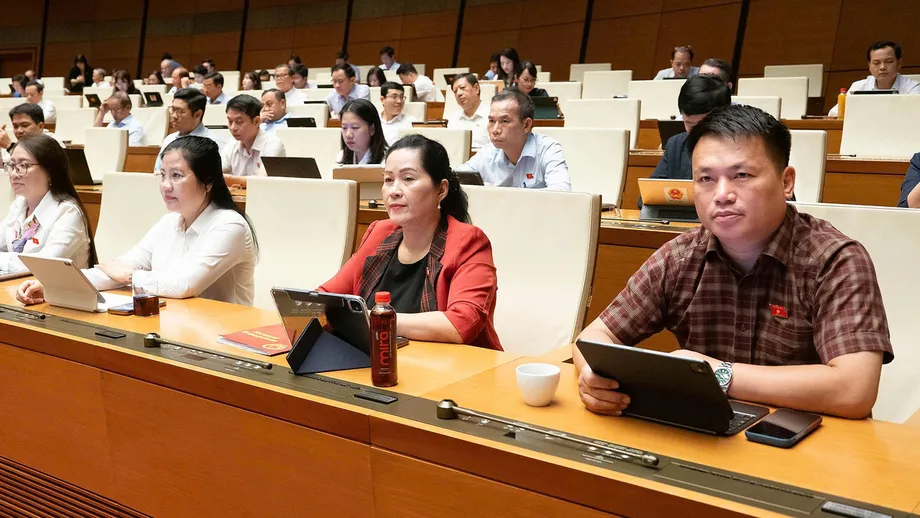
The resolution passed with 467 of the 469 participating deputies voting in favor. Those votes represented 93.40% of the full National Assembly. The two percentages use different starting totals: approximately 99.6% of deputies taking part supported the resolution, while 93.40% refers to all members of the legislature.
Finance Minister Ngo Van Tuan presented the government's explanatory and revised report on behalf of the prime minister before the vote in the 16th National Assembly. The plan contains 45 principal indicators and 11 groups of priority tasks, linking faster growth to economic stability, higher productivity and improvements in daily life.
The government is being asked to expand investment and business activity while keeping essential goods available and limiting pressure on prices. Ministries and local authorities will receive responsibilities tied to deadlines and measurable results. Growth benefits are also meant to reach different regions and population groups fairly, alongside environmental protection, better jobs and higher incomes.
What the main numbers mean
The investment target is equivalent to 36% to 38% of gross domestic product, or GDP, the value of goods and services produced within the economy. Put simply, the plan seeks total investment of between 36 and 38 units for every 100 units of economic output. This includes investment across the economy, rather than government spending alone.
Labor productivity is targeted to rise by 8.6%. Productivity measures how much output workers generate. Better machinery, skills, management and technology can help people produce more without simply working longer hours. The resolution places those improvements at the center of its proposed growth model.
Other targets include 1.18 million operating businesses and unemployment below 4% among people of working age in urban areas. Commercial electricity sales are expected to grow by an average of 10%, adding a concrete requirement for the energy system as factories, offices and households use more power.
The $6,100 GDP per person target divides national economic output by the population. It is a measure of the size of the economy relative to its population, rather than a wage or a payment to each resident. Household gains will also depend on employment, earnings, living costs and access to services, which the plan addresses through separate tasks.
How the plan developed and what comes next
The 2027 targets follow Conclusion No. 106-KL/TW, dated October 15, 2026, from the fourth meeting of the 14th Party Central Committee. To Lam, identified as Communist Party general secretary and state president, signed the conclusion on behalf of the committee. It set out proposed targets including GDP growth of at least 10%.
The National Assembly resolution turns that policy direction into an annual development plan. Its implementation is also intended to support the broader socioeconomic objectives for 2026 to 2030.
- October 15, 2026: Conclusion No. 106-KL/TW sets out proposed economic targets for 2027.
- November 7, 2026: The National Assembly approves the annual plan, including the growth target of at least 10%.
- Following approval: The Ministry of Finance and other authorities are instructed to prepare a government resolution containing implementation measures.
- During 2027: Agencies and localities are to work toward the investment, employment, housing and other annual targets.
- Before the 2027 to 2028 school year: Authorities are to ensure students receive textbooks on time.
The next administrative step is the government's action resolution, which must translate the national objectives into specific measures. No publication date was given for that document. Sector and local growth scenarios are to be updated regularly so authorities can respond when economic conditions change.
Keeping inflation under control while expanding credit
Ngo Van Tuan identified energy prices, raw material costs, transport expenses and unpredictable monetary policies in major economies as pressures on Vietnam's economic management. These costs matter because higher fuel or shipping bills can work their way into the prices of food, manufactured goods and other everyday purchases.
The government plans to adjust interest rates and exchange rates flexibly as conditions change. The resolution also calls for lower lending rates and for credit to flow toward production, business activity and priority sectors, while authorities monitor lending in areas carrying greater financial risks.
Interest rates affect the cost of borrowing, while exchange rates affect how much imported goods cost in Vietnamese currency. Managing both alongside rapid growth requires attention to inflation and financial stability. The plan therefore pairs support for business lending with controls on credit growth and measures to address weak financial institutions.
Fuel taxes, fees and charges may be adjusted according to market developments and the state budget's capacity. The government will assess existing support policies before deciding which measures remain suitable for 2027. Authorities are also tasked with forecasting prices, maintaining supplies of essential goods and choosing appropriate adjustments for goods and services whose prices the state manages.
Finding investment and making it count
The National Assembly calls for higher budget revenue, savings in expenditure, especially routine spending, and the use of bonds and official development assistance. Official development assistance, or ODA, is financing provided through government and development partners, often on terms intended to support development projects.
Tax reform is intended to create a more modern and transparent system, bring more taxable activity into the revenue base and secure lasting income for the budget. Authorities are also instructed to tackle revenue losses and transfer pricing practices that can shift taxable profits between related businesses.
Foreign investment is another proposed source of capital. The resolution calls for policies allowing greater foreign ownership in sectors that do not affect national security, together with the development of markets that provide financing over medium and long periods.
Public investment will face a stronger focus on results. Authorities are to speed up disbursement, allocate funds according to completed outputs and move capital from places spending slowly to those using it effectively. The plan also seeks improvement in the incremental capital output ratio, a measure of how much additional investment is needed to generate additional output. A lower ratio means more output is being obtained from each unit of investment.
Different regions receive different growth goals
Hanoi has a regional growth target of 11.1%, Ho Chi Minh City 10.4%, Quang Ninh 12% and Hai Phong 13%. These figures refer to gross regional domestic product, or GRDP, which measures economic output within a province or city rather than across the whole country.
Hai Phong's target is 2.6 percentage points above Ho Chi Minh City's target, using the stated figures of 13% and 10.4%. Other local targets fall below the national threshold of 10%: Son La is assigned 9.3%, Quang Tri and Quang Ngai 9%, and Dong Thap 8.7%.
The national goal therefore comes with different expectations across local economies. Each sector and locality is expected to prepare growth scenarios, tasks and deliverables rather than rely on the national headline alone. The government also says the gains should be shared fairly across regions and population groups.
Administrative changes are part of that delivery effort. The resolution calls for effective operation of local government at two levels, clearer delegated powers and resources that match responsibilities, especially at commune level. It also seeks fewer unnecessary reports and meetings, simpler business procedures and action against officials who avoid or pass on responsibility.
Railways, airports and reliable energy
The infrastructure priorities include the Lao Cai to Hanoi to Hai Phong railway, the North to South high speed railway, international rail connections and urban rail. Road priorities include the eastern and western North to South expressway corridors, important routes running east to west, coastal roads and ring roads connecting regions.
Long Thanh and Gia Binh international airports are also named for faster progress. At the same time, the National Assembly calls for an end to wasteful local investment in airports, seaports, data centers and free trade zones pursued simply because other localities are building them.
The plan places those two instructions together: advance strategic projects while improving the selection of investments. Authorities are also told to resolve projects that have remained stalled for long periods, allowing resources tied up in unfinished developments to be used more effectively.
Energy instructions are especially direct. The resolution requires adequate electricity and petroleum supplies in all circumstances, a national energy reserve strategy and faster work on power generation, transmission grids and solar projects under approved plans. Meeting the 10% target for growth in commercial electricity sales will require attention to both generating power and delivering it where demand rises.
Businesses and technology are expected to drive productivity
Private businesses, particularly small and medium enterprises, receive a central role in the development plan. Authorities are instructed to help household businesses convert into enterprises and support the emergence of larger domestic private companies. The plan also calls for restructuring state enterprises, selling shares and reducing state holdings where appropriate.
Banking reforms include modernization, action on bad loans and weak credit institutions, and measures against cross ownership. Cross ownership occurs when businesses or financial institutions hold stakes in one another, creating connections that can make financial risks harder to track. The resolution also calls for effective operation of Vietnam's international financial center.
Digital infrastructure priorities are specific: nationwide 5G coverage, preparations for 6G, internet delivered through satellites in low Earth orbit, additional submarine fiber optic cables and effective operation of the National Data Center. Cybersecurity and national control over data are included alongside the expansion of connectivity.
Science, innovation and digital transformation are intended to support the 8.6% productivity target. Trade measures seek more diverse export and import markets, greater value added in production and deeper participation in regional and global supply chains. The resolution also calls for action on trade and tariff issues, import deficits and reliance on a small number of markets.
Housing, schools and the test of daily life
More than 176,000 completed homes are targeted across social housing, rental housing and accommodation for workers in 2027. For people living near industrial areas or facing high housing costs, completed homes are a more immediate measure of progress than the national growth rate.
Education tasks include addressing shortages of schools, classrooms and teachers, especially in cities, industrial zones, disadvantaged areas, border communities and islands. Authorities must also ensure textbooks are available before the 2027 to 2028 school year begins.
The resolution calls for changes in teaching, learning, examinations and education management, including less examination pressure. Digital education, science and technology learning, gradual use of English as a second language in schools and digital learning records are among the priorities.
Vietnam's plan connects economic expansion with healthcare, social protection, culture and environmental protection. Its practical test will be whether investment produces functioning infrastructure, businesses create jobs, schools have adequate resources and households see better living conditions while prices remain manageable.
Key Points
- The National Assembly approved the 2027 plan on November 7, 2026, with 467 of 469 participating deputies voting in favor.
- Targets include GDP growth of at least 10%, GDP per person of about $6,100 and consumer price inflation of around 4.5%.
- Total investment is targeted at 36% to 38% of GDP, with labor productivity growth of 8.6%.
- Priorities include strategic railways and airports, reliable energy supplies, private business development and nationwide 5G coverage.
- The plan seeks more than 176,000 completed homes and urban unemployment below 4% among people of working age.
- The Ministry of Finance and other authorities must prepare detailed government implementation measures.