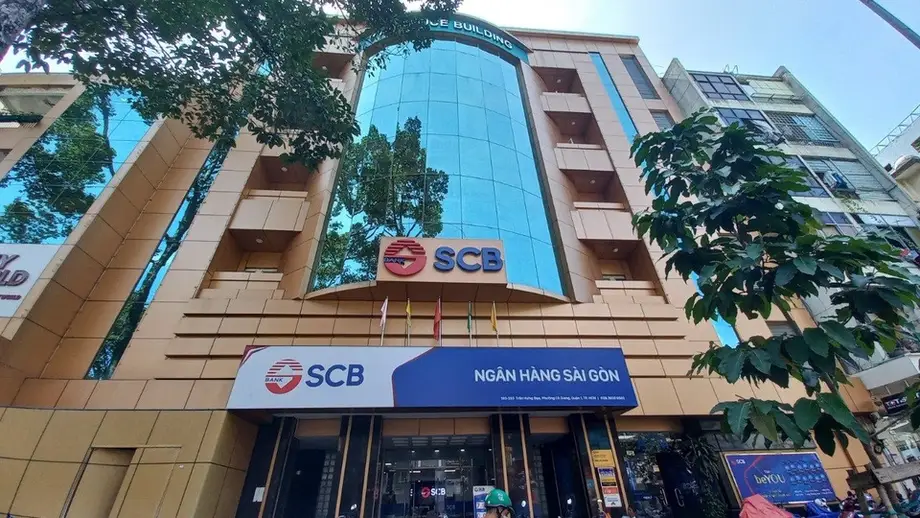
A banking overhaul with business lending at its center
Vietnam's central bank has set out a banking reform roadmap through 2030 that joins three goals: modernizing the financial system, resolving weak lenders and helping businesses, especially small and medium enterprises, obtain financing.
Contents
- A banking overhaul with business lending at its center
- Four workstreams, with responsibilities assigned
- What changes for smaller businesses?
- Modernization reaches beyond payment technology
- Weak lenders account for a large share of bad loans
- The legal tools behind bank restructuring
- More lending must be balanced with financial health
- What implementation needs to deliver
- Key Points
According to the State Bank of Vietnam's action plan announcement, the governor signed Decision No. 2409/QD-NHNN on November 1, 2026. It took effect that day and implements a project approved by the prime minister under Decision No. 1809/QD-TTg on September 18, 2026.
The plan brings technology, supervision, troubled banks and business credit into one program. Its practical challenge is to make financing easier to obtain while improving the health of the institutions supplying it.
Earlier banking figures show the scale of that challenge. At the end of February 2025, bad loans recorded on Vietnamese banks' balance sheets totaled 833 trillion dong, or 5.3% of outstanding loans, according to figures compiled by Viet Dragon Securities Corporation using data from the Vietnam Banks Association and the central bank. Five banks under special supervision accounted for 65% of those bad loans.
For a business seeking money to purchase materials, pay suppliers or expand production, the condition of its bank matters. A lender burdened by unpaid loans must devote money and staff to recovering debts and absorbing losses. The reform program addresses both that financial strain and the rules and systems through which businesses seek credit.
Four workstreams, with responsibilities assigned
The State Bank of Vietnam, known as the SBV, divides the action plan into four groups: general measures, banking modernization, the resolution of weak credit institutions and better access to business credit. Credit institutions are organizations authorized to provide financial services such as lending and deposit taking.
The general measures cover legal and policy changes, information technology infrastructure, banking databases, workforce training, policy communication and international cooperation. The SBV has assigned implementation responsibilities to its departments, related organizations and credit institutions according to their functions.
The roadmap runs through 2030. The announcement gives no numerical target for additional SME lending, no funding total for resolving weak banks and no completion date for an individual lender's restructuring. Those details matter to businesses and depositors looking for a clearer schedule of practical changes.
The main dates connecting the action plan with earlier banking legislation are:
- June 27, 2025: The National Assembly approved amendments to the 2024 Law on Credit Institutions.
- October 15, 2025: The amendments took effect, providing tools for troubled lenders and bad debt recovery.
- September 18, 2026: The prime minister approved the banking reform project through Decision No. 1809/QD-TTg.
- November 1, 2026: The SBV issued its action plan through Decision No. 2409/QD-NHNN, effective immediately.
- 2030: The endpoint of the action plan's implementation roadmap.
What changes for smaller businesses?
Small and medium enterprises, or SMEs, receive particular attention throughout the plan. The SBV says the banking sector will review credit and banking regulations and improve lending policies to make financing more accessible for production and business activity.
Credit is to be directed toward production, business operations, priority sectors and the economic growth drivers identified by the government and prime minister. The plan also calls for continuing government directed credit programs and strengthening connections between banks and businesses.
Those connections are intended to help authorities and lenders identify financing difficulties and address them promptly. For an individual company, the useful result would be a clearer route to discussing a rejected application, explaining its financing needs or identifying problems with the lending process.
The plan's focus is broader than increasing the amount of credit in the economy. It also addresses how money reaches businesses. Reviewing lending rules, improving information systems and connecting lenders with borrowers are different parts of that process: the rules govern applications, information supports lending decisions, and direct discussions help identify where access is becoming difficult.
Modernization reaches beyond payment technology
The SBV's modernization agenda covers monetary policy, foreign exchange management and credit policy, alongside payment systems and the operations of individual lenders. Monetary policy concerns the management of money and borrowing conditions, while foreign exchange policy concerns currencies and their exchange.
Payment systems, which move money between people, businesses and financial institutions, are another priority. The plan calls for modernizing both the systems themselves and the way they are managed and supervised. For businesses, dependable payments are part of everyday operations, from receiving customer revenue to settling supplier bills.
Banking inspection and supervision are also included. Inspectors examine institutions and their activities, while supervisors monitor financial condition and compliance over time. The plan seeks to make these functions more effective as banks modernize their operations.
Upgraded databases, information systems and staff training support those tasks. Better technology requires people who can operate it, and effective supervision depends on usable information. By including infrastructure, data and workforce development together, the plan addresses several practical requirements for changing how the banking system works.
Weak lenders account for a large share of bad loans
Vietnam's bad debt problem was heavily concentrated in a small group of institutions in early 2025. The five banks under special supervision held 65% of the system's recorded bad loans at the end of February, according to the figures compiled by Viet Dragon Securities.
A bad loan, also called a nonperforming loan, is a debt on which repayment has become seriously overdue or otherwise troubled. The system's 5.3% ratio at that time meant that slightly more than five dong out of every 100 dong in outstanding loans were classified as bad debt on bank balance sheets.
Saigon Joint Stock Commercial Bank, known as SCB, stood out. Its bad debt ratio reached 98.5% at the end of February 2025, compared with 20.9% in mid-2017. SCB experienced a bank run in October 2022 after the arrest of Truong My Lan, its de facto owner and chair of the property group Van Thinh Phat. A bank run occurs when many customers try to withdraw their deposits at the same time.
Pressure also appeared among listed lenders. The combined nonperforming loans of 27 listed banks reached 265 trillion dong in the first three months of 2025, an increase of 16% from the end of 2024.
The action plan calls for direct measures and supporting measures to accelerate the resolution of weak institutions. Its stated objectives include stronger finances, better governance and greater capacity to withstand shocks, while limiting damage to banking stability and the economy.
The legal tools behind bank restructuring
The amendments to the 2024 Law on Credit Institutions provide part of the legal framework for dealing with distressed lenders. Approved by the National Assembly on June 27, 2025, and effective from October 15 that year, they authorize the central bank to provide special loans carrying zero interest in specified circumstances.
Those circumstances include banks experiencing runs and institutions needing capital for recovery or mandatory transfer. A mandatory transfer involves placing a troubled bank under a new owner through a process directed by the authorities. Special lending gives authorities a way to supply money during such interventions.
The revised law also restores certain powers for lenders to seize collateral from borrowers who fail to repay, including in some cases involving criminal proceedings. Collateral is an asset pledged against a loan, such as property, which a lender may seek to recover when the borrower defaults.
Similar powers operated under Resolution 42, a pilot framework for bad debt settlement that ran from 2017 through the end of 2023. Data compiled by credit rating firm VIS Rating showed that average monthly bad debt recovery during that period increased by 65% compared with the preceding period. Voluntary repayments rose from 23% to 36% of total bad debt, a gain of 13 percentage points.
Phan Duy Hung, senior analyst for financial institutions at VIS Rating, described the expected effect of the legal changes when the amendments were approved in 2025:
We expect this legal reform will support bank profitability through improved debt recovery and lower operational costs, aided by a rebound in real estate transactions in 2025,
Debt recovery and bank restructuring address related problems. Recovering unpaid loans helps lenders absorb losses, while restructuring tackles the finances, ownership or management of institutions that require deeper intervention.
More lending must be balanced with financial health
Vietnam's reliance on bank credit creates a difficult balance for policymakers. Businesses need financing to operate and grow, while banks must manage the risks that accompany new loans.
Speaking to the National Assembly on June 19, 2025, SBV Governor Nguyen Thi Hong said the ratio of credit to gross domestic product had reached 134% in 2024. That compares the stock of credit with the value of goods and services produced in a year. She warned that continued heavy reliance on bank funding could create risks for the financial system and economy.
Credit was already expanding quickly in 2025. Lending grew 6.5% in the first five months of that year from the end of 2024, compared with growth of 2.4% during the same period a year earlier. The 2025 credit growth target was 16%, against 15% in 2024.
Hung identified rapid lending growth in property and construction, along with ownership links between banks and corporate groups, as concerns for loan quality. When a lender and a large business group are closely connected, financial trouble at that group can put pressure on the bank through unpaid debts and weakening depositor confidence.
The action plan places expanded business access alongside stronger supervision, better governance and the resolution of weak lenders. Those priorities address the two sides of the same task: supplying useful credit and maintaining banks capable of carrying the associated risk.
What implementation needs to deliver
The SBV has established the categories of work and assigned responsibility across the banking sector. The practical results will come through changes to regulations, payment infrastructure, supervisory work, institutional restructuring and the handling of business financing difficulties.
For smaller companies, the most relevant measures are the review of credit rules, continuation of government directed lending programs and closer engagement with banks. For depositors and the wider economy, the resolution of weak institutions and stronger supervision are central to the plan's stability goals.
The earlier figures explain why both priorities sit in one roadmap. Vietnam had a large and growing stock of bank credit, yet bad loans were concentrated heavily in troubled institutions. Making more money available to productive businesses and repairing damaged lenders require coordinated work across lending policy, debt recovery, technology and oversight.
The 2030 roadmap gives that work a common horizon. Its success will be reflected in concrete outcomes: healthier institutions, more dependable banking services and businesses able to obtain suitable financing for production and trade.
Key Points
- The SBV issued Decision No. 2409/QD-NHNN on November 1, 2026, implementing a banking reform project with a roadmap through 2030.
- The plan covers modernization, weak lenders, business credit access and supporting changes to rules, technology, data and training.
- SMEs are a priority, with measures to review lending policies and strengthen connections between banks and businesses.
- At the end of February 2025, recorded bad loans totaled 833 trillion dong, with 65% held by five banks under special supervision.
- Legal amendments effective from October 15, 2025, authorize certain special loans carrying zero interest and restore specified collateral recovery powers.
- The SBV has assigned implementation responsibilities across its units, related organizations and credit institutions.