A larger domestic commitment within a 75% target
The Philippines has submitted a 2026 climate pledge targeting a 75% net reduction and avoidance of greenhouse gas emissions against projected cumulative emissions for 2025–2035. The government plans to pursue seven percentage points through domestic resources and national capabilities, up from 2.71 percentage points in its 2021 commitment. The remaining 68 percentage points depend on international finance, technology and technical support.
Contents
- A larger domestic commitment within a 75% target
- What the 75% figure means
- How the commitment has changed
- Energy, transport and forests broaden the effort
- Methane measures reach farms and waste facilities
- Industrial accounting includes more gases
- Finance must support delivery
- Adaptation and inclusion shape implementation
- From technical preparation to accountable action
- Key Points
The updated Nationally Determined Contribution, or NDC, also brings forestry and other land use into the mitigation target for the first time. It covers six sectors and identifies policies and measures for each, connecting the national pledge to decisions about electricity, transport, farming, factories, waste and forests.
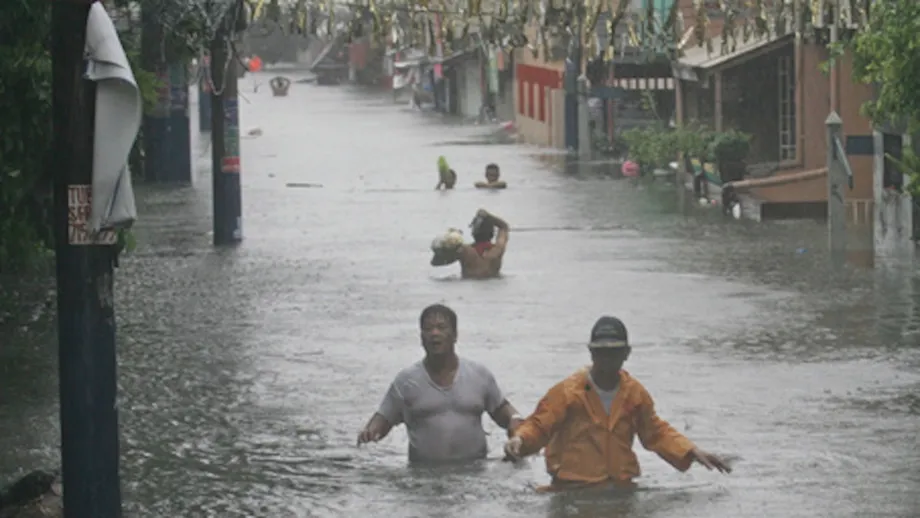
For a country exposed to destructive typhoons, flooding and rising seas, the commitment connects two urgent tasks: limiting emissions that warm the planet and protecting people from climate damage. The government places adaptation alongside emissions reduction, with the Philippine National Adaptation Plan guiding efforts to prepare communities and livelihoods for changing conditions.
Arnaud Peral, the United Nations Resident Coordinator in the Philippines, welcomed the higher domestic contribution and explained its importance:
"The increased unconditional contribution reflects stronger national ownership, while updates to the overall framework provide a clearer pathway for turning ambition into action," he said.
The central implementation challenge is financial as well as technical. Domestic action now accounts for a larger part of the pledge, but delivering the full commitment still requires substantial international support and coordination across government, businesses and communities.
What the 75% figure means
The target compares emissions with a projected business as usual scenario: an estimate of what the Philippines would emit over 2025–2035 without the additional climate measures counted in the commitment. It uses cumulative emissions, meaning the total across that period, rather than emissions in a single year.
Reducing emissions means bringing pollution down. Avoiding emissions means preventing pollution that would otherwise be expected, for example by meeting new electricity demand with renewable power. The word net accounts for both greenhouse gases released and carbon absorbed by sinks such as forests.
The seven percentage points designated unconditional are to be pursued primarily with domestic resources. The other 68 percentage points are conditional on international assistance. Together, they make up the 75% target.
The domestic component has risen by 4.29 percentage points from the previous 2.71%, making it about 2.6 times its earlier size. Within the updated pledge, domestic action represents about 9.3% of the total promised mitigation, calculated as seven divided by 75. Internationally supported action accounts for the remaining 90.7%.
How the commitment has changed
The 2021 NDC covered 2020–2030. The updated commitment covers 2025–2035 and uses recalculated emissions estimates for the 2015 base year, improved analytical methods and stronger modelling of individual sectors. Those changes affect how the government estimates emissions and identifies opportunities to reduce them.
The submission also sets out actions for every covered sector. That gives agencies a more detailed starting point for planning projects, coordinating responsibilities and tracking progress than a national percentage alone.
- 2021: The earlier NDC set an unconditional contribution of 2.71% for a commitment covering 2020–2030.
- September 8: The Philippines submitted its updated NDC, also described as NDC 3.0, to the United Nations Framework Convention on Climate Change.
- 2025–2035: The updated target covers cumulative emissions over this period.
- November 9: COP31 is scheduled to begin in Antalya, Türkiye, following the Philippine submission.
The submission places the Philippines among countries bringing updated national commitments to the international climate process ahead of COP31. Its practical value will depend on how the sector measures become funded programmes and measurable results.
Energy, transport and forests broaden the effort
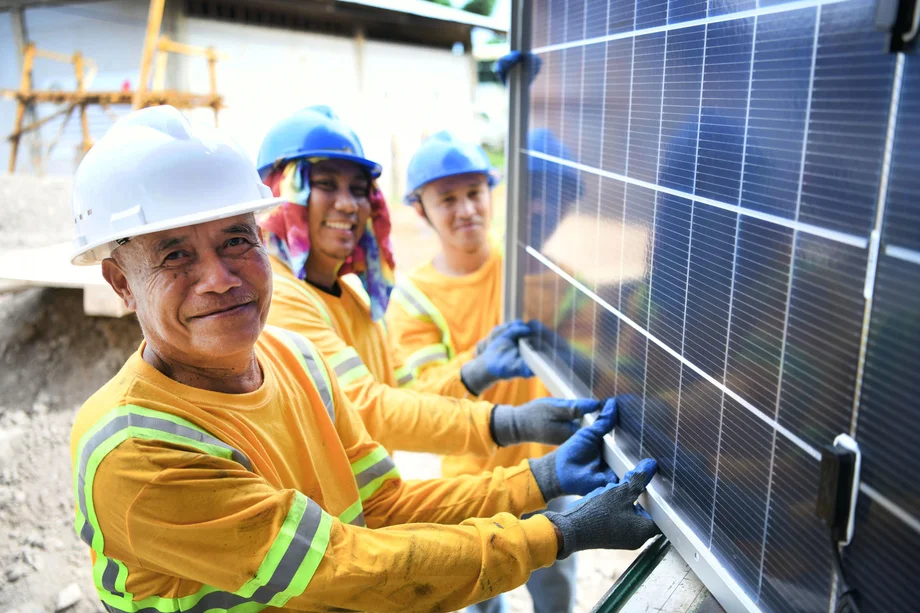
Energy offers the greatest potential for emissions cuts in the updated commitment. Expanding solar and other renewable sources can reduce the emissions associated with supplying electricity as the economy develops. The energy transition also connects with transport, where the government has identified electrification of public utility vehicles as a measure.
Transport measures include enforcement of Euro 5 and Euro 6 vehicle emission standards. These standards set limits on pollutants from vehicle exhaust. Alongside electrification, they connect climate action with the quality of the air people breathe on roads and in neighbourhoods.
Forestry and Other Land Use, or FOLU, joins agriculture, waste, Industrial Processes and Product Use, transport and energy in the mitigation target. Forest protection, reforestation and agroforestry are among the identified measures. Agroforestry combines trees with farming, allowing land to support production while storing carbon.
Forests absorb carbon as they grow, making their protection part of the emissions calculation. The updated commitment pairs that role with sustained reductions in other sectors. Protecting ecosystems also supports biodiversity and livelihoods, while measures in coastal, marine and urban areas can help reduce climate and disaster risks.
Methane measures reach farms and waste facilities
The Philippines is aligning the NDC with its Short-Lived Climate Pollutants National Action Plan and Methane Mitigation Roadmap. These pollutants include methane, black carbon and hydrofluorocarbons, or HFCs. Cutting them can help slow warming over the coming years while producing benefits for health and agriculture.
Environment Assistant Secretary Daniel Darius Nicer outlined the approach at the Superpollutant Action Summit, organised by the Climate and Clean Air Coalition alongside the 81st United Nations General Assembly in New York. He described the expected benefits:
Rapid reductions in superpollutants slow near-term warming while delivering immediate public health, clean air, and food security benefits.
Agricultural measures include alternate wetting and drying in rice fields, biodigesters and changes to livestock feeding. Alternate wetting and drying allows rice fields to drain at intervals instead of remaining continuously flooded, helping reduce the conditions that generate methane.
Biodigesters process organic material, such as animal waste, in controlled conditions and collect the resulting gas. Capturing that gas creates an opportunity to use it as fuel while managing waste. Changes in livestock feeding are another part of the agricultural programme.
Waste measures include capturing and flaring landfill gas, composting and anaerobic digestion. Flaring burns captured methane, while anaerobic digestion breaks down organic waste without oxygen in equipment designed to collect the gas. Composting provides another route for managing organic material and returning nutrients to productive use.
The NDC covers emissions from waste disposal on land, composting and wastewater handling, and recognises Philippine participation in the Global Methane Pledge. These measures connect the national commitment with everyday decisions about food scraps, sewage, farm residues and landfill operations.
Industrial accounting includes more gases
The Industrial Processes and Product Use sector, known as IPPU, covers emissions associated with making products and using certain chemicals and equipment. The update recalculates emissions estimates for cement production and substances used to replace chemicals that damage the ozone layer.
Sulphur hexafluoride emissions from electrical equipment are also included, after being absent from previous greenhouse gas inventories. An inventory is an accounting of emissions by source. More complete accounting gives the government a better basis for choosing which processes, materials and equipment need attention.
Refrigeration and air conditioning are another focus. The government plans to encourage refrigerants with lower global warming potential and improve the recovery and disposal of waste refrigerants. Global warming potential describes how strongly a gas warms the atmosphere compared with carbon dioxide over a specified period.
The measures are being pursued under the Kigali Amendment, which addresses HFCs, and Department of Environment and Natural Resources Administrative Order No. 2021-31. Managing refrigerants involves both the chemicals selected for equipment and what happens when systems are serviced or discarded.
The broader circular economy approach links these industrial and waste measures. Keeping products, materials and nutrients in use can reduce the need for new resources and limit waste, while supporting cleaner production and jobs associated with repair, recovery and recycling.
Finance must support delivery
International support determines how much of the conditional 68 percentage points the Philippines can carry out. The commitment identifies climate finance, technology development and transfer, and capacity building as necessary forms of assistance. Technology transfer can include access to equipment and the knowledge needed to operate and maintain it.
Nicer called for concessional and non-debt climate finance, cooperation through carbon markets under Article 6 of the Paris Agreement, and technical assistance for local monitoring, reporting and verification. Concessional finance offers more favourable terms than ordinary commercial funding. Non-debt finance can help fund action without adding repayment obligations.
Article 6 provides a framework for international cooperation, including carbon market arrangements. Monitoring, reporting and verification means measuring emissions and reductions, documenting the results and checking their accuracy. Those tasks become especially important when projects are spread across municipalities, farms, transport systems and industrial facilities.
The updated commitment gives no total investment requirement or detailed funding timetable. Its delivery will require domestic, international and private finance, effective institutions, and sustained coordination between agencies responsible for different sectors.
Adaptation and inclusion shape implementation
The Philippines treats adaptation as a continuing priority because cutting future emissions and preparing for present climate risks serve different needs. Renewable power, for example, addresses emissions, while preparing communities for flooding addresses the damage climate hazards can cause. Ecosystem protection can contribute to both.
The government says implementation will follow principles of equity, inclusion and responsibility to future generations. Its consultations involved national and local institutions alongside women, Indigenous Peoples, young people, persons with disabilities, informal workers, older people and local communities.
Those commitments matter when projects affect access to land, employment, transport, skills or technology. A just transition aims to protect people whose work and livelihoods change as the economy shifts. The NDC also recognises Indigenous knowledge, gender equality and disability inclusion as part of implementation.
Alignment with the Philippine Development Plan 2023–2028 and the Sustainable Development Goals connects climate spending with national priorities for jobs, health, livelihoods and resilience. It gives agencies a basis for considering those benefits when selecting investments.
From technical preparation to accountable action
The United Nations and its specialised agencies provided input and technical assistance for the update. The United Nations Development Programme supported the process through its Climate Promise Initiative, working with the Climate Change Commission, the Department of Environment and Natural Resources and the NDC Technical Working Group.
Support from AECID, the Spanish Agency for International Development Cooperation, helped UNDP provide technical assistance on waste and industrial emissions. It also supported analysis of circular economy approaches, ecosystem measures, development goals, gender equality, disability and social inclusion.
The next stage is implementation: assigning responsibilities, developing projects that can attract funding, securing support and measuring results. The updated accounting and sector measures provide a stronger foundation for that work. The share funded domestically has grown, while international cooperation remains central to achieving the full target.
Key Points
- The Philippines targets a 75% net reduction and avoidance of emissions against projected cumulative business as usual emissions for 2025–2035.
- The unconditional component rises from 2.71 to seven percentage points; 68 percentage points depend on international support.
- Forestry and other land use enter the mitigation target for the first time, bringing coverage to six sectors.
- Measures include renewable energy, public utility vehicle electrification, forest protection, methane controls and improved refrigerant management.
- Adaptation, inclusion, finance and reliable emissions monitoring are central to implementation.
- COP31 is scheduled to begin on November 9 in Antalya, Türkiye.