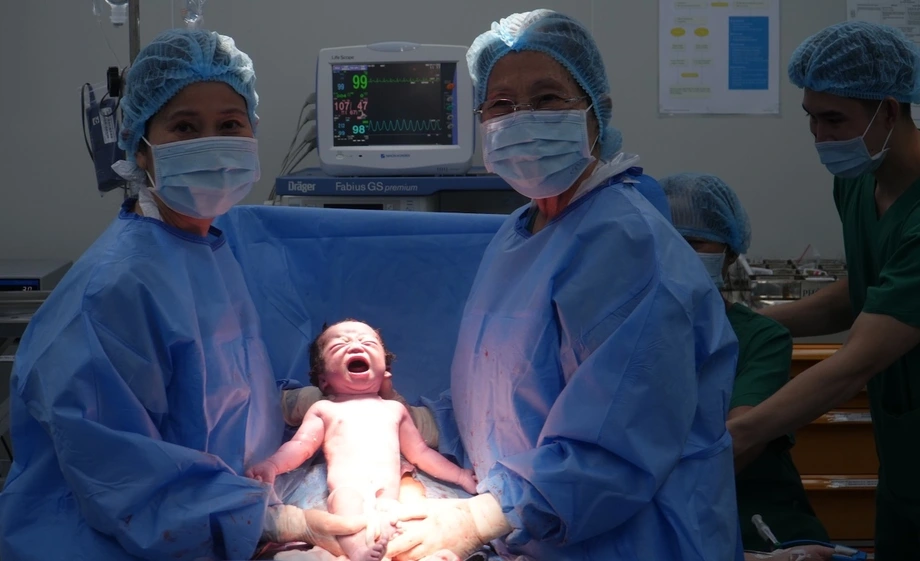
A Birth That Connects Three Generations
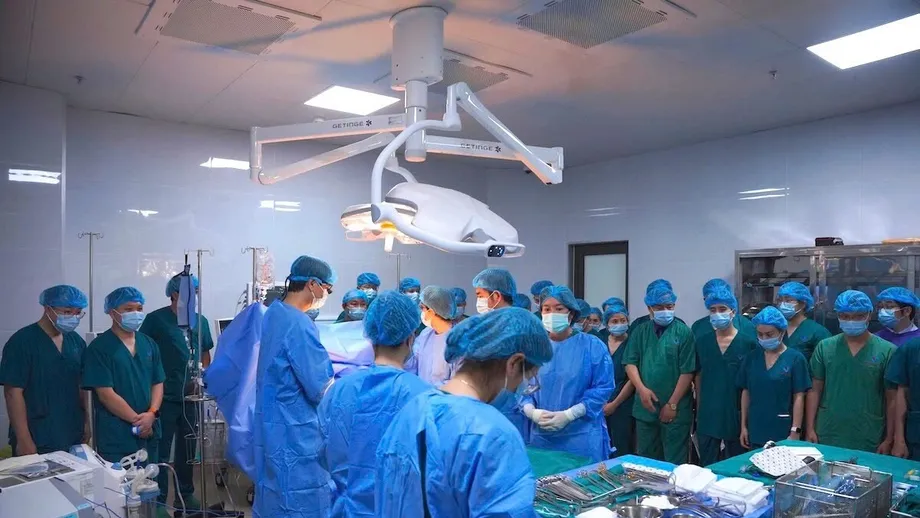
Lưu Tuyết Trân, one of Vietnam's first three babies born through in vitro fertilization, gave birth to her first child on November 4, 2026, with the same doctor who delivered her more than 28 years earlier. Professor Nguyễn Thị Ngọc Phượng performed the Caesarean section at Mỹ Đức Hospital in Ho Chi Minh City, welcoming a boy weighing 3,150 grams.
Contents
- A Birth That Connects Three Generations
- From a First Embryo Transfer to a Family
- How Vietnam Reached Its First IVF Births
- The Resistance Behind the Medical Milestone
- What Trân Said About Her Beginnings
- From Three Babies to More Than 16,300
- More Treatment Options and Quality Checks
- A Different Family's 16 Years of Waiting
- A New Chapter for the First Generation
- Key Points
The operation began at 11:15 a.m., and the baby was delivered about three minutes later. He cried strongly and was described as healthy. After a newborn examination, he was placed against his mother's bare skin. Trân's condition was stable after surgery.
Trân, 28, conceived naturally after marrying. During her first pregnancy, she received care from Phượng and Dr. Triệu Thị Thanh Tuyền. For Phượng, watching the baby grow on ultrasound brought back memories of caring for Trân's mother during one of Vietnam's earliest successful IVF pregnancies.
Trân's mother, Trần Thị Bạch Tuyết, was also at the hospital. On April 30, 1998, she had been the patient waiting to meet a daughter made possible by a new fertility treatment. This time, she was there to welcome her grandson, alongside the physician who had helped her become a mother.
From a First Embryo Transfer to a Family
Tuyết worked as a tailor in Mỹ Tho, in Tiền Giang. After years of infertility, she and her husband were told that IVF was their only chance of having a child. They became among the first patients to receive the treatment in Vietnam.
IVF involves fertilizing an egg with sperm in a laboratory, then placing an embryo into the uterus, where a pregnancy can develop. The familiar expression "test-tube baby" refers to that laboratory stage. The baby grows inside the mother's body.
Phượng raised support to cover medication and treatment costs, allowing Tuyết to receive care free of charge. She became pregnant after her first embryo transfer. When her daughter arrived, she chose the name Tuyết Trân, with Trân expressing the idea of a precious treasure.
About two years later, Tuyết's husband died after a serious illness. She continued working as a tailor and raised Trân alone. Phượng kept in touch through those years and came to regard Trân as a granddaughter.
The relationship continued into Trân's adulthood and pregnancy. Her hospital appointments became both medical checkups and reunions with someone who had followed her family since before she was born.
How Vietnam Reached Its First IVF Births
Phượng's effort to introduce IVF to Vietnam began during a working visit to Bangkok in 1984. Seeing women with infertility become mothers through the treatment convinced her to pursue it at home.
The work eventually brought together Vietnamese doctors and French specialists. Vietnam's first IVF and embryo transfer procedures took place in August 1997. At the time, Phượng was director of Từ Dũ Hospital, the Ho Chi Minh City institution where the first three babies would be born.
On April 30, 1998, Mai Quốc Bảo, Phạm Tường Lan Thy and Lưu Tuyết Trân arrived. Trân was the last of the three, born at 9 a.m. Phượng later recalled crying with emotion that morning.
The main dates trace a journey from introducing a technique to seeing another generation born:
- 1984: During a visit to Bangkok, Phượng saw IVF helping women with infertility and decided to bring the treatment to Vietnam.
- August 1997: Vietnam carried out its first IVF and embryo transfer procedures with support from French specialists.
- April 30, 1998: The country's first three IVF babies were born at Từ Dũ Hospital.
- April 27, 2023: Từ Dũ held an event marking 25 years since those births and the expansion of its IVF unit.
- November 4, 2026: Trân gave birth to her first child at Mỹ Đức Hospital.
The Resistance Behind the Medical Milestone
Dr. Hồ Mạnh Tường, a member of the team that performed Vietnam's first IVF procedures in 1997, recalled substantial opposition when he spoke at the anniversary event in 2023. By then, he was secretary general of the Ho Chi Minh City Society for Reproductive Medicine.
Tường described objections within society, the medical profession and even the hospital itself. Vietnam was pursuing policies to reduce births, money was scarce, and infertility treatment was sometimes viewed as an expensive service competing with care for diseases that threatened life.
Some doctors also doubted whether Vietnam had the technical ability to perform IVF. Tường recalled that some wanted the work prohibited because they feared it would produce babies with severe abnormalities. The team faced professional and political pressure as well as the medical challenge of making the treatment succeed.
At the April 27, 2023 ceremony, Ho Chi Minh City Health Department director Tăng Chí Thượng described the births of the three healthy children as a historic milestone for Vietnamese reproductive medicine. He credited the work of the hospital's medical staff, including Phượng, with opening another route to parenthood for families experiencing infertility.
What Trân Said About Her Beginnings
Trân attended the 25th anniversary gathering at Từ Dũ in 2023, before becoming a mother herself. She spoke about the people whose decisions and work had made her life possible.
Addressing the gathering as one of Vietnam's first IVF children, Trân expressed gratitude to both her family and the medical team:
I feel truly happy to be in this world in such a special way. Thank you very much to my parents and the doctors. I always promise myself to live well to be worthy of my parents' kindness and my presence in this world.
Her mother's experience gave those words a personal foundation. Financial support had made treatment accessible, the first embryo transfer had succeeded, and years of work as a tailor had supported Trân after her father's death.
Phượng's continuing contact connected the medical milestone with the ordinary events that followed: growing up, marriage and pregnancy. In November 2026, the doctor who had delivered Trân was able to deliver her son.
From Three Babies to More Than 16,300
Từ Dũ's figures at the 2023 anniversary showed how far its infertility service had grown. Dr. Trần Ngọc Hải, the hospital's executive deputy director, said more than 16,300 babies had been born through IVF there since the first births in 1998.
The hospital reported between 55,000 and 60,000 visits for infertility care each year. During the preceding decade, it had performed more than 22,000 intrauterine insemination procedures and more than 23,000 IVF cycles.
Intrauterine insemination, usually shortened to IUI, places prepared sperm directly into the uterus. Fertilization then happens inside the body. IVF takes fertilization into the laboratory before an embryo is transferred. An IVF cycle is a course of treatment, and some patients undergo several cycles.
The totals show the scale of two different treatment routes. Spread across 10 years, more than 23,000 IVF cycles amount to an average exceeding 2,300 cycles a year, while more than 22,000 IUI procedures amount to an average exceeding 2,200 a year. Annual visits also include consultations, tests and follow-up care.
Từ Dũ reported an IVF clinical pregnancy rate above 45%. A clinical pregnancy is generally confirmed through clinical examination or ultrasound. A live birth is a later outcome, after pregnancy has continued to delivery. Families therefore need both measures to understand the stages between treatment and taking a baby home.
More Treatment Options and Quality Checks
Từ Dũ's work expanded beyond the methods used in its first IVF programme. By the 2023 anniversary, the hospital described services including injecting a sperm directly into an egg, retrieving sperm surgically, freezing embryos, testing embryos for genetic conditions and preserving eggs or ovarian tissue.
Each method addresses a different need. Direct injection of sperm into an egg, known as ICSI, can assist fertilization. Freezing embryos allows them to be stored for a later transfer. Preserving reproductive cells or ovarian tissue can give some patients options for trying to have children later.
The hospital also reported that its infertility department received RTAC international certification for IVF quality management in 2017, becoming the first department in Vietnam's public hospital system to do so. It said the department underwent repeated assessments to maintain that certification.
For patients, laboratory procedures and quality checks sit alongside the more visible stages of treatment, such as consultations, ultrasound scans and embryo transfer. The hospital's account of its development included both a wider range of treatments and efforts to standardize how care was delivered.
A Different Family's 16 Years of Waiting
Từ Dũ's anniversary account also described a couple who welcomed a healthy child in June 2021 after 16 years of trying to build a family. Their experience showed another use of IVF: allowing embryos to be tested for a known inherited condition before transfer.
The couple, identified through the husband's initials, T.T.Q., both carried a mutation associated with factor VII deficiency. Factor VII is a protein that helps blood clot. Severe deficiency can cause dangerous bleeding.
Their first child died at 14 days old in 2011 after bleeding in the brain. Genetic analysis arranged with specialists in France found that both parents carried a recessive mutation. With that inheritance pattern, each pregnancy had a 25% chance of producing a child with the affected form inherited from both parents.
A pregnancy in 2013 was also found to be affected, and the family was advised to end it. Another child, born after a pregnancy in 2015, received intensive treatment but died at four years old.
The couple later underwent IVF with preimplantation genetic diagnosis, or PGD. This involves testing cells from an embryo for a specified genetic condition before deciding which embryo to transfer. Their first IVF attempt in late 2019 did not result in the child they hoped for. Another attempt followed in June 2020, and a healthy baby was born in June 2021.
Trân's family had needed IVF to achieve pregnancy. This couple needed IVF as part of a process to identify embryos suitable for transfer because of an inherited disorder. Their experiences show how the service that began with three births came to meet different medical needs.
A New Chapter for the First Generation
Trân's son was conceived naturally, while she had been conceived through IVF. Her pregnancy brought Phượng back into the care of the same family, nearly three decades after helping her mother.
The reason for the Caesarean section was not disclosed. The details released about the birth focused on the healthy boy, his weight, his mother's stable condition and their contact after his examination.
For Phượng, seeing the first IVF children grow up, marry and have healthy children brought happiness after years spent introducing the treatment to Vietnam. For Tuyết, the moment meant welcoming a grandson after raising the daughter she had once feared she might never have.
Key Points
- Lưu Tuyết Trân, one of Vietnam's first three IVF babies, gave birth to a son on November 4, 2026, at Mỹ Đức Hospital in Ho Chi Minh City.
- The boy weighed 3,150 grams. Trân was stable after the Caesarean section.
- Professor Nguyễn Thị Ngọc Phượng delivered both Trân in 1998 and her son in 2026.
- Trân conceived naturally after marriage. Her mother had received IVF treatment with financial support arranged by Phượng.
- Vietnam's first three IVF babies were born at Từ Dũ Hospital on April 30, 1998.
- By its 2023 anniversary event, Từ Dũ reported more than 16,300 IVF births and an IVF clinical pregnancy rate above 45%.