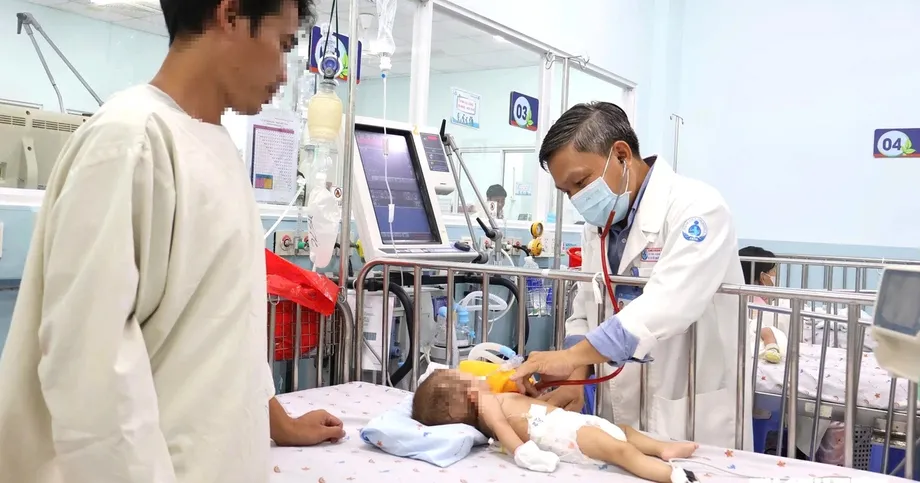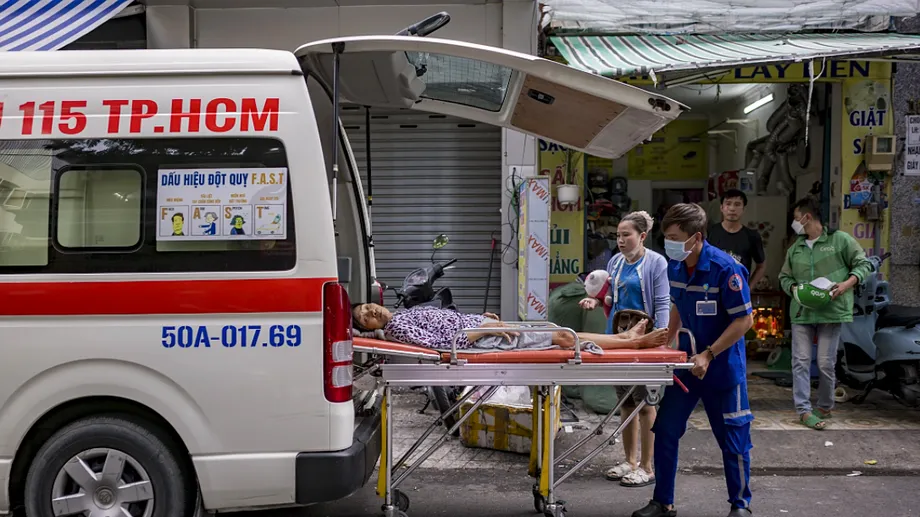
Medical dispatch moves into police command centres
Vietnam's Ministry of Health has set out a new system for routing medical requests made to the 113 emergency hotline directly to medical staff at provincial and municipal police command centres. Circular No. 42/2026/TT-BYT, dated October 31, 2026, sets November 1, 2026, as its effective date and gives those staff authority to dispatch emergency teams, coordinate hospital reception and call for additional help.
Contents
- Medical dispatch moves into police command centres
- What happens when a medical call reaches 113?
- Dispatch orders become binding
- The ambulance team's job continues through hospital handover
- Hospitals must report whether they can receive patients
- Which number should people call during the transition?
- Ho Chi Minh City sets out two stages
- Tracking technology meets an ambulance shortage
- The deadlines that will shape implementation
- Key Points
The change connects three parts of an emergency response: the person answering the call, the team treating the patient before hospital arrival and the hospital preparing to receive them. Ambulances must carry location tracking devices connected to police command centre data systems, while hospitals must keep emergency communication services operating around the clock.
Local authorities face two practical deadlines. Before January 1, 2027, they must identify eligible emergency providers and vehicles. Before July 1, 2027, they must complete medical staffing lists for the 113 hotline and the required investment and upgrades to infrastructure, vehicles and equipment.
For the public, the transition has an immediate point of clarification: 115 remains available for medical emergencies, alongside 113 for police assistance and 114 for fire and rescue. The plan is to bring these services together through a common 113 intake system while keeping all three numbers operating during the transition.
What happens when a medical call reaches 113?
Medical requests received through 113 must go to medical staff stationed at the provincial or municipal Police Command Information Centre. Those staff speak with the caller, establish what help is needed and assess the patient's condition.
Staff then classify the urgency of the case, a process known as triage. In simple terms, this means deciding how serious the emergency is and what kind of response the patient needs. Where an emergency team is required, dispatchers must prioritise a suitable provider capable of reaching the scene quickly.
The selection combines speed with medical capability. A team must be able to provide care appropriate to the patient's condition, rather than simply have a vehicle available. Dispatchers also monitor the response and work with the team to identify a receiving hospital.
Hospital selection must take account of the patient's condition, the treatment required, the hospital's ability to receive the patient and transport conditions. The aim is to connect the first call with a workable plan for care, including where the patient will go after treatment at the scene.
Dispatch orders become binding
Emergency providers instructed to respond by medical staff at the 113 centre must comply with the dispatch order. The circular allows orders to be communicated verbally, in writing or through other legally recognised forms of communication.
The provider must deploy a suitable medical team, vehicle and resources according to the patient's condition, professional requirements and the facility's actual capabilities. Providers must maintain qualified personnel, medicines, medical equipment and communication systems needed for care outside hospitals.
Medical staff at the hotline may mobilise additional emergency resources within their assigned authority. When a request goes beyond that authority, they must refer it to the competent authorities for a decision. This gives dispatch staff a route to seek more help when the initial response is insufficient.
Provincial and municipal People's Committees must arrange staffing with local health agencies and police. Staffing plans are to reflect population size, demand for handling calls and coordinating responses, and the condition of the local emergency network.
The ambulance team's job continues through hospital handover
Emergency teams must reach the scene promptly and provide first aid, emergency treatment and other procedures within their authorised professional scope. Here, care before hospital arrival includes treatment at the scene as well as care during transport.
The team assesses the patient and selects a suitable receiving facility in coordination with the hotline. It must notify the hospital so staff can prepare, while keeping the 113 centre informed. If the patient's condition exceeds the team's treatment capabilities, the team must request support through the centre.
The response continues until the patient has been transported and handed over to the receiving facility. The team must then notify the 113 centre that its emergency operation has ended. This final update allows the centre to track the completion of the case and the status of the responding service.
Emergency providers must also maintain services capable of receiving information 24 hours a day, regularly update the readiness of their resources, and organise training and periodic drills for participating personnel.
Hospitals must report whether they can receive patients
Receiving hospitals and other medical facilities must operate emergency communication services around the clock. They must prepare staff, beds, medicines, equipment and other conditions needed to receive and treat patients arriving through the system.
A hospital that becomes unable to receive a patient as planned because of another emergency or circumstances beyond its control must promptly inform the 113 centre. Dispatchers and ambulance teams can then coordinate another destination using updated information.
Hospitals must regularly share information on the readiness of emergency resources with ambulance services and hotline staff. That information also supports statistics, reporting and data sharing. For a patient already in transit, an accurate update about hospital capacity can affect where the ambulance goes.
The rules place responsibilities on both ends of the journey: ambulance teams must give advance notice, and hospitals must communicate whether they are ready. The practical benefit depends on those updates being timely enough to guide the response.
Which number should people call during the transition?
Vietnam's emergency numbers continue to have familiar functions while integration proceeds. The medical dispatch role added to 113 sits alongside the continuing operation of 115, rather than requiring callers to wait for the full merger before seeking help.
- 115 remains the number for urgent medical assistance, including unconsciousness, severe breathing difficulty, suspected stroke, serious chest pain, heavy bleeding and severe injuries.
- 113 remains available for police intervention in incidents involving security, violence or threats to public safety, and medical requests reaching it must be transferred to medical staff.
- 114 remains available for firefighting and rescue, including fires, people trapped in dangerous locations and incidents requiring specialist rescue equipment.
A road crash may need medical treatment, police traffic control and rescue personnel at the same time. The integrated approach is intended to help those services coordinate through a common intake point.
Callers should provide the location, the nature of the danger and the number of people affected if known. A bystander can request an ambulance; the caller does not need to be the patient or a relative. Serious injuries or signs of a threat to life require prompt medical assistance.
Ho Chi Minh City sets out two stages
Ho Chi Minh City's People's Committee has issued a plan to implement Prime Minister's Decision 1166/QĐ-TTg of June 29, 2026, on integrating 113, 114 and 115. The city's common 113 intake point will be located at the Ho Chi Minh City Police Command Information Centre.
The first phase runs from approval of the city plan through 2027. It covers integration of the emergency numbers and preparation of personnel, vehicles, facilities and technical systems. Police and medical staff will jointly staff the hotline and receive training in call handling, dispatch and responses at incident scenes.
The second phase runs during 2027 and 2028. After six months to one year of operation, the city plans to review performance and study the establishment of a formal 113 emergency information reception and processing centre under Ministry of Public Security rules.
The city also plans to use digital maps, caller location technology and artificial intelligence to support information classification and dispatch. Its plan requires information security, cybersecurity and protection of personal data. During the transition, calls to the three existing numbers are to be routed to the unified 113 intake point.
Tracking technology meets an ambulance shortage
Ambulance location tracking is a concrete requirement of the circular. By connecting vehicle data to police command centres, dispatchers can monitor where ambulances are and coordinate their use. A broader national platform is planned to add a shared digital view of emergency resources.
The expansion comes amid substantial shortages in vehicles, equipment and training. Figures attributed to the Ministry of Health put ambulance density at about 0.3 vehicles per 100,000 people. Reaching one ambulance per 100,000 would require more than three times that density; the estimated requirement is about 1,000 additional ambulances nationwide.
Other reported estimates indicate that about 30% of ambulances lack a full set of basic medicines and equipment, only 18% carry a defibrillator, and around 80% of personnel providing care before hospital arrival have not received standardised training. A defibrillator is a device that can deliver an electric shock to treat certain dangerous heart rhythms.
Transport figures show limited use of formal ambulance services. About 43% of emergency interventions reportedly result in ambulance transport, while a study involving patients with traumatic cardiac arrest at three major hospitals found that 26% arrived through formal emergency medical services. The study concerns a particular group of patients; the 43% figure concerns emergency interventions more broadly.
Demand management is another task for dispatchers. In some localities, up to 90% of emergency hotline calls have been described as inappropriate or unrelated to emergencies. Screening calls must therefore operate alongside preparations to send properly equipped teams to patients who need them.
The deadlines that will shape implementation
The national programme to develop emergency care outside hospitals covers 2026 to 2030 under Decision No. 1515/QĐ-TTg of August 10, 2026. It targets operation of a national emergency management platform from 2027, connected to the Ministry of Public Security's platform integrating 113, 114 and 115.
Plans for the platform include ambulance mapping, GPS tracking and video consultation between responders and hospital specialists. A digital emergency care pilot is underway in Hai Phong. These tools are intended to give dispatchers and clinicians shared information throughout a response.
The implementation timetable combines legal changes with later staffing and equipment deadlines:
- June 29, 2026: Decision 1166/QĐ-TTg approves the emergency hotline integration project.
- August 10, 2026: Decision 1515/QĐ-TTg establishes the emergency care development programme for 2026 to 2030.
- October 31, 2026: The Ministry of Health issues Circular 42/2026/TT-BYT, effective November 1, 2026.
- Before January 1, 2027: Localities must complete inventories of eligible emergency providers and vehicles.
- During 2027: The national emergency management platform is targeted to begin operation.
- Before July 1, 2027: Localities must complete hotline medical staffing lists and required infrastructure, vehicle and equipment upgrades.
Local authorities must publish lists of emergency providers on provincial and municipal government portals. The broader model envisages trials at command centres in all 34 provinces and cities for six months to one year, supporting development of a national 113 centre. No single date has been given for ending the separate 114 and 115 services nationwide.
Key Points
- Medical requests made to 113 will be handled by medical staff at provincial and municipal police command centres.
- Emergency dispatch orders are binding, and responding teams must coordinate treatment, transport and hospital handover.
- Ambulances must have location tracking connected to police data systems; hospitals must maintain emergency communications around the clock.
- 113, 114 and 115 continue operating during the transition to a common intake system.
- Local inventories are due before January 1, 2027, with staffing and equipment preparations due before July 1, 2027.
- The national digital platform is targeted to operate from 2027, alongside efforts to address shortages of ambulances, equipment and trained personnel.