A chart hit with human lyrics and an artificial voice
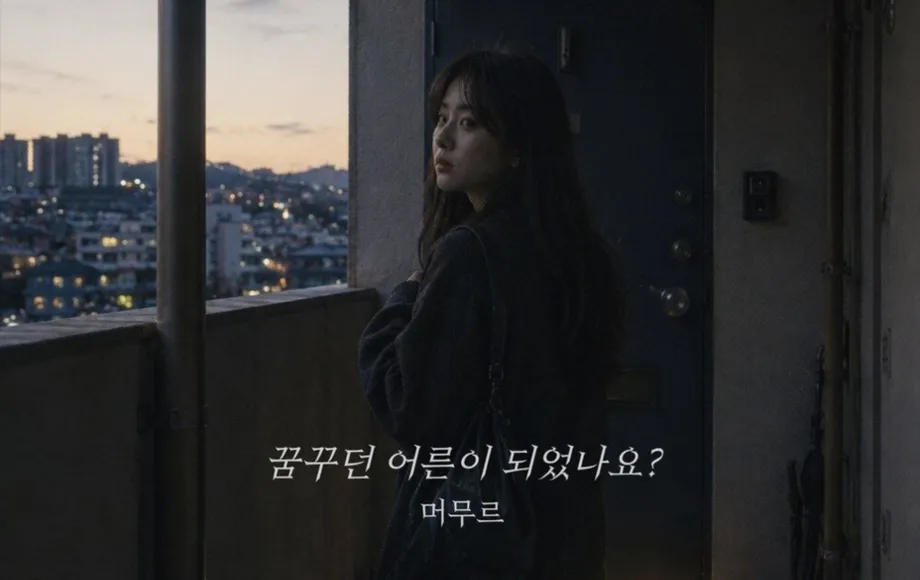
Meomuru's rise to No. 2 on South Korea's Melon Top 100 has put a song without a human singer at the centre of a debate about creativity, payment and disclosure. Its chart position was recorded on October 31, 2026. Behind the unfamiliar act are two experienced music producers, while the melody, arrangement and singing came from the artificial intelligence platform Suno.
Contents
- A chart hit with human lyrics and an artificial voice
- Who made the music?
- Why royalties remain unsettled
- The dates behind the debate
- Listeners hear opportunity and familiarity
- Virtual performers take different forms
- An American parallel and a fight over livelihoods
- The legal dispute reaches back to training
- Key Points
The track, known in English as both The Adult I Dreamed Of and Have You Become the Adult You Dreamed Of?, was created by Glorywave, the songwriting and production duo of Lee Yong-seok and Choi Sung-hyuk. They developed its concept, wrote its lyrics and finished the recording after Suno generated much of what listeners hear.
Glorywave say they have not registered the song with the Korea Music Copyright Association, known as KOMCA, and are not collecting standard songwriting or arrangement royalties. A successful recording has therefore reached listeners while the people behind it remain outside a familiar route for collecting payments for musical composition.
South Korean lawmakers are examining whether the AI Basic Act should be expanded, amid calls for mandatory labels on music generated by AI. The debate reaches beyond whether listeners enjoy the song. It concerns how human contributions should be recognised, what audiences should be told and whose work may have helped train the software.
Who made the music?
Lee and Choi have worked with South Korean artists for more than a decade. Their role in Meomuru began before the software produced any sound: they chose the concept and wrote the words. Suno then generated the melody, musical arrangement and vocal track. The duo edited, mixed and mastered the result.
Mixing means balancing the recorded sounds so they work together. Mastering prepares the finished recording for release, including its volume and tonal balance. Those final stages gave Glorywave control over the released track, even though no human performed its lead vocal.
Meomuru's production process places several kinds of creative work inside one recording. The lyrics came from people, the musical and vocal material came from software, and people made the final production decisions. Copyright and royalty systems must now address those contributions separately rather than relying on the familiar picture of a songwriter handing a song to a singer.
Music critic Kim Sung-hwan places particular weight on where the creative intention began. He described the initial concept as central to understanding authorship:
The most important thing is the original idea behind an AI-generated song," Kim said. "What matters is whether that initial idea - the concept that led to the song's creation - came from a human.
Why royalties remain unsettled
South Korea's Copyright Act requires human creative input for a work to qualify for protection. The difficult question for a production such as Meomuru's is how protection applies when people write the lyrics and direct the process, while software generates the tune, arrangement and voice.
Copyright gives creators legal rights over uses of their work. Songwriting and arrangement royalties are payments associated with those creative contributions. Glorywave's statement concerns those standard royalties; the financial details of other uses of the recording have not been disclosed.
KOMCA attempted to draw a boundary in August, introducing criteria that allowed registration of music assisted by AI when a human creator had a substantial and leading role. It withdrew those criteria just 22 days later, following objections from the creative community and a lack of clear legislative direction.
The withdrawal left a practical problem for creators using the technology. A requirement for human creativity needs a workable way to assess contributions such as writing lyrics, directing generation and selecting or editing the result. Glorywave's hit has brought that unresolved question into the country's mainstream music market.
The dates behind the debate
South Korea's experience with digital performers stretches back to 1998, but the latest controversy concerns software that generates musical material itself. The sequence shows how a longstanding experiment with virtual stars has developed into a dispute over authorship and payment.
- 1998: Virtual act Adam debuted and sold roughly 200,000 albums, before disappearing from the charts within a year.
- August: KOMCA introduced registration criteria for music assisted by AI where people held a substantial and leading creative role.
- 22 days later: KOMCA withdrew the criteria after opposition from the creative community.
- October 31, 2026: Meomuru's song was recorded at No. 2 on Melon's Top 100.
Lawmakers are now considering whether the AI Basic Act needs to cover more of the issues raised by generated music. No timetable for a legislative decision or mandatory music labelling was given.
Listeners hear opportunity and familiarity
Meomuru's social media accounts feature images and videos generated by AI, and listeners have repeatedly asked whether the music is artificial too. Two listeners, aged 41 and 19, described different reactions to learning how the songs were made.
Lee Sun-mi, a housewife in Daejeon, initially found the hit familiar. Her husband suggested it might have been generated by AI. After hearing more Meomuru tracks, she said the songs were "a bit too generic" and that she did not expect to seek out AI music again.
Shin Ji-hye, a university student in Jecheon, described the music as "moving and catchy" even after learning about Suno's role. Having experimented with AI music tools herself, she saw a way for people with ideas but limited money or performing skills to complete a recording.
Shin explained why that access mattered to her:
Someone might be interested in composing but lack the ability to sing or the money to produce a song," she said. "Others might enjoy writing lyrics but struggle to turn them into a finished track. AI can help bridge those gaps and allow more people to create music.
Their reactions illustrate two pressures shaping the market: some listeners value the chance to create music more easily, while others lose interest when songs sound too familiar. For producers, attracting an initial audience and keeping that audience are separate challenges.
Virtual performers take different forms
Plave, the virtual boy band, shows why a digital appearance tells listeners little about how a recording was made. Its five animated characters are controlled through motion capture and facial tracking. Human performers sing, dance and interact with fans through those characters.
The group's album HYPERDRIVE topped Billboard's Top Album Sales chart, and Plave sold out Seoul's Gocheok Sky Dome, which seats 18,000. Its success rests on human performance presented through animated identities. Meomuru instead uses software to generate the singing itself.
Adam, South Korea's virtual act from 1998, offers an earlier comparison. Despite sales of roughly 200,000 albums, expensive production and technological limits, including the cost of rendering 3D images, restricted the project. It disappeared from the charts within a year.
Yoo Seung-chul, a media studies professor at Ewha Womans University who specialises in consumer psychology, said Adam also struggled to build an emotional connection with fans. He pointed to Plave as evidence that virtual performers can develop those relationships.
Yoo linked that acceptance to the growing familiarity of conversational AI services such as ChatGPT and Gemini, especially among younger people. He expects AI music to develop into a genre of its own, while live human performers continue to have a place.
An American parallel and a fight over livelihoods
Xania Monet offers a closer comparison to Meomuru's production process. The American R&B act uses vocals generated by Suno over lyrics written by poet and designer Telisha "Nikki" Jones. Monet signed a deal worth millions of dollars with Hallwood Media and appeared on several Billboard charts.
That commercial success has drawn criticism from established musicians, including Grammy Award winner Victoria Monet, who argue that AI acts undercut working performers. The concern is concrete: music generated without hiring a singer can compete for the same audience attention as recordings built around a human performance.
Shin's enthusiasm and musicians' objections focus on different people affected by the same technology. A lyric writer without a recording budget may gain a route into music. A professional singer may face competition from a product that requires no vocal recording session. The debate over access therefore sits alongside a debate over paid work.
Kim, the music critic, views AI music as part of the recording industry's effort to reduce production costs. He also warned that creative quality can suffer when too little human effort goes into the process, and called for an institutional framework to guide the use of AI in music creation.
The legal dispute reaches back to training
Suno faces lawsuits in the United States from major labels including Universal Music Group and Sony Music Entertainment. They allege that its models were trained on copyrighted recordings without authorisation or compensation. Songs by South Korean artists Psy and BTS are among the recordings allegedly used.
Training is the process through which an AI system learns patterns from large amounts of material. For music software, those patterns can include relationships between sounds, instruments, rhythms and voices. The lawsuits concern whether the companies had permission to use protected recordings in that process and whether rights holders should have been paid.
Another dispute involves generative AI developer Anthropic. Authentic Brands Group, which owns rights connected to Elvis Presley's catalogue and likeness, sued over the alleged unlicensed use of 274 songs. That case extends the conflict beyond the software used to make Meomuru's recording.
Creators, music companies and lawmakers are consequently dealing with questions at both ends of production. At the beginning is permission to use existing work to train a model. At the end are authorship, royalties and disclosure for the new music it helps generate. For Meomuru, the immediate reality is a major chart position alongside unresolved rules for recognising the people behind the track.
Key Points
- Meomuru reached No. 2 on Melon's Top 100, with the position recorded on October 31, 2026.
- Glorywave wrote the concept and lyrics, used Suno for the melody, arrangement and vocals, then finished the recording.
- The duo say they have not registered the song with KOMCA and are not collecting standard songwriting or arrangement royalties.
- KOMCA withdrew its criteria for registering music assisted by AI just 22 days after introducing them.
- South Korean lawmakers are examining possible changes to the AI Basic Act amid calls for music labelling.
- Suno faces lawsuits alleging that copyrighted recordings were used for training without permission or compensation.