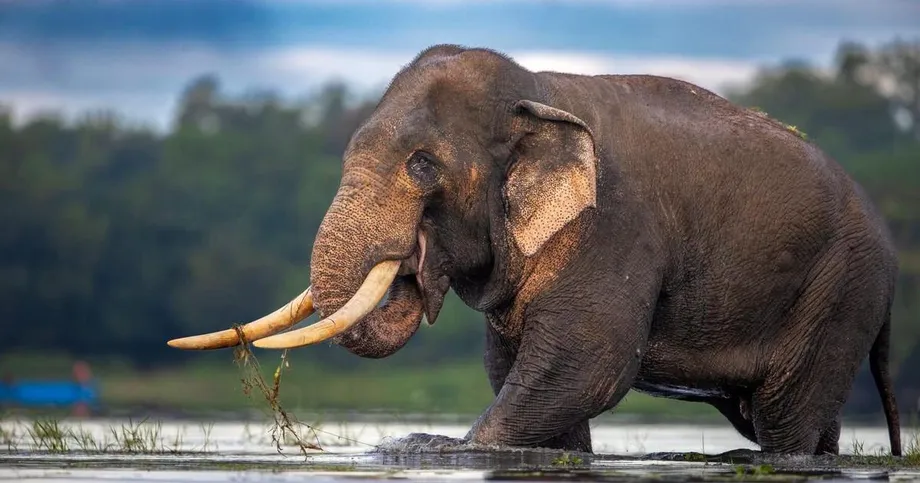
Two suspects held as court seeks scientific answers
Two men arrested over the shooting of Kavantissa, one of Sri Lanka's best known wild tuskers, have been ordered to remain in custody until November 11 as the Mahawa Magistrate's Court seeks forensic evidence and an expert examination of his veterinary treatment. The elephant died at about 6.18 p.m. on October 16, after weeks of illness following a gunshot injury near Galgamuwa in northwestern Sri Lanka.
Contents
- Two suspects held as court seeks scientific answers
- How investigators reached the suspects
- A shooting inquiry and a medical review
- From the first limp to the final collapse
- Veterinarians defend their work as scrutiny grows
- Why one elephant drew a nation into mourning
- What the law can require
- Hundreds of deaths beyond the famous tusker
- The tusks became part of the debate
- Key Points
At the October 28 hearing, Magistrate Anuruddika Seneviratne denied bail to Shantha Dharmasiri and Lakmal Padmakumara, citing the state of the investigation and concerns about possible influence on witnesses. She ordered reports on firearms and ammunition, along with an expert assessment of whether the elephant suffered harm during treatment.
Kavantissa's death has brought two questions before the authorities: who was responsible for his injury, and whether the care he received can explain his subsequent decline. The investigation has also placed a much wider problem in public view. Sri Lanka recorded 455 elephant deaths in 2025, including 79 attributed to gunshot injuries.
The tusker's final days drew politicians, Buddhist monks, veterinarians and wildlife enthusiasts to an effort to save him. His death then brought protesters to the Department of Wildlife Conservation headquarters, demanding accountability. The court proceedings now put medical records, forensic examinations and witness statements at the centre of that demand.
The cause of death, the circumstances of the shooting and any responsibility for harm during treatment remain under investigation. Neither suspect has been convicted. November 11 is the next date identified in the remand order.
How investigators reached the suspects
Wildlife officer Chathura Gunaratne told the court that investigators gathered information around Hunugallaewa while posing as members of a drama group. Information from a local shopkeeper helped direct their inquiries towards Padmakumara.
Gunaratne said officers went to Padmakumara's home after receiving information that game meat was being kept there. They found three cartridges and about three kilograms of game meat during the raid, according to the account presented in court. Investigators also raised questions about a licensed firearm and the areas in which it was licensed and allegedly used.
Gunaratne told the magistrate that Padmakumara had denied firing at Kavantissa and had named Dharmasiri as the shooter. Investigators said they were still examining who fired the shot and had received information about an eyewitness. Five other people had also been arrested, bringing the total mentioned during the hearing to seven.
Defence lawyer Uday Rajapaksa challenged the strength of the evidence, arguing that the arrests relied on village rumours and questioning how witness information had been obtained. He asked for an independent body to take over the investigation from the wildlife department and the Walana unit involved in the inquiries.
The magistrate directed investigators to submit their reports without unnecessary delay. She also cautioned against repeatedly extending detention without evidence, while refusing bail because of the concerns raised about witnesses and the continuing investigation.
A shooting inquiry and a medical review
The Department of Wildlife Conservation had described Kavantissa's injury as coming from a trap gun, according to the department's account cited by elephant scientist Prithiviraj Fernando. A trap gun is a concealed firearm set to discharge when an animal triggers it. At the hearing, the defence asked investigators to explain how that description fitted the allegations against the suspects.
Firearms, live ammunition and cartridge cases are to undergo forensic examination. Such examinations can help investigators assess the weapons and ammunition involved. The medical review has a different task: reconstructing the elephant's condition, the treatment decisions and the changes in his health.
Lawyer Vijitha Wickramanayake, representing the Protected World organisation, urged a broad investigation into both the shooting and the subsequent care. Lawyer Ravindra Irugal Bandara, appearing for an elephant protection organisation, also opposed bail and raised concerns about possible interference with witnesses.
The court's orders bring these lines of inquiry together. A full account of Kavantissa's death requires evidence about the original wound as well as what happened during the weeks that followed.
From the first limp to the final collapse
Kavantissa was first seen limping on September 22. He was in musth, a recurring period in adult male elephants associated with hormonal changes and heightened sexual activity. The wildlife department began treating him two days later, initially giving antibiotics by dart and sedating him the following day.
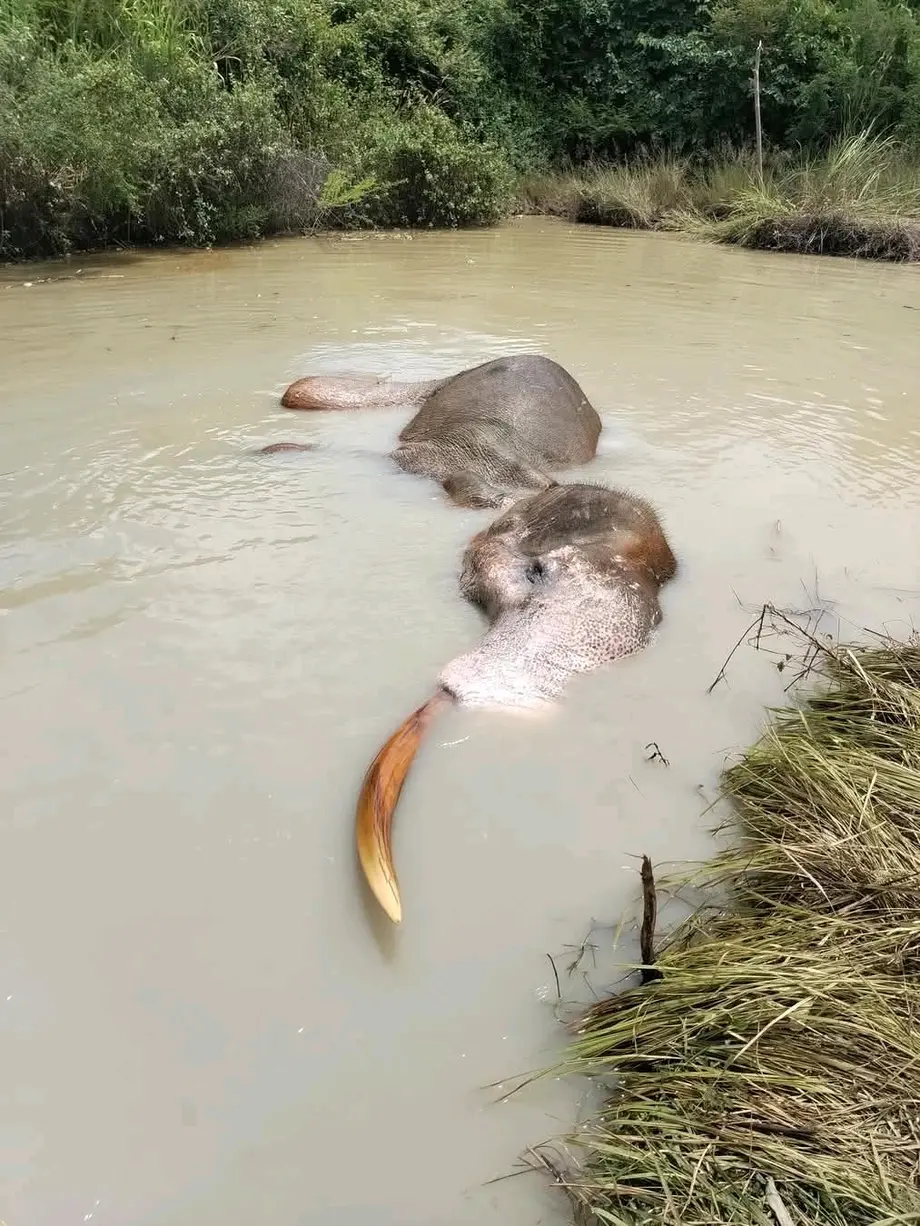
The department said he was responding well, but he was not seen again until October 2. His later symptoms included severe diarrhoea, feeding difficulties and time spent submerged in water. The sequence of sightings and treatment is central to understanding his decline.
- September 22: Kavantissa was seen limping.
- September 24 and 25: Antibiotic treatment began, followed by sedation the next day.
- October 2: He was seen again after a gap in sightings.
- October 5 and 6: Severe diarrhoea was observed, and treatment resumed the following day.
- October 15 and 16: He fell, suffered cardiac arrest the next evening and died despite attempts to revive him.
- October 19 and 28: The case came before the court, followed by the hearing that extended the two suspects' remand until November 11.
Senior wildlife veterinary surgeons were present when Kavantissa suffered cardiac arrest. One reportedly climbed onto his chest while attempting cardiopulmonary resuscitation, an emergency effort to restore circulation after the heart stops.
The department initially said it was seeking a court order for a post-mortem examination and planned to involve specialists, including personnel from the University of Peradeniya. After the examination, the department described how the elephant's remains were handled, but the findings establishing the cause of death have not been made public in the accounts of the proceedings.
Veterinarians defend their work as scrutiny grows
Videos of officers repeatedly darting Kavantissa prompted criticism on social media. Some users alleged negligence or speculated about excessive antibiotic treatment. The court has now requested an expert review of possible harm during care, giving those concerns a formal route for examination.
Department Director General Ranjan Marasinghe defended the veterinary team and said it had made every effort to save the tusker. He described the treatment as a coordinated operation drawing on experience across the profession.
"When an iconic tusker like Kavantissa is injured, our team of veterinarians act together as a team. We also welcome opinions of other senior veterinarians in the country who excel in treating elephants, so it is a planned operation," Marasinghe said.
Tharaka Prasad, a former director of wildlife health at the department, called for a scientific assessment that considered the elephant's symptoms alongside his treatment records and post-mortem findings.
"The reported history of feeding difficulties, prolonged absence of faeces and subsequent severe diarrhoea raises important clinical questions that must be assessed alongside the elephant's medical records, treatment history and any post-mortem findings," Prasad said.
Proposals for an independent review include preserving treatment records and samples, preparing a complete treatment timeline and involving specialists who did not take part in the care. Those steps would allow reviewers to examine what was observed, what medicines were given and how decisions changed as Kavantissa became more seriously ill.
Why one elephant drew a nation into mourning
Kavantissa was named after an ancient Sinhala king who ruled southern Sri Lanka in the second century B.C.E. His imposing appearance and gentle behaviour made him a favourite among wildlife photographers, especially when he crossed busy roads near Galgamuwa with elephant herds.
Opposition leader Sajith Premadasa was photographed kissing the tusker's head, while images of Environment Minister Dhammika Patabendi visiting in heavy rain also spread widely. Buddhist monks chanted Pirith, traditional verses invoking blessings. Businessman Dudley Sirisena offered to pay for treatment, including bringing in a veterinary team from abroad.
Former president Mahinda Rajapaksa also paid tribute after the tusker's death. Religious observances and a memorial ceremony followed, while wildlife enthusiasts demanded justice outside the wildlife department's headquarters.
Kavantissa's visibility helped turn a wildlife emergency into a national event. Fernando, who leads the Center for Conservation and Research, has urged people to carry that concern beyond one famous animal and towards the conditions that expose hundreds of elephants to injury and death.
What the law can require
Sri Lanka's Fauna and Flora Protection Ordinance provides the legal basis for investigating unlawful harm to elephants. Section 12 protects elephants against unlawful shooting, injury or killing even outside national reserves and sanctuaries. Section 20(1)(a) also addresses unlawful shooting, killing, injury and harm caused through devices such as electric wires.
Sections 67D and 67E concern wildlife authorities' investigative powers and the application of criminal investigation procedures. For readers following Kavantissa's case, the practical point is straightforward: an unlawful attack on an elephant can lead to a criminal investigation and prosecution.
Environmental groups have also used court petitions to seek action from public authorities. After seven elephants were found dead in Habarana's Hiriwadunna area in September 2019, the Centre for Environmental Justice filed petition CA/Writ/26/2020 on February 10, 2020. It sought a proper investigation, alongside a national policy, guidelines and a management plan for elephant protection.
A September 10 ruling in CA (Writ) 318/2025 allowed an elephant identified as Elephant X to be represented by the Centre for Eco-Cultural Studies. The case concerned an elephant that survived a railway collision in which seven others died. The Court of Appeal granted relief that included a requested mechanism bringing public bodies, civil society representatives and elephant specialists together to prevent railway deaths.
Earlier environmental cases also recognised organisations' ability to bring genuine conservation concerns before the courts. A 1996 ruling accepted the Environmental Foundation's interest in challenging permission for a private zoo. In the 2020 Wilpattu forest case, the Court of Appeal ordered remedial action after forest clearance had already occurred. These cases provide routes through which organisations can seek official action after wildlife or habitat has been harmed.
Hundreds of deaths beyond the famous tusker
Sri Lanka recorded 488 elephant deaths in 2023, around 388 in 2024 and 455 in 2025. Recorded deaths from gunshot injuries fell from 98 in 2023 to 84 in 2024 and 79 in 2025.
The figures show two trends moving in different directions. Shooting deaths fell by 19 between 2023 and 2025, a reduction of about 19%. Yet total recorded deaths rose by about 67 between 2024 and 2025, roughly 17%. Gunshot injuries accounted for about one in six recorded elephant deaths in 2025.
Elephants that survive shootings can face infection, lasting injury and prolonged suffering. Illegal trap guns remain a threat, while conservationists have raised concerns that giving farmers greater access to firearms for crop protection could increase harm.
Farmers also face real losses when elephants damage crops. Protecting their livelihoods is part of addressing the conflict, alongside protecting elephants. Forest clearance around Kavantissa's habitat adds pressure to places used by both people and wildlife.
Fernando has cautioned against relying on individual guards or constant surveillance to protect famous tuskers. Elephants can move across hundreds of square kilometres, including dense habitat shared with other animals. A guard following one elephant would still face the danger of a concealed trap gun.
Fernando, an elephant scientist and head of the Center for Conservation and Research, described protection of the wider population as the necessary response.
"Ultimately, the only effective way to protect iconic tuskers, or any other elephant, is to protect elephants in general and address the wider threats they face," Fernando said.
The tusks became part of the debate
After the post-mortem examination, Kavantissa's head was separated from his body and moved to a secure location to prevent the tusks from being removed, according to the wildlife department. The remainder of his body was cremated at the site.
Fernando questioned whether retaining the tusks matched the public desire to honour the elephant. He argued that the high value attached to ivory can increase the danger facing living tuskers, and suggested cremating the entire body, including the tusks.
His proposal connects the handling of Kavantissa's remains with the risks faced by other elephants. The department's action focused on securing the tusks after death; Fernando's argument focused on reducing the value people attach to ivory while animals are alive.
The court's immediate work remains more concrete: obtaining forensic reports, examining the treatment and assessing witness evidence. Those findings will shape accountability for Kavantissa's death. The wider conservation challenge is to reduce the conditions that brought him, and many less familiar elephants, into danger.
Key Points
- Kavantissa died on October 16 after weeks of illness following a gunshot injury.
- The Mahawa Magistrate's Court remanded Shantha Dharmasiri and Lakmal Padmakumara until November 11.
- The court ordered forensic reports and an expert assessment of possible harm during veterinary treatment.
- The defence challenged the evidence and requested an independent investigation.
- Sri Lanka recorded 455 elephant deaths in 2025, including 79 from gunshot injuries.
- Conservationists are calling for protection that addresses threats to all elephants, alongside accountability in Kavantissa's case.