Debt payments reach nearly Rs 99 billion in three months
Nepal's public debt reached Rs 3,009.12 billion by mid-October 2026, crossing Rs 3 trillion for the first time, according to the Public Debt Management Office. During the first quarter of fiscal year 2026/27, the government spent Rs 98.87 billion servicing debt, almost 3.5 times the Rs 28.42 billion spent on capital expenditure.
Contents
- Debt payments reach nearly Rs 99 billion in three months
- How the balance crossed the threshold
- Domestic loans dominate new borrowing
- Borrowing accelerated through the quarter
- Repayments absorb more than capital investment
- A decade of rising obligations
- Why low repayment risk can coexist with budget pressure
- The commission wants loans reserved for productive projects
- Tracking where the money goes
- Key Points
The debt office's figures put outstanding borrowing at 45.59 percent of gross domestic product (GDP), the value of goods and services produced in the economy in a year. External debt accounted for Rs 1,598.81 billion, while domestic debt stood at Rs 1,410.31 billion.
The government received Rs 123.33 billion in new loans during the quarter and repaid Rs 77.75 billion in principal, the original amount borrowed. A favorable change in exchange rates reduced the rupee value of its debt by another Rs 18.16 billion. Together, those movements raised the outstanding balance by Rs 27.41 billion from the start of the fiscal year.
Nepal's oversight bodies have focused on where borrowed money goes. The Office of the Auditor General says borrowing has financed routine expenses as well as investment. The National Natural Resources and Fiscal Commission wants domestic loans reserved for projects that create jobs, build productive assets and generate lasting benefits.
The Asian Development Bank offers a less alarming assessment of repayment risk, describing Nepal as remaining at low risk of debt distress despite greater financing needs. The immediate budget pressure is nevertheless visible: substantial payments on existing loans are falling due while spending on new public assets remains much smaller.
How the balance crossed the threshold
Nepal began fiscal year 2026/27 in mid-July with Rs 2,981.70 billion in outstanding debt. By the end of the first three months, the balance had increased by about 0.92 percent.
New borrowing and the increase in outstanding debt are different measures. New loans add to the balance, principal repayments reduce it, and changes in currency values alter how much foreign debt is worth in Nepali rupees. Interest payments are a cost of borrowing rather than a repayment of the original loan.
The quarter's figures fit that calculation: Rs 123.33 billion borrowed, minus Rs 77.75 billion in principal repayments and a Rs 18.16 billion exchange rate gain, produced the net increase of Rs 27.41 billion.
The exchange rate gain helped contain the increase this quarter. Nepal's obligations in foreign currencies can become cheaper in rupee terms when exchange rates move favorably, or more expensive when they move the other way. The Auditor General has warned that this exposure makes public debt sensitive to external monetary conditions.
Domestic loans dominate new borrowing
External creditors account for 53.13 percent of Nepal's outstanding public debt, compared with 46.87 percent owed domestically. Measured against GDP, external debt represents 24.22 percent and domestic debt 21.37 percent.
New borrowing during the quarter followed a different pattern. The government raised Rs 100 billion domestically and received Rs 23.33 billion in external loans. Domestic borrowing therefore supplied 81.09 percent of the money received, while external borrowing contributed 18.91 percent.
Nepal has an annual borrowing target of Rs 658.28 billion. By mid-October, it had obtained 18.73 percent of that amount, leaving about Rs 534.95 billion to raise during the rest of the fiscal year.
Domestic borrowing was close to a quarter of its annual target: Rs 100 billion against a planned Rs 410 billion, or 24.39 percent. External loan receipts reached just 9.39 percent of the Rs 248.28 billion target. The figures show that foreign financing was arriving much more slowly relative to its annual plan.
Borrowing accelerated through the quarter
Monthly receipts increased from Rs 23.84 billion in the first month to Rs 61.38 billion in the third. Borrowing in the final month was about 2.6 times the amount received in the first.
The progression, alongside the opening and closing debt balances, shows how the quarter developed:
- Mid-July 2026: Nepal entered the fiscal year owing Rs 2,981.70 billion.
- Mid-July to mid-August: The government received Rs 23.84 billion in loans.
- Mid-August to mid-September: Loan receipts rose to Rs 38.11 billion.
- Mid-September to mid-October: Receipts increased to Rs 61.38 billion.
- Mid-October: Outstanding debt reached Rs 3,009.12 billion after repayments and currency adjustments.
The larger receipts toward the end of the quarter brought total borrowing to Rs 123.33 billion. Even so, with one quarter of the fiscal year completed, receipts remained below one quarter of the annual borrowing target. The domestic and external figures show that the shortfall was concentrated in external financing.
Repayments absorb more than capital investment
Nepal spent Rs 98.8735 billion on principal and interest during the quarter, according to the debt office. Principal repayments accounted for Rs 77.7478 billion and interest for Rs 21.1257 billion.
Domestic debt required most of the payments. The government paid Rs 65.105 billion in domestic principal and Rs 17.633 billion in interest, totaling Rs 82.738 billion. External principal and interest payments together reached Rs 16.1355 billion.
The government has allocated Rs 417.887 billion for debt servicing across the fiscal year. By mid-October, it had spent 23.66 percent of that allocation. Quarterly servicing costs were equivalent to 1.50 percent of GDP, comprising principal repayments of 1.18 percent and interest of 0.32 percent.
The Financial Comptroller General Office recorded only Rs 28.42 billion in capital expenditure over the same period. Debt servicing exceeded that amount by about Rs 70.45 billion. Even interest payments alone, at Rs 21.13 billion, were equivalent to roughly three quarters of capital spending.
Capital expenditure finances assets such as infrastructure and equipment that can provide benefits for years. Debt payments meet obligations arising from earlier borrowing. The Auditor General's concern is that a growing share of public resources is going toward liabilities while too little borrowed money is helping expand productive capacity.
A decade of rising obligations
Nepal's public debt stood at Rs 697.68 billion in fiscal year 2016/17, or 26.84 percent of GDP, according to debt office figures. The latest balance is about 4.3 times that amount, while the debt ratio has risen by 18.75 percentage points.
Public borrowing increased as Nepal financed reconstruction after the 2015 earthquake and later responded to the COVID-19 pandemic. Debt crossed Rs 1 trillion in fiscal year 2018/19.
Ministry of Finance figures place outstanding debt at Rs 1,433.40 billion in fiscal year 2019/20, equivalent to 38.05 percent of GDP. Compared with that level, the latest balance is about 2.1 times as large, and the debt ratio has increased by 7.54 percentage points.
Rising expenditure, declining foreign grants and revenue collection below expectations have added to borrowing needs. Grants provide financing without creating a repayment obligation; loans bring future principal and interest bills.
Dividing the latest debt balance by Nepal's population puts the amount above Rs 100,000 per person. The practical effect for households comes through public finances: taxes and other government income must support debt payments alongside schools, health care, infrastructure and other services.
Why low repayment risk can coexist with budget pressure
The Asian Development Bank expects debt to rise further during fiscal year 2026/27 as Nepal finances reconstruction and recovery following floods on August 26. Its Asian Development Outlook 2026, released in September, also assessed the country's ability to manage those obligations.
The bank's report gave the following assessment:
Despite higher financing needs, Nepal remains at low risk of debt distress,
Debt distress means difficulty meeting repayment obligations. A country can retain the ability to pay its creditors while still facing difficult choices about how much money remains for public services and investment.
The Economic Reform Recommendation Commission, formed by the government in 2024, warned that GDP and revenue need to grow alongside borrowing. Its report said rising principal and interest obligations could leave less funding for education, health and security.
The commission linked the risk to the use of borrowed funds:
If public debt is not used properly and fails to generate returns, the likelihood of the country falling into a debt trap will increase,
The two assessments address different pressures. The ADB considers Nepal at low risk of repayment trouble, while the commission points to the longer budget strain when borrowing fails to support growth and revenue.
The commission wants loans reserved for productive projects
The National Natural Resources and Fiscal Commission has recommended keeping federal domestic borrowing within 5.5 percent of GDP. It has also called for strict restrictions on using domestic loans for routine government spending.
In its recommendations on borrowing limits for federal, provincial and local governments, the commission stated:
Domestic borrowing should be allocated to projects capable of creating employment opportunities, providing long-term benefits and contributing to capital formation. Its use for recurrent and administrative expenditure should be strictly prohibited,
Capital formation means creating or improving assets that support future activity, such as transport links, facilities and equipment. Recurrent spending covers continuing costs, including employee expenses and office operations.
The commission said net domestic borrowing in fiscal year 2024/25 was only 1.41 percent of GDP because much of the borrowing raised went toward repaying existing debt. Net borrowing is the amount left after principal repayments, so a large volume of new loans can leave a much smaller addition to financing.
For project selection, the commission wants cost-benefit analysis, net present value calculations and internal rate of return assessments. These methods compare expected future benefits with costs, accounting for when money is spent and received. It recommends financially profitable projects whose returns exceed financing costs, alongside social projects with strong benefits.
Tracking where the money goes
The government has not published a clear sector breakdown showing how domestic borrowing has been used. The fiscal commission says that gap has limited its ability to assess loan use and implementation of its recommendations.
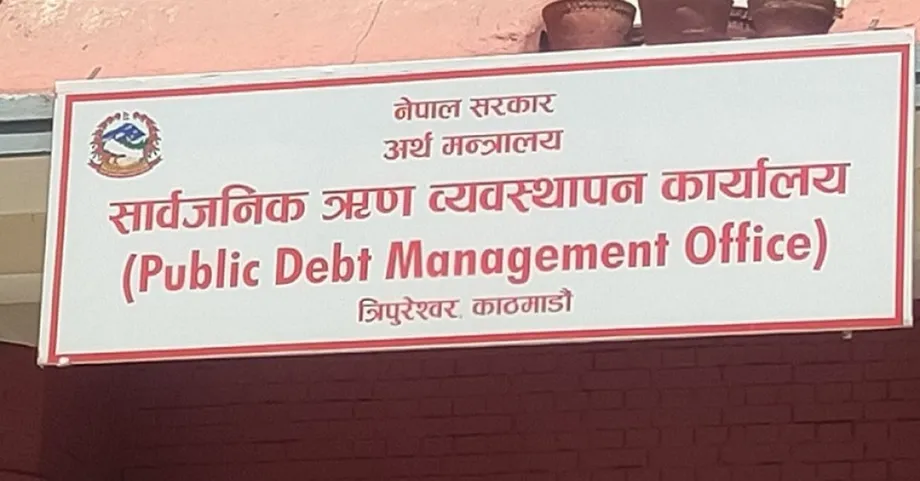
The commission wants all three levels of government to identify domestic borrowing explicitly in their budget financing details. It has also proposed an integrated electronic system for debt information, accounting and reporting through the Public Debt Management Office, with access for the commission.
The Auditor General's 63rd annual report adds a spending concern. It says borrowed funds have not been adequately directed toward capital formation and have also financed employee costs, services and consultancy, and office operations.
The audit office recommends containing recurrent expenditure, investing loans in projects that generate returns and considering financial instruments to manage currency risk. The fiscal commission also wants projects ready for implementation before borrowing is mobilised, with expected returns sufficient to cover principal and interest.
Nepal's immediate challenge is therefore more specific than the Rs 3 trillion milestone. It must meet repayment bills, improve revenue collection and ensure that new loans finance assets and services that strengthen the economy. The first quarter's nearly Rs 99 billion servicing bill, against Rs 28.42 billion in capital spending, shows the scale of that task.
Key Points
- Nepal's public debt reached Rs 3,009.12 billion by mid-October 2026, equivalent to 45.59 percent of GDP.
- The government borrowed Rs 123.33 billion during the quarter, with domestic loans providing 81.09 percent.
- Principal repayments and a favorable currency adjustment limited the net debt increase to Rs 27.41 billion.
- Debt servicing reached Rs 98.87 billion, almost 3.5 times capital expenditure of Rs 28.42 billion.
- The Asian Development Bank assessed Nepal as remaining at low risk of debt distress despite higher financing needs.
- Oversight bodies want borrowing directed toward productive projects, tighter control of routine expenses and clearer tracking of loan use.