A Missing Protein Makes Young Mouse Eggs Show Signs of Aging
Japanese researchers have identified a protein called OMC1 that helps mouse eggs preserve the chromosome connections they need for successful reproduction. When the researchers removed the protein, even young eggs developed weakened connections and chromosome separation errors resembling those seen in older eggs.
Contents
- A Missing Protein Makes Young Mouse Eggs Show Signs of Aging
- Why Eggs Need Connections That Last
- How the Team Found OMC1
- What Happened When OMC1 Was Removed?
- Restoring the Protein Reduced Errors
- A Human Gene Offers Another Clue
- Why Chromosome Errors Matter for Pregnancy
- The Study and Its Timeline
- What Researchers Can Investigate Next
- Key Points
The study, published in Nature Aging on October 29, 2026, brings together researchers from Chiba University, Kumamoto University and RIKEN. RIKEN announced the discovery on October 30 in its OMC1 research announcement, describing a protein that prevents the loss of REC8 cohesin, a complex that holds chromosome copies together.
OMC1 stands for Oocyte Meiotic Chromosome protein 1. An oocyte is an immature egg cell. Its chromosomes must remain correctly connected during a long pause in development before the cell resumes the divisions needed to produce a mature egg.
The researchers also performed a rescue experiment: restoring OMC1 in adult mouse oocytes partly restored REC8 on chromosomes and reduced chromosome errors. That result gives scientists a specific maintenance mechanism to investigate as they study why egg quality declines with age.
Why Eggs Need Connections That Last
Female mammals form their supply of oocytes before birth. These cells begin meiosis, the special process that reduces the number of chromosomes for reproduction, then pause partway through. In humans, that pause can last for decades.
Chromosomes carry genetic instructions. Before the pause, each chromosome has been copied, producing two matching structures called sister chromatids. REC8 cohesin acts like a molecular fastening system that keeps those copies connected until the appropriate stage of division.
An egg needs those connections to release at the right time. If they weaken too early, chromosomes can separate incorrectly, leaving the mature egg with too many or too few chromosomes.
REC8 cohesin is not replenished during this long resting period. Its gradual loss is considered a major contributor to chromosome errors in aging eggs. The researchers wanted to understand whether oocytes actively protect this lasting supply of cohesin.
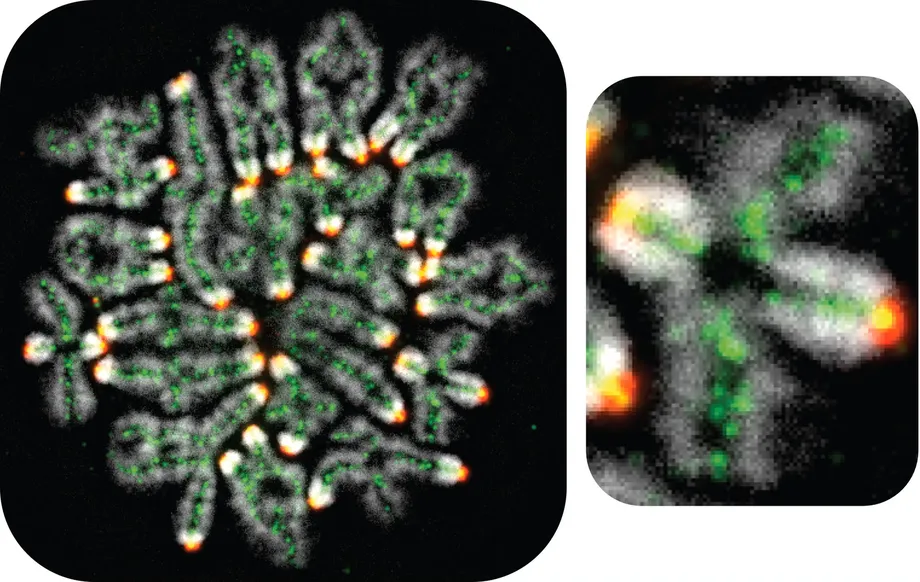
Their discovery places OMC1 alongside REC8 in that protective process. RIKEN says OMC1 remains on oocyte chromosomes with REC8 and helps prevent the complex from disappearing.
How the Team Found OMC1
Professor Kei-ichiro Ishiguro of Chiba University's Graduate School of Medicine led the research. The team included doctoral student Sakie Iisaka and lecturer Ryuki Shimada at Chiba University, together with Tomoya S. Kitajima, deputy director and team director at the RIKEN Center for Biosystems Dynamics Research, and RIKEN technician Shuhei Yoshida.
The researchers began by comparing gene activity in immature fetal oocytes with activity in male germ cells, the cells that give rise to sperm. Male germ cells do not undergo the same prolonged pause as oocytes, making the comparison useful for finding genes associated with that distinctive waiting period.
They used single-cell RNA sequencing, a technique that reads RNA messages in individual cells. Those messages show which genes a cell is using. Combined with information from mice in which meiosis was delayed, the analysis identified a previously uncharacterized gene that became active in oocytes shortly before the pause.
The team named the gene Omc1 and its protein OMC1. Further experiments found the protein in the same chromosome locations as REC8 cohesin, from fetal development through adulthood.
What Happened When OMC1 Was Removed?
Mice engineered to lack Omc1 allowed the researchers to examine what happens when this maintenance system is missing. Once their oocytes entered the prolonged resting stage, REC8 began disappearing from chromosomes earlier than normal.
Young oocytes then showed reduced chromosome cohesion, meaning the connections between chromosome copies were weaker. They also made errors when distributing chromosomes during division, resembling problems commonly associated with older eggs.
The experiments described in the Japanese account also found that chromosomes separated abnormally early and that the proportion of fertilized eggs developing into normal embryos fell sharply. No numerical percentage was given for that decline.
The sequence connects a molecular change to a reproductive outcome: loss of OMC1 was followed by reduced chromosome connections, faulty separation and poorer embryo development. The finding helps explain why preserving the structures already present in an egg matters throughout its long resting period.
Restoring the Protein Reduced Errors
The researchers next introduced messenger RNA carrying instructions for making OMC1 into oocytes that lacked the protein. Messenger RNA, often shortened to mRNA, is a temporary set of instructions that a cell can use to produce a particular protein.
Restoring OMC1 in adult oocytes partly recovered the amount of REC8 attached to chromosomes and reduced chromosome errors. The Japanese account also describes suppression of the premature separation seen when OMC1 was absent.
Ishiguro, the Chiba University professor who led the study, described OMC1's role in terms of chromosome maintenance:
"Based on these results, OMC1 should be regarded not as a factor that stops aging itself, but as a maintenance factor that extends the chromosomal lifespan of eggs," said Ishiguro.
The partial recovery gives researchers a way to study how OMC1 preserves chromosome connections in adult eggs. It also leaves a practical question for future experiments: how much protection can be recovered at different stages of an egg's life, particularly after substantial cohesin loss.
A Human Gene Offers Another Clue
Humans have a counterpart of the mouse gene called CCDC201. Previous genetic studies have associated variants in CCDC201 with early menopause and loss of ovarian function, giving the mouse experiments a connection to human reproductive health.
The researchers examined that connection by making a shortened version of mouse OMC1 modeled on one human CCDC201 variant. A shortened protein is missing part of its usual structure, which can affect where it goes inside a cell and whether it can perform its job.
The altered mouse protein failed to reach the oocyte chromosomes and could not restore chromosome cohesion. Together with the earlier human genetic findings, this suggests that disrupted OMC1 or CCDC201 function may help explain some differences in reproductive aging.
The work now points toward studying how human CCDC201 functions in oocytes and how particular variants affect it. The restoration experiments described here were carried out in mouse cells; a treatment for patients and a timetable for clinical use have not been announced.
Why Chromosome Errors Matter for Pregnancy
An egg normally needs half the usual chromosome complement so that fertilization can combine it with the chromosomes carried by sperm. Meiosis achieves that reduction through carefully ordered divisions. Weak chromosome connections can upset that ordering.
An abnormal chromosome number is called aneuploidy. In human reproduction, it is an important cause of infertility and early miscarriage. Some chromosome abnormalities can lead to a continuing pregnancy and a child with a condition such as Down syndrome, which involves an extra copy of chromosome 21.
The risk of chromosome errors in eggs rises with maternal age. The OMC1 research identifies a protein that helps preserve one of the structures needed for accurate chromosome distribution, bringing the explanation down to a specific maintenance process inside the cell.
For people concerned about fertility, the immediate development is a clearer biological explanation rather than a new clinical option. The experiments give researchers a target for investigating egg quality, while human reproductive outcomes will require further study.
The Study and Its Timeline
The paper is titled Oocyte-specific OMC1 is required for maintaining chromosome cohesion through reproductive life. Its identifier is DOI: 10.1038/s43587-026-01245-5. The collaboration included researchers affiliated with Chiba University, Kumamoto University, RIKEN and Kyushu University.
The key dates and developmental stages are:
- During fetal development, the researchers detected Omc1 activity shortly before oocytes entered their prolonged resting stage.
- From fetal development through adulthood, OMC1 remained on oocyte chromosomes alongside REC8 cohesin.
- In adult mouse oocytes lacking OMC1, restoring the protein partly recovered chromosome associated REC8 and reduced errors.
- October 29, 2026: The study was published in Nature Aging.
- October 30, 2026: RIKEN issued its announcement of the discovery.
These experiments follow the protein across the period when eggs must preserve their chromosome connections. They also connect its presence during development with its function in adult oocytes.
What Researchers Can Investigate Next
OMC1 gives scientists a specific route for examining why chromosome cohesion lasts longer in some circumstances than in others. The loss experiment shows what happens without the protein, while the restoration experiment provides a way to explore how much of the maintenance process can recover.
Ishiguro linked the research to the growing number of people having children later in life. He described its possible longer term value:
In the longer term, these findings may contribute to the development of approaches for understanding, assessing or potentially mitigating the age-related decline in egg quality.
The human CCDC201 findings provide another direction: investigating how changes in this gene affect chromosome maintenance and ovarian function. For now, the clearest result is that mouse oocytes use OMC1 to help retain REC8 cohesin, preserving chromosome connections needed for accurate division.
Key Points
- Japanese researchers identified OMC1, a protein that helps mouse oocytes retain REC8 cohesin on their chromosomes.
- Young mouse eggs lacking OMC1 developed weakened chromosome connections and separation errors resembling those in older eggs.
- Restoring OMC1 in adult mouse oocytes partly recovered chromosome associated REC8 and reduced errors.
- A shortened mouse protein modeled on a human CCDC201 variant failed to reach chromosomes or restore their connections.
- The study appeared in Nature Aging on October 29, 2026, followed by RIKEN's announcement on October 30.
- The findings open a research direction for understanding egg aging; no patient treatment was announced.