Two executions put prisoner information under scrutiny
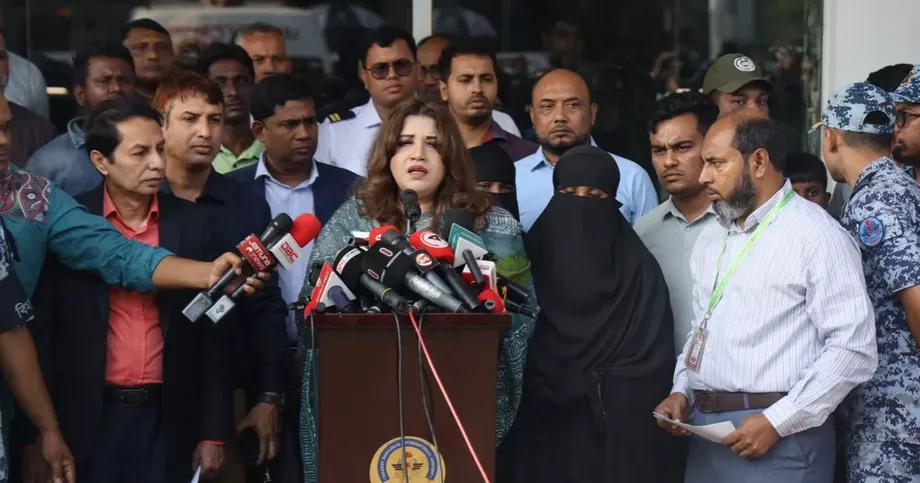
Bangladesh has requested court judgments and an explanation from Saudi Arabia after two Bangladeshi nationals were executed in Makkah on 14 October 2026 without advance notification to its diplomatic missions. Around 7,500 Bangladeshis are being held in Saudi prisons, State Minister for Foreign Affairs Shama Obaed Islam said in Dhaka on Friday, 23 October.
Contents
- Two executions put prisoner information under scrutiny
- What the prison records said about the two nationals
- How the requests for answers unfolded
- Notification and legal assistance are central concerns
- What the wider prison figures show
- Scrutiny reaches across successive governments
- A plumber's journey home ends at Dhaka airport
- Conflict deaths add to the burden on families
- Stranded workers seek visas and jobs
- Key Points
The two executed nationals were identified as Nazrul Islam Abdul Bashir and Sweety Akhtar. A confidential memorandum from Bangladesh's consulate in Jeddah said they had been detained since August 2023 under separate allegations involving cybercrime and adultery. A Saudi Interior Ministry announcement described their convictions as involving an immoral act inside a mosque in Makkah.
Bangladesh has called in the Saudi ambassador and formally requested the judgments. The consulate has also sought details of the judicial proceedings from the Makkah branch of Saudi Arabia's Ministry of Foreign Affairs.
Shama made her remarks at Hazrat Shahjalal International Airport while receiving the body of Md Shahed Ahmed, a Bangladeshi plumber killed in an attack at Riyadh's King Khalid International Airport. His return brought together several urgent problems facing Bangladeshi workers in Saudi Arabia: imprisonment, access to diplomatic assistance, deaths in regional conflict and difficulties returning to employment.
Shama, the state minister responsible for foreign affairs, described the scale of imprisonment using information held by Bangladesh:
According to information available to Bangladesh, around 7,500 Bangladeshis are being held in prisons across Saudi Arabia.
Saudi Arabia periodically sends Bangladesh lists of prisoners and people convicted of offences. Shama said the government was checking whether the two executed nationals appeared in those records.
What the prison records said about the two nationals
A confidential consular letter dated 18 October gives a more detailed account of the detention records. It says a prisoner list received by the Bangladesh Consulate General in Jeddah on 30 September recorded Nazrul's detention on 1 August 2023 over an alleged offence under Saudi Arabia's cybercrime law. Sweety was detained the following day on allegations of adultery.
The list reportedly included both names without indicating that either person had received a death sentence. Shama's later statement that officials were checking the lists leaves the handling of those records central to Bangladesh's inquiries.
Saudi Arabia's Interior Ministry said the death sentences followed judicial proceedings and approval before execution. Its public description concerned an immoral act inside a mosque, while the consular detention records listed the two separate allegations.
The precise conduct involved, the evidence, the final legal grounds for the death sentences, and whether either defendant had a lawyer or interpreter remain unknown to Bangladeshi officials awaiting the judgments. Saudi Arabia had given no date for providing them.
The consulate said it knew of no previous case in which a Bangladeshi had received a Saudi death sentence for an offence under the cybercrime law or for adultery. That makes the requested court documents especially important for explaining how the cases developed between detention and execution.
How the requests for answers unfolded
Bangladesh's efforts to obtain information continued for more than a week after the executions. Foreign Ministry spokesperson Shahidul Karim said on 21 October that Saudi Arabia had not responded to the inquiries. Two days later, Shama said detailed information was still outstanding.
The sequence connects detention records dating from 2023 with diplomatic requests made in October 2026:
- 1 and 2 August 2023: Nazrul and Sweety were detained on successive days, according to the consular memorandum.
- 30 September 2026: The Jeddah consulate received a Saudi prisoner list containing both names, reportedly without death sentences recorded.
- 14 October: Saudi authorities executed the two nationals in the Makkah region.
- 17 October: Shama confirmed that Bangladesh had formally requested information about the offences, proceedings and lack of notification.
- 18 October: The consulate sent its memorandum to the Ministry of Expatriates' Welfare and Overseas Employment.
- 21 October: Shahidul Karim said Saudi Arabia had not responded.
- 23 October: Shama renewed the request for judgments while speaking at Dhaka airport.
Notification and legal assistance are central concerns
The Jeddah consulate's memorandum said Saudi authorities had not informed Bangladesh's embassy or consulate about the death sentences or executions, either officially or unofficially. Bangladesh learned of the executions after they occurred, through public information referring to the Saudi Interior Ministry announcement.
Shama identified the lack of notification as the immediate problem facing the government:
The problem is that we were not informed of the sentences imposed on the two Bangladeshis who were executed.
The consulate also said neither family had applied for legal assistance or contacted it seeking help. Its account described interpreting assistance in Saudi courts, with defendants unable to choose their own interpreters under that arrangement.
For a person facing trial abroad, an interpreter helps them understand the court's language and communicate their answers. A lawyer can explain the accusation, examine the case and advise on available legal steps. Bangladesh's request for details of the proceedings includes establishing what assistance the two defendants received.
Human Rights Forum Bangladesh has called for an independent review of the diplomatic mission's handling of the cases, including whether officials adequately followed up on incomplete prisoner records. Shama said allegations of negligence by missions would be investigated and action taken if substantiated.
What the wider prison figures show
The estimate of 7,500 prisoners covers different parts of Saudi Arabia. The consular memorandum provides a narrower regional picture: 306 Bangladeshis were imprisoned in the country's western region, including 147 serving sentences ranging from one month to 15 years.
Those 147 people represented about 48 percent of the 306 prisoners recorded in the region. The document also referred to three cybercrime cases carrying prison terms of six months to five years. Together, these figures show why officials need details of individual cases as well as a total prisoner count: the sentences recorded vary widely.
Bangladesh's response involves the Foreign Ministry, the Ministry of Expatriates' Welfare and Overseas Employment, and the Home Affairs Ministry on legal matters. Shama said diplomatic contact can be used to seek a reduced sentence or explore a pardon, which is an official decision forgiving or reducing punishment.
Shama explained the government's approach when it learns that a citizen has been sentenced:
When we learn that any Bangladeshi has been sentenced in Saudi Arabia, we communicate with the Saudi authorities through diplomatic channels to seek a reduction in the sentence or explore whether there is any process for a pardon.
Scrutiny reaches across successive governments
Shama said Bangladesh respects other countries' judicial systems while seeking information and assistance for its citizens. Her stated approach combines accepting Saudi jurisdiction with asking to know when a Bangladeshi faces serious punishment.
The minister also brought the cases into Bangladesh's domestic political debate. She pointed out that the events dated from 2023, when the Awami League was in government, and referred to the subsequent interim administration before the current Bangladesh Nationalist Party government.
She said the current government had been in office for about six months and had not received the relevant information during that period. Her comments placed responsibility for following the cases across successive administrations, while the consular records and notification process remain the practical focus of the requests to Saudi Arabia.
Bangladesh's next steps depend on receiving the judgments and further discussions with Saudi officials. The Jeddah consulate said it would submit another report after obtaining the court documents.
A plumber's journey home ends at Dhaka airport
Shahed Ahmed's body arrived in Dhaka shortly after 8am on 23 October. His remains and government assistance were handed over to his wife, Kohinur Akter Kakoli. Shama also said a government grant would be delivered to the family quickly.
Shahed came from Madla village in Shahjahanpur upazila of Bogura. His parents were named as Rafiqul Islam and Shahera Begum. He worked as a plumber on a project in Jeddah for a Saudi contracting company and held an iqama, the Saudi residence permit used by foreign workers.
He had returned to Bangladesh following his brother's death. After taking leave to attend the funeral, he was travelling back to his job through Riyadh when the 10 October attack struck King Khalid International Airport.
Bangladesh's Foreign Ministry attributed the attack to the Houthi armed group. It said another Bangladeshi, Md Nasrullah Badarpuri, from Badarpur village in Nangalkot upazila of Cumilla, was also killed, and 24 Bangladeshis were injured.
Shahed's death illustrates how travel between home and employment can expose migrant workers to conflict far from their actual workplace. His job was in Jeddah; the fatal attack occurred while he was passing through Riyadh.
Conflict deaths add to the burden on families
Shahed was the 11th Bangladeshi killed in Middle East conflicts whose body had been brought home during the preceding six months, Shama said. Three Bangladeshis had been killed in missile attacks in Saudi Arabia during the preceding month.
His body was the one returned that Friday. The government was arranging to bring home the others, according to the minister. For the families involved, repatriation means getting their relatives' remains back to Bangladesh for burial while dealing with the loss of someone working abroad.
More than four million Bangladeshis work in Saudi Arabia, Shama said. The size of that workforce means that attacks, interrupted travel and problems with official documents can affect many Bangladeshi households alongside the workers themselves.
The minister called for the Middle East war to stop and expressed the hope that Bangladeshis and people of every nationality would be spared such attacks.
Stranded workers seek visas and jobs
Bangladesh is discussing visa and iqama extensions with Saudi Arabia for workers unable to return to their jobs because of the regional conflict. The talks also cover visa renewal, rehabilitation and employment opportunities for Bangladeshis who have lost work abroad.
A visa allows someone to enter or remain in a country under specified conditions. An iqama documents residence in Saudi Arabia. Workers stranded in Bangladesh may need action on these documents before they can resume their employment, so the government's discussions concern both permission to return and the ability to work again.
Shama said Bangladesh's missions have labour welfare wings where expatriates can submit complaints. Officials assigned through the ministries responsible for expatriate welfare or labour work in those wings.
Assistance to expatriates is a responsibility of both the government and its missions, she said. The promises to investigate negligence, seek court documents and negotiate document extensions now form three concrete areas in which affected workers and families are seeking action.
Key Points
- Around 7,500 Bangladeshis are in Saudi prisons, according to State Minister Shama Obaed Islam.
- Nazrul Islam Abdul Bashir and Sweety Akhtar were executed in Makkah on 14 October 2026.
- Bangladesh says its missions received no advance notification and has requested the judgments and details of the proceedings.
- A consular memorandum records separate allegations at detention in August 2023; officials are awaiting the final court documents.
- Shahed Ahmed's body returned to Dhaka on 23 October after his death in the Riyadh airport attack.
- Bangladesh is also discussing visa and iqama extensions, employment and assistance for workers affected by the Middle East conflict.