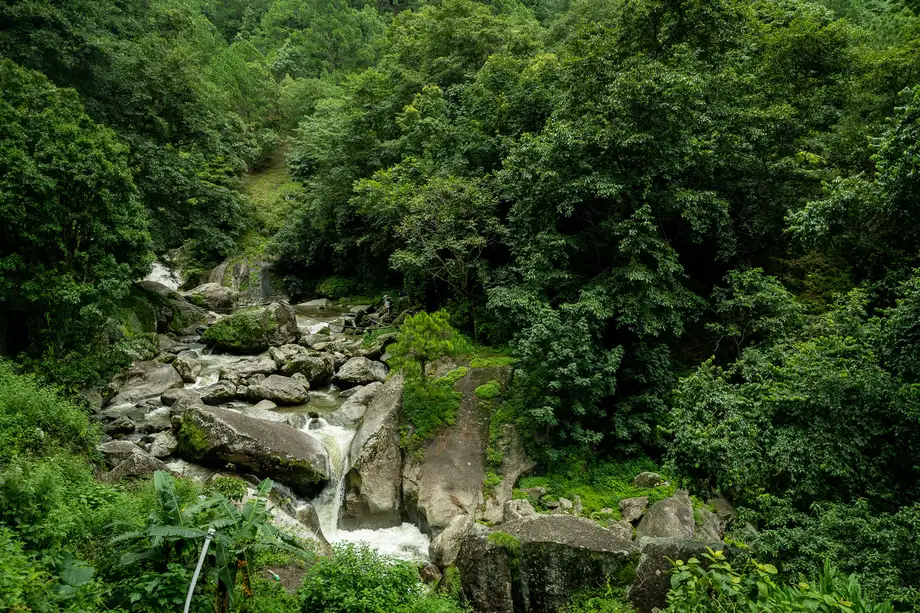
From relatively clean headwaters to oxygen-starved rivers
The Bishnumati reaches zero dissolved oxygen around Khusibu and Teku. The Bagmati becomes so contaminated by Chobhar that a water quality assessment describes it as extremely unsafe even for irrigation. Across six Kathmandu Valley river systems, testing traces a repeated pattern: water deteriorates as sewage and other waste enter from urban settlements.
Contents
- From relatively clean headwaters to oxygen-starved rivers
- What the water tests reveal
- The Bagmati loses its gains downstream
- Dhobikhola and Bishnumati follow the same decline
- Nakhu and Tukucha show different starting conditions
- Hanumante gathers pollution at its confluences
- Earlier laboratory findings add a bacterial warning
- How the testing unfolded
- Lawmakers seek sewage control and a coordinated plan
- What to Know
The River Water Quality Analysis Report for August 2026, prepared by the High-Powered Committee for Integrated Development of the Bagmati Civilization, examines the Bagmati, Dhobikhola, Bishnumati, Nakhu Khola, Tukucha and Hanumante. Several retain relatively healthy water near their sources, then become heavily polluted as they pass through populated areas.
The Bagmati illustrates how quickly that change happens. At Sundarijal, its water has relatively high oxygen, low cloudiness and comparatively little faecal contamination. The committee considers it potentially suitable for drinking after basic treatment. By Gokarna, sewage entering directly into the river has already sharply increased contamination.
The findings also connect with an earlier laboratory study of the Bagmati and three tributaries. Samples collected between December 2023 and February 2024 contained substantial bacterial contamination, while every bacterial isolate tested for antibiotic susceptibility was resistant to ampicillin.
Parliament's Infrastructure Development Committee has directed the government to control sewage discharge and bring river restoration, protection of river land and flood management into one plan. The testing identifies why that work must extend beyond a single stretch of river: pollution enters at many points, and tributaries carry their own waste into the Bagmati.
What the water tests reveal
Dissolved oxygen is the oxygen available in water for fish and other aquatic organisms to breathe. When sewage and other organic waste decompose, microorganisms use that oxygen. Heavy waste loads can leave too little for aquatic life, producing the depleted conditions recorded in several urban stretches.
Turbidity describes how cloudy water is because of particles such as soil, sand and waste. Faecal coliform bacteria indicate contamination from human or animal waste. Reading these measurements together helps explain whether a river is mainly carrying sediment, receiving sewage, or suffering from both.
Biological oxygen demand, usually shortened to BOD, measures how much oxygen microorganisms need to break down organic material in a water sample. A high BOD means that decomposition places a heavy demand on the river's oxygen supply. The earlier laboratory study found both high BOD and low dissolved oxygen.
The Nakhu Khola provides a useful example of why several measurements matter. Near an asphalt plant, its water contained substantial soil and sand but comparatively little pollution associated with organic sewage. Further downstream, sewage became a major part of its deterioration.
The Bagmati loses its gains downstream
The committee sampled 11 locations along the Bagmati, from Sundarijal to Chobhar. They included Gokarna, Jorpati, Guhyeshwari, Aryaghat, Minbhawan, the Manohara confluence, Thapathali, the Bishnumati confluence and Sundarighat.
Gokarna marks an early deterioration from the relatively clean headwaters. Direct sewage discharge raises faecal contamination, with pollution becoming more severe around Jorpati and Guhyeshwari. Cloudiness also increases sharply along these stretches.
Aryaghat shows some improvement associated with water passing through a treatment plant. Further downstream, however, the river receives more waste as it crosses densely populated neighbourhoods. By Thapathali, the assessment records extremely high turbidity, very low dissolved oxygen and substantial organic and chemical pollution.
Chobhar receives the accumulated effects of pollution from settlements and tributaries across the valley. The committee describes the water there as resembling sewage and extremely unsafe for irrigation. For people using the river downstream, contamination is therefore a practical concern for water use as well as an ecological problem.
The contrast between Aryaghat and the lower river is central to the restoration challenge. A local improvement can be overwhelmed when untreated wastewater continues entering further along the channel. Treatment and sewage control need to follow the river through the city and include the waterways that feed it.
Dhobikhola and Bishnumati follow the same decline
Dhobikhola samples were collected at six locations. At Chapali, near its source, the river had high dissolved oxygen, low turbidity and comparatively limited contamination from organic waste, chemicals and faecal bacteria.
By Ekta Basti, oxygen had fallen while turbidity and faecal contamination had risen sharply. Gopikrishna and Ratopul were particularly polluted. At Ratopul, the committee identified extensive waste contamination, very low oxygen and elevated faecal coliform levels associated with direct sewage discharge. The river remained heavily polluted around Buddhanagar before joining the Bagmati.
The Bishnumati begins in relatively good condition around Budhanilkantha, where the water can support aquatic life. Before reaching Tokha, however, it receives faecal waste and other pollutants, with falling oxygen and increasing cloudiness.
Conditions become especially poor where the Mahadev Khola joins the Bishnumati. By Khusibu, the water has the characteristics of sewage, and that condition continues towards Teku. The assessment records zero dissolved oxygen and strong odours along these severely degraded stretches.
Both rivers carry contamination into the Bagmati. Their condition means that restoring the main river also requires controlling waste in neighbourhoods along the tributaries, including places well upstream of their meeting points.
Nakhu and Tukucha show different starting conditions
The Nakhu Khola already showed visible pollution in its upper sampled reaches. Near an asphalt plant, high turbidity reflected substantial soil and sand in the water, while organic sewage pollution was relatively low. Similar cloudiness persisted near Kantipur Colony without a comparable rise in other pollution indicators.
At Rani Bu Bridge, sewage contamination had severely degraded the river. Pollution reached a critical level at its confluence with the Bagmati, where the assessment describes the water as harmful. Its course therefore combines a sediment problem upstream with serious sewage contamination further down.
The Tukucha was already severely polluted at Putalisadak, the first sampling location described in the assessment. This densely urbanised stretch had extremely low dissolved oxygen, high turbidity and elevated faecal coliform levels, pointing to direct sewage entry.
By Kalmochan Ghat, the Tukucha had become heavily contaminated with sewage. Unlike the cleaner upper sampling locations on the Bagmati, Dhobikhola and Bishnumati, the sampled Tukucha stretch offered no similar starting point of relatively healthy water.
Hanumante gathers pollution at its confluences
The Hanumante, flowing through Bhaktapur, had relatively good water quality near Gonsa and Brahmayani Ghat. Low turbidity and comparatively low faecal contamination made these stretches more suitable for aquatic life.
Near Bhadra Khola, sewage and chemical fertiliser began entering the waterway. Dissolved oxygen decreased as coliform levels increased. By the Bira Khola area, the river was heavily polluted, and oxygen fell further at the Kasan Khola confluence.
The Ghatte Khola confluence brought high turbidity and a substantial increase in suspended solids, meaning particles carried within the water. At the Godavari confluence, oxygen was close to zero. At the Manohara confluence, direct sewage entry was associated with high coliform levels.
Hanumante's pattern shows how pollution accumulates through a network rather than at one isolated outlet. Its cleaner upper stretches are progressively affected by waste arriving along the river and through adjoining streams.
Earlier laboratory findings add a bacterial warning
A study published on June 10, 2025, in Scientific World examined 24 water samples from four sampling sites on the Bagmati, Dhobikhola, Manohara and Tukucha. The researchers collected the samples between December 2023 and February 2024 and used American Public Health Association methods.
The river water study, titled Assessment of river water quality in Kathmandu valley: A physico-chemical and microbial analysis, measured dissolved oxygen at 1.02 to 3.50 milligrams per litre. Biological oxygen demand ranged from 76.8 to 285 milligrams per litre, while alkalinity ranged from 130 to 235 milligrams per litre.
The researchers reported coliform counts of 210 to 2,400 per 100 millilitres, above Nepal's drinking water standard. Thermotolerant E. coli, bacteria associated with faecal contamination, appeared in 45.83% of samples, equivalent to 11 of the 24 samples.
The study listed E. coli at 79%, Salmonella at 67%, Enterobacter and Citrobacter at 42% each, and Klebsiella at 33% among the bacteria isolated. Every bacterial isolate tested was resistant to ampicillin, an antibiotic used against bacterial infections. Resistance means the drug failed to stop those bacteria in the laboratory test.
Several other measurements, including pH, total hardness and chloride, fell within Nepal's drinking water limits. The researchers nevertheless concluded that the water required further treatment because of the combined oxygen and microbial findings. Their published assessment states:
Bagmati river and its tributaries are highly polluted and unsafe for consumption without further treatment.
The study also calculated Water Quality Index values of 13.52 to 37.52. A water quality index combines several measurements into a single score; the researchers interpreted their results alongside the individual tests, including the low oxygen and heavy bacterial contamination.
How the testing unfolded
The committee's river sampling took place during Sawan 2083 in Nepal's calendar, which spans parts of July and August 2026. The Bagmati work covered two consecutive days, while several tributaries were sampled later in the month.
- December 2023 to February 2024: Researchers collected 24 samples from four sites for the academic study.
- June 10, 2025: Scientific World published the study's findings.
- Sawan 18 and 19, 2083: The committee sampled the Bagmati from Sundarijal through Chobhar.
- Sawan 19 and 21, 2083: Tukucha and Dhobikhola sampling took place, respectively.
- Sawan 26 and 29, 2083: The committee tested Nakhu Khola and Hanumante, respectively.
The earlier study supplies numerical laboratory results, while the 2026 assessment traces changes across many named river locations. Together, they show serious contamination during separate sampling periods and identify where water quality deteriorates along the valley's waterways.
Lawmakers seek sewage control and a coordinated plan
The House of Representatives' Infrastructure Development Committee has directed the government to immediately control the discharge of sewage and dirty water into the Bagmati. It also called for a coordinated institutional mechanism, clear responsibilities, regular monitoring and public accountability.
Committee chair Ashish Gajurel instructed the Ministry of Infrastructure Development to clarify jurisdiction over the river area and combine protection of river land, control of encroachment and flood risk management. He called for a green, open river corridor suited to pedestrians and the public, with clean water as the first priority.
Lawmakers also sought a heritage river corridor linking environmental restoration with the Bagmati's religious, cultural, historical and tourism significance. The committee directed the ministry to allocate sufficient funding and pursue these tasks through an integrated plan.
Dr Anand Singh Bhat, executive chair of the High-Powered Committee for Integrated Development of the Bagmati Civilization, told the parliamentary committee that planting along riverbanks and construction of embankments to control erosion had been accelerated.
The parliamentary direction gives no completion deadline, sewage treatment capacity target or specific funding amount. The immediate task identified by both the testing and the committee's instructions is concrete: intercept and treat wastewater before it enters the rivers, while controlling other waste and sediment along their courses.
What to Know
- Testing across six Kathmandu Valley river systems found severe deterioration as sewage and other waste entered urban stretches.
- The Bagmati was relatively clean at Sundarijal but described as extremely unsafe for irrigation by Chobhar.
- The Bishnumati reached zero dissolved oxygen around Khusibu and Teku.
- An earlier study found thermotolerant E. coli in 11 of 24 samples and ampicillin resistance in every bacterial isolate tested.
- Lawmakers have directed the government to control sewage discharge and coordinate restoration, river protection and flood management.