A shorter breathless walk becomes a hope for recovery
A woman in her 50s who received three sheets of heart muscle cells made from induced pluripotent stem cells says she can breathe more deeply after surgery in Osaka. Her recovery marks the first use of RiHeart as an approved regenerative medicine product, with a larger study of 75 patients now required to secure full approval.
Contents
- A shorter breathless walk becomes a hope for recovery
- Four years of declining heart function
- How three sheets are intended to help the heart
- A 50 minute operation through the left ribs
- What the eight patient trial found
- Safety monitoring continues after discharge
- Why 75 patients and the year 2033 matter
- A price of 53.2 million yen and strict eligibility
- Supplying hospitals beyond Osaka
- Key Points
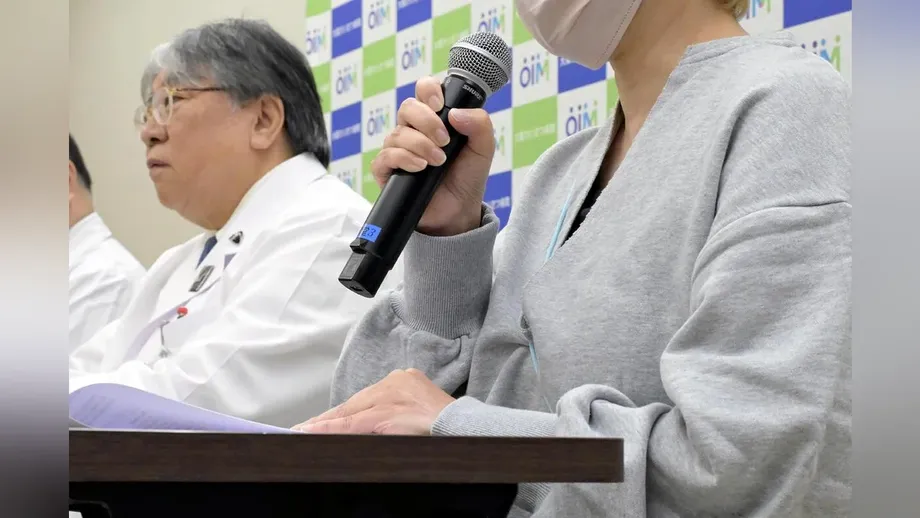
The Kanagawa Prefecture resident underwent the operation at Osaka Keisatsu Hospital on September 29, 2026. Speaking at a press conference on October 21, she was scheduled to leave hospital the following day. Yoshiki Sawa, the hospital president who performed the surgery, said her recovery was progressing well.
The patient described a change she noticed during her first weeks after the operation:
About a week after surgery, I could take deeper breaths. I could feel the difference.
RiHeart, developed by Osaka University startup Cuorips, received conditional approval in March 2026 and became covered by public health insurance on September 1. The product is intended for a specific group: people with severe heart failure caused by ischemic cardiomyopathy whose condition has not improved sufficiently with standard treatment.
Japan's Ministry of Health, Labour and Welfare has published results from an earlier trial involving eight patients. Those results show improvements in symptoms and some measures of exercise capacity, alongside less consistent changes in the heart's pumping performance. The next phase will examine how patients fare over a longer period and compare their outcomes with an external group.
Four years of declining heart function
The woman suffered a heart attack in 2022. Catheter treatment and medication followed, but her heart function continued to decline. Walking brought severe shortness of breath and palpitations, and carrying heavy objects became difficult.
A heart attack happens when blood cannot reach part of the heart muscle, usually because a coronary artery becomes blocked. The resulting damage can leave the heart too weak to pump enough blood for everyday activity. Ischemic cardiomyopathy is the term used when reduced blood supply has damaged and weakened the heart muscle.
The patient eventually sought care at Osaka Keisatsu Hospital, also known in English as Osaka Police Hospital. After surgery, she moved from intensive care to a general ward two days later and began rehabilitation through walking. She will continue taking medication and attending follow up appointments after discharge.
Her goals are practical: walking her dog, going to the sea and returning to hobbies that illness had pushed aside. At the press conference, she described the activities she hoped to resume:
I want to walk my dog, go for a good run and enjoy my hobbies.
How three sheets are intended to help the heart
RiHeart consists of heart muscle cells grown from donor iPS cells and formed into sheets about four centimeters across. Surgeons place three sheets on the surface of the heart.
iPS cells are adult body cells that have been reprogrammed into a state from which they can develop into many different cell types. For RiHeart, the manufacturing process directs them to become heart muscle cells, then purifies those cells and shapes them into sheets.
The ministry's insurance coverage document, prepared for the Central Social Insurance Medical Council on July 22, describes the intended action. The transplanted cells release signaling proteins, including cytokines and growth factors, that are expected to encourage new blood vessels and limit fibrosis, the buildup of scar tissue.
By improving the condition of the existing heart muscle, the treatment aims to improve or maintain heart function and exercise capacity. For a patient, exercise capacity means something as immediate as how far they can walk or how much activity they can manage before becoming breathless.
Cuorips traces the research to collaboration begun in 2008 between Sawa's group and Kyoto University professor Shinya Yamanaka, who pioneered iPS cells. The company used a medical iPS cell stock supplied by Kyoto University's Center for iPS Cell Research and Application to develop its manufacturing process.
A 50 minute operation through the left ribs
Sawa completed the woman's operation in about 50 minutes. He is also a professor emeritus at Osaka University and a Cuorips director, with a central role in developing the treatment.
Cuorips describes the procedure on its RiHeart product page as inserting the sheets through an opening of roughly seven centimeters between the left ribs. The company calls this an approach without conventional open chest surgery; the ministry document describes transplantation under general anesthesia through a left thoracotomy, a surgical opening into the chest.
Both descriptions involve reaching the heart through the left side of the chest and placing sheets on its surface. Cuorips says the method avoids puncturing the heart muscle and is intended to reduce the burden of the procedure.
Sawa drew attention to the setting in which the first treatment took place. At the press conference, the hospital president said:
There is significance in that the operation was performed at a midsize private hospital.
Cuorips plans to make the treatment available at about 20 facilities. Osaka Keisatsu Hospital is considering operations for another 10 patients, making the ability to provide it beyond a university research center an immediate part of the rollout.
What the eight patient trial found
The domestic trial described by the ministry enrolled eight people with severe heart failure caused by ischemic cardiomyopathy. It involved multiple medical centers, was open label, meaning participants and clinicians knew the treatment was being given, and had no control group receiving a different treatment for comparison.
The main measure was left ventricular ejection fraction, or LVEF, assessed by ultrasound at 26 weeks. LVEF measures the proportion of blood pumped out of the heart's main pumping chamber with each contraction. Two of the eight patients met the trial's threshold of at least 5% improvement.
At 52 weeks, four of seven patients with measurements available improved their peak oxygen uptake by at least 10%. Peak oxygen uptake, often called peak VO2, measures how much oxygen a person can use during strenuous exercise and helps assess their capacity for physical activity. One patient's measurement was missing.
All eight patients improved by at least one grade on the New York Heart Association classification, which groups patients according to how much heart symptoms limit physical activity. A separate assessment of LVEF using CT scans found improvement of at least 5% in two of six patients with measurements available.
The results therefore describe different aspects of recovery: all eight improved on the symptom classification, four of seven improved on the exercise measure, and two of eight reached the main ultrasound threshold. The ministry judged that the findings met criteria for a reasonable expectation of efficacy under the conditional approval route.
Safety monitoring continues after discharge
The ministry document records no deaths among the eight trial participants during the stated follow up periods: three years for five patients and five years for three patients. It also records no tumors attributed to the product at the time of the assessment.
Cuorips says its clinical trial began in January 2020 and that no case of cancer arising from the treatment had been reported to date. Tumor formation is a concern in iPS cell manufacturing because cells left in an undifferentiated state can continue multiplying. The company uses manufacturing steps designed to remove those cells.
Donor cells also bring a risk of immune rejection, in which the recipient's immune system attacks the transplanted cells. The ministry describes a regimen of immunosuppressive medication from the day after transplantation for 90 days.
The insurance proposals include reimbursement for measuring the blood concentration of immunosuppressive drugs so clinicians can adjust doses precisely. For patients, the treatment therefore involves a period of medication and monitoring as well as the operation and rehabilitation.
Why 75 patients and the year 2033 matter
RiHeart's authorization is conditional and limited to seven years. Cuorips must gather further evidence from 75 patients and submit a new application within that period to obtain full approval. The company aims to demonstrate efficacy by 2033.
The ministry describes surveillance covering every treated patient in this program, with outcomes compared against an external control group. Its main assessment will take place 52 weeks after transplantation and combine exercise performance with a measure of the heart's structure.
To meet that main assessment, a patient's peak oxygen uptake must rise by at least 10%. Their left ventricular end systolic volume index, or LVESVI, must also improve or remain within the study's specified range. LVESVI measures how much blood remains in the main pumping chamber after a contraction, adjusted for body size. The protocol allows a decrease, no change or an increase of less than 10%.
Researchers will also track hospital admissions for heart failure, survival and other measures of cardiac function. How long the first recipient's improvement will last, and how consistently other patients will benefit, are questions the surveillance program is designed to answer.
The main milestones are:
- January 2020: The clinical trial began.
- March 2026: RiHeart received conditional manufacturing and marketing approval.
- September 1, 2026: Public health insurance coverage began.
- September 29, 2026: The first operation using the approved product took place.
- October 21, 2026: The patient discussed her recovery, ahead of planned discharge on October 22.
- By 2033: Cuorips aims to establish efficacy and obtain full approval within the seven year authorization period.
A price of 53.2 million yen and strict eligibility
The ministry's July document proposed a reimbursement price of 53.2 million yen for RiHeart, compared with the company's request for 53.4 million yen. The product entered clinical use at the 53.2 million yen price.
Public insurance and Japan's benefit system for high medical expenses limit the amount eligible patients pay themselves. Patient payments were described as capped at several hundred thousand yen at most, although an individual's bill depends on the applicable insurance arrangements.
Coverage is restricted to severe heart failure caused by ischemic cardiomyopathy when standard treatments, including drugs and invasive procedures, have been insufficient. Clinicians must follow appropriate use guidance from relevant medical societies and record the medical reasons for treatment. Reimbursement for the sheets is limited to once per patient.
The ministry document lists an estimated eligible population of 690 and forecasts annual use reaching 96 patients in the tenth year, with annual sales of about 5.11 billion yen. Those are planning estimates. Japan has an estimated 1.2 million people with chronic heart failure, while RiHeart's approved use concerns a much smaller group with a particular cause and severity of disease.
The ministry did not designate the product for a formal cost effectiveness assessment at this stage. It says that decision will be reconsidered when the product receives renewed approval, making the evidence collected during the conditional period relevant to both treatment decisions and future spending assessments.
Supplying hospitals beyond Osaka
Cuorips manufactures cells at its CLiC-1 facility in Minoh, Osaka Prefecture, which began operating in August 2020. The facility supports cell processing, manufacturing development and commercial production.
The company says completed sheets can travel at room temperature for about two days in a protective transport solution. It gives transport from Minoh to hospitals in Tokyo, including by Shinkansen, as an example. Hospitals receive the product in sheet form, with only light washing needed before transplantation, according to Cuorips.
That transport window is a practical part of the plan to supply about 20 facilities: the living cell sheets must reach the operating team in usable condition. The rollout combines manufacturing, transport, surgery and follow up rather than simply distributing a medicine to pharmacies.
Another iPS cell product, Sumitomo Pharma's Amchepry for Parkinson's disease, received conditional approval at the same time as RiHeart and also gained public insurance coverage. Its first operation was scheduled for October, but the company had not announced whether it had taken place as of the October 21 heart treatment update.
For the RiHeart recipient, the immediate milestone is returning home and rebuilding daily activity. For Cuorips and the hospitals preparing further operations, the next task is to collect the measurements required to turn a promising first recovery into evidence about the treatment's benefits and safety across 75 patients.
Key Points
- A woman in her 50s received RiHeart at Osaka Keisatsu Hospital on September 29, 2026, and reported easier breathing.
- Three sheets of heart muscle cells derived from donor iPS cells were placed on her heart during an operation lasting about 50 minutes.
- The treatment is covered for eligible patients with severe ischemic cardiomyopathy after standard treatment has been insufficient.
- An earlier trial involved eight patients, with improvements varying across symptoms, exercise capacity and heart pumping measurements.
- RiHeart is priced at 53.2 million yen, with public insurance limiting eligible patients' personal payments.
- Cuorips must gather further evidence from 75 patients within seven years and aims for full approval by 2033.