Zero tariffs for Indian goods from October 20
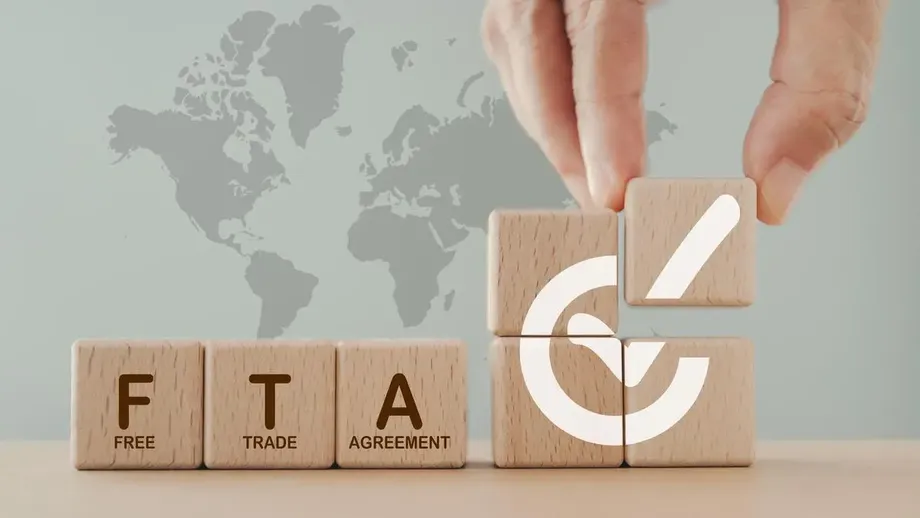
New Zealand will remove tariffs on every category of Indian goods when its free trade agreement with India takes effect on October 20, 2026. The change eliminates duties of up to 10% on textiles, clothing, leather and footwear, while India will open its market more selectively, keeping protections for dairy and several agricultural products.
Contents
- Zero tariffs for Indian goods from October 20
- Which Indian exporters gain most?
- How the agreement reached implementation
- What New Zealand receives in return
- Which Indian sectors remain protected?
- Apples and kiwifruit: lower duties, seasonal windows
- Honey and protein quotas begin immediately
- Services, workers and students gain new routes
- Investment and farming cooperation beyond tariffs
- A trade target following a weaker year
- Key Points
The agreement comes into force after a weaker year for merchandise trade. In 2025–26, India exported $566.51 million in goods to New Zealand and imported $589.1 million, leaving a deficit of $22.59 million. Both governments now want trade in goods and services to reach NZ$7 billion, approximately 35,000 crore rupees, by 2030.
Indian exporters receive the broadest immediate tariff benefit: all New Zealand tariff lines, the categories customs authorities use to classify products, become duty free from the first day. India is offering concessions on around 70% of its tariff lines, with some reductions introduced gradually and selected agricultural imports restricted by quantity, price and season.
Commerce and Industry Minister Piyush Goyal and New Zealand Trade and Investment Minister Todd McClay signed the agreement in New Delhi on April 27, 2026. Both countries completed ratification, the process of formally approving the pact, on September 21.
The agreement reaches beyond goods. It opens services markets, creates routes for temporary employment and student mobility, sets faster customs clearance targets and includes a commitment by New Zealand to help bring $20 billion in investment into India over 15 years. Businesses must now turn those provisions into orders, projects and employment.
Which Indian exporters gain most?
Textiles, garments, leather and footwear lose duties of up to 10%, according to Sampath Kumar, Additional Director General of Foreign Trade. Agricultural and marine products, pharmaceuticals, plastics, chemicals and electrical goods lose duties of up to 5%.
A tariff is a tax charged when goods enter a country. Removing it reduces the importer's tax bill and gives an exporter more room to compete on price. For a product previously carrying a 10% duty, every $100 of customs value attracted $10 in that duty. The agreement removes that charge for qualifying Indian goods.
Small manufacturers, artisans and businesses employing large numbers of workers are among the intended beneficiaries. Food exporters gain opportunities across fruit, vegetables, coffee, tea, cocoa, spices, cereals and processed foods. Engineering goods, machinery, rubber products and medicines also receive improved access.
Goyal marked the agreement's launch by flagging off a small excavator manufactured by JCB India for New Zealand. He said JCB India already exported 25% of its production and challenged the company to raise that share to 50%. New Zealand becomes its 140th export destination.
Exporters also need an efficient route through customs. The pact provides clearance targets of 48 hours for cargo and 24 hours for express and perishable consignments. Digital certification and permission for eligible businesses to certify origin themselves are intended to reduce paperwork. Rules of origin determine whether a product qualifies as Indian or New Zealand goods for the agreement's benefits.
How the agreement reached implementation
India and New Zealand completed negotiations in roughly nine months before moving through signature and domestic approval. The main dates are:
- March 16, 2025: Negotiations began.
- December 22, 2025: Negotiations concluded.
- April 27, 2026: Goyal and McClay signed the agreement at Bharat Mandapam in New Delhi.
- September 21, 2026: Both countries completed ratification.
- October 20, 2026: The agreement and India's quota allocation provisions take effect.
The next agricultural milestones fall in 2027. Apples and kiwifruit receive no preferential quota in 2026, while their first allocations begin the following year. Manuka honey and albumins, a category of protein products, receive initial quotas in 2026.
What New Zealand receives in return
India's concessions cover around 70% of tariff categories, while 29.97% remain excluded. New Zealand's Ministry of Foreign Affairs and Trade says 57% of the country's exports to India will qualify for tariff free entry from October 20, subject to the applicable conditions.
Todd McClay, New Zealand's Minister for Trade and Investment, described the broader coverage expected as the agreement is implemented:
Once fully implemented, 95 per cent of New Zealand's current exports to India will benefit from tariff elimination or substantial tariff reductions, creating new opportunities across many of our key export sectors.
The two percentages describe different stages and benefits: 57% concerns immediate tariff elimination, while 95% includes exports receiving either elimination or substantial reductions after implementation is complete. Tariff categories and export value also measure different things. A smaller number of heavily traded products can represent a large share of trade.
Patrick John Rata, New Zealand's High Commissioner to India, expects opportunities for New Zealand businesses selling kiwifruit, honey and apples. He also said expanded access would let businesses in both countries explore new markets, supporting business growth and employment.
Which Indian sectors remain protected?
India has kept milk, cream, whey, yoghurt and cheese outside tariff concessions. Other protected agricultural products include onions, chickpeas, peas, corn, almonds, sugar, artificial honey and animal, vegetable or microbial fats and oils. Animal products other than sheep meat are also excluded.
Precious metals, finished jewellery, arms and ammunition, and specified copper and aluminium products remain protected. The metal exclusions include products such as copper rods, bars and coils, and aluminium ingots, billets, wire, rods and bars.
Selected imports follow narrower rules. Apples, kiwifruit, Manuka honey and albumins receive tariff rate quotas. A quota allows a specified quantity to enter at a reduced duty, with access governed by the agreement's conditions. Minimum import prices set a floor on the shipment value eligible for the concession.
India's Directorate General of Foreign Trade has notified the allocation procedures, including quantities, duties, price requirements and import windows. Together, these rules limit how much preferential access exporters can use and when shipments can enter.
Apples and kiwifruit: lower duties, seasonal windows
New Zealand apples receive a quota of 35,000 tonnes in 2027, the second quota year. The allocation rises to 37,500 tonnes in year three, 40,000 tonnes in year four and 42,500 tonnes in year five. From year six, the annual limit reaches 45,000 tonnes.
Apple imports within the quota attract a 25% duty, compared with India's prevailing 50% apple import duty. That halves the duty rate for eligible shipments. Their cost, insurance and freight value, usually shortened to CIF, must be at least $1.25 per kilogram. CIF includes the goods, their insurance and transport to the importing destination.
The apple import window runs from April 1 to August 31 each year. The eventual annual quota of 45,000 tonnes is 10,000 tonnes larger than the initial 35,000 tonnes, an increase of about 29%.
Kiwifruit receives an initial quota of 8,000 tonnes in 2027. It increases to 9,750 tonnes in year three, 11,500 tonnes in year four and 13,250 tonnes in year five, reaching 15,000 tonnes annually from year six. The final allocation is 87.5% above the starting quantity.
Kiwifruit within the quota enters duty free if its CIF value is at least $1.80 per kilogram. Its annual import window runs from April 1 to October 15. Importers therefore need to plan purchases around three conditions at once: the remaining quota, the minimum shipment value and the permitted arrival period.
Honey and protein quotas begin immediately
Manuka honey has an allocation of 40 tonnes in 2026, rising to 200 tonnes annually from 2027. Eligible honey must be certified by New Zealand's Ministry for Primary Industries and meet the specified CIF value requirement.
Albumins receive a quota of 200 tonnes in year one, 1,500 tonnes in year two, 2,000 tonnes in year three and 2,500 tonnes in year four. From year five, the annual quota becomes 3,000 tonnes. These imports attract an 11% duty and can arrive throughout the year.
New Zealand will allocate access to exporters or producers through certificates identifying the product, permitted quantity and designated Indian importer. The total quantities covered by certificates must remain within each product's allocation.
The Directorate General of Foreign Trade set out the time limit on those permissions in its public notice:
A TRQ authorisation shall be valid only for the quota year in which it is issued, and imports against it shall be permitted only within the quota window. Any unutilised quantity shall lapse on expiry of the authorisation.
Importers must use an allocation within its authorised period. Unused quantities expire rather than carrying forward into the next quota year.
Services, workers and students gain new routes
New Zealand is opening 118 services sectors and subsectors to Indian providers, including information technology, professional services, telecommunications, construction, education, finance and tourism. Commitments covering 139 subsectors also concern most favoured nation treatment, which addresses how Indian providers are treated relative to providers from other countries under the relevant provisions.
Employees transferred within the same company can stay for up to three years. Business visitors and workers installing or servicing equipment can stay for up to 90 days within a period of 12 months. Contractual service providers and independent professionals can stay for up to 12 months.
A temporary employment pathway covers skilled Indians in areas including IT, engineering, construction, education and healthcare, alongside yoga instructors, chefs, music teachers and practitioners of India's Ayush traditional medicine systems. The pathway is described as allowing up to 5,000 people at any given time, with stays of up to three years; an annual quota of 5,000 has also been stated. The precise counting rule needs clarification for applicants.
A working holiday route provides 1,000 places annually. Eligible Indian graduates and postgraduates in science, technology, engineering and mathematics can receive work rights lasting up to three years after study, while eligible doctorate holders can receive up to four years.
These provisions give companies more ways to send staff abroad and give eligible students time to gain work experience after completing their qualifications. The different routes have different purposes and permitted lengths of stay.
Investment and farming cooperation beyond tariffs
New Zealand has committed to helping bring $20 billion in foreign direct investment into India over 15 years. Foreign direct investment means investment in business operations or projects, such as factories and infrastructure. Manufacturing, agriculture, infrastructure and innovation are among the areas identified for opportunities.
The investment commitment stretches well beyond the 2030 trade target. Its economic value will depend on projects attracting capital and moving into operation, creating production capacity and jobs.
An agricultural productivity partnership will draw on New Zealand's expertise in precision agriculture, which uses technology and information to manage farming more accurately. Dedicated plans for apples, kiwifruit and honey focus on productivity, quality and supply chains.
Planned technical assistance and centres of excellence involve states including Uttarakhand, Nagaland, Himachal Pradesh, Uttar Pradesh and West Bengal. Better orchard management and reduced losses after harvest are among the intended benefits. For Indian farmers, this cooperation accompanies the controlled opening of the market to selected New Zealand produce.
A trade target following a weaker year
Bilateral merchandise trade reached about $1.3 billion in 2024–25, up 49% from the preceding year, with Indian exports of $711 million. It then fell to about $1.15 billion in 2025–26. Indian exports declined to $566.51 million, a decrease of $144.49 million, or approximately 20%.
Sampath Kumar expects the agreement to increase India's trade surplus with New Zealand. The latest annual merchandise figures instead show a $22.59 million deficit, making growth in Indian exports a practical priority as implementation begins.
Goyal's target is to double goods and services trade to NZ$7 billion by 2030, requiring roughly 18% compound annual growth. Compound growth means each year's increase builds on the previous year's larger total. Services are included in that ambition alongside merchandise.
India's wider trade relationships provide another measure to watch. Across 23 partners covered by trade agreements, its aggregate trade deficit rose from $8.2 billion in 1998 to $127 billion in 2025. The number of those partners with which India recorded a deficit increased from 11 to 16. The United Arab Emirates, Singapore and South Korea account for almost half of India's imports from that group.
Commerce Secretary Rajesh Agrawal, who said 60–70% of New Zealand's trade is concentrated in the Asia Pacific region, described the immediate task for both countries:
The job is now to see how we are able to take this FTA and translate this opportunity into actual benefits for our people.
Export orders, use of the new services routes, investment projects and improvements in agricultural production will provide concrete measures of progress. The tariff changes begin on October 20; the larger trade and investment goals require sustained activity over the years that follow.
Key Points
- New Zealand removes tariffs on all Indian goods from October 20, 2026, including duties of up to 10% on clothing, textiles, leather and footwear.
- India offers concessions on around 70% of tariff categories while protecting dairy and several agricultural and industrial products.
- Apple and kiwifruit quotas begin in 2027, with quantity limits, minimum import prices and seasonal windows.
- Manuka honey and albumin quotas begin in 2026, and unused allocations expire.
- The pact opens 118 services sectors and subsectors and provides routes for temporary workers, business visitors and students.
- Both countries target NZ$7 billion in goods and services trade by 2030, alongside a commitment to help bring $20 billion in investment into India over 15 years.