Nearly three in 10 highly educated young people are unemployed
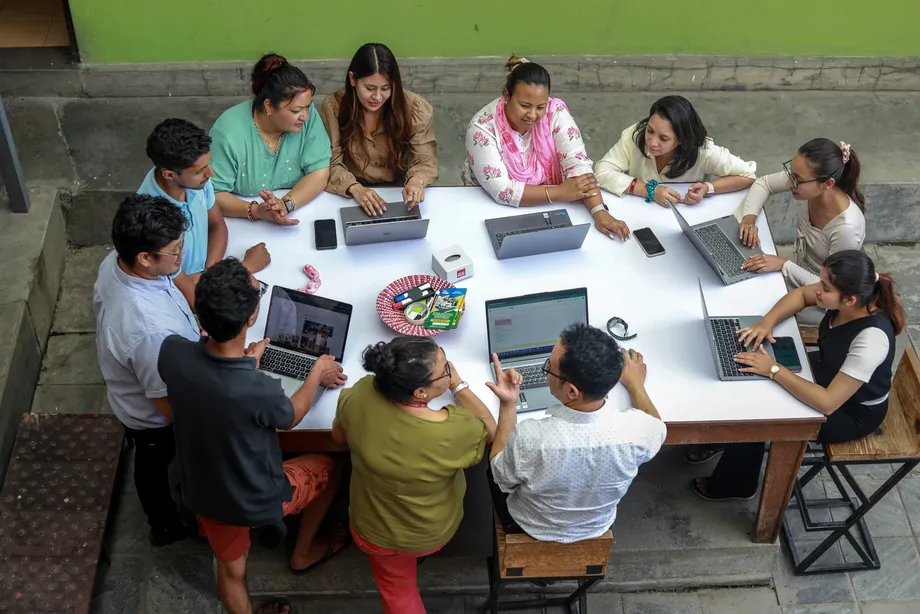
Nearly 29% of highly educated young people in Bangladesh are unemployed, while almost half of highly educated workers hold jobs below their qualifications, according to the International Monetary Fund. The findings expose two pressures facing the country: finding work after education, and finding work that actually uses what people have learned.
Contents
- Nearly three in 10 highly educated young people are unemployed
- What the unemployment figures mean
- A problem that predates the AI boom
- Employers identify specific gaps
- Education and job creation must connect
- What the AI hiring evidence shows
- Why the first job needs attention
- Training programmes need lasting results
- A young population needs broader investment
- Key Points
The IMF presented its October 2026 Regional Economic Outlook on 15 October in Bangkok, Thailand. It put Bangladesh's broader youth unemployment rate at about 12% to 13%, meaning the rate among highly educated young people is more than twice as high.
Bangladesh also faces a growing need for jobs. The IMF projects that its population aged 15 to 64 will increase by around 10% to 12% between 2025 and 2035. Manufacturing and services will need to generate productive employment for that expanding population.
Artificial intelligence is changing the hiring environment at the same time. Drawing on 40 million online job postings across 19 Asian economies, the IMF found that employer demand for occupations more exposed to AI had fallen by nearly 10% relative to occupations with less exposure. Demand for workers with specialised AI skills, however, is rising.
Bangladesh's challenge therefore stretches beyond getting more young people through university or training courses. Education must connect more closely with employers' needs, while businesses must create enough suitable positions. Otherwise, graduates can leave education with certificates, enter additional training and still struggle to earn a stable living.
What the unemployment figures mean
The IMF's figures describe different groups. The nearly 29% unemployment rate concerns highly educated young people participating in the labour market. The almost 50% figure concerns highly educated people who already have work, but whose occupations make limited use of their qualifications.
For the first group, the problem is getting hired. For the second, it is finding a better match between education and employment. Both can reduce the economic return from years spent studying, because acquired knowledge and skills remain unused.
Bangladesh's informal economy adds another layer of insecurity. Many workers in agriculture and other informal activities lack formal employment contracts, reliable job protection and clear opportunities to advance. They count as employed while facing uncertain incomes and limited prospects.
Unemployment measures people without work who are seeking and available for it. Understanding Bangladesh's labour market also requires looking at job quality, earnings and whether workers can use their abilities. The IMF's findings show why those questions matter alongside the headline unemployment rate.
A problem that predates the AI boom
Bangladesh's difficulties in moving young people into suitable work were visible years before the latest advances in AI. The Centre for Policy Dialogue's skills gap study cites Bangladesh Bureau of Statistics figures showing youth unemployment at 10.6% in 2016–17, compared with national unemployment of 4.2%. Young people accounted for 79.6% of all unemployed people.
The same study cites graduate unemployment estimates of 32% in 2015 and 43% in 2019. Those figures concern graduates, while the latest IMF figure concerns highly educated young people. Each statistic needs to be understood through its population group and period.
A short timeline shows how the concern has developed:
- 2016–17: Youth unemployment stood at 10.6%, and almost 30% of young people were outside education, employment or training.
- February 2021: An academic paper called for closer connections between education, technical training and workplace needs.
- November 2021: A survey of 100 employers examined recruitment difficulties and missing skills.
- 2022: Bangladesh's youth unemployment rate was 11.5%, compared with unemployment of 4.6% across the labour force.
- October 2026: The IMF highlighted unemployment among highly educated youth, jobs below workers' qualifications and changes associated with AI.
The 2022 youth unemployment rate was 2.5 times the national rate, using the 11.5% and 4.6% figures cited from the Asian Development Bank's Basic Statistics. Bangladesh's economy had grown by an average of 6.5% annually over the preceding decade, yet young people continued to face much greater difficulty finding work.
Employers identify specific gaps
The Centre for Policy Dialogue examined the problem from both sides of recruitment: an online survey of 100 employers outside government and skills assessments involving 500 university students and recent graduates. Among employers, 46 said vacancies were difficult to fill because too few applicants possessed the required skills. Another 35 cited insufficient qualifications, and 32 cited difficulty meeting experience requirements.
Employers frequently wanted abilities that cut across occupations. A total of 83 selected soft skills as important in hiring, compared with 65 selecting technical skills and 51 selecting years of experience. Soft skills include explaining an idea, managing time, working with others and solving problems.
Communication was especially important. Sixty one employers named it among the main skills expected from graduates. Student and graduate assessments, meanwhile, produced some of their lowest average scores in communication and English, alongside numeracy and mathematics. The largest gap between employers' priorities and assessed performance was in communication and English.
Employers also identified weaknesses in professional networking, cited by 56 respondents; critical thinking, cited by 53; and numeracy and mathematics, cited by 48. Respondents could select several answers.
The study used small samples selected without random sampling, so its findings describe the participating employers and young people. Its practical value lies in identifying particular areas for better teaching and assessment, rather than treating employability as an undefined quality that graduates either possess or lack.
Education and job creation must connect
The academic paper Mitigating Educated Youth Unemployment, published in the Journal of Developing Areas and posted on 18 February 2021, argued that Bangladesh needed stronger connections between formal education, technical training, entry into employment and the workplace itself.
The paper cited unemployment of 2.7% among people educated to primary level and 11.2% among university graduates, against a national rate of 4.2%. Its authors argued that technical institutions were producing too few workers with relevant skills, while some Bangladeshi companies hired skilled people from abroad to fill shortages.
The authors also linked frustration over employment to social tensions, citing student protests against quotas in public service recruitment. Their concern was that an expanding educated population, combined with slow job creation, could place increasing pressure on society.
The IMF's latest analysis adds a difficulty on the employer side. Asia's traditional route to development through manufacturing exports is becoming harder as production relies more on machinery and investment, and trade becomes more fragmented. A factory can increase output without increasing its workforce at the same pace.
Bangladesh therefore needs both better preparation for work and more productive businesses capable of hiring. Training policy has to connect with investment, access to finance, industrial development and demand for goods and services. A more capable applicant still needs an employer with a vacancy.
What the AI hiring evidence shows
The IMF's analysis of 40 million online job postings offers a regional view of how employers are adjusting. Occupations with greater AI exposure contain more tasks that the technology can perform or assist with, such as drafting text, analysing information or producing computer code.
Employer demand for those occupations fell by nearly 10% compared with occupations with less exposure. The IMF also found that this relative decline appeared to have stabilised despite rapid improvements in AI capabilities. Its interpretation is that AI is reshaping work more than eliminating it.
Krishna Srinivasan, director of the IMF's Asia and Pacific department, described the change in employers' requirements during the outlook's launch:
AI is reshaping occupations and the demand for skills for those roles,
The wording appears in the regional outlook, which calls for better jobs, relevant worker skills and greater ability to move between jobs. For Bangladesh, the practical issue is whether new entrants can combine their professional knowledge with the tools employers increasingly expect them to use.
Different population trends also change the effect of AI. Economies with ageing populations may use it to help fill labour shortages. Younger economies such as Bangladesh face the additional task of creating opportunities for growing numbers of workers, including people looking for their first job.
Why the first job needs attention
IMF Managing Director Kristalina Georgieva has estimated that about 40% of jobs worldwide could eventually be improved, reduced in scope or eliminated through AI. Young people entering employment are particularly exposed because routine tasks have often provided their first workplace experience.
Singapore President Tharman Shanmugaratnam, who co chairs the World Bank's Jobs Council, called for governments to work with businesses and provide incentives to recruit graduates. He described the pressure on initial employment:
the first rung in employment, your first job upon graduation, is now seeing less demand,
Bangladesh's recruitment practices already create an experience problem. The Centre for Policy Dialogue survey found that 32 of 100 employers struggled to fill vacancies because of their experience requirements. Its recommendations included reducing experience demands for initial positions and employing students during semester breaks or for part of the working week.
Workplace learning can help students build the experience employers seek while allowing firms to assess their abilities. As AI changes routine work, such opportunities become more valuable because they give young people a route into professional judgement, teamwork and responsibility.
World Bank President Ajay Banga estimated that 1.2 billion young people will turn 18 over the next 15 years. He said private businesses generate 75% to 85% of jobs in any country and will need to absorb most of those entrants. That places business investment alongside education at the centre of the employment response.
Training programmes need lasting results
Bangladesh has already invested in substantial training programmes. The ICT Division's Learning and Earning Development Project offered 200 hours of instruction in areas including graphic design, web development and digital marketing, targeting roughly 40,000 young people.
The World Bank funded Enhancing Digital Government and Economy project, known as EDGE, uses a more direct connection with employers through its Hire and Train initiative. It reported training 5,300 graduates toward a target of 8,000, with an 80% placement rate across more than 130 IT companies.
Those 5,300 trainees represent about 66% of the programme's target. The placement figure provides a useful employment measure, while longer tracking would show how many participants remain in relevant work and how their earnings develop.
A practical way to assess public training would be to follow participants after three, six and 12 months. Useful measures include employment, job retention, median earnings, the connection between the course and subsequent work, sustained income from self employment, and the public cost of each successful employment outcome.
Course design also needs to reflect what employers buy. Using a design application differs from solving a client's branding problem. Building a website from a template differs from maintaining secure, reliable software. Practical assignments, portfolios and employer assessments can help training programmes prepare people for those specific responsibilities.
A young population needs broader investment
Bangladesh has nearly 46 million people aged 15 to 29, about one quarter of its population, according to figures attributed to the Bangladesh Bureau of Statistics. Across South Asia, UNICEF figures put the population under 24 at more than 700 million, including more than 340 million adolescents.
The IMF's policy advice for countries with growing youth populations includes investment in education, skills and health, wider access to retraining and support for people moving between jobs. It also calls for stronger participation in the labour force and a private sector supported by simpler regulation, competition, better governance and access to finance.
Digital infrastructure and reliable, sustainable energy matter because firms and workers need both to use new technology. The IMF's AI Preparedness Index examines these foundations alongside human capital, labour policies, innovation, economic integration, regulation and ethics.
Asia and the Pacific's projected growth of 4.8%, supported by semiconductor and AI infrastructure demand, shows the technology's economic potential. Malaysia and Singapore are closely involved in the AI supply chain. South Korea's concentration in technology exports also leaves it exposed to a downturn in global AI demand, according to IMF deputy director Sonali Jain-Chandra.
Bangladesh's immediate task is to turn its growing labour supply into productive employment. The IMF has identified the scale of the challenge, but no specific Bangladesh implementation timetable accompanies the measures described. Progress will be visible in more graduates entering suitable work, workers moving into better occupations and training participants sustaining higher earnings.
Key Points
- The IMF puts unemployment among highly educated young Bangladeshis at nearly 29%, compared with broader youth unemployment of 12% to 13%.
- Almost half of highly educated workers hold jobs below their qualifications.
- Bangladesh's population aged 15 to 64 is projected to grow by 10% to 12% between 2025 and 2035.
- Research involving Bangladeshi employers identified gaps in communication, critical thinking and numeracy, alongside difficult experience requirements.
- Across 19 Asian economies, hiring demand in occupations more exposed to AI fell nearly 10% relative to less exposed occupations, then appeared to stabilise.
- Training programmes need to connect with employer demand, while employment, earnings and retention provide measures of lasting results.