Heavier cargo drones join Da Nang's disaster preparations
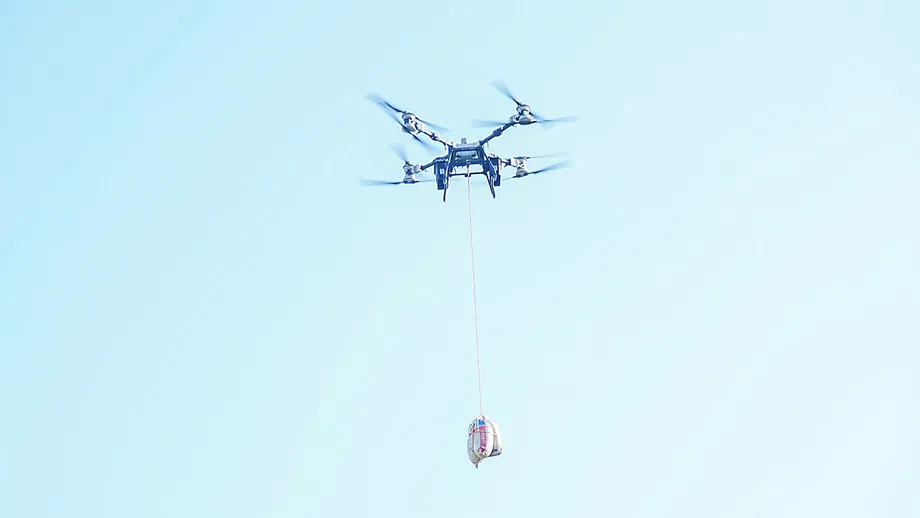
Da Nang's Military Command tested cargo drones with stated carrying capacities of 80 to 120 kilograms alongside motorized inflatable boats on October 15, 2026, expanding preparations to reach communities isolated by floods and landslides. The equipment has different jobs: boats would carry rescuers and evacuate residents, while drones would deliver food and essential supplies where roads and waterways are inaccessible.
Contents
- Heavier cargo drones join Da Nang's disaster preparations
- What the equipment checks covered
- How the preparations developed
- What happened when drones reached Hoa An
- Weather still shapes the delivery window
- Investment reaches beyond the aircraft
- More than 500 people rehearse flood response
- A larger city faces several kinds of flood risk
- Plans tied to rainfall and local responsibility
- Key Points
Colonel Nguyen Huu Thang, deputy commander of the city's Military Command, led the inspection. Teams examined components, assembly procedures and operation before conducting boat runs and test flights under practical conditions. The checks focused on stability, safety, movement on water and the ability to transport cargo, forming the basis for acceptance before deployment.
The new drones have a stated payload two to three times the approximately 40 kilograms carried by each aircraft used in a documented relief operation in Dai Loc commune during the October 2025 floods. Payload means the weight of goods an aircraft can carry. For an isolated community, a larger load could mean more food and other essentials arriving on each flight.
Da Nang's Military Command expects the combination of air and water transport to widen access and shorten the time needed to help residents. The preparations follow emergencies in late 2025, when authorities mobilized nearly 47,000 personnel deployments to evacuate more than 12,000 households across areas affected by flooding and landslides.
What the equipment checks covered
The October inspection covered both the condition of the equipment and the procedures used to assemble and operate it. Inspectors checked individual parts before assessing how the boats and drones performed during trials.
The inflatable boats were tested for their ability to move on water. Their planned duties include transporting response teams, reaching flooded neighborhoods and taking residents to safety. The drones were assessed for cargo transport, with their intended role centered on moving supplies to places cut off from conventional transport.
The Military Command described the equipment as part of modernizing civil defense, the work of protecting and assisting the population during emergencies. Here, that means adding ways to reach people when a flooded road, a dangerous current or a landslide interrupts the usual route.
No deployment date or detailed flight performance results were announced. The number of drones, their flight range, endurance and operating limits in bad weather were also not specified, leaving the stated payload as the main published measure of their capacity.
How the preparations developed
Da Nang's move toward heavier cargo drones follows their use during actual flooding. The sequence connects an emergency operation in 2025 with spending, training and equipment checks described in 2026.
- October 30, 2025: Viettel Da Nang deployed two drones to deliver supplies to households in Hoa An village, Dai Loc commune, after four days of isolation.
- Late 2025: Flooding and landslides prompted nearly 47,000 personnel deployments to help evacuate more than 12,000 households.
- September 17, 2026: City chairman Nguyen Manh Hung inspected seven locations vulnerable to urban flooding and called for plans tied to specific rainfall levels.
- By September 19, 2026: Disaster preparations included reported investment of 28 billion dong in cargo drones and 21 billion dong in three logistics staging sites.
- October 15, 2026: The city's Military Command inspected and tested motorized inflatable boats and drones with stated payloads of 80 to 120 kilograms.
The September preparations covered drainage, evacuation sites, rescue skills and supply storage as well as aircraft. The October trials added a practical check of equipment intended to support that broader response.
What happened when drones reached Hoa An
Hoa An village provides a concrete example of the access problem. On October 30, 2025, Viettel Da Nang sent two drones carrying essential supplies and medicines to dozens of households that had been isolated for four days.
Relief vehicles were heading toward badly flooded areas along National Highway 14B, but roads into some residential areas remained deeply submerged. Strong currents also prevented motorboats from reaching certain locations. Supplies could reach the wider area without reaching the families who needed them.
Viettel's teams surveyed the terrain and selected flight coordinates and landing points before sending the aircraft. They packed and secured the goods, then local authorities in Dai Loc received the deliveries and distributed them to flooded communities. The aircraft completed the transport leg; people on the ground organized what happened at either end.
Lieutenant Colonel Nguyen Vu Tra My, director of Viettel Da Nang, said each aircraft could carry up to approximately 40 kilograms over a distance of 1.5 to 2 kilometers, with each trip taking around five minutes. She described the value of using drones during the emergency:
Using drones amid severe flooding is a timely solution, helping quickly reach places that conventional vehicles cannot access.
The newer stated capacity of 80 to 120 kilograms would allow a heavier load per flight than those aircraft carried. The comparison is straightforward: 80 divided by 40 is two, while 120 divided by 40 is three. The October trials focused on assessing the equipment before it entered service.
Weather still shapes the delivery window
The Si Tu Viet volunteer group also used a drone to deliver food, drinking water and instant noodles in Dai Loc on October 30, 2025. Its experience showed how relief flights depended on a suitable break in the weather.
Group member Do Nhat Duc said prolonged heavy rain had forced flights to be postponed. When conditions briefly improved that day, the volunteers began delivering supplies to isolated locations. He said the group intended to seek further support and continue drone deliveries to other deeply flooded parts of Da Nang after completing its Dai Loc operation.
For residents, the practical value lies in having several ways to receive help. A boat can move people and equipment when a water route is usable. A drone can carry supplies across an inaccessible stretch when flight conditions allow. Stock held closer to vulnerable communities can support residents while transport is interrupted.
Investment reaches beyond the aircraft
Da Nang's disaster preparations included 28 billion dong for cargo drones capable of carrying more than 100 kilograms and another 21 billion dong for three sites used to assemble and store logistics supplies. Those two reported allocations total 49 billion dong.
The staging sites address a different part of the same problem. Food, water and other materials need to be ready for dispatch before a drone or boat can carry them. The sites were also described as supporting prolonged supply operations and providing space for helicopters to land for medical evacuation.
Mountain communities make this preparation especially urgent. Areas including Hung Son, Tay Giang, Dong Giang, Tra Linh, Tra My and Tra Leng face landslide risks during prolonged rain. In places dependent on a single access road, a landslide can sever the route serving an entire village.
The city's military response includes preparing supplies and local capacity for periods of isolation. This is the practical purpose of the Vietnamese emergency approach often called "four on the spot": having command, personnel, equipment and logistics available locally, so communities can begin responding before outside help arrives.
More than 500 people rehearse flood response
More than 500 people took part in field exercises in flood prone areas, including scenarios involving drone deliveries to isolated communities, rescues in fast flowing water and emergency evacuation as riverside neighborhoods flooded.
Dai Loc and other low lying areas along the Thu Bon and Vu Gia rivers face widespread flooding during heavy rain, sometimes combined with releases from hydropower reservoirs. Strong currents make the work more difficult for rescue crews, even when boats are available.
The city's Military Command worked with a maritime school to train 284 militia members in operating watercraft. The trainees were personnel based in areas at risk of flooding, placing those skills among the people likely to respond first.
Nguyen Minh Dam, a staff member of the Nam Phuoc commune Military Command, said the course helped local personnel become more confident in handling boats during floods and responding promptly to protect residents.
Police also practiced using a pulley system to rescue people across a river during a flash flood scenario. Lieutenant Colonel Le Van Luu, deputy head of the city's fire prevention, firefighting and rescue police department, said the exercises were needed to improve responses to fast flowing water and complex river and stream conditions.
A larger city faces several kinds of flood risk
Da Nang's territory after its administrative merger covers nearly 12,000 square kilometers, taking in mountains, plains, coastal areas, islands and remote border communities. Its preparations therefore address several different access and evacuation problems.
Mountain villages face roads blocked by landslides. Communities along the Thu Bon and Vu Gia rivers can become isolated by broad areas of floodwater. In the urban center, drainage capacity determines how quickly heavy rainfall can escape streets and residential areas.
The city brought a 646 meter underground drainage conduit on Phung Hung Street and the Ong Ich Khiem pumping station into operation ahead of the rainy season. The pumping station has a stated capacity of 25 cubic meters per second, equivalent to 25,000 liters each second. These works were intended to improve drainage around locations including Le Duan, Nguyen Van Linh and Ham Nghi streets and Thac Gian Lake.
Construction authorities also checked buildings designated as evacuation shelters, prepared arrangements to transfer railway passengers if flooding disrupted travel, and called for obstacles to be cleared from inland water routes. Buoys and warning signs were being installed to help rescue craft navigate more safely.
Plans tied to rainfall and local responsibility
City chairman Nguyen Manh Hung inspected seven urban flooding hotspots on September 17, 2026. His instructions connected response plans to mapped flood risks, specific rainfall levels and responsibility for individual areas.
Hung told the agencies involved to prepare for rainfall exceeding 100 millimeters or 200 millimeters in an hour and to identify who would be responsible in each location:
Units must use flood maps to develop response plans for specific rainfall scenarios. If rainfall exceeds 100 mm per hour or 200 mm per hour, how will it be handled? There must be someone responsible for each area.
Those scenarios put the equipment trials in a practical setting. A response plan needs to identify where people may become isolated, where supplies will be held and how crews will reach them. The new boats and cargo drones are intended to give those crews more options when a particular route becomes unusable.
The 2025 Hoa An operation already showed the steps involved: identify households needing help, survey a route, prepare the load, fly it to a receiving point and distribute it locally. Da Nang's latest preparations seek to support that chain with heavier cargo capacity, trained boat operators and supplies positioned for emergencies.
Key Points
- Da Nang's Military Command tested cargo drones with stated payloads of 80 to 120 kilograms and motorized inflatable boats on October 15, 2026.
- Colonel Nguyen Huu Thang led checks covering equipment condition, assembly, safety and practical operation.
- The drones are intended to deliver supplies to isolated communities, while boats will help rescuers reach and evacuate residents.
- Two drones used in Hoa An in October 2025 each carried about 40 kilograms over 1.5 to 2 kilometers.
- Reported preparations included 28 billion dong for cargo drones and 21 billion dong for three logistics staging sites.
- More than 500 people joined field exercises, and 284 militia members received watercraft training.
- A deployment date and detailed operating limits for the newly tested drones were not announced.