Low Screening Scores Put Public Appointments Under Scrutiny
Ha Dong-geun received 85.8 points and ranked eighth among eight candidates in document screening for the presidency of Korea District Heating Corporation. In interviews, he scored 81.42 points and finished fifth among five finalists. He was appointed in April to a position with reported annual compensation of about 243 million won, including performance pay.
Contents
- Low Screening Scores Put Public Appointments Under Scrutiny
- What Ha's Evaluation Records Show
- Why the Lowest Ranked Finalist Could Still Be Appointed
- A Five Day Approval at the Nuclear Safety Foundation
- Hwang's Application Prompts Questions About Ambition
- Missing Documents at the Construction Workers Association
- Nam's Selection and the Longer Seongnam Connection
- The Allegations Extend Beyond Agency Chiefs
- The Timeline and What Still Needs Explaining
- Key Points
Those figures are among the most specific evidence behind opposition allegations that public institution appointments associated with President Lee Jae-myung's administration rewarded personal connections rather than professional qualifications. Other cases involve a nuclear safety foundation appointment approved within five days, a brief application for a culture and tourism research post, and questions about missing documents at an institution managing construction workers' retirement funds.
The People Power Party has focused on appointees with connections to civic organizations in Seongnam, a city in Gyeonggi Province where Lee and senior presidential aide Kim Hyun-ji developed their political networks. The party argues that these relationships helped candidates secure senior positions despite weaknesses in their applications or evaluations.
The Democratic Party rejects that interpretation. It says screening rankings do not automatically determine appointments and that leadership, public responsibilities and relevant experience must also be considered. Korea District Heating says Ha was selected lawfully. Climate and Energy Minister Kim Seong-hwan has denied presidential office pressure over his appointment.
The central distinction is between evidence of low rankings or procedural questions and proof of improper influence. The records described in the controversy establish specific evaluation results and approval steps. They do not, by themselves, establish that personal relationships determined the decisions or that an appointment violated the law.
What Ha's Evaluation Records Show
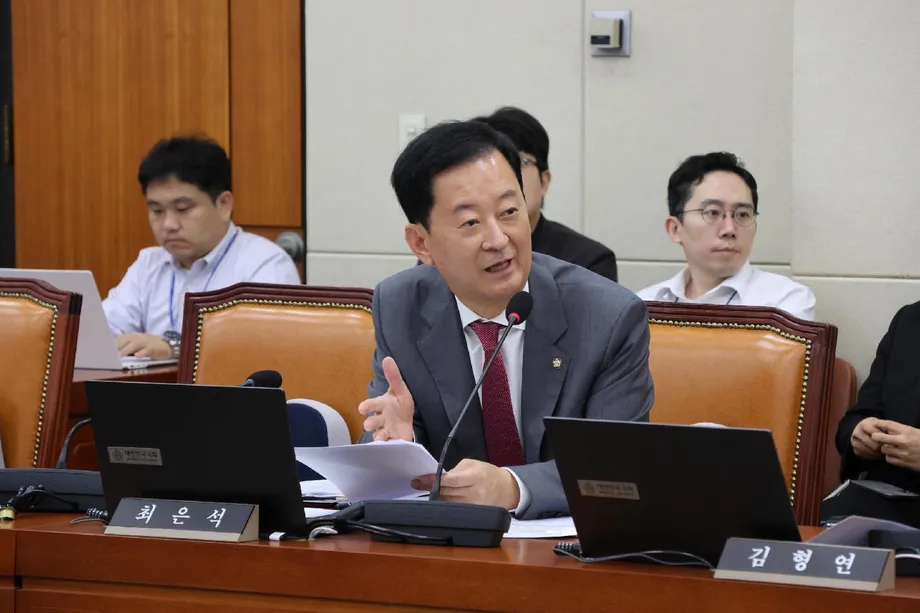
People Power Party lawmaker Na Kyung-won obtained Korea District Heating's appointment records and presented the issue during a parliamentary audit by the National Assembly's Climate, Energy, Environment and Labor Committee. The records put Ha last in both screening stages, although the candidate pool narrowed from eight to five.
Ha also received no A rating from any evaluator for knowledge and experience in the relevant field during either document screening or interviews. That finding is narrower than a conclusion that he had no qualifications: it shows that no reviewer awarded him the highest grade in that category, not that he failed every assessment.
His previous positions included leadership of the Seongnam Environmental Movement Coalition, the Pangyo Environmental Ecology Learning Center and the Korea Environmental Education Center. He also served on a Gyeonggi investment review committee. Reports describe his career as concentrated in environmental education and civic activism rather than direct experience in district heating or power generation.
Ha worked with Lee on civic initiatives, including efforts to establish the Seongnam Municipal Medical Center, and officiated at Kim Hyun-ji's wedding. Those ties explain the opposition's focus on him, but a personal connection alone does not establish preferential treatment.
Why the Lowest Ranked Finalist Could Still Be Appointed
The appointment process does not operate as a competition in which the highest screening score automatically wins. For Korea District Heating, the described procedure includes recommendations by an executive recommendation committee, review and approval by the Public Institutions Management Committee, approval at a shareholders' meeting, a ministerial nomination and appointment by the president.
Ha remained among the five recommended finalists despite his rankings. The minister then submitted his name. The disputed decision is therefore the choice within an eligible candidate pool, rather than evidence that the screening winner was legally entitled to the job.
At the parliamentary audit, Minister Kim Seong-hwan was asked whether he had faced pressure from the Blue House or presidential office over Ha's appointment. He answered:
No
The minister also defended considering environmental and ecological factors alongside energy responsibilities. Democratic Party spokesperson Son Myeong-su cited Ha's environmental experience and service as a public institution management evaluator, arguing that these were relevant to reducing carbon emissions and changing how district energy is produced.
Korea District Heating's response was procedural. A company official said Ha:
was lawfully selected in accordance with relevant procedures and regulations.
That defense addresses legality. It does not explain in detail why Ha was preferred to candidates with higher scores. Conversely, his ranking alone does not disprove the company's account of procedural compliance.
A Five Day Approval at the Nuclear Safety Foundation
A separate case concerns Kim Seong-jin, a lawyer and former presidential secretary under the Moon Jae-in government, appointed chairman of the Korea Foundation of Nuclear Safety. Records submitted by the Nuclear Safety and Security Commission to People Power Party lawmaker Seo Cheon-ho's office show that the foundation requested approval on May 15 and received it on May 20.
The commission reportedly held no separate qualification review or meeting during those five days. The foundation's executive recommendation committee cited Kim's initiative, leadership and ability to collaborate. Critics question whether those general qualities adequately addressed the requirements of a nuclear safety institution.
Kim reportedly had little experience in nuclear or safety work. He is also described as close to Kim Yong, a senior official at the Institute for Democracy, and as having helped prepare Kim Yong's candidacy for a June election. His foundation post carries reported annual salary and performance pay of about 235 million won.
The short approval interval is a concrete fact in the appointment record. What is not established is whether a separate commission review was legally required, what substantive checks occurred before the request reached the commission, or whether the recommendation committee considered qualifications beyond the explanation described publicly.
Hwang's Application Prompts Questions About Ambition
Hwang Gyo-ik, a former food columnist known for supporting Lee during political difficulties, applied in February to lead the Korea Culture and Tourism Institute and was appointed in April. Appointment materials submitted to lawmaker Kim Seok-ki's office show that his personal statement and job performance plan were each approximately one and a half A4 pages.
The criticism concerns the substance of the plan as well as its length. In his application, Hwang described the institute's existing business plan positively and presented his intended role as carrying it out:
The existing business plan is excellent, so there is nothing to add. If appointed as director, I will do my best to realize it,
Hwang also wrote about the scope of his proposed work during the appointment:
I will not push myself too hard. There is not that much to do within the three-year term.
Those passages invite scrutiny of how reviewers judged his plans for the institution. They do not establish that a short application was formally invalid: no minimum page requirement or complete scoring breakdown is identified in the reports. The issue is whether the selection process adequately tested his understanding of the job and his proposed direction.
Missing Documents at the Construction Workers Association
Jang Geon's appointment as chairman of the Construction Workers Mutual Aid Association raises a different procedural question. When a People Power Party lawmaker's office requested the appointment materials, the association supplied a package that did not include a mandatory personal statement.
The lawmaker's office suspects Jang was appointed without submitting it. However, a document missing from the materials delivered to lawmakers is not necessarily proof that it was never submitted. Resolving the allegation would require the original application file or an explanation from the association.
Some career verification documents were also issued two days after the application deadline. That timing supports questions about how the deadline was applied, but the reports do not establish whether supplementary documents were allowed or whether other candidates received the same opportunity.
Jang, reported to be 74, co-led the Seongnam Participatory Autonomy Citizens' Coalition in 2004, when Lee was its executive committee chairman. Kim Hyun-ji served as secretary-general for three years from that period. In 2020, while Lee was Gyeonggi governor, Jang became the nonexecutive chairman of the Korea Ceramic Foundation.
The Construction Workers Mutual Aid Association operates under the labor ministry and manages retirement funds for workers in temporary and daily construction employment. Its chairman's compensation was reported at 210 million won, including performance bonuses, for 2024. That is a historical figure for the position, not a confirmed statement of Jang's current pay.
Nam's Selection and the Longer Seongnam Connection
Nam Gwang-woo was appointed to lead the Korea Environmental Industry and Technology Institute despite another applicant ranking first in both document screening and interviews. Nam scored 89 points in the document stage, placing third, and 84 in interviews, placing second. The position's reported annual salary is about 182 million won.
Nam had served as a standing vice president of the Korea Environment Preservation Association. His institute handles environmental technology research and development, support for the environmental industry and environmental health projects. Its appointment process allows an executive recommendation committee to propose multiple candidates, with the minister making the final selection.
Nam was the inaugural secretary-general of a Seongnam civic organization founded in 1995. Reports differ on the timing of Lee's and Kim Hyun-ji's roles. Some describe Lee as executive committee chairman and Kim as a coordinator at the organization's launch. Another account says Kim joined in 1998 and Lee became executive committee chairman the following year.
The consistent point is that all three had connections to the organization. The differing dates mean those relationships should not be presented as a fully established chronology beginning in 1995.
The Allegations Extend Beyond Agency Chiefs
The People Power Party has broadened its criticism to other executive and oversight appointments. It claims that about 22% of industry and energy public institution executives appointed after the administration took office were subject to controversy over political alignment. That percentage describes the opposition's classification, not an independently established rate of improper appointments. The total number assessed and the full criteria for inclusion are not given.
Among the examples is lawyer Park Ji-hoon, a public supporter of Lee who was appointed a nonexecutive auditor at the Korea Institute for Advancement of Technology in August. Reports questioned whether his submitted career history demonstrated experience relevant to the institute's work supporting business technology development.
Lawyer Kim Pil-seong, who represented Lee in the Daejang-dong case, became an executive at the Korea Petroleum Quality and Distribution Authority. Kim Gyeong-mun, a former Seongnam official and former secretary-general of a civic organization associated with Kim Hyun-ji, received an executive post at an institution supporting distribution for small and medium businesses.
Former election candidate Nam Byeong-geun, whose fundraising Lee publicly supported in April 2024, was appointed to an executive position at Korea Gas Safety Corporation. Reports questioned the relevance of his police career. Opposition floor leader Jeong Jeom-sik also cited Choi Jae-gwan's appointment to lead the Korea Energy Agency despite a reported seventh place screening result, although the detailed scores and candidate pool were not specified.
The Democratic Party says the opposition is combining career histories and personal associations to label appointments unfairly. It has pointed to controversies under the Yoon Suk Yeol government, including the appointments of former lawmakers Chung Yong-ki and Lee Eun-jae, and Choi Yeon-hye's selection to lead Korea Gas Corporation after a renewed recruitment process.
The Timeline and What Still Needs Explaining
The reported sequence includes application deadlines, appointments and later parliamentary scrutiny. The reports do not consistently establish a calendar year for all the February, April, May and October events, so those dates cannot be treated as one fully verified annual timeline.
- February: Hwang Gyo-ik submitted his application to the Korea Culture and Tourism Institute.
- April: Hwang, Ha Dong-geun and Nam Gwang-woo were reported appointed to their respective posts.
- May 15 and May 20: The nuclear safety foundation requested approval for Kim Seong-jin, and the commission approved it five days later.
- August: Park Ji-hoon was reported appointed as a nonexecutive auditor.
- October 7 to 10: Reports described party exchanges, demands for parliamentary witnesses and scrutiny of appointment evaluations.
Jeong Jeom-sik made investigating Kim Hyun-ji and establishing the facts about former Lee aide Jeong Jin-sang priorities for the parliamentary audit. The People Power Party sought their appearance as witnesses. The reports do not establish that either request was approved or provide a confirmed hearing date.
The unresolved questions differ by institution: why a lower ranked finalist was chosen, whether required documents were actually missing, how late verification papers were handled, and what expertise checks supported an approval. Full application files, selection reasons and responses from the bodies making the appointments would help distinguish lawful discretion from preferential treatment.
Key Points
- Ha Dong-geun ranked eighth of eight in document screening and fifth of five in interviews before becoming Korea District Heating president.
- Nam Gwang-woo ranked third and second in the two stages and was selected over an applicant who ranked first in both.
- Kim Seong-jin's nuclear safety foundation appointment received approval five days after the request, reportedly without a separate commission review or meeting.
- Hwang Gyo-ik's brief application and Jang Geon's allegedly missing personal statement raise separate questions about selection standards.
- The opposition alleges favoritism linked to Seongnam civic networks. The Democratic Party rejects the allegations, and Minister Kim Seong-hwan denies presidential office pressure over Ha's appointment.
- Screening rankings do not automatically decide the appointments, and the reported records do not by themselves prove unlawful influence.