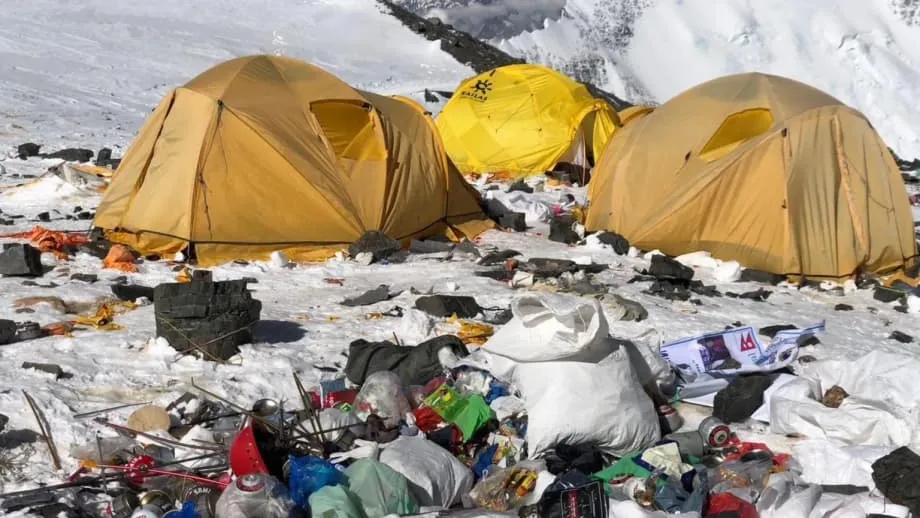
A $4,000 deposit failed to keep Everest clean
Nepal has decided to abandon a scheme that required Mount Everest climbers to pay a $4,000 waste deposit, after authorities concluded that it had failed to reduce the rubbish accumulating on the world's highest mountain. An estimated 50 tonnes of waste remain on Everest despite 11 years of refunds tied to bringing rubbish back to base camp.
Contents
- A $4,000 deposit failed to keep Everest clean
- Why returning 8 kilograms was not enough
- Higher camps were beyond effective monitoring
- Waste ranges from abandoned tents to human excrement
- Snow samples reveal pollution that is harder to see
- A fee would create a fund for cleaning and patrols
- The cabinet plan links waste control to climbing numbers
- Drones, ropeways and GPS would be studied
- China's permit limits offer a comparison
- Army clean-ups and local cooperation remain essential
- The Essentials
As of December 30, 2025, officials are proposing a replacement: a fee that climbers would not get back, likely set at the same $4,000. The money would pay for cleaning and monitoring, including a checkpoint at Camp Two and mountain rangers working higher on the mountain. The proposed amount has not been confirmed.
The old system required climbers to return with at least 8 kilograms of waste to recover their deposit. Most received their money back, meaning they brought down some rubbish. Yet officials found that climbers generally collected enough from lower camps to meet the requirement, while tents, food packaging and other debris remained at higher camps.
Himal Gautam, a director at Nepal's tourism department, said the scheme was being shelved because it had "failed to show a tangible result." He said the garbage problem had "not gone away" and administering the deposits had "become an administrative burden."
The change is part of a broader effort to deal with visible litter, human waste and tiny plastic particles on Everest. A five-year mountain clean-up action plan recently endorsed by the cabinet also includes possible limits on climbing numbers, studies of drones and ropeways, and tests of GPS technology to help locate human remains.
Why returning 8 kilograms was not enough
Tshering Sherpa, chief executive officer of the Sagarmatha Pollution Control Committee, identified a basic gap between the waste climbers produce and the amount they had to bring down. An average climber can generate up to 12 kilograms during an expedition lasting as long as six weeks, including time spent acclimatising and climbing.
Acclimatisation means giving the body time to adjust to the conditions at altitude before climbing higher. During those weeks, climbers need food, shelter and equipment, all of which can produce rubbish.
The old requirement covered 8 kilograms against that figure of up to 12 kilograms. A climber producing 12 kilograms and returning only the required amount could therefore leave 4 kilograms behind. That is one-third of the waste generated in that example. Repeated across hundreds of summit attempts each year, the gap allowed rubbish to keep accumulating.
The location of collection mattered as much as the weight. Bringing down rubbish from lower camps could satisfy the refund rule without removing abandoned material from the most difficult parts of the mountain. The incentive rewarded meeting a weight target, while the upper camps continued to collect debris.
Higher camps were beyond effective monitoring
Everest's "Death Zone," above 8,000 metres, presents a dangerous setting for waste collection. Retrieving discarded equipment there is physically demanding, and climbers prioritise survival over cleaning. Heavy or awkward items can remain where they were used.
Tshering Sherpa, whose committee operates a key checkpoint on the mountain, said oxygen bottles were generally the only items people brought back from higher camps. He described what was left behind:
Other things like tents and cans and boxes of packed foods and drinks are mostly left behind there, that is why we can see so much of waste piling up.
Sherpa also said that, apart from a checkpoint above the Khumbu Icefall, there was no monitoring of what climbers were doing. Once beyond that point, climbers could leave equipment and waste without effective oversight or a clear risk of detection and punishment.
The terrain makes conventional enforcement extremely difficult. The deposit system operated at the point where rubbish was returned, but authorities lacked an effective way to check what happened farther up the mountain. The proposed Camp Two checkpoint and ranger deployment are intended to address that gap.
Waste ranges from abandoned tents to human excrement
Everest's estimated 50 tonnes of rubbish include the remains of equipment needed to keep people alive during expeditions. Tents, ropes, ladders and portable gas stoves can become lasting debris when abandoned. In the mountain's cold, dry environment, such materials can take hundreds of years to break down.
Human waste creates a less visible problem. Freezing conditions at high altitude prevent natural decomposition, so fecal matter does not decay as it would in warmer surroundings. It can remain on the mountain until thawing snow and ice move it elsewhere.
Geologist Alton Byers estimated that approximately 5,400 kilograms of human waste are collected from base camps annually. Much human waste nevertheless remains on the mountain or is washed into streams during the thaw.
Contaminated water poses health risks to climbers and local communities. Waterborne diseases can include cholera and hepatitis A. The issue therefore extends beyond the appearance of the climbing route to the water that people use.
The Sagarmatha Pollution Control Committee made poop bags mandatory above base camp in 2024. These bags allow climbers to carry human waste down rather than leave it at altitude. Similar strict measures are expected to continue alongside the broader policy changes.
Snow samples reveal pollution that is harder to see
An assessment of snow samples collected in 2019 found microplastics in 53 of 56 samples, with the highest concentration at Everest Base Camp. Microplastics are tiny pieces of plastic, small enough to be present in snow without looking like ordinary litter.
The particles were primarily fibres from polyester outdoor clothing. Their presence shows how the gear and apparel used by thousands of trekkers and climbers visiting the region each year can carry pollution into remote environments. Removing tents and cans addresses one part of the problem; fibres in snow are another.
Public concern has also grown through images of the larger debris. A video shared by the platform Everest Today showed garbage, oxygen cylinders and abandoned tents scattered across snow near camps at high altitude. The footage prompted anger online, with viewers describing the scene as heartbreaking and calling for stricter rules to protect the Himalayan ecosystem.
A fee would create a fund for cleaning and patrols
Tourism ministry officials say the proposed fee will likely match the former $4,000 deposit. The financial arrangement would change, however: instead of holding money that most climbers eventually recover, authorities would retain the payment to fund waste removal and monitoring.
The planned uses include establishing a checkpoint at Camp Two and deploying mountain rangers to patrol higher areas. The rangers would check that climbers bring their rubbish down. These measures link the money collected from expeditions to work on the mountain itself.
Mingma Sherpa, chairperson of the Pasang Lhamu rural municipality, said the Sherpa community had pressed for the change for years. He explained why local officials wanted a dedicated fund:
We had been questioning the effectiveness of the deposit scheme all this time because we are not aware of anyone who was penalised for not bringing their trash down. And there was no designated fund but now this non-refundable fee will lead to creation of a fund that can enable us to do all these clean-up and monitoring works.
The proposal addresses two weaknesses described by officials: the lack of monitoring above the existing checkpoint and the absence of money specifically reserved for that work. Climbers would still be expected to remove their waste, while their payments would also support organised cleaning and enforcement.
The cabinet plan links waste control to climbing numbers
Nepal's cabinet has recently endorsed a five-year mountain clean-up action plan. Jaynarayan Acarya, a spokesperson at the tourism ministry, said it was designed "to immediately address the pressing problem of waste on our mountains."
The strategy includes limiting the number of climbers according to the mountain's carrying capacity and the risk of congestion. Carrying capacity means the amount of activity a place can support without excessive pressure on its environment and operations. On Everest, the proposal connects the number of visitors with the difficulty of handling the waste they produce.
Some local entrepreneurs oppose restrictions because they are concerned about tourism revenue. Climbing limits would therefore affect both environmental management and businesses that depend on expeditions.
The plan also calls for mandatory orientations on clean mountains before expeditions. Climbers and expedition leaders would have to submit written commitments concerning waste disposal. Together with the existing requirement for poop bags, these measures place responsibilities on climbers before and during their time on the mountain.
Drones, ropeways and GPS would be studied
Over the next five years, Nepal plans feasibility studies on using drones and ropeways to collect garbage from areas above base camps. A feasibility study examines whether a proposed method can work in the conditions where it would be used.
Ropeways move loads along suspended cables. Drones could provide another way to transport material from places that are difficult to reach on foot. Both are being explored as possible aids to waste removal, which currently demands physical work in dangerous terrain.
The action plan also includes pilot testing of a GPS tracking system to help locate and retrieve human remains. GPS uses satellite signals to identify a location. Human remains have become more visible as snow and ice melt, creating another difficult retrieval task alongside rubbish collection.
The sequence of measures spans several years:
- 2019: Snow samples revealed microplastics in 53 of 56 samples, and the Nepal Army began leading waste collection efforts.
- 2024: The Sagarmatha Pollution Control Committee made poop bags mandatory above base camp.
- December 30, 2025: Nepal's decision to abandon the waste deposit scheme and its proposed replacement form part of the current policy changes.
- The next five years: The action plan calls for studies of drones and ropeways and pilot testing of GPS tracking for human remains.
China's permit limits offer a comparison
China controls the northern side of Everest and issues only 300 climbing permits to foreigners annually. It also requires one guide for each climber. Those controls place tighter limits on climbing traffic and reduce environmental strain compared with the Nepal side.
Nepal issued a record 478 permits in a single recent season. That total was 178 higher than China's annual limit for foreign climbers. The figures illustrate the difference in permitted activity, although they cover a Nepal season and China's annual quota for foreigners.
The guide requirement on the northern side also gives each climber individual supervision. Nepal's proposed rangers and additional checkpoint would introduce more monitoring on its side, where officials have described little oversight above the Khumbu Icefall checkpoint.
Nepal's action plan brings visitor numbers into the waste debate, but the opposition from some local entrepreneurs shows the competing pressures. Authorities are seeking to reduce congestion and rubbish while businesses remain concerned about the income generated by climbers.
Army clean-ups and local cooperation remain essential
The Nepal Army has led waste collection efforts since 2019. During a recent expedition, an army team summited Everest specifically to collect rubbish, with a target of removing around 10 tonnes of material from the area.
These campaigns, alongside work by nongovernmental organisations, provide temporary relief from the accumulated debris. The proposed fee, patrols and climbing controls are intended to support a lasting system that also reduces the waste left behind by new expeditions.
Academic researchers from the University of Colorado Boulder have advocated a collaborative governance model. In plain terms, this means government agencies, private businesses and community organisations working together, rather than relying solely on rules imposed and enforced by authorities, often described as "command and control" regulation.
The researchers argue that trekking agencies and lodge owners need to participate in recycling and waste reduction. Their approach would also move away from the practice of burning rubbish in open pits near villages. Waste management in the region involves the businesses and settlements serving visitors as well as the camps on Everest.
Nepal's policy change therefore joins several tasks: removing old debris, making climbers responsible for new waste, financing monitoring and involving local organisations. The failure of the deposit scheme has put the focus on where rubbish is collected and how authorities check that it comes down.
The Essentials
- Nepal is abandoning its $4,000 Everest waste deposit scheme after 11 years because authorities say it failed to produce tangible results.
- The old rule required 8 kilograms of returned waste, while an average climber could produce up to 12 kilograms during an expedition lasting up to six weeks.
- Everest holds an estimated 50 tonnes of rubbish, with substantial debris left at higher camps.
- A proposed fee, likely $4,000 and not refundable, would fund cleaning, a Camp Two checkpoint and mountain rangers.
- The cabinet's five-year plan includes possible climbing limits, mandatory orientations, waste commitments and studies of drones, ropeways and GPS tracking.
- Poop bags have been mandatory above base camp since 2024; a 2019 assessment found microplastics in 53 of 56 snow samples.
- The Nepal Army continues waste collection campaigns, while researchers advocate cooperation among government, businesses and community organisations.