Young people without a safe place to sleep
Almost half of the requests for help received by Homeless Hearts of Singapore in 2025 have come from people under 35, up from just over one third in 2022. The volunteer group's experience points to a problem that can be difficult to spot: young people without stable housing who move between friends' homes, eateries open 24 hours a day and public spaces.
Contents
- Young people without a safe place to sleep
- Why youth homelessness stays out of sight
- What Singapore's counts capture
- A timeline of shelter and service demand
- Family breakdown can remove a home overnight
- Work and housing rules leave gaps for younger singles
- Unstable housing takes a toll on health and education
- How Singapore's support network works
- What approaches elsewhere can offer
- Practical proposals for earlier help
- What young people need, and how to respond
- What to Know
Singapore has 22 Safe, Sound Sleeping Places, known as S3Ps, offering temporary shelter at night and basic amenities. About 100 people were staying at these sites in July 2025. Some operators say their locations have been full in recent months, while others have sometimes had to turn people away.
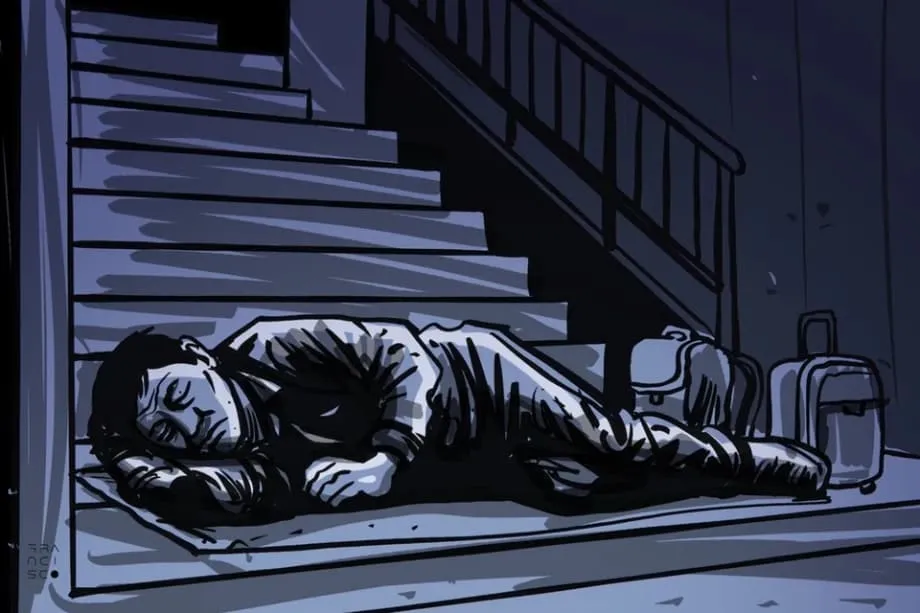
Young people experiencing homelessness may still attend classes or work during the day. At night, they might sleep on a friend's couch, a playground bench or in a stairwell after cleaners leave. Moving frequently can keep them away from visible street sleeping, but leaves them without a dependable place to rest.
Jemina, a pseudonym, was 17 when her father died and her mother remarried. She left home because she no longer felt safe or welcome. A junior college hostel gave her somewhere to stay until her lease ended before her pre university examinations.
Jemina then moved between friends' couches, playground benches and fast food outlets. After entering university, eye problems and mental health struggles forced her to withdraw. A family eventually took her in, but fear of judgment and a sense of being misunderstood made her reluctant to discuss what had happened.
Jemina said adults at school also misunderstood her distress:
Even adults at my school saw me as being difficult rather than as one who was suffering. I was very alone.
Why youth homelessness stays out of sight
Kenneth Thong runs The Last Resort, a small volunteer initiative that has hosted many young people since 2007. His experience shows how young people can remain outside the familiar public picture of homelessness.
Thong described the gap between that picture and the lives of teenagers seeking shelter:
You do not think of teenagers when you think of homelessness in Singapore, but it is a real issue.
Volunteers and social workers are seeing more requests for help from people under 35. Young people are often skilled at finding temporary alternatives to the street. Staying with friends can protect them from public scrutiny and stigma, while also making their housing difficulties harder for services to identify.
Community groups describe this pattern as hidden homelessness. A young person may have somewhere to sleep tonight without knowing where they can sleep tomorrow. A formal family address may also exist even when returning there feels unsafe.
The Ministry of Social and Family Development describes homelessness in terms of safety and belonging, not simply property rights. That approach recognises that having access to a flat on paper and having a safe home are different circumstances.
What Singapore's counts capture
Singapore's nationwide street count in 2019 found between 921 and 1,050 people sleeping outdoors across most parts of the island. A follow up count in 2021 recorded 616. These exercises counted people visible in public places late at night.
Many people identified in the first study were older men working in jobs with low wages, including cleaning and security. Interviews suggested that about six in ten had jobs despite lacking stable housing. Median pay among those working was far below the national median.
Half had been sleeping outdoors for one to five years, and a large minority had done so for longer. Common sleeping locations included void decks, commercial building corridors and playgrounds.
Young people staying intermittently with friends are often missed by street counts. No official nationwide counts were conducted in 2023 or 2024, leaving frontline services as the clearest source of recent signs of change. The number of young people experiencing hidden homelessness is not known.
A recent review of research on youth homelessness in East Asia Pacific also identified difficulties comparing statistics across places. Different definitions and methods of collecting data can count different groups of young people, complicating decisions about the kinds of services needed and their scale.
A timeline of shelter and service demand
Singapore's figures describe several parts of the housing problem: people sleeping outdoors, requests for help, new clients and stays in temporary shelters. Together, they show why both street outreach and services for people moving between temporary homes matter.
- Since 2007: The Last Resort has hosted many young people through its small volunteer initiative.
- 2019: A nationwide street count found between 921 and 1,050 people sleeping outdoors.
- 2021: A follow up count recorded 616 people sleeping outdoors.
- 2022: Just over one third of help requests to Homeless Hearts of Singapore came from people under 35.
- 2023: Catholic Welfare Services recorded 192 new clients. No official nationwide street count was conducted that year.
- 2024: The Ministry of National Development received 175 public reports of rough sleeping through channels including the OneService app. No official nationwide street count was conducted.
- July 2025: About 100 people were staying at Singapore's 22 S3Ps.
- 2025, as of November 30: Almost half of help requests to Homeless Hearts of Singapore came from people under 35, and Catholic Welfare Services recorded 317 new clients.
Catholic Welfare Services' increase from 192 new clients in 2023 to 317 in 2025 amounts to 125 more clients, or about 65%. Bless Community Services, another operator, says its shelter locations based in churches have been full in recent months.
For a young person seeking a bed, pressure on temporary accommodation can mean continuing to move between short stays. Shelter operators also need to help guests find housing that lasts beyond the next night.
Family breakdown can remove a home overnight
Family conflict, the death of a parent or caregiver, mental health distress and financial difficulties can combine quickly. A teenager or young adult may lose both a place to live and the people they previously relied on for money, guidance and support.
Qualitative research on youth homelessness in Singapore, which examines people's experiences in detail, has found that breakdowns at home often begin with abuse, neglect or rejection. A family home can remain an official address while no longer providing a safe room to return to.
Sarah, a pseudonym, became her father's sole caregiver after her mother died. She worked multiple jobs but still could not keep up with rent. Temporary accommodation became part of trying to keep both herself and her father housed.
Sarah described the strain of that period:
Living between temporary accommodations was a struggle,
Sarah also described feelings of "self blame and self loathing" when she could not protect her dad. Her experience shows how grief, caring responsibilities and rent pressure can arrive together, leaving little room to recover from any one of them.
Jemina's experience followed a different family crisis, but also involved losing a dependable home after a parent's death. In both cases, the immediate need was practical: somewhere safe to stay while managing responsibilities and distress.
Work and housing rules leave gaps for younger singles
Young adults often work in jobs at the start of their careers or have irregular employment. Saving for a rental deposit can be difficult when income is small or unpredictable. The 2019 study's finding that many homeless people were employed shows how a job can coexist with an inability to afford stable accommodation.
A shared flat being sold or a landlord increasing rent can turn a small gap in wages into a loss of housing. Missed shifts or an injury can force someone to choose between food and a bed.
Singapore's public housing system is designed primarily around families. Singles typically qualify for public flats at age 35. Public rental schemes and emergency pathways exist, but age requirements and household definitions can limit access for teenagers and young adults who are estranged from their families.
Private rooms can require deposits, proof of income and sometimes a guarantor, a person who agrees to take responsibility if the tenant cannot pay. Young people without savings or family support may struggle to meet those conditions.
Friends can provide temporary shelter, but those arrangements may end when relationships become strained or a couch is no longer available. Young people can then move between informal stays and periods of sleeping outdoors.
Unstable housing takes a toll on health and education
Homelessness disrupts sleep, meals, school and work. Anxiety and depression can grow as a young person repeatedly tries to work out where to spend the night. Jemina's eye problems and mental health struggles eventually forced her to leave university and its campus accommodation.
Local qualitative research identifies a difficult choice for young people who need immediate income: they may put school aside to earn enough to survive. Leaving education also means losing access to qualifications that could improve earnings later.
Studies across East Asia Pacific have tested several forms of mental health support for homeless youth. Art therapy gives participants ways to express feelings, while cognitive behavioural therapy helps people recognise patterns in their thoughts and develop coping skills. Other programmes teach life skills or seek to strengthen family relationships where doing so is safe.
Many interventions have shown improvements in depression, anxiety or resilience, the ability to cope with difficult experiences. Some gains fade without continuing support. Short sessions can help, but lasting stability generally requires dependable housing alongside counselling and casework.
A caseworker can help a young person connect the different parts of recovery, including accommodation, education, employment and mental health care. Without a stable home, immediate survival can repeatedly push longer plans aside.
How Singapore's support network works
Singapore's safety net for people sleeping outdoors has grown over the past decade. S3Ps provide mats or beds at night, showers and lockers at sites operated by charities and faith based groups.
Staff and volunteers help guests obtain documents, contact social workers and apply for housing or jobs. These tasks matter because a temporary bed offers immediate rest, while resolving paperwork, income and accommodation needs can help someone move into a more stable situation.
The government has brought community partners together to coordinate assistance and build trust with people who avoid formal agencies. Family Service Centers can work with young people on family mediation where safe, financial assistance and job placement.
Members of the public can report rough sleeping through the OneService app, prompting outreach. Community groups can also partner with an S3P or the Partners Engaging and Empowering Rough Sleepers network to support shelters and outreach work.
The Destitute Persons Act allows authorities to admit destitute individuals into welfare homes for care. Most young people, however, are better helped in community settings that preserve their independence and connections to school or work. Frontline groups therefore focus on night shelters, casework and referrals rather than institutional placements.
Abraham Yeo, co founder of Homeless Hearts of Singapore, described the place of human connection in this work:
Homelessness is not just a problem to be solved but a people to be loved.
What approaches elsewhere can offer
Youth homelessness has risen in many wealthy cities. In the United Kingdom, charity data shows that well over 100,000 young people approached councils in a recent year saying they were homeless or at risk. Rising rents have placed urban areas under strain, while assessment and support rates vary between local authorities.
Medicine Hat, a Canadian city, committed to placing people in permanent housing within days and then arranging support services around that home. Its mayor later said the approach made financial sense because stable housing reduced the use of crisis services.
Denmark used Housing First alongside a large stock of public housing, with dedicated youth services moving young adults into permanent homes quickly. Housing First means making a stable home the starting point, with support organised around the person living there.
Tokyo reduced visible homelessness through temporary housing and employment advice delivered at scale, backed by strong social services. Each place has a different housing market and policy base, but these examples offer a common practical idea: quick access to a safe room, matched with casework and mental health care.
Practical proposals for earlier help
Singapore's frontline experience and research point to several possible ways to stop a short housing crisis from becoming years without a stable home. These are proposals for improving support, rather than a description of services already guaranteed to young people.
- Create dedicated sleeping places for young people, with daytime support, contact with schools and mental health counselling. Keep them small and safe, and assign a named caseworker to every guest.
- Provide a clear route into public rental housing for estranged young people under 35, with safeguards, time limits and regular reviews. Pair each tenancy with mentoring and an education or employment plan.
- Develop a host homes programme using vetted and trained families to offer short stays. Include background checks, modest stipends and continuing support for hosts and guests.
- Allow students facing family breakdown or eviction to remain in dormitories during term breaks and examinations, supported by emergency funds and counselling.
- Expand training for teachers, social workers and volunteers to recognise the effects of trauma and identify warning signs early. Referrals should involve helping young people make contact with services.
- Provide quick financial assistance for deposits and the first month's rent through existing schemes, with simple applications and fast decisions for young people referred by trusted agencies.
- Create integrated youth hubs bringing together housing advice, mental health care, legal assistance for family or tenancy issues, and job support.
- Add a dedicated youth referral route within the OneService app, directing reports to trained outreach teams and explaining what happens next.
- Guarantee at least 12 months of continuing support after a young person moves into stable housing, helping prevent small setbacks from causing another loss of a home.
- Restart regular street and service counts, and include methods for measuring stays on friends' couches so decisions reflect hidden homelessness as well as visible rough sleeping.
These proposals address different moments in a housing crisis: before a young person leaves home, during an urgent search for shelter and after a move into more stable accommodation. Maintaining school and work connections is part of keeping that stability.
What young people need, and how to respond
Sarah said finding help can be difficult for young people who have little experience navigating services:
We have less life experience, and we may not know where to go or who to ask for help, which intensifies feelings of helplessness.
Jemina called for greater awareness and a willingness to help young people who have newly lost a safe home:
I really wish there were more people who are aware of this issue.
Young people who have lost a parent or feel unsafe at home need a chance to stay in school, keep a job and sleep without fear. Small interventions delivered promptly can help protect those parts of their lives.
Members of the public who encounter someone sleeping outdoors can take practical steps while respecting privacy:
- Call the police at 999 if someone appears to be in immediate danger.
- Approach respectfully during daylight hours, ask whether the person wants help and listen before offering advice.
- Report sightings through the OneService app or website so outreach teams can follow up. The OneService platform provides information about reporting.
- Direct young people to a nearby Family Service Center or school counsellor who can connect them with housing and financial assistance.
- Avoid posting photographs of people sleeping outdoors on social media. Protect their privacy and dignity.
- Community groups can partner with an S3P or the Partners Engaging and Empowering Rough Sleepers network to support shelter or outreach services.
What to Know
- Almost half of Homeless Hearts of Singapore's help requests in 2025 came from people under 35, compared with just over one third in 2022.
- Young people moving between friends' homes and public spaces are often missed by street counts.
- Nationwide counts found 921 to 1,050 rough sleepers in 2019 and 616 in 2021. No official nationwide counts took place in 2023 or 2024.
- Singapore has 22 S3Ps, with about 100 guests in July 2025. Several operators report pressure on capacity.
- Catholic Welfare Services recorded 317 new clients in 2025, compared with 192 in 2023. Public reports of rough sleeping reached 175 in 2024.
- Family breakdown, caregiver loss, low income, mental health distress and housing eligibility rules can combine to leave young people without a safe home.
- Proposals include dedicated youth shelters, earlier rental access, host homes, campus support, help with deposits and at least 12 months of continuing care after rehousing.
- Stable accommodation, counselling and ongoing casework can help young people protect their health, education and employment.