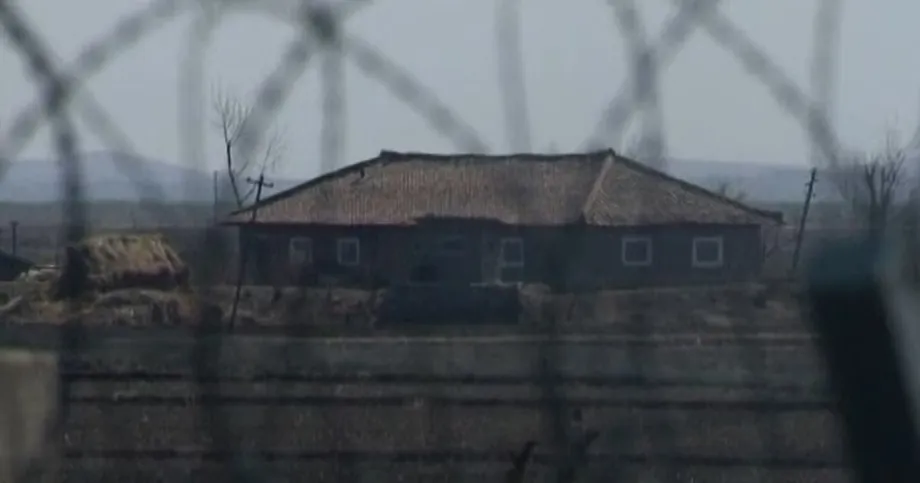
A hidden prison system, with sharply different estimates
Between 53,000 and 65,000 people are held in four North Korean political prison camps, according to a recent report by the Korea Institute for National Unification, a state funded research institute in Seoul. Greg Scarlatoiu, president of the Washington based Committee for Human Rights in North Korea, puts the possible population much higher, at close to 200,000.
Contents
- A hidden prison system, with sharply different estimates
- Why the prisoner counts are so far apart
- Four, five or six camps?
- Camp boundaries and buildings change over time
- What satellites can show
- How imprisonment can reach an entire family
- What accountability would require
- International demands and access to information
- Key Points
North Korea denies that political prison camps exist and bars international investigators from its detention facilities. Behind that closed door are allegations of imprisonment without trial, forced labor lasting a lifetime, and punishment imposed on relatives because of their family ties.
Satellite images offer a partial view of changes to detention facilities. At least 14 facilities have reportedly been built or remodeled since late 2023, including prisons described as providing reeducation and other places of detention. Establishing who is inside, what happens to them and who gives the orders requires testimony and records that are far harder to obtain.
Why the prisoner counts are so far apart
The Korea Institute for National Unification estimates 53,000 to 65,000 prisoners. An unnamed source inside North Korea has put the population at about 147,000 across six camps. The U.S. State Department's 2023 Country Reports on Human Rights Practices: North Korea gives a range of 80,000 to 200,000 based on external estimates of the nationwide political prison camp population, while Scarlatoiu believes the current figure could be close to the top of that range. The report says most estimates of political prisoners range from 80,000 to 120,000, with some nongovernmental organizations estimating as many as 200,000.
Each estimate draws on different information, methods and assumptions, including which facilities count as operating political prison camps. None comes from an independently verified census. Without access to prisoners or official registers, researchers must assemble a picture from fragments, including accounts from people who have escaped and information from contacts inside the country.
Scarlatoiu said his estimate was roughly 120,000 about a decade earlier, compared with about 200,000 now. His assessment points to a possible increase, but the exact current population and the scale of any change remain unknown. The immediate task is to improve the evidence while addressing the abuses already described by former detainees and investigators.
Four, five or six camps?
South Korea's Ministry of Unification identifies five operating camps on its prison camp overview: Kaechon No. 14, Yodok No. 15, Myonggan No. 16, Kaechon No. 18 and Chongjin No. 25. The institute's more recent estimate covers four camps, excluding Yodok, while the estimate attributed to an unnamed contact inside North Korea covers six.
The State Department's 2023 report identifies six operating kwanliso sites at the end of that year: Camps 14, 15, 16, 18 and 25, plus Choma-bong Restricted Area. It describes these as "total control-zone" camps where prisoners were not expected to survive.
The ministry's page cites a study published in 2013 and the institute's 2022 White Paper on Human Rights in North Korea. Those reference dates matter when comparing its five listed camps with a more recent assessment. The page offers detailed information about locations and operations, while later research presents a different count.
Myonggan No. 16 is also called Hwasong, reflecting an older place name. Chongjin No. 25 is known as the Susong reeducation prison, although the ministry describes it as a facility holding political prisoners. Names alone can therefore make the system difficult to follow: a site labeled as a reeducation prison may also appear in an assessment of political detention.
The ministry says Yodok occupies about one third of Yodok County in South Hamgyong Province. It also records testimony that Chongjin No. 25 has held senior officials, including a provincial security chief and a provincial people's committee chairman. The system described reaches both ordinary families and members of the governing apparatus.
Camp boundaries and buildings change over time
Kaechon No. 18 illustrates why a camp's history matters. According to the ministry, the former Bukchang No. 18 camp was greatly reduced and moved to Tongnim village in Kaechon around 2006 to 2007. A familiar camp number can therefore refer to a facility whose location and size have changed.
The ministry's operating table also distinguishes between forms of confinement. It describes areas under complete control, areas associated with reeducation, differences in the possibility of returning to society, and whether prisoners are held alone or with relatives. Political imprisonment is presented as a system with different categories, rather than one uniform type of prison.
Several dates help place the current concerns in context:
- Around 2006 to 2007: The ministry says Bukchang No. 18 was substantially reduced and relocated to Kaechon.
- 2014: The United Nations Commission of Inquiry issued its final report identifying political prison camps and public executions as extreme instruments of fear.
- Since late 2023: At least 14 detention facilities have reportedly been built or remodeled.
- November 2024: The United States called for the immediate dismantlement of political prison camps during North Korea's fourth Universal Periodic Review in Geneva.
The construction reports cover several kinds of detention facility. The figure of 14 therefore describes building activity across a broader prison network, while the estimates of four, five or six concern facilities classified as political prison camps.
What satellites can show
Satellite imagery is one of the few ways to monitor detention sites without entering North Korea. Images can reveal new buildings, expanded boundaries and changes to security infrastructure. Comparing images taken on different dates can help researchers identify where physical changes have occurred.
A prisoner count requires other evidence. Researchers need to know which buildings hold detainees, how those buildings are used and how many people occupy them. Images also leave investigators dependent on testimony and documents for information about treatment, daily routines and orders given inside a facility.
Former detainees can describe work assignments, punishments and the organization of camp life. Insiders may provide information about staffing or administration. Internal government records can help connect those accounts to rules and decisions. Each type of evidence answers a different part of the same basic inquiry: what happened, to whom and under whose authority.
How imprisonment can reach an entire family
Ethan Hee-seok Shin, a member of the U.N. Working Group on Arbitrary Detention, described political imprisonment as a punishment that can extend far beyond the person accused. He said prisoners:
can face imprisonment without trial, lifelong forced labor and punishment that extends to family members under the state's system of guilt by association.
Guilt by association means that relatives can face punishment because of their relationship to an accused person. A family member may be confined because of that connection, rather than because authorities have established an individual offense through a fair legal process.
Shin said families may receive no information about whether a detained relative is alive or where that person is being held. People who try to find out can themselves face punishment. For a family outside the camp, the consequences include uncertainty over a relative's survival and fear about even asking for news.
Shin described the wider effect of these practices on the population:
help create a climate of fear that reaches far beyond the prison camps themselves.
The U.N. Commission of Inquiry reached a related finding in its 2014 final report, identifying political prison camps and public executions as extreme tools used to frighten people into obedience. The fear concerns personal safety, family safety and the possible consequences of attracting official suspicion.
What accountability would require
Shin called for stronger international efforts to collect, preserve and analyze evidence for future accountability processes. His priorities include information about camp command structures, reporting lines, internal rules and the roles of individual officials.
Command structures show who supervised whom. Reporting lines show where information traveled. Rules can reveal how practices were organized, while records of officials' duties can help investigators determine who made decisions, carried them out or received reports about them.
Preserving testimony and documents now matters because future legal proceedings would need a detailed account of both abuses and responsibility. A survivor's description of forced labor can establish what that person experienced. Administrative records and insider testimony may help explain how the practice was ordered and maintained.
The U.S. State Department has also said that many political prisoners lack fair trials or due process. Due process means basic legal protections, such as being told the accusation, having a meaningful opportunity to answer it and receiving a fair hearing. For people held without those protections, accountability concerns both their treatment in custody and the decision to imprison them.
International demands and access to information
The United States called for North Korea to dismantle its political prison camps immediately during the country's fourth Universal Periodic Review in Geneva in November 2024. It also urged the release of people unjustly detained and protections against arbitrary detention, including fair trials.
The Universal Periodic Review is a U.N. process in which countries examine one another's human rights records and make recommendations. In North Korea's case, the demands described concrete changes: ending the camp system, freeing unjustly held prisoners and providing legal safeguards.
Scarlatoiu linked worsening conditions under Kim Jong Un to purges, tighter border controls and restrictions on information from outside North Korea. Alongside evidence gathering, he argued for broader efforts to increase access to outside information, describing greater awareness of the outside world as a critical tool for lasting change.
For detainees and their families, the demands are immediate and practical: an end to imprisonment without trial, information about missing relatives, protection from punishment based on family ties and release from unjust detention. For investigators, the work is to preserve enough detail to identify both the victims and the people responsible.
Key Points
- The Korea Institute for National Unification estimates 53,000 to 65,000 political prisoners across four camps; the U.S. State Department's 2023 report cites external estimates ranging from 80,000 to 200,000.
- South Korea's Ministry of Unification lists five camps on a page drawing on research from 2013 and 2022; the State Department's 2023 report lists six operating sites, including Choma-bong Restricted Area.
- At least 14 detention facilities have reportedly been built or remodeled since late 2023, including facilities outside the political camp category.
- North Korea denies the camps exist and bars international investigators from its detention facilities.
- Alleged abuses include imprisonment without trial, lifelong forced labor and punishment extending to relatives.
- Calls for accountability focus on preserving testimony, internal records and evidence about officials' responsibilities.