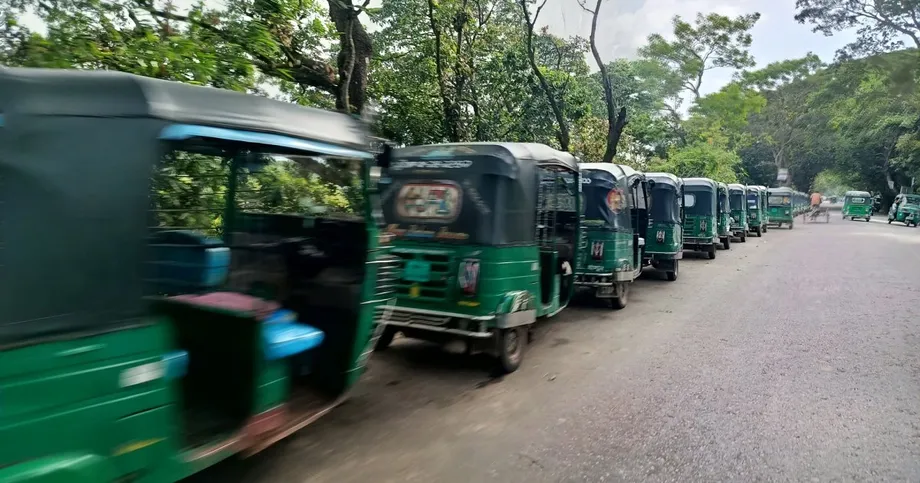
A highway ban meets a transport system that depends on small vehicles
On the Dhaka–Chattogram highway at Mirsarai, vehicles making U turns share space with buses, trucks and small passenger vehicles, without a separate turning lane. On the Chattogram–Cox's Bazar route, six crashes described across the wider Chattogram region left at least six people dead and 45 injured. Three wheelers were involved in every collision.
Contents
- A highway ban meets a transport system that depends on small vehicles
- What the restrictions cover
- Six crashes show the danger around Chattogram
- Why mixing vehicles creates such severe risks
- Political pressure and thin staffing weaken enforcement
- Why drivers keep returning to highways
- A narrower enforcement plan followed the nationwide ban
- What the death figures show about priorities
- Chattogram's vehicle economy reaches beyond the roadside
- Separate routes and safer vehicles offer concrete options
- Key Points
Bangladesh has repeatedly restricted these vehicles on major highways. An October 2012 High Court restriction concerned autorickshaws powered by compressed natural gas, or CNG. In August 2015, the government banned three wheelers and vehicles without motors on 22 major highways. Yet CNG autorickshaws, battery rickshaws, easy bikes and other small vehicles continue to carry passengers alongside much heavier traffic.
The reasons stretch beyond drivers ignoring a prohibition. Highway police officers describe political pressure and limited staffing. Drivers say village routes cannot cover their costs. Passenger advocates point to missing service roads, while transport researchers identify weak brakes, unstable vehicles and inadequate training.
The result is a daily conflict between local journeys and traffic travelling longer distances at higher speeds. People need to reach markets, workplaces and town centres, but the roads connecting them often double as national transport corridors.
Figures from different periods show the scale of the danger. The Mymensingh district office of the Bangladesh Road Transport Authority recorded 143 deaths and 141 injuries in 149 crashes on the Dhaka–Mymensingh highway during the reporting year. In Chattogram city, police records counted 263 road deaths between 2020 and 2022. Each count covers a different place and period, requiring a response suited to the roads involved.
What the restrictions cover
The government's original explanation of the highway ban drew a boundary between national highways and the rest of the road network. Road Transport and Highways Division Secretary M A N Siddique said the restriction applied to 3,570 kilometres of national highways within a network of about 250,000 kilometres.
Those figures put the restricted roads at about 1.4% of the network described at the time. Three wheelers could continue using other roads, he said. Authorities also marked national highway sections on maps and made them available online.
Implementation was assigned to divisional commissioners, district administrators, senior police officers, highway police and BRTA magistrates. The policy therefore involved several layers of government, rather than roadside policing alone.
A later Appellate Division decision addressed battery powered three wheelers specifically. A bench led by Chief Justice Hasan Foez Siddique modified a High Court order issued on December 15 that had directed authorities to identify and remove illegal battery powered three wheelers and easy bikes nationwide. The modified order retained the restriction on highways.
Lawyer Tania Amir, representing the applicants seeking that change, said their case raised livelihoods and a draft government policy governing the vehicles. Labour representatives welcomed the decision as allowing operation away from highways and called for registration under the proposed regulatory framework.
Six crashes show the danger around Chattogram
The collisions described around Chattogram involved buses, a small truck, microbuses and a dump truck, as well as CNG autorickshaws. Several were head on collisions. The accounts give the following dates without specifying the year:
- February 27: An autorickshaw and a small truck collided at Adhunagar in Lohagara on the Chattogram–Cox's Bazar highway, killing one person and injuring seven, including a child.
- March 28: Six people were injured when a microbus and a CNG autorickshaw collided near Modern Hospital in Sitakunda.
- May 31: A collision involving a bus, dump truck, microbus and CNG autorickshaw at Barabkunda market in Sitakunda killed one person and injured 25.
- September 5: A bus and CNG autorickshaw collided head on in Chandanaish, killing two people and seriously injuring three.
- October 7: Two people died in a bus and autorickshaw collision south of Nayakhal Pathani Bridge in Satkania. An injured passenger was admitted to Chattogram Medical College Hospital.
- October 9: Three autorickshaw passengers suffered serious injuries in a collision with a microbus in Patiya.
Mirsarai resident Md Nurul Alam described frequent crashes at the municipal market U turn, including incidents involving prohibited small vehicles travelling against traffic. Bus and truck drivers also identified the absence of a separate turning lane as a danger.
Why mixing vehicles creates such severe risks
A slow vehicle entering a faster traffic stream can force other drivers to brake or change direction suddenly. Turning across traffic, joining from a village road or travelling against the permitted direction makes those movements harder to anticipate.
Professor Md Hadiuzzaman, director of the Accident Research Institute at Bangladesh University of Engineering and Technology, identified braking and balance problems in locally assembled vehicles. He also pointed to the vulnerability of their occupants and the need for driver training.
These vehicles may turn over on slopes or while making a turn. The rate of deaths among the drivers and passengers of these vehicles when hit by bigger vehicles is quite high. Besides these, the drivers are not trained.
The vehicles grouped under the three wheeler label vary widely. Some use CNG or diesel; others run on batteries or small engines adapted for local transport. A motor added to a pedal rickshaw can increase its speed while leaving its original braking and balancing arrangements largely unchanged.
Paimul Islam, a supervisor with Hanif Paribahan, described sudden turns and entry from connecting roads. Other bus drivers identified poor visibility at night and vehicles moving into the wrong lane when traffic builds up.
These risks extend beyond Chattogram. Locations identified by drivers include Gobindaganj, Mokamtala, Kodda, Kaliakoir, Ashulia, Savar and Jatrabari. Near Nalka in Sirajganj, a woman and her daughter died when another vehicle struck their battery rickshaw van. Police station chief Mosaddek Ali said the van appeared to have been crossing the highway; police were searching for the vehicle that hit it.
Political pressure and thin staffing weaken enforcement
Dohazari Highway Police Station officer in charge Nurul Absar said small vehicles were increasing highway risks and described inadequate driver training. He also said political and other influential figures prevented police from taking full action against prohibited three wheelers.
That account points to a problem beyond the number of checkpoints. Allegations that drivers and owners make regular payments to influential groups accompany the continued operation of vehicles on restricted roads.
In Mymensingh, BRTA Assistant Director Anisur Rahman said officials sometimes conducted mobile court operations with administrative support, but staff shortages prevented regular action. Additional Superintendent of Police Abdullah Al Mamun said drivers entered highways from village roads whenever an opportunity arose, despite highway police checkpoints.
The road layout makes enforcement difficult. A checkpoint controls one location, while numerous connecting roads provide entry points elsewhere. At Churkhai intersection and Trishal bus stand, residents described three wheeler stands operating beside the Dhaka–Mymensingh highway, creating queues and obstructing larger vehicles.
Trishal resident Samsu Mia said congestion affected pedestrians as well as traffic. Churkhai shopkeeper Kamal Hossain described buses repeatedly braking and passengers struggling to reach destinations on time. For residents, the problem includes both exposure to crashes and the everyday cost of slower journeys.
Why drivers keep returning to highways
Easy bike driver Sumon Mia, from Trishal, acknowledged the danger but said village journeys did not generate enough money to meet vehicle rental costs and provide an income. He therefore travelled to the town centre and carried passengers onto the highway.
Mahindra driver Selim Mia said his vehicle had no registration and operated through an organisation whose leaders handled related matters. He described occasional police fines and said driving supported his household because he could not do other work.
The scale of that dependence is substantial, according to labour representatives Khalekuzzaman Lipon and Imran Habib Rumon. Their statement estimated that about five million drivers, mechanics, small owners and garage operators were directly involved with battery vehicles, with another 25 million to 30 million people dependent on them.
The representatives said highways pass through or beside district towns, smaller administrative centres and markets. Where public transport is scarce, a short local journey can therefore require using part of a highway.
Former Road Transport and Bridges Minister Obaidul Quader acknowledged that tension when discussing a more limited enforcement approach. He explained why authorities were considering regulated operation on routes outside five highways selected for closer monitoring.
If we stop operation of the vehicles, many drivers would be jobless and people will face problems. So, these can be operated, but under a guideline,
His position placed local mobility and employment alongside enforcement. Drivers still needed rules, while passengers needed a practical way to complete journeys that existing bus services did not adequately serve.
A narrower enforcement plan followed the nationwide ban
At a National Road Safety Council meeting in 2022, Quader said authorities would closely monitor five highways: Dhaka–Chattogram, Dhaka–Sylhet, Dhaka–Mymensingh, Dhaka–Tangail and Dhaka–Aricha. He cited insufficient BRTA and highway police staffing to apply the same level of monitoring to the other 17 covered by the 2015 ban.
A ministry committee formed in June 2019 had examined controls on three wheelers. A draft regulatory guideline followed in November 2021. Proposals discussed around that framework included registration and rules for manufacture, import and operation.
The council also approved the National Road Safety Strategic Action Plan for 2021–24, with targets to reduce crashes by 25% by 2024 and 50% by 2030. Quader attributed the delay in approval to the pandemic.
Motorcycles were part of the same policy debate. A government investigation committee had recommended keeping them off national highways unless separate service lanes were available. The council rejected a highway motorcycle ban and favoured tighter controls.
The 2024 target date has passed, and 2030 remains the later target year. The accounts give no confirmed outcome against those targets, final adoption date for the three wheeler guideline or next implementation deadline.
What the death figures show about priorities
The Accident Research Institute counted 310 three wheeler passengers or drivers among 3,558 road deaths in 2020, about 8.7% of the total. Those deaths placed small vehicle occupants among the groups needing direct protection.
For the first nine months of 2022, the Road Safety Foundation recorded 5,043 deaths in 4,225 crashes. Its figures associated three wheelers with 21.71% of deaths and motorcycles with 37.78%, a combined 59.49%. The two datasets use different periods and categories, so each gives a separate view of road casualties.
Chattogram's urban figures reveal another large group at risk. The Chattogram City Road Safety report, jointly published by Chattogram Metropolitan Police and Chittagong City Corporation using police records, counted 263 deaths from 2020 to 2022. Pedestrians accounted for 56%, while motorcycle and three wheeler drivers together accounted for 30%.
The city's road death rate rose from 2.1 per 100,000 people in 2020 to 2.9 in 2022, an increase of about 38%. Men accounted for 81% of fatalities, and most victims were aged between 20 and 54.
Bayazid Bostami police station recorded the most crashes, followed by Bakalia. The Bahaddarhat–Shah Amanat Bridge link road recorded about five deaths per kilometre over three years. Tiger Pass intersection and Khejur Tala on the Outer Ring Road were also identified as dangerous locations.
The report identified heavy trucks as a major source of deaths among pedestrians and motorcycle users. Its recommendations included wider and continuous footpaths, raised crossings, speed humps and pedestrian islands, giving authorities specific locations and measures for protecting people outside vehicles.
Chattogram's vehicle economy reaches beyond the roadside
Chattogram Autorickshaw and Auto Tempo Owners Association General Secretary Titu Chowdhury estimated that the city and district had about 63,000 registered CNG autorickshaws: 13,000 in the city and 50,000 in the district. He put the unregistered CNG fleet at another 50,000.
On those association estimates, unregistered vehicles number almost four for every five registered CNG autorickshaws. Chowdhury also described several hundred thousand other small vehicles, including easy bikes, tomtoms and battery rickshaws, across the city and district.
An account focused on Chattogram city estimated about 30,000 battery rickshaws and roughly 282 charging stations, with several hundred more charging facilities in surrounding upazilas. Listed concentrations included 52 stations in Chandgaon, 35 near Karnaphuli Bridge and 30 in Patenga.
Allegations that some garages draw electricity directly from utility poles, and that influential local political figures own vehicles or charging facilities, add another enforcement concern. Addressing an illegal fleet can involve vehicle owners, garages and power connections as well as drivers.
CNG driver Abdul Karim complained that battery vehicles contributed to congestion while legal operators faced police action. Metropolitan police officials said they would act against illegal battery rickshaws. A city corporation decision to stop autorickshaw operations also formed part of the local response.
Separate routes and safer vehicles offer concrete options
Professor Hadiuzzaman argued that popular local transport could not disappear overnight. He proposed alternative passenger services and roads that separate local journeys from faster highway traffic.
Vehicles like small bus or microbus can be used for short-distance travel. A service road parallel to a highway will be a better option as in any case heavy vehicles will run at a high speed on the highways.
A service road runs beside the main carriageway and can connect markets, neighbourhoods and local stops. It gives shorter journeys their own route instead of requiring small vehicles to compete for space with buses and trucks.
Bangladesh Passenger Welfare Association Secretary General Md Mozammel Haque Chowdhury similarly identified the absence of separate service lanes and weak enforcement. Labour representatives also called for service roads, alongside registration under the draft three wheeler policy.
The proposals converge on several practical needs: usable local passenger services, routes separated from faster traffic, registered vehicles and trained drivers. At Mirsarai, safer turning arrangements address a particular danger. In Chattogram city, safe crossings and continuous footpaths address the pedestrian deaths documented by police.
Enforcement remains part of that response. Police accounts of political interference and drivers bypassing checkpoints show why a prohibition needs support beyond occasional fines. For passengers and drivers, the lasting change would be a local journey that can be completed affordably without entering a dangerous traffic stream.
Key Points
- Bangladesh banned three wheelers and vehicles without motors on 22 major highways in August 2015, following earlier court restrictions.
- Six crashes described around Chattogram killed at least six people and injured 45.
- Police and BRTA officials cited political pressure, limited staffing and entry from village roads as enforcement problems.
- Drivers said local routes often failed to cover costs, while labour representatives called for registration and separate service roads.
- Chattogram city recorded 263 road deaths during 2020–22; pedestrians accounted for 56%.
- Proposed measures include safer vehicles, driver training, alternative passenger services, service roads and better pedestrian crossings.