Tariff relief brings new pressure from Beijing
China has lodged formal complaints with Malaysia and Cambodia over trade agreements with the United States that set a 19 percent tariff ceiling for many of their exports while drawing both countries closer to Washington's economic security rules. As of November 28, 2025, the dispute is putting two Southeast Asian governments under pressure to protect access to American consumers without weakening their commercial ties with China.
Contents
- Tariff relief brings new pressure from Beijing
- What Washington secured in the agreements
- What Malaysia and Cambodia receive
- Why Beijing objects
- Malaysia's chip industry sits between two markets
- Cambodia weighs garment exports against Chinese support
- How the competition developed through 2025
- Origin rules could reshape factory sourcing
- Enforcement gives Washington continuing influence
- ASEAN seeks predictable rules as businesses adjust
- The decisions that matter next
- Key Points
Officials from China's Ministry of Commerce met Malaysian counterparts in Beijing this week and Cambodian officials earlier. They expressed grave concerns about the agreements and urged both governments to consider their long term interests. Beijing's objections concern provisions covering export controls, sanctions, investment screening and cooperation against efforts to bypass US restrictions.
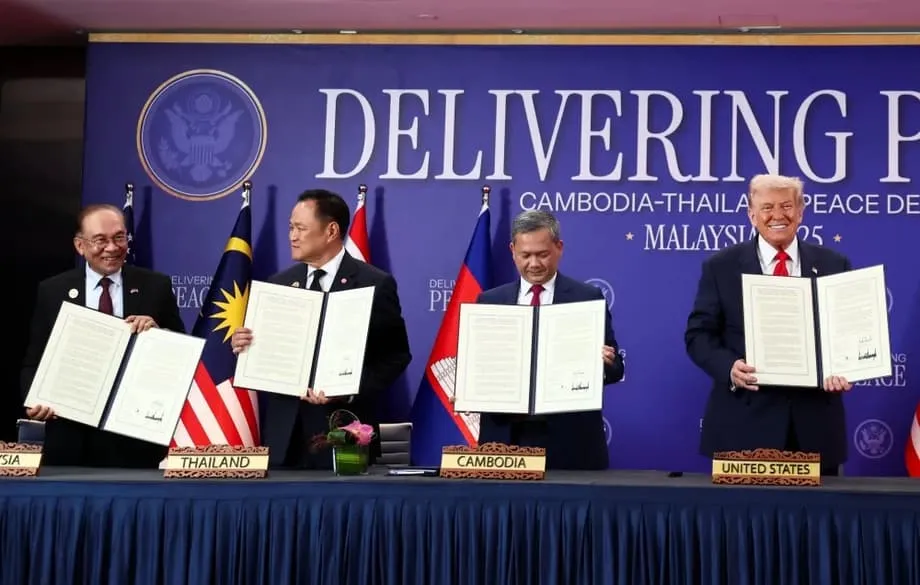
Malaysia and Cambodia finalized the agreements during US President Donald Trump's visit to Kuala Lumpur in October, alongside framework talks with Vietnam and Thailand. Washington offered tariff relief and preferential access as both countries sought protection from steep US duties. In return, the agreements connect trade benefits with cooperation on security and enforcement.
China is the largest trading partner for most countries in Southeast Asia and a major investor in factories, railways, ports and digital infrastructure. The United States is the leading destination for many of their exports. A factory can therefore depend on Chinese investment or components while relying on American customers, making decisions about trade increasingly inseparable from security and industrial policy.
Malaysia's semiconductor industry and Cambodia's garment factories show why this matters. Chinese companies bought about $18 billion in chips from Malaysia last year, while Chinese owned factories dominate Cambodia's garment industry and export mostly to the United States. Both countries have strong reasons to preserve connections with the two powers.
What Washington secured in the agreements
Malaysia and Cambodia agreed to coordinate more closely with US export controls and sanctions covering sensitive technologies. The areas include advanced electronics, telecommunications equipment, aerospace components and dual use items. Dual use items have both civilian and military applications, which makes their destination and intended use important to security authorities.
Both agreements call for stronger screening of investments in sectors considered vulnerable to security risks. They also commit the countries to respond to US requests for information about investors from third countries and to stop companies from helping other governments or businesses evade US restrictions.
Washington also wants closer cooperation against transshipment, including tighter customs checks. In the conduct targeted by these agreements, goods pass through another country so their original source can be disguised. The aim is to close routes that could allow restricted goods or products subject to higher duties to reach the US market through Malaysia or Cambodia.
The agreements also seek to expand trade related to defense and the sharing of information with the United States. Taken together, these commitments reach beyond the price charged at the border: they concern who invests, what technology moves, where products come from and how governments exchange information about those activities.
What Malaysia and Cambodia receive
The United States offered a tariff ceiling of 19 percent for a wide range of Malaysian and Cambodian goods, with exemptions or lower rates for selected products. A tariff is a tax on imports. Reducing that tax can help a country's goods remain attractive to buyers, while a higher tax can make them more expensive.
Malaysia agreed to reduce or eliminate tariffs on some US products and lower other duties by specified percentages. Cambodia agreed to remove tariffs on US food, agricultural and industrial goods. The agreements also include commitments to buy more American energy, farm goods and security equipment.
The tariff pressures behind the negotiations were different. The Trump administration proposed a 24 percent rate on Malaysian goods, later paused but still a threat. The United States imposed a 49 percent rate on Cambodian goods this year, threatening an export industry heavily dependent on American orders.
Compared with those rates, 19 percent is five percentage points below Malaysia's proposed 24 percent rate and 30 percentage points below Cambodia's 49 percent rate. The agreements' exemptions and product differences affect the treatment of individual shipments. Their wider structure reflects Washington's bargaining approach in 2025, with access to American consumers tied to negotiated commitments.
Why Beijing objects
China views the agreements as an attempt to bring Southeast Asian trade policy into line with US security goals. Beijing is concerned that the provisions could restrict companies with Chinese investment, reduce access to technology and steer regional exports away from supply chains involving China.
Investment screening and information sharing are especially sensitive for Chinese businesses operating outside China. A company based in Malaysia or Cambodia could face closer checks because of its investors, suppliers or customers. Beijing also fears that trade routes and investment channels could be restricted as the price of continued access to the US market.
A spokesperson for China's Ministry of Commerce publicly criticized parts of the Malaysia agreement after the consultations in Beijing. The ministry's position was that the pact should support regional trade while protecting regional cooperation and China's interests:
China's Ministry of Commerce said it had serious concerns regarding certain content of the Malaysia US agreement and called on Malaysia to weigh its long term interests and handle the matter properly, adding that any pact should not harm regional cooperation or China's interests.
China also sought explanations from Cambodia after Phnom Penh agreed to eliminate tariffs on US goods and cooperate on export controls. Cambodia has long been a close partner of Beijing, making its commitments to Washington particularly sensitive. China's message to both governments is that their pursuit of American tariff relief must leave room for continued economic ties with China.
Malaysia's chip industry sits between two markets
Malaysia has tried to act as a bridge between Washington and Beijing while chairing the Association of Southeast Asian Nations, or ASEAN, in 2025. It has courted both powers and hosts substantial investment in semiconductor assembly, testing and packaging. These are essential stages in turning components into finished chips.
American and European companies have brought new projects to Malaysia as they diversify supply chains away from China. China remains a vital buyer: Chinese companies imported about $18 billion in Malaysian chips in 2024 for electronics assembled in China, including devices ultimately sold in the United States.
Malaysian officials say they gave China clarifications on each point of the US agreement and stressed their commitment to deepen trade with Beijing. Their immediate objective is predictable access to the American market while maintaining the Chinese relationships that support Malaysian production and exports.
A senior Malaysian official expressed the government's position earlier this year:
We cannot choose, and we will never choose between China and the US.
The chip trade explains the difficulty behind that position. Malaysia participates in production networks linking suppliers, factories and customers in several countries. A change in US technology restrictions or sourcing requirements can affect those networks even when the manufacturing work takes place in Malaysia.
Cambodia weighs garment exports against Chinese support
Cambodia's challenge centers on garments and its dependence on Chinese financing and investment. The 49 percent US tariff imposed this year dealt a major blow to an industry dominated by Chinese owned factories selling mainly to American buyers. Phnom Penh's agreement seeks exemptions and signals cooperation with Washington on export controls, enforcement and information sharing.
China remains Cambodia's largest creditor. Cambodia has also sought Chinese support for major infrastructure projects, including the Funan Techo Canal. Those financial and investment relationships make Beijing's concerns difficult for Phnom Penh to disregard even as it seeks relief for exporters.
Cambodian garment factories face pressure on several fronts. Some may seek customers in China or Europe, while others could reduce capacity. Their choices connect factory employment and export earnings with decisions made by the country's two major economic partners.
Malaysia's exposure is concentrated partly in complex electronics networks; Cambodia's is especially visible in clothing orders and infrastructure financing. Both governments nevertheless face the same practical task: securing US market access while preserving the Chinese investment, trade and financial support on which important parts of their economies depend.
How the competition developed through 2025
President Xi Jinping visited Vietnam, Malaysia and Cambodia in April, as new US tariffs and negotiations unsettled Southeast Asia. He signed dozens of cooperation agreements covering infrastructure, supply chains, the digital economy, agricultural trade and green technology.
Malaysia and China expanded cooperation in services trade and industrial parks and revived discussions about Belt and Road projects. In Cambodia, leaders discussed financing and investment focused on major infrastructure and tourism. At each stop, Xi urged resistance to unilateral protectionism and presented China as a stable partner for the long term.
- April 2025: Xi visited Vietnam, Malaysia and Cambodia, signing cooperation agreements and urging resistance to unilateral protectionism.
- October 2025: Malaysia and Cambodia finalized US trade agreements during Trump's visit to Kuala Lumpur, alongside framework talks with Vietnam and Thailand.
- November 2025: China pressed Cambodia for explanations and met Malaysian officials in Beijing during the week of November 28 to convey its concerns.
The competing approaches address different needs. Washington offers targeted tariff relief in exchange for trade terms aligned with its security priorities. Beijing offers market access, investment and infrastructure that connect regional economies more closely with Chinese supply chains. Southeast Asian leaders are weighing those benefits against demands for jobs, stable exports, political autonomy and security.
Origin rules could reshape factory sourcing
Malaysia's agreement leaves a section on rules of origin open for future negotiation. Rules of origin determine where a product qualifies as having been made and whether it can receive preferential tariff treatment. They can consider production stages and the materials or components used.
Further limits on Chinese inputs could therefore become part of later negotiations. If Washington tightens the requirements for Malaysian exports, manufacturers could need to change suppliers, reorganize production or move more stages of manufacturing out of China. No final thresholds for that open section have been given.
US officials want to close routes through which goods enter the American market while bypassing restrictions involving Chinese inputs. Their focus includes products made largely in China that are minimally altered or rerouted through another country before being shipped onward. Stricter customs checks and cooperation under the agreements are intended to address those practices.
Semiconductors show how complex enforcement can become. Malaysia's packaging and testing operations are important manufacturing steps. US concerns include whether some movements of components could help China obtain items subject to controls, and whether finished goods contain Chinese content that affects eligibility for reduced tariffs.
Companies in Malaysia face two related compliance tasks: keeping exports eligible for US preferences and avoiding penalties linked to violations of US controls. Cambodia's export production is less complex, but origin checks also matter for textiles, footwear and consumer goods. US authorities have already increased scrutiny of claims about where those products were made.
Enforcement gives Washington continuing influence
The agreements lack a conventional dispute settlement mechanism. Under such a mechanism, governments would normally have an agreed procedure for resolving a disagreement about compliance. Here, Washington can take unilateral action, including restoring higher tariffs, if it determines that a partner has failed to meet its commitments.
The 19 percent ceiling and selected exemptions therefore sit alongside an enforcement risk for exporters. A business planning orders or production must consider both the agreed tariff treatment and the possibility of later US action over compliance.
Malaysia's unfinished origin provisions give Washington further scope to seek stricter sourcing requirements if it sees signs of circumvention. Customs cooperation could also mean higher compliance costs and slower shipping schedules, particularly for textiles and consumer goods. The commercial value of the agreements will depend partly on how these requirements are applied.
ASEAN seeks predictable rules as businesses adjust
ASEAN governments have called for restraint and predictable trade rules, warning that sudden tariff changes can disrupt investment decisions, slow growth and unsettle supply chains built over decades. Malaysia's prime minister has used the country's ASEAN chairmanship to press for unity and deeper integration, arguing that collective action can help members absorb shocks.
Many governments are also seeking more trade with the Middle East, Europe and other ASEAN members to reduce dependence on any single market. Vietnam has pledged tighter oversight against illegal transshipment. Thailand is working to preserve US market access through its own negotiations, while Indonesia has considered higher duties to protect local manufacturers from a surge of inexpensive imports.
Businesses are experiencing the effects unevenly. American farmers stand to benefit from purchase commitments and lower trade barriers in Malaysia and Cambodia. US energy suppliers and defense manufacturers also stand to gain from procurement pledges.
Some Malaysian exporters may win orders as American importers seek alternatives to Chinese goods facing higher duties. Medical gloves illustrate that opportunity: buyers facing a 145 percent tariff on Chinese gloves could still find Malaysian products commercially viable despite a base US tariff, helping sustain orders for Malaysian producers.
Other manufacturers face rising costs or weaker demand. Future limits on Chinese content could force Malaysian electronics and machinery companies to change sourcing. Smaller businesses across the region report pressure from cheaper imports redirected from China after US tariffs raised barriers. That pressure has already contributed to factory closures in parts of Thailand and layoffs in Indonesia's textile industry.
The decisions that matter next
Malaysia's future rules of origin will be a key development for electronics and machinery manufacturers. Any new thresholds for Chinese content would affect their supply choices. Enforcement against transshipment will also matter, particularly if closer customs cooperation increases paperwork, inspections or shipping delays.
China's financing decisions offer another measure of its response. Support for Cambodia's Funan Techo Canal and new industrial parks will indicate how actively Beijing backs partners under tariff pressure. US decisions on extending exemptions or raising duties for countries judged to have missed enforcement commitments will determine how much protection the agreements provide.
Company decisions will make the effects more visible. New factory announcements or delays involving chips, solar components and automotive parts will show how businesses assess policy risks. ASEAN cooperation on customs data sharing and standards could help members manage competing demands while sustaining regional trade.
The November consultations show that securing a trade agreement with one major partner can create immediate diplomatic pressure from another. Malaysia and Cambodia have obtained tariff relief, but their work now includes satisfying US enforcement requirements while maintaining the Chinese commercial relationships that support factories, infrastructure and exports.
Key Points
- China lodged formal complaints with Malaysia and Cambodia over their US trade agreements and urged both to consider their long term interests.
- The agreements provide a 19 percent US tariff ceiling for many goods, with selected exemptions or lower rates, alongside security and enforcement commitments.
- Malaysia faced a proposed 24 percent US tariff, while Cambodia faced a 49 percent rate imposed this year.
- Both countries committed to closer cooperation on export controls, sanctions, investment screening and action against transshipment.
- Washington can restore higher tariffs over noncompliance; Malaysia's rules of origin remain open for negotiation.
- Chinese companies bought about $18 billion in Malaysian chips in 2024, while Chinese owned factories dominate Cambodia's garment industry.
- China is Cambodia's largest creditor, and Phnom Penh has sought its support for the Funan Techo Canal.
- Future origin rules, customs enforcement, US tariff decisions and Chinese financing will shape the benefits and costs of the agreements.