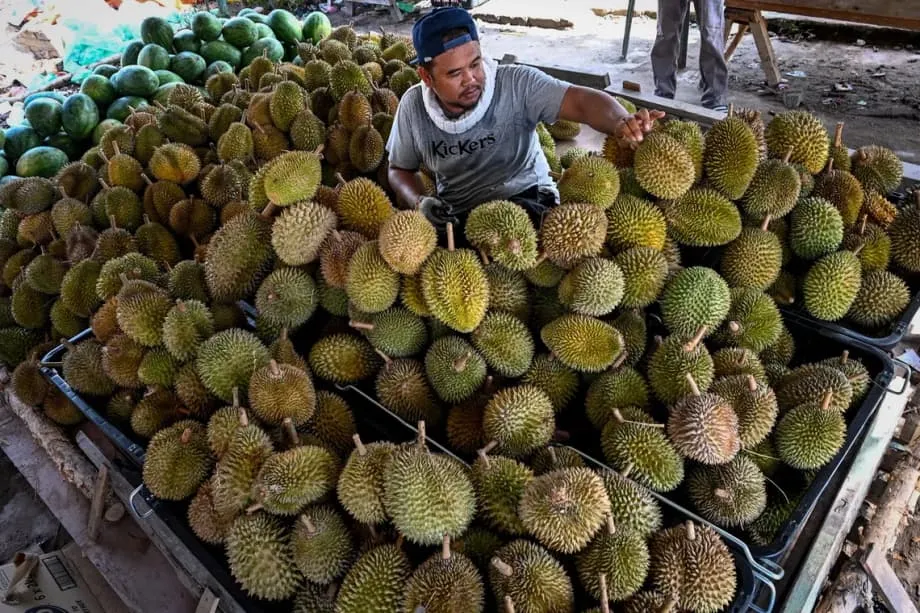
Two fruits, one proposed national symbol
Malaysia is considering two proposals to name an official national fruit, with durian and pineapple competing for recognition. As of November 28, 2025, Agriculture and Food Security Minister Mohamad Sabu has confirmed that the submissions are undergoing technical review and could be sent to the Cabinet for consideration. The matter has not yet reached the Cabinet, and there is no fixed deadline for a decision.
Contents
- Two fruits, one proposed national symbol
- How the proposals could reach the Cabinet
- Durian supporters seek recognition and a national day
- Pineapple makes a case through everyday use
- Indonesia challenges Malaysia over durian
- China is reshaping the durian market
- Both fruits have a place in Malaysian food culture
- What recognition could mean for farms and branding
- Quality checks and reliable contracts matter to growers
- The next step is still a ministry review
- Key Points
Durian supporters have also proposed July 7 as National Durian Day. Their campaign draws on Malaysia's reputation for premium varieties such as Musang King and Black Thorn. Pineapple advocates point to a fruit widely eaten at home, grown commercially across the country and sold abroad in both fresh and processed forms.
The discussion has attracted attention across Southeast Asia, including objections from Indonesia's Coordinating Minister for Food Affairs, Zulkifli Hasan. He cites Indonesia's production of nearly two million tonnes of durian in 2024 as grounds for challenging Malaysia's proposal to make the fruit a national emblem.
Malaysia's choice brings together questions of cultural identity, farming and trade. Durian offers a premium reputation and attracts international curiosity. Pineapple offers broad consumption, steady supply and a long presence in local cooking and food processing. Both are familiar to Malaysians, but their supporters are making different arguments about how each could represent the country.
A designation could influence the fruit promoted in tourism campaigns, school materials, museums and festivals. It could also focus attention on investments in farms and supply chains. Alongside the debate over symbolism, the ministry is working to strengthen tropical fruit exports and improve farmers' access to reliable markets.
How the proposals could reach the Cabinet
The Agriculture and Food Security Ministry is reviewing the competing submissions before deciding whether to prepare a recommendation for higher approval. A technical review typically examines cultural heritage, agricultural data, export potential and the views of people and organisations involved in the industry.
The Cabinet would be the next possible stage after that ministry review. For now, the proposals remain under examination, while the government's parallel priority is expanding the overseas market for Malaysian tropical fruit.
The dates attached to the discussion concern different parts of the story, from regional production to a proposed annual celebration and protection for a variety's name:
- 2024: Indonesia produced close to two million tonnes of durian, the figure cited by Zulkifli Hasan in his objection.
- November 28, 2025: Malaysia's national fruit proposals remained at the technical review stage.
- July 7: The Durian Manufacturers Association has suggested this date for an annual National Durian Day.
- March 2034: Malaysia's renewed geographical indication for the Musang King name runs until this month.
Officials could also invite more public engagement before concluding the process. The central policy question is which fruit best combines cultural recognition with Malaysia's ambitions for agriculture and international trade.
Durian supporters seek recognition and a national day
The Durian Manufacturers Association has formally proposed naming durian as Malaysia's national fruit and establishing a yearly celebration. Its suggested date, July 7, would give the industry a regular occasion to promote the fruit.
The association places durian at the centre of Malaysian identity, connecting village orchards, known locally as kampung orchards, with international showcases. Musang King and Black Thorn are central to that argument because they attract visitors and command premium prices abroad.
Malaysia has also protected the Musang King name through a geographical indication renewed until March 2034. A geographical indication connects a product's name with its place of origin. In this case, it supports control of origin claims and the way Musang King is presented to buyers.
Durian's appeal extends beyond the fruit sold fresh. Malaysia has developed a processing industry for pulp, paste and frozen products, giving exporters several ways to reach overseas customers. Its case for national recognition therefore rests on both cultural familiarity and a premium commercial reputation.
Pineapple makes a case through everyday use
Pineapple's supporters, including growers and processors, present it as a dependable ambassador for Malaysia. The crop is cultivated across the country, with a strong production base in Johor, and supports an established industry producing canned fruit and juice.
MD2, a popular pineapple variety, has helped Malaysia sell to regional and Middle Eastern markets. Its sweetness and uniform size make it a reliable choice for retailers and food service buyers, who need fruit that meets consistent requirements.
Pineapple travels well and is familiar to consumers across a range of prices. It appears in homes, markets and festive menus, while its presence in both home gardens and commercial plantations gives it a broad connection to daily life.
Smallholders often turn to pineapple for dependable yields and supply throughout the year. Its suitability for processing also gives growers an outlet beyond the fresh fruit market. Canning plants can continue buying fruit when fresh prices soften, helping farms manage changes in demand.
Pineapple's case is therefore built around accessibility and reliability. Where durian supporters stress celebrated varieties and premium prices, pineapple advocates highlight regular consumption, established processing capacity and a crop that fits into everyday cooking.
Indonesia challenges Malaysia over durian
Zulkifli Hasan, Indonesia's Coordinating Minister for Food Affairs, has rejected the idea that Malaysia should claim durian as a national emblem. His argument rests on production scale: Indonesia grew close to two million tonnes in 2024, far more than Malaysia.
Indonesia's production centres stretch across Java, Sumatra, Kalimantan and Sulawesi. Malaysia produces smaller volumes, but its durian earns strong prices in export markets because of premium varieties and its developed processing industry.
The comparison brings two different strengths into the discussion. Indonesia points to the quantity it grows, while Malaysia's commercial position draws on the reputation and value of particular varieties, as well as products made from the fruit.
Malaysian officials have responded that every country is free to choose its own national symbols. Durian has deep roots in several Southeast Asian countries, allowing each to make a case for celebrating it in its own way.
Officials also highlight fruit's role in diplomacy, sometimes described as durian diplomacy. Food fairs, business connections and cultural exchanges can build goodwill. Although the public discussion may sound like a race, governments also have reasons to cooperate: shared safety and quality standards can help trade move more smoothly, while growing regional demand can support farmer incomes.
China is reshaping the durian market
China's growing appetite for durian has changed the regional market and increased the importance of export access. Malaysia has expanded that access and invested in better handling, grading and cold chain practices to meet demand.
Grading means sorting fruit according to quality requirements. A cold chain keeps products at suitable temperatures as they move through storage and transport. Both matter for durian, which can be damaged during handling and requires care on its journey to buyers.
The government has launched a durian collection and export centre with a strong focus on shipments to China. The centre is intended to improve quality control and consistency while making it easier for buyers to source fruit.
Smallholders who meet strict grade standards could gain better returns through this more organised route to market. The aim is to connect fruit of consistent quality with export buyers while improving the practical steps between the orchard and shipment.
Pineapple follows a different trade pattern. It moves fresh and processed to nearby markets such as Singapore, as well as the Middle East and parts of East Asia. Its ability to remain in usable condition during storage, combined with consistent demand, helps reduce market risk for many farms.
Both fruits have a place in Malaysian food culture
Durian is part of street life, family traditions and food memories in Malaysia. Its aroma is familiar at night markets and on Kuala Lumpur's Jalan Alor, where seasonal peaks bring queues of residents and curious travellers looking for creamy fruit.
Choosing durian can involve careful sorting and tasting, with buyers paying close attention to the fruit they purchase. Weekend trips to orchards have also become a seasonal pastime, connecting consumption with the places where durian grows.
Pineapple has a different but equally familiar presence. Pineapple tarts are a much loved festive treat, while home cooks use the fruit with prawns, fish and curries. Its sharp, bright flavour complements rich gravies made with coconut.
Juices and desserts provide other outlets for pineapple, but its use in everyday cooking gives it a wider role than a fruit eaten on its own. For supporters, that ease of use strengthens its claim to represent the country.
The cultural choice is therefore about more than which fruit attracts the most attention. Durian brings seasonal outings, distinctive varieties and an experience that draws visitors. Pineapple brings festive baking, familiar meals and a presence across household and commercial production.
What recognition could mean for farms and branding
A national fruit designation could give government and industry a clearer focus for branding, research and support programmes. It could also provide a recognisable symbol for tourism promotion and public education.
Durian would gain another way to present Malaysia's position in the premium market. The geographical indication for Musang King already protects origin claims. Pairing that protection with national recognition could strengthen messages about quality and traceability, meaning the ability to follow a product back to its source.
Pineapple could use recognition to attract investment in planting materials, mechanisation and new varieties suited to heat and disease pressure. Processors could also build stronger marketing around Malaysian pineapple quality.
Growers could benefit from more training and certification programmes that make access to international buyers simpler. Either choice would likely encourage clearer standards and more consistent grading, giving buyers a better idea of what they are purchasing.
These are possible effects of recognition, rather than spending commitments already announced. The practical value for farmers would depend on how branding is connected to research, production support and access to markets.
Quality checks and reliable contracts matter to growers
The ministry has made quality and market access priorities for the near term. Its durian collection and export centre is designed to improve consistency, reduce spoilage and simplify logistics.
Centralising the arrival of fruit allows operators to apply tighter checks on ripeness, pest control and cleanliness. Better checks can reduce the risk of shipments being rejected at foreign ports and help protect prices.
Smallholders can face difficulties because they lack cold rooms, grading tables or access to export brokers. A shared collection and export system can help address those gaps and connect farms with buyers whose requirements might otherwise be difficult to meet.
Pineapple support follows a similar approach. Clear specifications and firm contracts from factories and exporters allow farmers to plan planting and harvest periods more efficiently. Training in soil health, irrigation and handling after harvest helps keep fruit in better condition during long journeys.
Research agencies and industry groups have also called for a wider range of export destinations, better logistics and new harvesting techniques for delicate fruit such as durian. Those improvements can support several tropical crops, rather than benefiting only the fruit eventually selected as a national symbol.
The next step is still a ministry review
Mohamad Sabu's ministry has received the proposals, and the Cabinet may evaluate them after the technical review. Durian remains at the forefront of international demand, while pineapple offers established markets and a strong processing base.
The government's immediate focus is to expand fruit exports while supporting farmers who need better infrastructure and dependable buyers. Whether officials choose durian, pineapple or seek further public participation, the debate has already brought fresh attention to Malaysia's fruit sector.
Key Points
- Malaysia is reviewing proposals to name durian or pineapple its official national fruit.
- Agriculture and Food Security Minister Mohamad Sabu says the proposals could proceed to the Cabinet after technical review.
- The Durian Manufacturers Association has also proposed July 7 as National Durian Day.
- The Musang King geographical indication has been renewed until March 2034.
- Pineapple supporters highlight broad consumption, dependable supply and established processing capacity.
- Indonesia's Zulkifli Hasan objects to Malaysia's durian proposal, citing nearly two million tonnes of Indonesian production in 2024.
- Malaysia says countries are free to choose their national symbols and highlights opportunities for fruit diplomacy.
- A new durian collection and export centre focuses on quality, logistics and shipments to China.
- National recognition could support branding, research and farmer programmes, while practical improvements would benefit the wider fruit sector.