Fast growth, uneven rewards
Taiwan's economy has grown around 8 percent for two consecutive quarters, October exports have surged a record 49.7 percent, and its stock market has overtaken Germany to become the world's eighth largest. Yet the industries powering that expansion, electronics and semiconductors, employ only about 6.5 percent of the workforce despite producing more than 15 percent of gross domestic product (GDP).
Contents
- Fast growth, uneven rewards
- The chips and servers behind the surge
- Exports lift the outlook for 2025 and 2026
- Why many workers feel little benefit
- Traditional manufacturers face a different economy
- New factories intensify the housing squeeze
- Trade and security risks surround the boom
- Spreading gains beyond the chip industry
- Keeping workers part of the AI expansion
- At a Glance
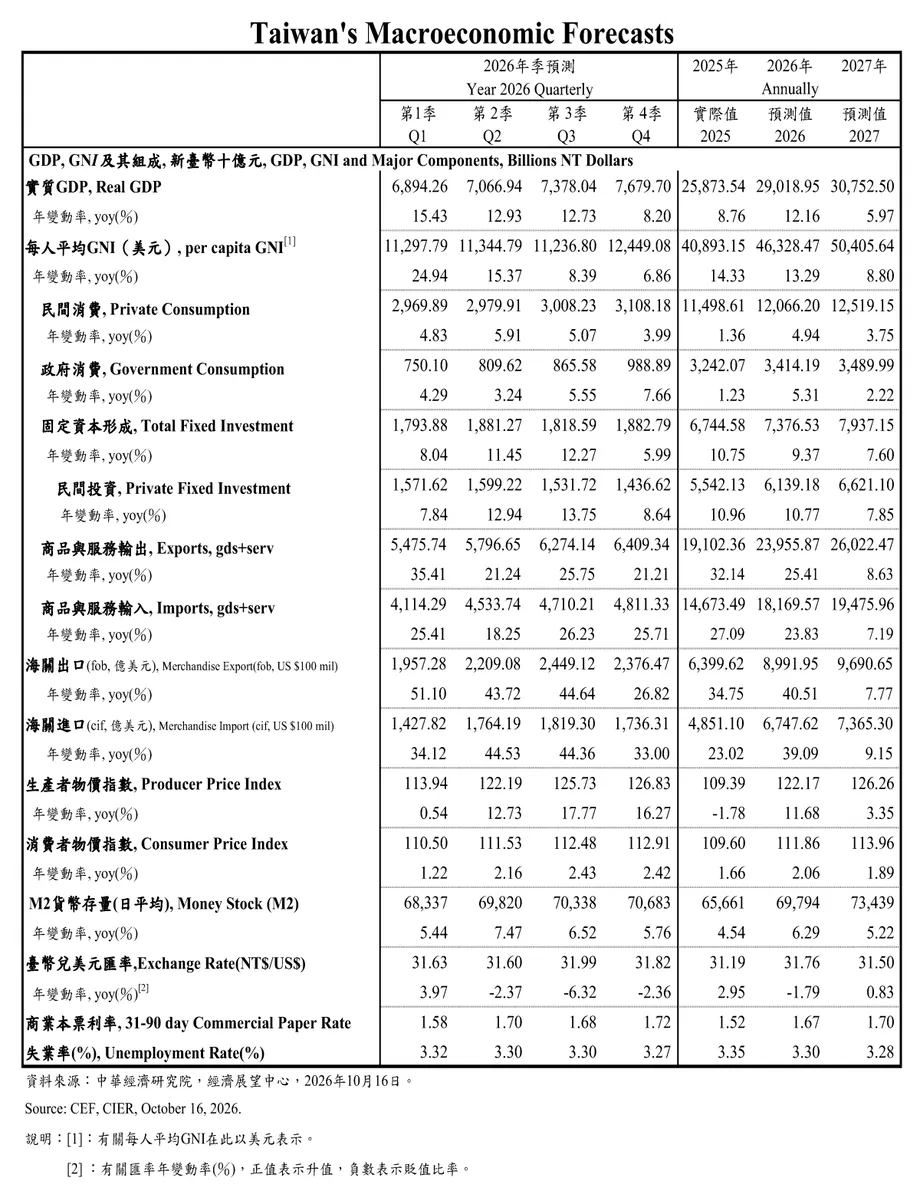
As of November 28, 2025, officials project GDP growth of about 7.37 percent for the year, a pace that would outstrip China. Demand for the chips and servers used in artificial intelligence is drawing investment into Taiwan's factories and lifting the value of its biggest technology companies. GDP measures the value of goods and services an economy produces, so its rapid expansion shows how much more Taiwan is making and selling.
For many households, however, the boom has brought little improvement in spending power. Real wages, meaning pay adjusted for changes in prices, have been largely flat since the early 2000s. Labor's share of GDP has slipped, consumer confidence remains subdued, and rising housing costs are putting more pressure on workers outside the technology sector.
GDP per person is forecast to climb above $38,000, but average wages remain at least 30 percent below those in South Korea and Japan. GDP per person spreads the value of national production across the population; it is not the amount each person receives in pay. Taiwan's figures show how quickly output can rise while wages for much of the population lag.
The central issue is how far the earnings from AI hardware can spread. Taiwan has become essential to the global expansion of computing capacity, while many workers and smaller businesses face a much slower economy.
The chips and servers behind the surge
Taiwan Semiconductor Manufacturing Company (TSMC) produces the advanced chips that power AI training and inference. Training is the process through which an AI model learns from data. Inference is the work it does afterward, such as answering a question or processing a new request.
TSMC manufactures processors for companies that design chips and for businesses supplying computing capacity to customers around the world. Its foundry model allows other companies to concentrate on chip design while TSMC handles manufacturing. Taiwan captures value at one of the most complex stages of production.
Server makers and contract manufacturers supply another essential part of the system. They assemble the racks of machines installed in cloud data centers, where large numbers of processors work together. Taiwan's role therefore extends beyond individual chips to the equipment that turns those chips into usable computing power.
Training a large AI model can require thousands of graphics processing units working in parallel. Specialized memory feeds data to those processors, while advanced packaging connects smaller chip components, called chiplets, at high speed. Taiwan dominates key parts of this hardware stack, the collection of components needed to run the system.
TSMC has raised its revenue outlook because of AI demand. Its suppliers are expanding production of high bandwidth memory, advanced packaging and networking equipment. Assembly and testing operations cluster around Hsinchu, Taichung, Tainan and Kaohsiung, linking the expansion to several major industrial centers.
Exports lift the outlook for 2025 and 2026
October's record 49.7 percent increase in exports from a year earlier followed a 36.5 percent rise during the third quarter. Shipments to the United States climbed more than 60 percent in the first ten months of 2025, reflecting the strength of demand from a major destination for Taiwan's technology products.
Chips and electronics account for nearly three quarters of exports. That concentration helps explain the speed of the current expansion: when customers order more AI equipment, a large share of Taiwan's export economy responds. Global investors have also poured money into AI suppliers, helping propel the stock market past Germany.
Officials have raised their expectations beyond the current year. They now forecast GDP growth of 3.54 percent in 2026, up from an earlier estimate of 2.81 percent. Exports are projected to grow more than 6 percent next year, even as the pace cools from the 2025 peak.
The figures trace a boom building on much longer pressures in wages and housing:
- Since the early 2000s, real wages have been largely flat.
- Since 2020, home prices in Kaohsiung's Nanzih district have risen about 89 percent.
- In the third quarter of 2025, exports increased 36.5 percent from a year earlier.
- In October 2025, exports rose a record 49.7 percent from a year earlier.
- For 2025, officials project GDP growth of about 7.37 percent.
- For 2026, officials forecast GDP growth of 3.54 percent and export growth of more than 6 percent.
Cloud providers and large enterprises are still racing to install more computing power. The official outlook points to continued expansion, although at a slower rate than the exceptional growth projected for 2025.
Why many workers feel little benefit
Electronics and semiconductors generate more than 15 percent of GDP while employing about 6.5 percent of workers. Most people therefore earn their living outside the industries driving the strongest growth. The gap between the sectors' share of output and their share of employment helps explain why national prosperity and household experience can move at different speeds.
Five years ago, wages in electronics were already about 35 percent higher than the average across the economy. That premium has grown as chipmakers use bonuses and overtime to meet orders. Skilled engineers and employees at a relatively small group of companies receive a concentrated share of the AI windfall.
Many traditional firms face weaker demand and thinner profit margins. Real wage growth for much of the workforce has remained near zero for years, while labor's share of national income has declined. In plain terms, the part of the economy's income going to workers has become smaller.
Younger workers and people early in their careers also face exposure in jobs most affected by software automation. Opportunities and pay gains are clustering in engineering, data and advanced manufacturing roles connected to AI. Workers whose skills or jobs sit outside those areas have fewer direct routes into the boom.
Subdued consumer confidence fits this uneven pattern. Strong exports and rising share prices can lift national totals without giving every household more money to spend, particularly when housing and other living costs absorb much of its income.
Traditional manufacturers face a different economy
Small and medium sized enterprises have long formed the backbone of Taiwan's manufacturing base. Many have adapted and found places in global supply chains, but the current export surge is not reaching all of them equally.
A strong Taiwan dollar and new tariffs on traditional goods have squeezed machinery, chemicals and auto parts manufacturers. A stronger currency can make goods priced in that currency more expensive for overseas buyers. Tariffs add a further cost to goods entering a foreign market.
Economists warn of an economy moving at two speeds. Semiconductor and server businesses are expanding rapidly, while many other sectors work through slow growth and pressure on margins. A business selling traditional manufactured goods may face difficult conditions even when national export figures set records.
The divide also affects the ability to raise wages. Companies receiving strong orders have more room to pay bonuses, add overtime and invest. Firms facing weak demand and reduced margins have less room to offer similar gains, leaving workers with sharply different experiences of the same national economy.
New factories intensify the housing squeeze
Kaohsiung's Nanzih district illustrates how the chip boom is changing local property markets. Home prices there have risen about 89 percent since 2020, reflecting new fabrication plants and the arrival of engineers with higher pay. A fabrication plant, often called a fab, is a factory where semiconductor chips are made.
The TSMC effect is the local shorthand for the way new chip fabs reshape surrounding neighborhoods. Higher incomes and new employment attract demand for homes near industrial sites. Hsinchu, Tainan, Taichung and parts of Chiayi show similar patterns, with fresh projects lifting nearby property markets.
Taipei's ratio of house prices to income is now above that of many major global cities. The ratio compares the cost of a home with household earnings: the higher it rises, the harder it becomes for buyers to afford a property from their income. Large numbers of people trying to buy their first home face prices beyond their reach.
Household wealth inequality has nearly quadrupled over three decades. Rising home values have widened the gap as owners of multiple properties gain wealth far faster than wages grow. Families outside the chip sector may accept smaller homes or longer commutes to stay within their budgets.
The government has raised the minimum wage in recent years, introduced preferential loans for people buying their first home, and increased taxes on ownership of multiple homes. Those measures provide some help, but they have not offset rapid price increases near fab hubs or the broader shortage of affordable housing in areas with plentiful jobs.
Trade and security risks surround the boom
The United States now takes about a third of Taiwan's exports. Taiwan's growing trade surplus with the United States, meaning it sells more goods there than it buys in return, raises the risk of new tariffs. Taiwan still lacks a comprehensive trade agreement with Washington.
China continues to assert sovereignty claims over the island, adding to uncertainty for businesses and financial markets. At the same time, China is spending heavily to catch up in mature chips, the established types of semiconductor used in many products. That competition could put pressure on profit margins in some chip product lines.
Taiwan's export mix also makes growth sensitive to changes in global technology investment. With chips and electronics making up nearly three quarters of exports, a change in spending on computing equipment can reach a large part of the economy. The industry concentration is both a source of strength during an investment surge and a source of vulnerability when demand weakens.
Former Minister of Economic Affairs Mei-Hua Wang expressed confidence at a recent forum that the expansion still had room to run. Wang said computing needs were continuing to grow as more companies put AI into their operations and products:
Demand for AI computing power is skyrocketing, and semiconductor demand shows no sign of slowing.
Official forecasts also anticipate further growth in 2026, although at a cooler pace. The outlook combines strong continuing AI demand with the trade, competitive and geopolitical pressures facing an economy heavily reliant on technology exports.
Spreading gains beyond the chip industry
Business leaders and economists have discussed expanding vocational and technical training, helping traditional manufacturers adopt automation and digital tools, and extending support for research and development beyond semiconductors. The aim is to improve productivity in the sectors employing most workers, so more businesses can produce greater value and pay higher wages.
Small and medium sized firms could benefit from stronger incentives to invest in equipment and software. Their ability to modernize matters because the AI boom's largest companies employ only a small portion of the workforce. Broader investment would connect more businesses to the gains from new technology.
Housing proposals address another part of the divide. Changes to zoning rules, faster approvals near new industrial parks, and more social housing could reduce pressure around factory developments. Better transport links between fab towns and surrounding cities could give workers access to good jobs without requiring everyone to live close to the same sites.
The policy task involves both income and costs. Higher productivity outside the chip cluster could support better pay, while more housing and stronger transport connections could reduce the pressure that forces families into smaller homes or longer journeys to work.
Keeping workers part of the AI expansion
Academic research on automation points to a pattern in which wages can rise as productivity improves, then flatten as machines replace a larger share of cognitive tasks. Cognitive tasks involve mental work, such as processing information or making judgments, rather than physical effort alone.
Economists argue that wage growth is more likely to continue when investment in the physical economy keeps pace with investment in intelligence and computing. For Taiwan, that means pairing cloud and chip expansion with spending on healthcare, construction, energy and infrastructure that uses AI tools to improve productivity.
Tax and labor policies could also reward companies for training employees, keeping people involved in service and manufacturing workflows, and sharing productivity gains through profit sharing or performance pay. The focus is on helping workers benefit as businesses become more efficient, rather than limiting the gains to the companies supplying AI hardware.
Taiwan's immediate achievement is substantial: rapid economic growth, record export expansion and a larger global presence for its technology companies. The household challenge is equally concrete. Wages outside the leading industries remain weak, housing near new factories has become much more expensive, and most workers earn their living beyond the semiconductor boom.
At a Glance
- Taiwan recorded growth of around 8 percent for two consecutive quarters, driven by AI hardware exports.
- Officials project GDP growth of about 7.37 percent in 2025 and 3.54 percent in 2026.
- October exports rose a record 49.7 percent from a year earlier, following a 36.5 percent increase in the third quarter.
- Taiwan's stock market overtook Germany to become the world's eighth largest.
- Electronics and semiconductors produce more than 15 percent of GDP but employ about 6.5 percent of workers.
- Chips and electronics account for nearly three quarters of exports; shipments to the United States rose more than 60 percent in the first ten months of 2025.
- Real wages have been largely flat since the early 2000s, and average wages lag South Korea and Japan by at least 30 percent.
- Home prices in Kaohsiung's Nanzih district have risen about 89 percent since 2020.
- Training, investment outside semiconductors, housing supply and transport are among the priorities discussed for spreading the gains.