A New Name After a 34 Year History
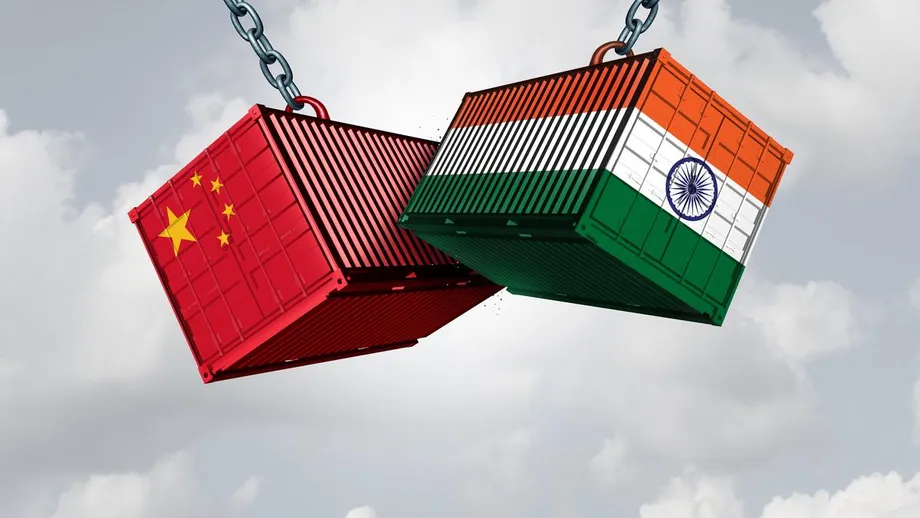
Huiyuan Group announced on October 19, 2026, that it would stop producing juice bearing the Huiyuan trademark and switch to a new brand, Zanjia Guoyuan, as a dispute over investment, company control and trademark rights moved deeper into the courts.
Contents
- A New Name After a 34 Year History
- Two Businesses Behind One Familiar Name
- The Dispute Over 1.6 Billion Yuan
- How the Partnership Broke Apart
- What the Courts Have Ordered
- Why Dropping the Brand Does Not End the Case
- What Changes for Shoppers and Distributors
- Can Zanjia Guoyuan Win Shelf Space?
- From a Shandong Cannery to a Divided Business
- Key Points
The announcement followed an October 13 ruling by the Fuzhou Intermediate People's Court ordering companies associated with the group to stop infringement and pay more than 97 million yuan in compensation. Huiyuan Group said it would appeal.
At the centre of the dispute is an alleged funding shortfall. Huiyuan Group says Shanghai Wensheng Asset Management, the investor brought into the restructuring of Beijing Huiyuan Food and Beverage Co., still owes 850 million yuan of a promised 1.6 billion yuan investment. It also alleges that 750 million yuan already paid was not used for business operations as agreed.
The split separates a familiar name from the business network that helped build it. Beijing Huiyuan holds the core Huiyuan trademarks, while Huiyuan Group says it retains orchards, factories, production systems and distribution resources accumulated over more than three decades.
For shoppers, the practical change is that the original group intends to sell its juice under Zanjia Guoyuan rather than Huiyuan. Beijing Huiyuan continues to operate with the Huiyuan trademark. For distributors and factories, the stakes include which products they can legally make, stock and sell, and which business will support those products.
The group says its withdrawal concerns the brand alone. Its legal effort over the restructuring agreement will continue alongside the launch of the replacement name.
Two Businesses Behind One Familiar Name
Beijing Huiyuan Beverage and Food Group Co., referred to here as Huiyuan Group, issued the October 19 statement. The company at the centre of the restructuring is Beijing Huiyuan Food and Beverage Co., referred to here as Beijing Huiyuan. Their similar names help explain why the dispute can be difficult for consumers to follow.
Beijing Huiyuan's restructuring plan was approved in June 2022. Wensheng became its new controlling investor through the investment vehicle Zhuji Wenshenghui, under an arrangement involving a commitment to invest 1.6 billion yuan over three years and a 70% shareholding.
A restructuring is a legal process intended to help a company in financial trouble continue operating while reorganising its debts, ownership or funding. In this case, the arrangement placed the core Huiyuan trademarks with Beijing Huiyuan, while much of the established production network remained with Huiyuan Group.
Huiyuan Group now argues that Beijing Huiuan has become detached from its integrated business system. That system connects fruit supplies, processing, manufacturing and quality control. The group says juice currently carrying the Huiyuan trademark no longer relies on that network.
The Dispute Over 1.6 Billion Yuan
Huiyuan Group's funding allegations concern both money it says never arrived and the use of money that did. The 850 million yuan allegedly unpaid represents about 53% of the promised 1.6 billion yuan investment. The 750 million yuan paid represents about 47%.
The group's October statement alleges that the money already invested was not put into operations as the restructuring investment agreement required. An earlier accusation, made public in August 2025, put the amount allegedly withheld from operations at 647 million yuan of the 750 million yuan received.
Huiyuan Group says Beijing Huiyuan consequently relied on funds left from before the restructuring to keep operating between 2023 and 2025. It describes Wensheng's conduct as a fundamental breach of the investment agreement, meaning a failure serious enough to undermine the purpose of the deal.
Beijing Huiyuan has made accusations of its own. In January 2026, it alleged that the former management team was involved in misappropriating or occupying more than 600 million yuan in company funds. The investment and management allegations remain contested, with related legal proceedings continuing.
Hebei Huiyuan Food and Beverage Co., which previously held all of Beijing Huiyuan's shares, is separately seeking about 914 million yuan from the investment side under the restructuring investment agreement.
How the Partnership Broke Apart
The separation developed over several years. Trademark permissions, management control and access to sales channels became points of conflict before Huiyuan Group formally abandoned the brand.
The main developments were:
- June 2022: Beijing Huiyuan's restructuring plan was approved, bringing Wensheng into the business as the controlling investor.
- 2023: Beijing Huiyuan authorised Hebei Huiyuan and two other companies to manufacture products under contract.
- January 1, 2025: Those trademark authorisations ended, according to the account of the subsequent trademark dispute.
- August 2025: The conflict became public as Huiyuan Group accused the investor of failing to meet its funding obligations and Wensheng took control of Beijing Huiyuan's operations.
- January 2026: The two sides issued competing statements about control, company funds and the right to produce Huiyuan juice. Beijing Huiyuan began using contract manufacturers for its products.
- July 2026: Huiyuan Group increased marketing for Zanjia Guoyuan.
- October 13, 2026: The Fuzhou court issued its first instance trademark judgment.
- October 19, 2026: Huiyuan Group announced the end of its Huiyuan branded production and cooperation.
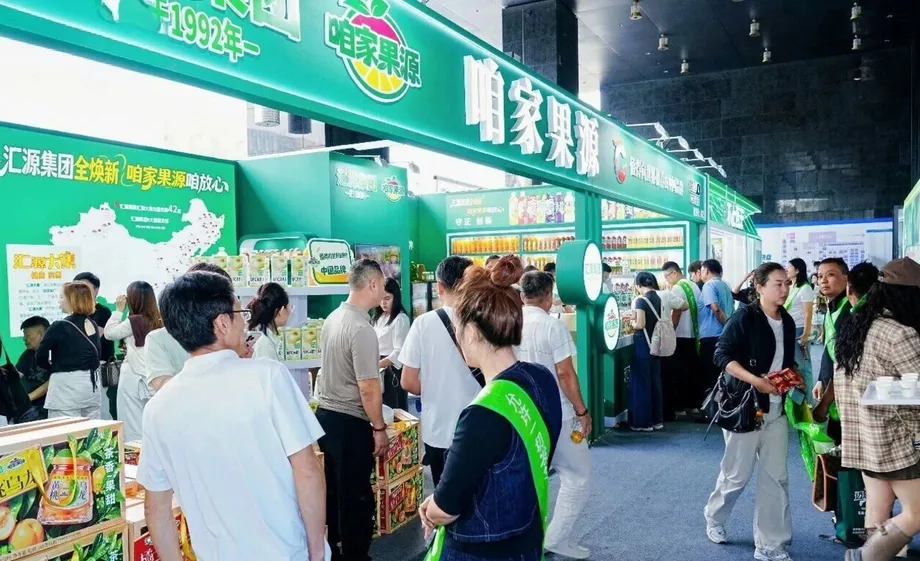
Huiyuan Group had already taken Zanjia Guoyuan to the 2026 autumn food and drinks trade fair to recruit distributors across China. The October announcement therefore made a developing commercial change explicit: future juice sales by the group would centre on the replacement brand.
What the Courts Have Ordered
The Fuzhou Intermediate People's Court's October 13 judgment addressed trademark use and unfair competition. According to Beijing Huiyuan's announcement of the decision, the court found that Beijing Huiyuan Group Kaifeng Co. and Beijing Huiyuan Biotechnology Co. had produced and sold Huiyuan juice without authorisation.
The court ordered the companies to stop using Huiyuan in their business names, stop producing and selling infringing products, publish a clarification and jointly pay more than 97 million yuan in compensation. Hebei Huiyuan was also held jointly liable because it had not demonstrated that its company assets were independent.
Joint liability means that more than one company can be legally responsible for paying the compensation. Huiyuan Group said it would appeal the first instance judgment.
A separate enforcement action concerns ownership interests. On July 17, the Beijing Third Intermediate People's Court issued an enforcement ruling freezing a 60% stake in Beijing Huiyuan held by Zhuji Wenshenghui. The stake corresponds to approximately 640.45 million yuan in registered capital, and the freeze runs until July 16, 2029. Registered capital is the recorded amount shareholders commit to a company.
The 70% shareholding described in the restructuring arrangement and the 60% stake covered by the freeze concern different stages and legal measures. The freeze restricts dealings in the specified shares while the dispute proceeds.
Why Dropping the Brand Does Not End the Case
Huiyuan Group says it is ending production under the Huiyuan trademark, terminating related contract manufacturing agreements and stopping cooperation involving that trademark. It also says it will continue seeking legal remedies over the restructuring.
The group explained that position in its October 19 statement. In translation, it said:
This is only a separation at the brand level; the relevant legal proceedings to defend our rights will continue.
Cui Wenguan, founding partner of Sichuan Angong Law Firm, said an initial court defeat already sends a warning to business partners and distributors about the risks of continuing cooperation involving the disputed name. If an appeal also fails, continued use could increase the infringement losses for which companies may be held responsible.
Cui said a final finding of fundamental breach by Wensheng could give Huiyuan Group grounds to seek termination of the relevant agreement. He also said courts set a high threshold for overturning an effective restructuring plan, with such outcomes generally confined to extreme circumstances.
The group is therefore pursuing two tasks at once: moving its commercial operations to another name while asking the courts to address the earlier investment arrangement. A new label can be introduced through marketing and distribution decisions; the ownership and contractual disputes require legal decisions.
What Changes for Shoppers and Distributors
Huiyuan Group says consumers should be able to identify who made their juice and which company is responsible for it. Its statement ties the brand change directly to that concern.
The group described its reasoning in these words, translated from Chinese:
We would rather bear the pain so that every consumer can distinguish who produced the juice in their hands and whom to hold accountable if a problem occurs.
Beijing Huiyuan, meanwhile, has asserted its ownership of the trademark and challenged unauthorised use by producers and sales businesses. It says market regulators have investigated more than 300 entities for infringement.
Distributors face decisions about stock, authorisation and future supply. Jiang Han, a senior researcher at the Pangoal Institution, said the process covering effective legal documents, changes to business names, removal of inventory and changes in distribution channels usually takes at least six months.
Jiang's estimate describes the work involved in a transition rather than a timetable announced by either company. For the businesses selling the juice, the immediate commercial issue is keeping products moving while matching their stock and supplier agreements to the rights each producer holds.
Can Zanjia Guoyuan Win Shelf Space?
Huiyuan Group is promoting Zanjia Guoyuan with products including 1 litre packs of 100% juice and NFC juice made from Guoguang apples. NFC means not from concentrate: the juice is processed without first removing water to make a concentrate that is later diluted.
Beijing Huiyuan is also introducing products, including a tea and fruit series described as containing more than 99% juice. About 300 employees have reportedly moved from Huiyuan Group to Beijing Huiyuan, adding a staffing dimension to the competition for factories, channels and customers.
Zhu Danpeng, vice president of the Guangdong Food Safety Promotion Association, said the two businesses face different weaknesses. Beijing Huiyuan faces challenges involving production capacity, consistent products and supply costs. Zanjia Guoyuan must persuade consumers to choose an unfamiliar name despite the group's established manufacturing and distribution resources.
Zhu described juice as a business with low profit margins that depends on products selling quickly. A producer needs enough sales volume to cover costs, while retailers need stock to leave shelves rather than sit in storage. Familiar branding can help secure that shelf space.
Consumer marketing specialist Xiao Zhuqing also pointed to the difficulty of restarting distribution, whether through newly registered product barcodes for Beijing Huiyuan or a new trademark for Zanjia Guoyuan. Competition has grown, with Nongfu Spring's freshly squeezed apple juice attracting strong sales through Sam's Club.
From a Shandong Cannery to a Divided Business
Huiyuan's history began in 1992, when founder Zhu Xinli took over a struggling cannery in Yiyuan County, Shandong. In 1993, he introduced a German production line and began processing local apples into concentrated juice for export to Europe.
The business moved its headquarters to Beijing's Shunyi district in 1994. In November 1996, it committed 70 million yuan to a five second advertising slot after the evening news on China Central Television, helping turn a regional producer into a nationally recognised name.
Huiyuan listed in Hong Kong in 2007, raising HK$2.4 billion. Coca-Cola proposed buying it for HK$17.9 billion in 2008, but Chinese regulators blocked the transaction in 2009. Huiyuan had expanded its integrated production network around that period, adding to the financial commitments the business later carried.
Growth slowed after 2011, profits weakened and debt pressure increased. Huiyuan was delisted from Hong Kong in 2021, the same year Beijing Huiyuan entered restructuring.
The October 2026 announcement brings that history into a new phase. Huiyuan Group is placing its factories, fruit supplies and commercial relationships behind a replacement name. Beijing Huiyuan holds the established trademark. Both now have to turn their respective assets into reliable production and sales while the courts handle the disputes between them.
Key Points
- Huiyuan Group announced on October 19, 2026, that it would stop producing Huiyuan branded juice and use Zanjia Guoyuan.
- The group alleges that Wensheng owes 850 million yuan in investment and failed to use funds already paid as agreed.
- Beijing Huiyuan holds the core Huiyuan trademarks; the original group says it retains its integrated production network.
- A Fuzhou court ordered associated companies to stop infringement and pay more than 97 million yuan. Huiyuan Group said it would appeal.
- A 60% stake in Beijing Huiyuan held by Zhuji Wenshenghui is frozen until July 16, 2029.
- The brand change proceeds alongside continuing litigation and competition for distributors, employees and customers.