A New Role for an Old Hub
Hong Kong trades server megawatts for trade arbitrage as Southeast Asia freezes. While regional neighbors build massive data centers, Hong Kong has quietly become mainland China's indispensable semiconductor re-export lifeline and primary offshore AI capital markets conduit. Official customs data show semiconductors re-exported through the city reached US dollar 124 billion in the first five months of 2026, accounting for a record 52 percent of China's US dollar 239 billion total chip imports. This trade pivot redefines Hong Kong's value proposition, shifting focus from physical server farms to logistics speed, capital flows, and common law governance.
Contents
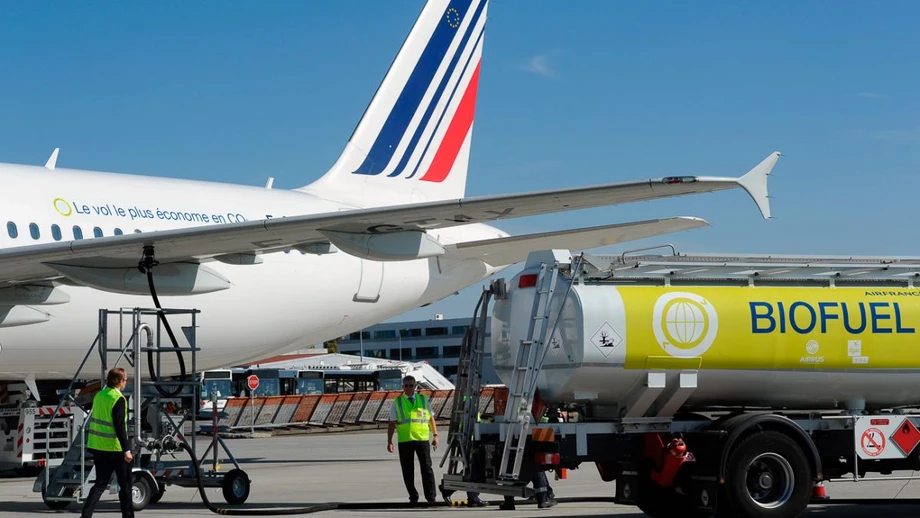
The shift is visible in recent trade statistics. Electronics, led by AI processors and memory devices, expanded to 80.1 percent of Hong Kong's total merchandise exports in the first seven months of the year. Monthly semiconductor exports hit an all time high of HK dollar 345.7 billion by September. Air freight accounts for more than 45 percent of the city's total merchandise trade value, driven by automated cargo terminals and expanded three runway capacity handling high value integrated circuits.
Investors now watch how this physical trade pivot translates to market confidence. The Hang Seng Index fell for a fifth consecutive trading day to close at 22,383.74 points, breaking below the psychological 22,000 threshold briefly. Market participants focused on the time it will take for AI related capital expenditures to translate into actual earnings, alongside concerns about US semiconductor export restrictions. The Hang Seng Tech Index fell 0.09 percent to 3,508.00 points, marking a ninth straight decline.
The divergence highlights a strategic nuance for regional policymakers. Physical data center capacity and semiconductor supply chain centrality are no longer synonymous. While Southeast Asian economies poured billions into land and grid allocations, Hong Kong's zero tariff free port regime and customs clearance speed make it the primary clearinghouse for non restricted semiconductors, high density memory modules, and electronics components feeding Greater Bay Area manufacturing.
Census and Statistics Department data confirms the strength of this trade. Total exports of goods increased 65.6 percent year on year to HK dollar 764.5 billion in October, following a 64.9 percent rise in September. Imports grew 56.2 percent to HK dollar 783.8 billion. A government spokesman attributed strong export performance to continued robust growth in AI related electronic products and noted that shipments to most major markets recorded notable increases.
The growth in specific sectors has been dramatic. Exports of electrical machinery rose 57.8 percent, while office machines and automatic data processing machines jumped 146.5 percent. By market, exports to the mainland rose 65.4 percent, while exports to Mexico jumped 258.6 percent and those to the United States more than doubled. Looking ahead, a government spokesman said strong global investment in AI will continue to support Hong Kong's merchandise trade, though external uncertainties remain.
Hong Kong trade data reveals the structural change. Nominal wage indices rose 3.4 percent, and real wage indices rose 1.7 percent, indicating that the workforce is benefiting from this high value trade activity. Median monthly wages reached HK dollar 21,200, providing a stable domestic base for the financial and technological sectors that drive this new AI economy.
Regional AI investment trends show a cautious optimism. Investors are weighing the sustainability of AI investments against tightening US semiconductor export controls. Despite the market dips, buying emerges on dips near the 22,000 level, suggesting that long term capital sees the city's re engineering as a durable advantage rather than a temporary setback.
<The Re-Export Lifeline in Action
The city's strategic position is reinforced by the rapid expansion of its financial infrastructure. On October 23, Hong Kong Exchanges and Clearing launched the HKEX Artificial Intelligence Index and the HKEX Semiconductor Index, tracking 40 listed companies across a five layer AI stack and 30 largest listed chip related firms. This launch came with a licensing agreement with Shenzhen based China Southern Asset Management to introduce mainland exchange traded funds tracking the benchmark indices.
As US dollar venture funds retreat from Chinese semiconductor and foundation model startups under tightening outbound investment screening, Hong Kong's equity and ETF plumbing provides a crucial institutional liquidity bridge. This bridge channels onshore RMB and regional capital, offering a scale that no rival ASEAN exchange can match at comparable levels. The competitiveness of Hong Kong tech ETFs lies in offering scarce tech assets underrepresented in A shares alongside allocation opportunities under a distinct pricing mechanism.
Zhang Yi bin, a postdoctoral research fellow in the joint program between The Chinese University of Hong Kong and Bosera Funds, noted that average daily turnover for Stock Connect ETFs reached HK dollar 4.6 billion in the first 10 months of 2026, up 81 percent year on year. This expansion continues even as near term positioning turns more tactical, with November seeing temporary net outflows from AI themed funds.
The financial sector is also adapting to the AI wave. The Hong Kong Monetary Authority launched Project SAGE on November 2 at Hong Kong FinTech Week. This initiative introduces an intent anchored accountability model for autonomous AI agents in banking, grounding AI agent identity, liability, and auditability within the city's common law legal framework while streamlining cross boundary personal data flows with the Greater Bay Area.
Regulators are positioning the city as a trusted compliance testbed for global banks and mainland technology firms. This regulatory sandbox complements the physical trade advantages, creating a holistic environment where AI hardware flows through customs and capital flows through markets with similar efficiency.
The scale of the trade pivot is not just a local phenomenon but a global supply chain recalibration. US export controls have forced a reshuffling of chip destinations. Companies like RiCloud AI and Airvres, which act as fronts for Chinese owned entities, have successfully navigated these restrictions. Airvres exported at least US dollar 5.6 billion of chips to Southeast Asia between April 2024 and February 2026, including Nvidia's top of the line Blackwell silicon, demonstrating the fluidity of trade routes around regulatory barriers.
Export control adjustments are key to understanding this volume. The US Bureau of Industry and Security licensing hurdles have pushed some hardware south, but Hong Kong remains the primary clearinghouse for non restricted semiconductors. This position allows the city to capture value from both the high velocity logistics of physical goods and the financial services that support them.
The interplay between trade and regulation is evident in the city's recent diplomatic and economic engagements. John Lee Ka chu, the Chief Executive, emphasized the need for higher level connectivity in supply chain management and digital trade during the 2026 Greater Bay Area Service Trade Conference. He highlighted that over 360 mainland enterprises have been assisted by the outbound task force, establishing a broader network for AI and service trade.
AI infrastructure trends indicate a shift from raw capacity to strategic positioning. Hong Kong's retreat from physical mega cluster hosting reflects hard economic and regulatory math. The city ranks among the region's five most expensive build markets for data centers, yet rivals like CBRE note that active data center capacity reached 687 MW with 653 MW in upcoming supply, supported by resilient enterprise and AI inference demand.
Financial market updates show that investor demand is unprecedented. JLL's market outlook highlights capital inflows driven by local data sovereignty and generative AI. The city's ability to monetize AI through offshore capital markets and common law rules sets it apart from neighbors competing for raw data center megawatts.
<Capital Markets and Governance as Infrastructure
Hong Kong's financial infrastructure is evolving to support the AI boom directly. The launch of new indices by HKEX formalizes investor access to the sector. These indices provide a clear window into the companies driving the industry, from chip design to physical applications. The pairing with China Southern Asset Management ensures that mainland capital can flow seamlessly into these new instruments, creating a two way street for investment.
Southbound investor appetite has expanded rapidly. Zhang Yi bin pointed out that while Shanghai's STAR Market offers fuller upstream coverage in semiconductor equipment and materials, Hong Kong concentrates on scarce platform, large model, and commercial application leaders such as Tencent, Alibaba, Zhipu, MiniMax and Biren Technology. This specialization allows Hong Kong to offer distinct value propositions to global investors seeking exposure to the most dynamic parts of the AI ecosystem.
The regulatory framework is equally critical. Project SAGE by the HKMA introduces a supervisory discussion paper that proposes an intent anchored accountability model. This model is designed to handle the complexities of autonomous AI agents in banking, ensuring that as AI becomes more autonomous, the legal liabilities remain clear and enforceable. This reduces risk for global banks operating in the region.
Streamlining cross boundary personal data flows with the Greater Bay Area is another key component of this regulatory sandbox. By reducing friction in data movement, Hong Kong facilitates the rapid testing and deployment of AI solutions, making it an attractive base for companies looking to scale across different regulatory regimes.
The synergy between trade and finance is evident in the recent market movements. Despite the Hang Seng Index falling to 22,383.74 points, the underlying fundamentals of the AI trade remain strong. Investors are focusing on the time it will take for AI related capital expenditures to translate into actual earnings, suggesting that the current market correction may be a healthy adjustment rather than a structural decline.
Government officials remain optimistic about the long term prospects. A government spokesman highlighted that strong global investment in AI will continue to support Hong Kong's merchandise trade. He also warned that external uncertainties, including developments in international trade and technology policies, pose risks that need to be monitored closely.
The economic data supports this optimism. China's industrial profits jumped 20.1 percent in October, driven largely by AI hardware. Electronics makers saw profits lift 100.9 percent year on year to US dollar 112.5 billion, providing a robust demand base for Hong Kong's re exports. Yu Weining, a chief statistician, linked this growth to sustained demand for AI computing power in memory chips and related manufacturing.
Market outlook remains positive despite short term volatility. The divergence between Hong Kong and other regional markets highlights the city's unique position. While neighbors grapple with grid bottlenecks and water shortages, Hong Kong leverages its financial and legal strengths to capture durable economic value from the AI boom.
<Strategic Advantages and Vulnerabilities
Despite its strengths, Hong Kong's model faces three acute vulnerabilities heading into 2027. The city's current advantage rests on cross border regulatory arbitrage and trade intermediation, which could be eroded by sudden shifts in US enforcement or mainland demand. The first vulnerability is the risk of US export enforcement. Handling 52 percent of mainland China's semiconductor imports keeps Hong Kong squarely in the crosshairs of agencies policing transshipment networks.
The second vulnerability relates to domestic compute capacity. Cyberport's 3,00 petaFLOPS facility is tailored for applied enterprise and university workloads rather than frontier model training. This leaves Hong Kong dependent on cross border compute arrangements in Shenzhen and the wider Greater Bay Area as US export controls tighten further on remote cloud access.
The third vulnerability is the sustainability of market depth. While HKEX's new indices formalize investor access, sustained secondary market liquidity depends on whether mainland AI firms can translate heavy research spending into commercial profitability amid intensifying domestic price competition.
The risk of US tariff hikes also looms. Proposed increases lifting duties on targeted economies to 15 to 20 percent threaten to cool the city's 47.4 percent year to date export surge. This could impact the front loaded chip shipments that have driven recent trade growth, requiring careful management of supply chain flows.
The strategic nuance lies in distinguishing physical data center capacity from semiconductor supply chain centrality. Hong Kong does not need to compete for raw megawatts on equal footing with Southeast Asia. Instead, it offers a high value logistics and cross border capital plumbing model that captures durable economic value without betting its power grid on imported silicon.
For governments across Southeast Asia, Hong Kong offers an instructive counter model. Competing for raw data center megawatts exposes small, trade dependent jurisdictions to grid bottlenecks and sudden US hardware vetoes. By contrast, Hong Kong's approach allows it to remain a stable hub for global AI trade and finance.
The city's leadership is actively positioning itself for the next phase. John Lee Ka chu highlighted the importance of hard connectivity in infrastructure and soft connectivity in rules and mechanisms. He noted that Hong Kong will deepen coordination with Bay Area cities to create a more efficient and convenient business environment for AI and service trade.
Economic indicators suggest that the labor market is adapting well to these changes. Real wage indices are rising, and median wages are increasing, reflecting the high value nature of the work being done. This supports the growth of the financial and technological sectors that are central to the city's AI strategy.
Trade policy updates show that the government is aware of the risks but remains confident in the long term trajectory. The focus on high value services and digital trade provides a buffer against potential trade shocks, ensuring that Hong Kong remains a key node in the global AI ecosystem.
<The Road to 2027 and Beyond
As Hong Kong navigates these complexities, the focus remains on leveraging its unique legal and financial systems. The common law framework provides a stable base for cross border contracts and dispute resolution, which is critical for the high value transactions in the AI sector. The city's ability to bridge the gap between mainland China and global markets is likely to grow in the coming years.
The launch of new financial products by HKEX and the regulatory innovations by the HKMA are just the beginning. The city is building an ecosystem where AI is not just a technological trend but a fundamental component of its economic structure. This includes everything from the chips that enter through the port to the capital that flows through the exchanges.
Investors and policymakers are watching closely to see how the city manages the transition. The key will be maintaining the balance between openness and regulatory control, ensuring that the flows of goods and capital continue uninterrupted even as global trade dynamics shift. The success of this strategy will determine Hong Kong's role in the global AI landscape for decades to come.
The city's leadership is committed to this path. John Lee Ka chu has emphasized the need for continuous innovation and connectivity. He believes that Hong Kong's unique position as a global city will allow it to thrive in the face of challenges, serving as a vital link in the global supply chain and a hub for AI investment.
The data supports this vision. With strong export growth, rising wages, and a robust financial sector, Hong Kong is well positioned to capitalize on the AI boom. The city's strategy of combining physical trade with financial and regulatory innovation offers a sustainable model for growth, distinct from the purely infrastructure driven approaches of its neighbors.
Future outlook points to continued growth in AI related sectors. As the city's infrastructure and regulatory frameworks mature, it is expected to attract more global talent and capital, further solidifying its position as a key player in the global AI economy.
The next few years will be critical. The city must address its vulnerabilities, particularly in compute capacity and US regulatory risks, while capitalizing on its strengths in trade and finance. If successful, Hong Kong will not only survive the AI reshuffling but will emerge as an even more indispensable hub for the global economy.
<The Bottom Line
- Hong Kong re exported US dollar 124 billion in semiconductors in the first five months of 2026, capturing 52 percent of China's total chip imports.
- Electronic exports reached 80.1 percent of total merchandise exports in the first seven months, driven by AI processors and memory devices.
- The Hang Seng Index fell to 22,383.74 points, reflecting investor caution on AI monetization and US export restrictions.
- HKEX launched new AI and Semiconductor Indices in October to formalize investor access to the sector.
- The HKMA launched Project SAGE to create a regulatory sandbox for autonomous AI agents in banking.
- China's industrial profits rose 20.1 percent in October, with electronics makers seeing a 100.9 percent profit increase.
- Hong Kong faces risks from US export enforcement and domestic compute limitations but maintains a strategic advantage in trade and finance.
- Regional policymakers view Hong Kong's model as a sustainable alternative to the high infrastructure costs of Southeast Asian data center buildouts.