A Quote of 260,000 Yuan for One Animal
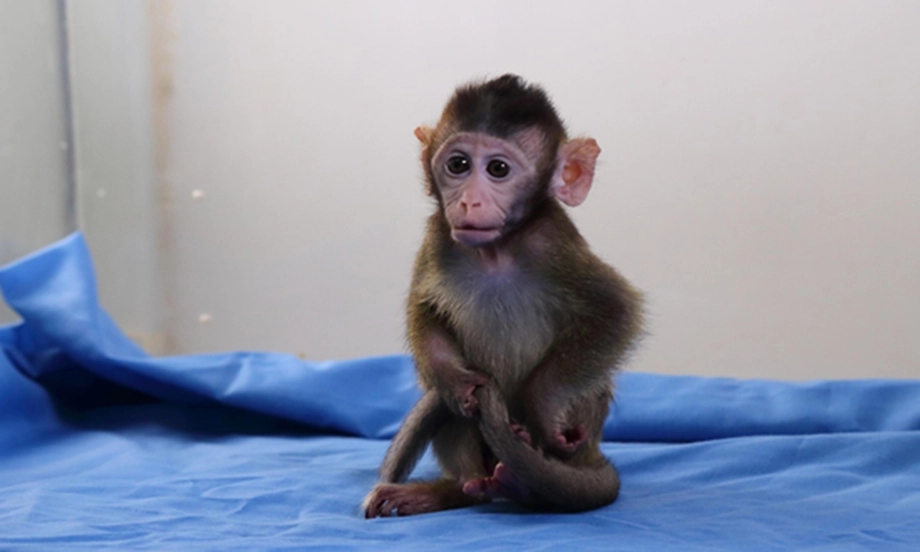
Pharmaceutical researchers across China were quoted 250,000 to 260,000 yuan for a single cynomolgus monkey in the last week of November 2026, more than double the price a year earlier. The figures, gathered from research staff at several drug companies, cap a climb that has run almost without pause since the middle of 2025 and has turned a laboratory supply item into one of the most contested inputs in Chinese drug development.
Contents
- A Quote of 260,000 Yuan for One Animal
- Why Two Species Carry the Whole Industry
- Six to Seven Years Between One Monkey and the Next
- The Cost of Proving One Drug Is Safe
- A Drug Industry That Suddenly Needs Many More Monkeys
- Contract Researchers Buy Farms, Not Monkeys
- Imports Are a Valve, Not a Solution
- How a 2020 Ban Redrew the Global Map
- The Race Moves From Animals to Data
- Key Points
The curve is steep and well documented. Cynomolgus monkeys fell back to the 100,000 yuan mark in the second half of 2025, reached 200,000 yuan by July 2026 and added another 50,000 to 60,000 yuan in the months since. Public procurement records show the same movement from the buying side: research institutes paid about 131,000 yuan an animal in March 2026 and 178,000 yuan in June, when a state laboratory bought 40 cynomolgus monkeys at that price, equal to US$26,294 each and nearly double the level of a year before. Notices issued more recently put procurement near 190,000 yuan.
Farm asking prices have run beyond the procurement figures. Market reference quotes for cynomolgus monkeys have reached 250,000 to 300,000 yuan, with rhesus macaques at about 150,000 yuan. A year or two ago, buyers paid just over 100,000 yuan.
Why Two Species Carry the Whole Industry
Laboratory monkeys are animals bred by hand, with micro organisms and parasites tightly controlled and a known genetic background, and used in vaccine work, drug development and physiology studies. The definition matters because most of this work happens before a drug reaches a human: the preclinical stage, where companies must show regulators that a candidate molecule is safe in a living system.
Only two species do that job in practice. Cynomolgus monkeys, smaller and easier to handle than rhesus macaques, need lower doses of an experimental drug, which lowers cost, and account for more than 90 percent of preclinical monkey use. Their genetic material is 93.2 percent identical to that of humans. Rhesus macaques remain a common second choice for safety work on large molecule drugs because their drug targets match human ones closely.
Other animals cannot stand in. In a review of 39 antibody drugs, 82 percent reacted with tissue from cynomolgus monkeys, against 17 percent for rabbits, 11 percent for dogs, 7 percent for mice and none for rats. Zebrafish, mice, pigs and rabbits are used widely in research, and monkeys remain the closest available model for drug safety assessment, effectiveness testing and disease research because of their physiology, immune system and drug metabolism.
Six to Seven Years Between One Monkey and the Next
The supply problem begins with biology that cannot be hurried. Cynomolgus monkeys reach sexual maturity at about four years, carry a pregnancy of roughly six months and nurse for about six more. A young animal kept for breeding needs another two to three years before it produces offspring that can be raised to experimental age, which puts six to seven years between the decision to expand a colony and the arrival of a usable monkey.
Breeding stock in China is also aging, which has pushed down the share of animals that reach saleable age. Farms say they have nothing to sell. A staff member at a breeding company in Guangxi said the facility works only with established partners.
We've sold out all of this year's monkeys, and reservations for next year haven't opened yet.
A breeder in Sichuan reported the same. The oldest animals at that facility were just over two years old and will not reach the minimum research age of three until 2027. Another company in the southwest has had no cynomolgus monkeys for nearly a year. Buyers in Guangxi and Guangdong found the same answer: farms supply fixed institutional clients and take no outside orders.
The Cost of Proving One Drug Is Safe
Regulators require monkey data before certain drugs can enter human trials, and the volume required is larger than most people assume. A study of how a drug moves through the body over time, known as pharmacokinetics, uses 18 monkeys. The toxicokinetic arm, which measures how the body absorbs, distributes, metabolises and excretes a compound, uses 40. A full safety package therefore consumes 58 animals.
At 260,000 yuan a monkey, that package costs 15.08 million yuan before a single dose of the drug is made for a patient. One research programme can need anywhere from a dozen to 100 monkeys, depending on the compound and the questions regulators ask.
Harri Jarvelainen, an independent consultant based in China who advises Western clients on preclinical work, said sourcing difficulties stretch the planning phase of a study by four months and sometimes by 10. He pointed to the three year minimum age as the reason the gap cannot be closed quickly.
Once a bottleneck develops, you can't fix it just like that.
A Drug Industry That Suddenly Needs Many More Monkeys
Demand is the other half of the squeeze, and it has grown faster than almost anyone forecast. Data published by the National Development and Reform Commission on Nov 3, 2026 showed Chinese drugmakers licensed technology abroad for about US$130 billion in the first three quarters of the year, close to the whole of 2025.
The mix of drugs under development has shifted too. Biologics have climbed from less than 4 percent of new medicines approved by the US Food and Drug Administration in 2013 to nearly half in 2023, and those complex molecules depend on primate testing in a way that pills built by chemistry never did. China now accounts for roughly a third of the world's innovative drug pipeline and is the leading location for clinical trials.
Chen Chen, head of China healthcare research at UBS Securities, said primate studies are critical for the newer formats driving Chinese research: antibody drug conjugates, bispecific antibodies and CAR-T therapies delivered inside the body.
Securing animals has become a negotiation of its own. Jielun Zhu, co-founder and chief financial officer of cancer therapy developer Excalipoint Therapeutics, compared it to the scramble for scarce computing hardware.
It's like negotiating with Nvidia to secure its chips, or arranging for capacity with a data centre provider, if you are a large language model company in need of computing power. Everybody has their own way.
Contract Researchers Buy Farms, Not Monkeys
The companies that run safety studies for drugmakers have responded by owning the supply. Joinn Laboratories, WuXi AppTec, Pharmaron and Dingtai have bought breeding farms and now hold roughly 90,000 laboratory monkeys between them, according to industry tallies.
Zhongfu Technology (300692.SZ) told investors on Nov 10 that it is building its own primate bases and buying existing farms. A site in Chizhou is under construction with a target of 7,000 to 8,000 animals. A farm in Kaiping, in Guangdong's Jiangmen, has been acquired and will be upgraded toward 4,000 to 5,000 animals. The company said further acquisitions would let it offer clients a chain running from preclinical work to clinical trials.
Pricing has adapted. Rather than raising the headline price of a monkey, contract research firms move the premium into the service fee attached to a project, a person at a drug company said, which improves the tax profile of a contract and lifts the margin on the order.
Joinn told investors at a Nov 5 briefing that the direction of prices would depend on how far import rules are relaxed and on other unknowns.
Imports Are a Valve, Not a Solution
Buying from abroad is the obvious answer and a limited one. Cynomolgus monkeys are listed in Appendix II of the Convention on International Trade in Endangered Species, so shipments are capped by international quotas, and compliant overseas breeding facilities that meet laboratory standards are scarce. China has few quarantine sites built to current standards, so animals queue on arrival. Every other buyer is competing for the same animals.
The United States uses about 60,000 monkeys a year in research, some selling above US$50,000 as recently as 2024, and runs a shortfall of more than 20,000 animals annually. France's national scientific research centre is expanding breeding capacity because prices there reached 30,000 euros (US$34,595) an animal. Charles River Laboratories, the global contract research leader, paid US$510 million for a Cambodian supplier of research primates to lock up capacity at the source.
A February 2026 report from Zheshang Securities projected an annual shortage of 15,000 to 20,000 monkeys in China between 2026 and 2028. Imports from Cambodia resumed in 2026 after a pause tied to the pandemic, which should ease the gap at the margin.
How a 2020 Ban Redrew the Global Map
Today's shortage has roots in a decision taken six years ago. China banned its wildlife trade in January 2020, citing public health risks as the coronavirus spread. Until then the country supplied most of the primates used in American laboratories, including 20,270 macaques imported by the United States in 2019. American imports from China fell 81.6 percent in 2020, and shipments from Cambodia rose 82.8 percent to 15,664 animals in fiscal 2020.
China's own appetite did not disappear with the ban. Imports of macaques rose from just over 2,400 in 2023 to more than 13,000 in 2025, with Cambodia the leading supplier, according to data compiled by the journal Science. Cambodia's rise drew legal scrutiny: prosecutors said animals passed through facilities run by Vanny Bio Research, where they were labelled as bred in captivity before export. The charges were later dropped, and American imports from Cambodia were effectively halted after a 2022 scandal, pushing suppliers toward Mauritius and Vietnam.
Paul Nuyujukian, a neurologist at Stanford University whose team uses macaques to develop interfaces that connect brains to computers for stroke and epilepsy patients, said access itself is now at stake.
We need to stabilize and strengthen the academic process, including access to non-human primates for research.
The Race Moves From Animals to Data
Regulators have begun to loosen the requirement that has made monkeys so valuable. In December 2025 the US Food and Drug Administration issued draft guidance on nonclinical safety studies for monoclonal antibodies, allowing companies to skip a toxicity study lasting six months in primates if a three month study is supported by an assessment of the weight of evidence. In September 2026 the agency issued a direct final rule replacing the term animal tests with nonclinical tests and studies, due to take effect in February 2027.
China's Centre for Drug Evaluation opened a parallel path in July 2026, publishing a draft pilot plan for new approach methods that lists eight uses, among them waiving the longer toxicity study with repeated dosing for antibody drugs, and set up an entry point for method developers to validate tools jointly with reviewers.
Technology has started to produce tools worth validating. Organoids, tiny models of organs a few millimetres across that stem cells assemble in a dish, can be built from human cells and used to test drug responses without any species difference. A liver chip made by Emulate, a Boston biotechnology company, identified compounds known to damage the liver with 87 percent accuracy. Chinese contract researchers such as Medicilon have built organoid models from tumour collections grown from patients, covering colon, gastric, pancreatic, lung and liver cancers.
Artificial intelligence offers a second route, training models on historical toxicology data to flag risky molecules before they are made. The FDA and the European Medicines Agency jointly recognised AIM-NASH in December 2025, the first AI tool for drug development, to score liver tissue in trials for a fatty liver disease. Such models depend on large, standardised datasets, and their reliability for entirely new mechanisms or complex biologics still needs testing.
Key Points
- A single cynomolgus monkey was quoted at 250,000 to 260,000 yuan in late November 2026, up from 200,000 yuan in July and about 100,000 yuan in the second half of 2025.
- Public procurement records show 131,000 yuan in March 2026, 178,000 yuan in June and about 190,000 yuan in recent notices.
- Cynomolgus monkeys account for more than 90 percent of preclinical primate use and share 93.2 percent of their genetic material with humans.
- Farms in Guangxi, Guangdong and Sichuan report no animals available this year, and monkeys must be at least three years old before use.
- A full safety package for one drug needs 58 monkeys, a cost of 15.08 million yuan at current quotes.
- China licensed about US$130 billion of drug technology abroad in the first three quarters of 2026, close to the whole of 2025.
- Joinn, WuXi AppTec, Pharmaron and Dingtai hold about 90,000 monkeys after buying farms, while Zhongfu Technology is building bases targeting 7,000 to 8,000 and 4,000 to 5,000 animals.
- Zheshang Securities projected a shortage of 15,000 to 20,000 monkeys a year from 2026 to 2028.
- The FDA rule replacing animal tests with nonclinical studies takes effect in February 2027, and China's Centre for Drug Evaluation is piloting alternative methods.