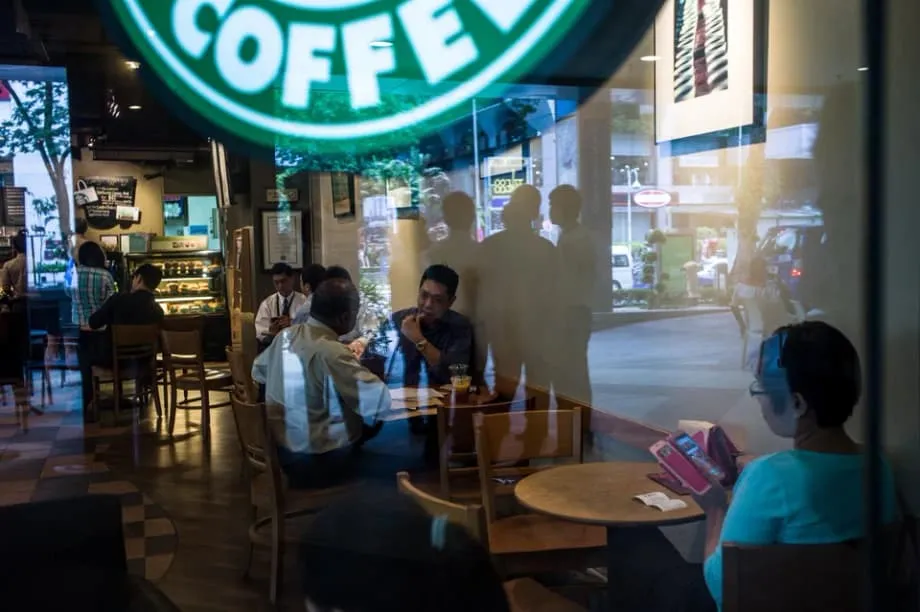
Smaller losses offer an early sign of recovery
Berjaya Food, the company holding the Starbucks licence in Malaysia, reported a 3.3 percent rise in revenue and a net loss of 14.8 million ringgit for its first quarter ended September 30. The loss more than halved, offering an early sign of improvement after nearly two years of boycott pressure linked to the war in Gaza.
Contents
- Smaller losses offer an early sign of recovery
- How the downturn unfolded
- Why local ownership became part of the message
- What the financial figures say
- Promotions ease as analysts weigh the recovery
- A busier coffee market puts pressure on prices
- Restaurant operators face similar pressures across the region
- Selective overseas growth adds another demand on cash
- Investors want evidence the improvement can last
- The Bottom Line
The improvement follows a record loss of 292 million ringgit in the financial year ended in June and the closure of dozens of Starbucks outlets. Berjaya Food has reduced the Malaysian network from about 400 stores to roughly 320 as customer visits fell and the company sought to bring costs down.
Sydney Lawrance Quays, chief executive of Berjaya Food, said customer traffic had improved and trading conditions were more stable than during the worst months of 2024. In an interview, he described the recovery as visible but fragile, with a return to performance before the boycotts still taking time.
The recovery is slow, but we do see that there is a positive sign moving forward.
Management attributes some of the easing in boycott pressure to greater public understanding of the business. Starbucks Malaysia is locally operated by Berjaya Food, rather than being a unit of the United States parent, and most of its employees are Muslims. The company says those explanations have helped address confusion that spread on social media after the conflict escalated in late 2023.
The commercial challenge has also changed. Local chain ZUS Coffee, operated by Zuspresso Sdn Bhd, has overtaken Starbucks in store count following aggressive expansion. Customers returning to Starbucks now have more alternatives, making the recovery a contest over price, convenience and service as well as public sentiment.
How the downturn unfolded
Starbucks Malaysia's latest results come after a prolonged decline that forced Berjaya Food to shrink its network. The sequence helps explain why a smaller quarterly loss matters to the company, even while it continues to spend more than it earns.
- Late 2023: Boycott calls spread after the conflict in Gaza escalated, accompanied by confusion on social media about the ownership and operation of Starbucks Malaysia.
- 2024: Customer traffic weakened, international restaurant brands across Malaysia and Indonesia faced steep revenue declines, and competition through discounts intensified.
- 2024 and early 2025: Berjaya Food closed Starbucks outlets as it reduced costs and reshaped its Malaysian network.
- Early 2025: Several restaurant operators in Indonesia reported changes in profitability, while Starbucks licensee Map Boga Adiperkasa slowed expansion after a significant loss.
- Financial year ended June 2025: Berjaya Food recorded a loss of 292 million ringgit.
- First quarter ended September 30, 2025: Revenue rose 3.3 percent from a year earlier and the net loss narrowed to 14.8 million ringgit.
The reduction from about 400 Malaysian Starbucks stores to roughly 320 amounts to around 80 outlets, or about one fifth of the earlier network. Management describes the remaining estate as more sustainable, with greater concentration in locations that attract stronger customer traffic.
Why local ownership became part of the message
Berjaya Food manages hiring, supply chains and local compliance for Starbucks Malaysia under a licence from the global brand. The operation is halal compliant and its workforce is predominantly Muslim. Management has made those points central to its communication with customers.
A licence allows a local business to operate under an international brand while paying royalties to that brand. Berjaya Food runs daily operations in Malaysia, while the licensing arrangement maintains the commercial connection to Starbucks. That structure explains both the local role in running the stores and the relationship with the global name.
Boycotts in Malaysia have often targeted businesses perceived to have links with Israel. Executives say some consumers have become more familiar with the distinction between local operations and global politics. This has coincided with a modest return of customers and fewer online calls to avoid Starbucks.
Berjaya Food still has to communicate its ownership structure without appearing defensive. Its message about Malaysian operations and Muslim employees sits alongside the practical task of rebuilding loyalty through service, value and product innovation. Customers deciding where to buy coffee also weigh what they receive for their money.
What the financial figures say
Starbucks supplies roughly 80 percent of Berjaya Food's revenue, making the coffee chain the main influence on the group's earnings. A recovery at Starbucks can therefore have a large effect on the parent company, while continued weakness leaves limited room for its other businesses to offset the damage.
The latest quarterly revenue increase was measured against the same period a year earlier. The narrowing loss suggests that cost reductions and a gradual return of customers are gaining traction. The record annual loss and the smaller quarterly deficit cover different lengths of time, so the useful comparison for the latest quarter is the reported reduction of more than half.
Last year's sharp downturn also creates a low starting point for measuring growth. When sales have fallen heavily, a modest recovery can produce a stronger percentage change than it would from a healthier base. Items occurring only once can also affect reported profit or loss. More quarters of results will help show how much the business can earn under its new operating structure.
The smaller store network is part of that structure. Closing underperforming outlets reduces overheads, the continuing expenses needed to keep a business running. Berjaya Food intends to focus on locations with stronger traffic and better margins, meaning a larger share of sales remains after costs.
Management's approach depends on customers continuing to return to the remaining stores. A leaner network can improve the finances of individual outlets when spending recovers, but the group still needs sufficient sales to cover its wider expenses and move back towards profit.
Promotions ease as analysts weigh the recovery
CGS International believes the pressure from the boycotts likely reached its lowest point during 2024 and expects consumption to improve gradually over the next few years. Its estimates put Starbucks Malaysia at around two thirds of its 2023 consumption level in the current financial year, followed by further gains over the next two years.
That estimate places the business roughly one third below its 2023 level, even with the expected improvement. It gives a sense of the distance still to travel before Starbucks Malaysia regains the volume it had before the boycott period.
CGS International also said Berjaya Food had reduced some weekly promotions for app members and Starbucks card users as volumes stabilised. After months of heavy discounting, the company is seeking a better balance between bringing customers into stores and retaining more money from each sale.
Discounts can increase orders while reducing the amount earned on each drink. Cutting back on them can support profitability if customer traffic holds. It also places greater weight on service, speed and products as reasons for customers to choose Starbucks.
Analysts have mixed views on how quickly the recovery can progress. Some expect the festive period at the end of the year and temporary cash assistance to households to support discretionary spending, the money people spend beyond essential needs. Others remain cautious about sentiment linked to geopolitics and competition from expanding local and Chinese chains.
A busier coffee market puts pressure on prices
ZUS Coffee has built a dense store network and strong delivery channels, gaining ground while Starbucks reduced its footprint. Chinese entrants have also expanded into Malaysian cities with competitive prices and streamlined menus. Their appeal rests partly on affordability and quick service.
Starbucks competes through its store atmosphere, customer experience and wider options for customising beverages, generally at a higher price. Local and Chinese chains often advertise value drinks costing less than a typical Starbucks latte, making the price gap a central part of the competition.
Heavy discounting across the market in 2024 encouraged customers to move between brands. Berjaya Food's decision to reduce frequent app promotions therefore comes in a market where consumers have become accustomed to comparing deals. Protecting margins requires customers to keep buying even when discounts become less frequent.
Quays has pointed to tourists and Malaysia's growing middle class as opportunities for specialty coffee sales. Travel hubs and malls can serve those customers, while digital ordering and loyalty programmes can help retain regular buyers.
The remaining network of roughly 320 stores is more concentrated in areas with stronger traffic after the closures. Management expects this focus to support better returns from individual outlets as spending recovers. The combination of location, convenience and service will matter alongside the premium experience Starbucks promotes.
Restaurant operators face similar pressures across the region
Major United States fast food and coffee brands in Malaysia and Indonesia experienced steep revenue falls through 2024 as boycott calls spread against businesses perceived to be linked to Israel. The damage extended beyond Starbucks, prompting operators to change prices, menus and communication with customers.
QSR Brands, which operates KFC and Pizza Hut in Malaysia, moved from a profit before tax in 2023 to a loss in 2024. Management used price reductions, halal messaging and an emphasis on local hiring to try to stabilise sales.
In Indonesia, Pizza Hut operator Sarimelati Kencana returned to profit in early 2025 after losses, helped by new menu items and digital marketing. KFC's Indonesian operator narrowed its losses and sold a stake in a poultry supplier to support its finances.
Starbucks licensee Map Boga Adiperkasa slowed expansion after reporting a significant loss in early 2025. The different responses show operators balancing efforts to bring customers back with measures to conserve money and limit further financial strain.
Consumer activism has also benefited local alternatives in some markets, including beverage and snack brands. Social media has allowed reputational pressure to spread quickly across borders, pushing international businesses to adjust their strategies, build local engagement and, in some cases, reshape their portfolios.
Selective overseas growth adds another demand on cash
Berjaya Food is cutting costs at home while pursuing growth outside Malaysia. The company holds rights to develop Starbucks in parts of the Nordic region and is planning a third outlet in Iceland after launching there in 2025. No date was given for that planned opening.
Overseas stores offer potential revenue over time, but opening a business also brings expenses before it reaches steady trading. Those initial costs have weighed on recent results. Analysts following Berjaya Food say the spending needs to be matched by stable cash flow from the Malaysian operation.
Berjaya Food also operates Kenny Rogers Roasters and produces baked goods for Paris Baguette in Malaysia and the Philippines. Those activities give it businesses beyond coffee, although Starbucks remains its main profit driver and accounts for most group revenue.
The company's strategy therefore has two connected parts: operate a smaller, more efficient Starbucks network in Malaysia and pursue selected opportunities abroad. The financial balance depends on how quickly the domestic business recovers and how much the new operations cost while getting established.
Roshan Raj, a partner at Redseer Strategy Consultants, described the pressures he sees facing foreign brands across parts of Southeast Asia, including restrictions imposed by governments and dissatisfaction among consumers.
Foreign brands are confronting two challenges at once, government restrictions and unhappy consumers.
For Berjaya Food, the immediate measures described by management centre on customer sentiment, store costs and where to invest. Its overseas plans add another area for investors to monitor alongside the Malaysian recovery.
Investors want evidence the improvement can last
Berjaya Food's shares rose about 2 percent on the day the quarterly results were released, while remaining roughly 25 percent lower for the year. The positive reaction reflected the improvement in the quarter, with the longer decline showing the financial pressure the company has faced.
Research houses remain divided. Some expect narrower losses in coming quarters as seasonal demand and consumption improve. Others retain cautious recommendations because of brand sentiment and strong competition. Several analysts also point to the possibility of higher operating expenses if Berjaya Food increases marketing to defend its market share.
RHB Bank took a sceptical position in a research note earlier in the boycott period, warning that a turnaround would be difficult while the conflict continued. The bank's assessment focused on the effort required to recover customers and market share.
The post-boycott recovery may not be straightforward and it may take Berjaya Food much effort to regain its market share.
Customer visits and average spending per purchase will be useful measures as promotions become less frequent. Investors will also watch further changes to the Malaysian network, the pace of openings in the Nordics and whether local and Chinese competitors widen or narrow the price gap.
A durable ceasefire or an easing of tensions in the Middle East could help customer sentiment. Berjaya Food's route back towards stronger earnings also depends on commercial decisions within its control: keeping costs manageable, retaining customers and earning more from a smaller store network.
The Bottom Line
- Berjaya Food reported revenue growth of 3.3 percent and a net loss of 14.8 million ringgit for the quarter ended September 30, with the loss more than halving.
- The group recorded a loss of 292 million ringgit in the financial year ended June and reduced Starbucks Malaysia's network from about 400 stores to roughly 320.
- Management says boycott pressure has eased as more customers understand the locally operated, halal compliant business and its predominantly Muslim workforce.
- Starbucks accounts for roughly 80 percent of group revenue, leaving the coffee chain central to Berjaya Food's recovery.
- ZUS Coffee has overtaken Starbucks in store count, while local and Chinese chains compete strongly on price and convenience.
- CGS International estimates consumption at around two thirds of the 2023 level in the current financial year, with gradual gains over the following two years.
- Berjaya Food has reduced some weekly promotions and is pursuing selected Nordic expansion, including a planned third store in Iceland.
- Analysts remain divided over the recovery as competition, customer sentiment, marketing expenses and overseas opening costs affect the outlook.