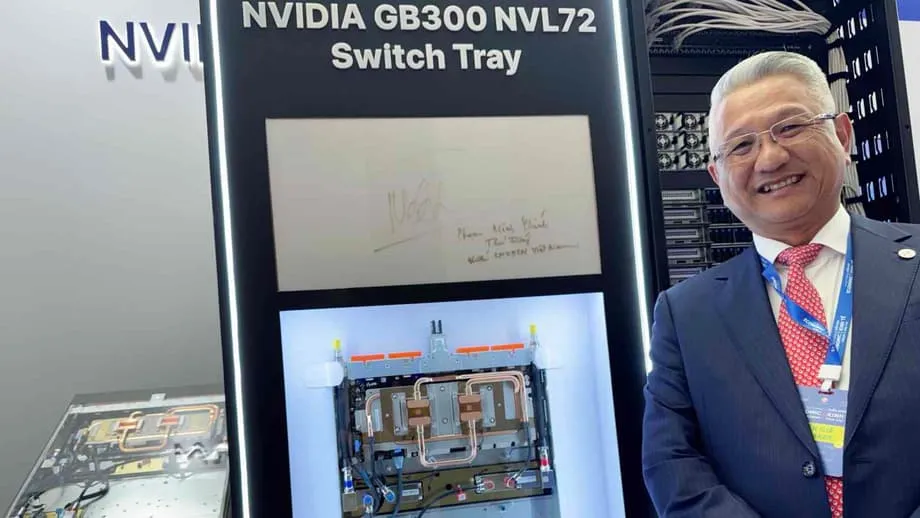
Vietnam takes a larger role in Foxconn's AI expansion
Foxconn Industrial Internet, the server and networking arm of Hon Hai, is targeting $20 billion in Vietnam revenue in 2026, roughly double the level it expects for 2025. The plan would put Vietnam among the group's largest production bases by value as customers order more of the powerful hardware needed to train and run artificial intelligence models.
Contents
- Vietnam takes a larger role in Foxconn's AI expansion
- What goes into a complete AI rack?
- Why AI customers keep ordering more hardware
- Why Vietnam fits the manufacturing network
- Servers reshape a business built on consumer devices
- Vietnam joins expansion in the Americas
- A concentrated market with demanding customers
- What could slow the $20 billion target?
- What Vietnam could gain from more complex production
- Key Points
Orders for systems built around Nvidia accelerators, alongside other high performance components used by cloud companies, are driving the expansion. Accelerators are processors that handle the heavy calculations behind AI. Foxconn wants Vietnam to take a larger share of the work of assembling these components into complete servers and racks for customers around the world.
Foxconn's business mix is already changing. In the second quarter of 2025, cloud and networking products accounted for about 41 percent of group revenue, ahead of consumer electronics at about 35 percent. That gap of roughly six percentage points shows how servers, storage and data center equipment are gaining ground within a company long associated with smartphones and other consumer devices.
Vietnam's role goes beyond putting individual machines together. Foxconn Industrial Internet plans to expand assembly and integration of complete AI racks, the cabinets that combine computing equipment, networking connections and power systems inside data centers. Its customers include major public cloud providers, social media platforms and AI laboratories building large computing clusters.
Foxconn already manufactures server components across Asia and the Americas. Vietnam is becoming a larger location for bringing those parts together quickly and shipping finished systems to regional and global customers. The $20 billion figure is a revenue target for 2026, with its delivery depending on customer orders, component availability and the company's ability to expand production.
What goes into a complete AI rack?
Foxconn Industrial Internet specializes in several stages of server manufacturing: motherboard and baseboard design, server assembly, firmware installation, thermal and signal testing, and final rack integration. Firmware is the software built into hardware that helps its components operate. Vietnam's facilities are expected to handle more of these stages as orders increase in 2026.
An AI server contains accelerator cards, central processing units, memory, storage, fast networking connections and carefully controlled power delivery. Many customers buy these machines as complete racks that can be installed directly in a data hall. The rack brings multiple systems together so they can work as part of a larger computing cluster.
In a typical production process, suppliers send accelerators and central processing units to Foxconn factories. Engineers mount them on carrier boards and motherboards, connect links that can move large amounts of data, and add liquid cooling or advanced air cooling. The systems then undergo sustained operating tests, checks against customers' software and testing of the complete rack.
Those checks help ensure that computing, networking and cooling equipment work together before shipment. A cabinet that arrives ready for installation reduces the amount of assembly a buyer must do at its data center and can shorten the time before the equipment enters service.
Nvidia platforms such as HGX and the newer GB200 require custom boards, dense rack arrangements and, in some configurations, liquid cooling. Manufacturers able to obtain the components, build to customer specifications, validate performance and ship promptly are capturing a growing share of the value in AI hardware. Foxconn wants Vietnam to be central to that work, combining lower production costs with proximity to component flows across Asia.
Why AI customers keep ordering more hardware
Training a modern generative AI model can require thousands of accelerators working together. These processors need reliable electricity, cooling and very fast network connections so that data can move between machines without slowing the whole cluster.
Training is only one part of the demand. Once a model is ready, it needs computing power to answer users. This stage is called inference. Serving millions of users can require additional clusters, creating demand for new hardware even after the original training process has finished.
Cloud providers are therefore ordering complete racks in large quantities. Each new generation of Nvidia systems tends to increase the amount of power concentrated in a rack and the complexity of its networking. That makes the ability to assemble, cool and test a complete system increasingly valuable to customers.
Foxconn's production schedules must also fit the dates when customers expect their data centers to be ready. Vietnam's growing role is intended to help the company ship larger volumes of complete systems within predictable delivery windows, with more of the expanded production plan expected to reach steady output in 2026.
Why Vietnam fits the manufacturing network
Vietnam is close to Asia's core electronics supply base while offering a different cost and policy environment from China. That combination matters to a manufacturer moving large volumes of sensitive hardware to North America, Europe and customers elsewhere in Asia.
Vietnam already has experience assembling phones, personal computers and networking equipment. Supplier clusters produce enclosures, cables, power supplies and test fixtures. These capabilities provide a foundation for more valuable server work as manufacturers redirect existing inputs toward AI systems.
Industrial zones, highways and access to ports in both northern and southern Vietnam support export production. Investment has also flowed into substations and electricity grid upgrades serving large manufacturing campuses. Dependable power and reliable transport are essential when factories must test complex equipment and meet demanding shipping schedules.
Foxconn's facilities across Asia, the United States and Mexico give it several places to distribute production. Vietnam can take on complex system assembly while other locations handle sudden increases in demand or specialized tasks. That network can reduce bottlenecks and give customers greater confidence when planning data center construction over several years.
Servers reshape a business built on consumer devices
Foxconn built its reputation manufacturing consumer electronics, but servers and networking equipment are now at the center of its growth. Demand for expensive AI racks has brought orders forward, shifting the balance away from the smartphone dominated business of earlier years.
Quarterly sales in the middle of 2025 rose in line with expectations, supported by strong AI server orders. Company guidance pointed to continued growth during the second half of the year. Cloud and networking revenue moved ahead of consumer electronics in the second quarter, the first such reversal in recent memory, and that change continued into subsequent quarters.
Within Foxconn Industrial Internet, AI servers have also become a larger part of the server business. Company updates in late 2024 indicated that AI server revenue had reached nearly half of total server revenue. That share has likely grown as orders for newer Nvidia platforms accelerated through 2025.
The figures describe two related changes at different levels of the business. The 41 percent cloud and networking share concerns group revenue, while the figure of nearly half concerns AI products within Foxconn Industrial Internet's server revenue. Both help explain why the company is directing more manufacturing capacity toward AI equipment.
Vietnam joins expansion in the Americas
Foxconn is also adding AI server capacity in the United States and Mexico. Those investments allow more systems to be built within the region where customers will use them, complementing the manufacturing work carried out in Asia.
Mexico became a larger base for server hardware following a series of investment moves in 2024 and 2025. Shorter supply routes can reduce exposure to disruption when transport conditions or trade policy change, while giving large customers more options for receiving their equipment.
The developments leading into Vietnam's 2026 target span several periods:
- In 2024 and 2025, Foxconn made investment moves that expanded Mexico's role in server manufacturing.
- In late 2024, Foxconn Industrial Internet indicated that AI servers generated nearly half of its total server revenue.
- In the second quarter of 2025, cloud and networking products contributed about 41 percent of group revenue, compared with about 35 percent from consumer electronics.
- Through 2025, orders for newer Nvidia platforms accelerated, while company guidance pointed to growth in the second half.
- For 2026, Foxconn Industrial Internet is targeting $20 billion in Vietnam revenue and a larger role for Vietnamese facilities in complete server and rack production.
Vietnam's target is part of this wider production strategy. Foxconn is expanding its ability to build AI systems in several regions while assigning a greater share of assembly, validation and integration work to Vietnam.
A concentrated market with demanding customers
Taiwanese manufacturers dominate the global server market. Industry estimates put their share at a large majority of all server shipments and an even greater share of AI servers. Foxconn operates within that manufacturing network alongside companies including Quanta and Wistron.
Foxconn has worked with Nvidia for years on graphics hardware and server reference designs, the designs manufacturers use as a basis for building systems. That relationship has developed into large scale integration for data centers as AI computing requirements have grown.
Most orders for the latest accelerator racks come from a relatively small group of very large buyers: public cloud platforms, social networks and AI laboratories. These customers expect manufacturers to increase output quickly, maintain consistent quality and protect security throughout the supply chain.
A manufacturing network spanning several countries gives Foxconn flexibility in meeting those requirements. Vietnam's intended contribution is to combine cost efficiency with production scale, allowing complete systems to ship in large volumes when customers begin new model training cycles.
What could slow the $20 billion target?
Foxconn's Vietnam plan depends on a steady supply of accelerators, networking chips, optical components, power equipment and memory. A shortage of any essential part can delay a complete system. Delayed introductions of the next generation of components could also move deliveries into later quarters.
Trade rules add another source of uncertainty. Tariffs and other policies can change quickly, affecting shipping routes or prices even for goods manufactured outside China. Export controls on advanced chips require companies to prepare different combinations of components for different destinations.
Currency movements and electricity costs can change the financial advantage of assembling a system in one country rather than another. These costs matter as Foxconn distributes work across Vietnam and its other manufacturing locations.
Factory execution is equally demanding. AI racks are heavy, generate substantial heat and must meet strict testing requirements. Expanding production in Vietnam requires staff training, checks that suppliers can meet specifications, and close coordination with logistics partners.
Foxconn has experience establishing new production lines across regions, but increasing output still carries operational risks. Clear communication with customers about delivery schedules will be essential during 2026, particularly when their own data center projects depend on equipment arriving within a narrow window.
What Vietnam could gain from more complex production
Vietnam could gain more skilled work if it takes a larger share of the server manufacturing process. Electrical engineering, software validation and thermal management are among the tasks associated with building and checking complete AI systems.
Local suppliers could also develop their capabilities in precision metal components, cable assemblies and power systems. Domestic companies have opportunities to supply parts other than chips and to provide testing services as more of the production process takes place in Vietnam.
Universities and technical institutes could align courses with the needs of data center hardware manufacturing. Relevant areas include factory automation and signal integrity, which concerns whether electrical signals reach their destination accurately through boards and connections.
The commercial activity extends beyond the factory. AI equipment requires packaging, freight transport and support after delivery. Vietnamese freight forwarders, maintenance specialists and other service companies could gain work from the longer supply chain surrounding complete servers and racks.
If Foxconn reaches its 2026 goal, Vietnam would have a larger position in the manufacture of advanced computing equipment. That could open opportunities for further investment in data center infrastructure and supporting industries. The immediate task is turning rising orders into dependable production, tested systems and timely exports.
Key Points
- Foxconn Industrial Internet targets $20 billion in Vietnam revenue in 2026, roughly double its expected 2025 level.
- Orders for Nvidia based systems and other AI server equipment are driving the expansion.
- Cloud and networking products accounted for about 41 percent of group revenue in the second quarter of 2025, ahead of consumer electronics at about 35 percent.
- Vietnam is expected to handle more server assembly, software validation, testing and complete rack integration.
- Capacity expansion in the United States and Mexico complements Foxconn's manufacturing network in Asia.
- Component supply, trade policy, power costs, logistics and factory execution are key risks to the target.
- More complex server production could bring skilled jobs and new opportunities for Vietnamese suppliers and service companies.