Four islanders seek repairs and a global emissions order
Four residents of Pulau Pari, a low island north of Jakarta, are asking a Swiss court to make cement group Holcim help pay for climate damage thousands of kilometers from its headquarters. Each plaintiff seeks 3,600 Swiss francs for repairs and coastal protection. Their larger demand is an order requiring the company to reduce its global emissions by 43 percent by 2030 and 69 percent by 2040, compared with 2019 levels.
Contents
- Four islanders seek repairs and a global emissions order
- Floodwater reaches homes, wells and beaches
- Livelihoods change as the coast retreats
- Residents build defenses with limited resources
- How the case reached the court in Zug
- The civil laws behind the residents' claim
- Why cement production puts Holcim in focus
- Holcim says lawmakers should set emissions limits
- What could follow the admissibility decision
- At a Glance
The civil lawsuit before the Cantonal Court of Zug connects a global problem with damage to individual homes and livelihoods. The residents argue that past and present carbon emissions from Holcim and its predecessor companies have contributed to rising seas, flooding and erosion on their Indonesian island. They want compensation for a proportional share of that harm, alongside action to limit further warming.
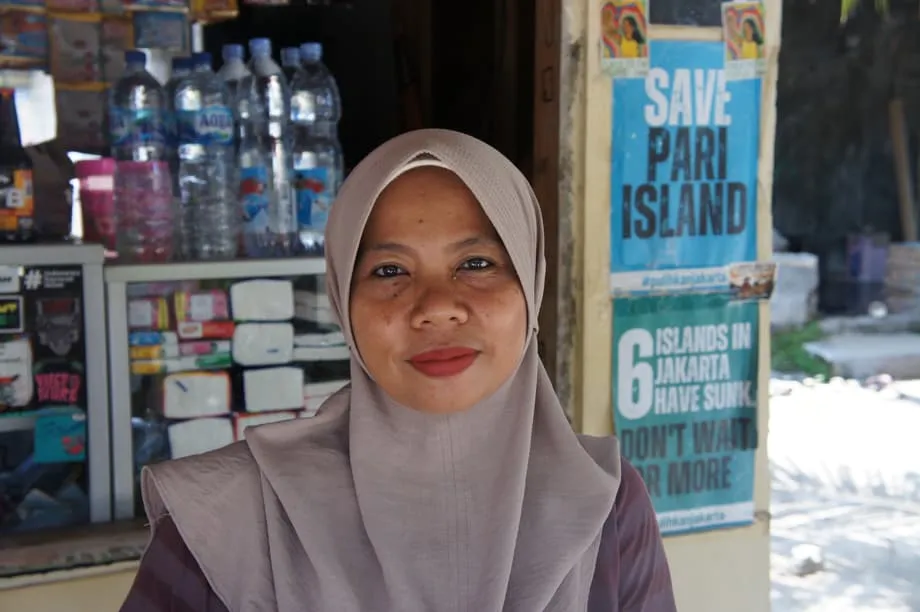
Pulau Pari has about 1,500 residents, most living a few meters from the waterline. Floodwater increasingly reaches homes and shops, while beaches used for snorkeling and fishing are shrinking. The plaintiffs include guesthouse manager Ibu Asmania and tourism worker Arif Pujianto, who say climate change has made life harder each year.
As of November 26, 2025, the court has yet to decide whether the case can proceed. A preliminary hearing on September 3, 2025, addressed admissibility, meaning whether the court has authority to hear the dispute and whether the complaint meets procedural requirements. Evidence about the damage and its connection to company emissions would be examined later if the lawsuit moves forward.
The residents have support from civil society groups in Indonesia and Europe. Their claim could become the first case of its kind in Switzerland and a reference point for other communities seeking compensation and protection from climate damage.
Floodwater reaches homes, wells and beaches
Pulau Pari sits barely above the ocean. As the planet warms and sea levels rise, high tides and storms push water onto roads and into places where people live and work. Salt water also enters wells that families depend on for drinking water.
Residents describe familiar shoreline markers disappearing and seawater reaching thresholds that were once safely dry. Environmental groups say roughly 11 percent of the island's surface area has disappeared in recent years. Many residents fear that much of Pulau Pari could be underwater by the middle of the century if warming continues.
The flooding creates costs beyond repairing walls and floors. Contaminated wells affect access to drinking water. Salt water damages equipment and rusts motorbikes and boat engines. Erosion reduces the beaches that help attract visitors, placing the island's tourism income under pressure.
For the plaintiffs, climate damage is therefore a combination of lost land, damaged possessions, threatened health and less reliable earnings. Their lawsuit seeks to connect those local losses to a measurable share of emissions from a company based abroad.
Livelihoods change as the coast retreats
Pulau Pari once relied on seaweed farming, but warmer waters damaged crops and made the practice unviable. Many residents shifted to tourism, running small guesthouses, renting boats and selling food and supplies to visitors from Jakarta.
Ibu Asmania and Arif Pujianto are among those whose work now depends on the island remaining accessible and attractive to visitors. Shrinking beaches and flood damage threaten that replacement source of income, after warming waters had already undermined seaweed farming.
Fishermen also describe growing difficulties. Mustaghfirin, known locally as Bobby, reports smaller catches and more dangerous conditions at sea, with changes in the weather becoming harder to predict. The island's problems extend beyond the shoreline into the waters where residents earn their living.
Residents build defenses with limited resources
Pulau Pari residents have piled stones into low dykes, planted mangroves and other vegetation to anchor sand, and raised floors in homes where they can. These measures offer protection, but they cannot stop the water on their own.
Limited resources leave households facing repeated repairs as each season brings fresh damage. The plaintiffs want money to raise floors, fix walls and plant mangroves and other barriers. They also seek support for planning, so the community can develop measures that last rather than relying on repeated temporary repairs.
The requested compensation totals 14,400 Swiss francs across the four plaintiffs, based on 3,600 francs each. The payments would address practical needs on the island, while the separate demand for emissions cuts would address the pollution contributing to the threat.
How the case reached the court in Zug
Swiss procedure requires an attempt at conciliation before a civil complaint is filed. Conciliation gives the parties an opportunity to settle their dispute before asking a court to decide it. The Pulau Pari residents began that process in the Canton of Zug in July 2022, but no settlement followed.
The residents filed their lawsuit in early 2023 with support from Swiss Church Aid (HEKS), the European Center for Constitutional and Human Rights (ECCHR) and WALHI in Indonesia. In October 2023, the court granted them free legal aid after finding that they lacked sufficient funds and that their petition was not without a chance of success.
The main steps so far are:
- July 2022: The residents initiated the required conciliation process in the Canton of Zug. It ended without a settlement.
- Early 2023: The four plaintiffs filed their civil lawsuit with the cantonal court.
- October 2023: The court granted free legal aid based on their financial circumstances and the prospects of their petition.
- September 3, 2025: The court held a preliminary hearing focused on admissibility.
- November 26, 2025: A decision on whether the case can proceed remained pending.
The judges must first decide whether they are competent to hear the case and whether it meets procedural requirements. If they allow it to continue, the proceedings would then turn to evidence of harm and causation, the connection between the conduct being challenged and the damage claimed.
The civil laws behind the residents' claim
The plaintiffs rely on ordinary Swiss civil law to bring together two demands rarely combined in lawsuits over company emissions: proportional compensation for climate damage and an order to reduce emissions in line with the Paris Agreement temperature goals.
Article 28 of the Swiss Civil Code protects personality rights, including health and physical integrity. Article 41 of the Code of Obligations provides for redress when harm is caused unlawfully. The residents argue that Holcim's historical and continuing emissions contribute to flooding and erosion that threaten their homes, livelihoods and health.
Their case rests on proportional responsibility. Research cited by the residents attributes about 0.42 percent of historical global industrial carbon dioxide emissions to Holcim and its predecessors. They argue that a measurable contribution to the problem should lead to a corresponding contribution toward the island's damage and prevention costs.
The requested reductions of 43 percent by 2030 and 69 percent by 2040, measured against 2019 emissions, form the second part of the claim. The residents want the court to require changes in company conduct as well as payments for harm already suffered.
The court would have to examine evidence about rising seas, the effects on Pulau Pari and the share attributable to corporate emissions. That connects the company's activities with concrete losses on a distant island through existing civil law, rather than through a special climate statute.
Why cement production puts Holcim in focus
Cement production accounts for roughly 7 percent of global carbon dioxide emissions, according to industry estimates. It produces emissions in two main ways: limestone releases carbon dioxide when heated to make clinker, and the kilns used for that process are usually powered by fossil fuels.
Clinker is the most carbon intensive ingredient in cement. Reducing its share in cement mixes can reduce emissions, while changes to the energy used in production address another part of the manufacturing process.
Researchers tracking corporate contributions to climate change identify large producers across energy and materials as carbon majors. Studies covering emissions since the middle of the twentieth century attribute more than seven billion tons of industrial carbon dioxide to Holcim and predecessor companies, representing about 0.42 percent of the global historical total.
Those figures explain the residents' choice of defendant and their request for proportional responsibility. Their argument is that Holcim should pay a share of the costs linked to its contribution and reduce the emissions that continue to add to the problem.
Holcim says lawmakers should set emissions limits
Holcim says it is committed to climate action and argues that setting emissions levels is a matter for lawmakers rather than a civil court. In a statement, the Swiss company described the central issue as the allocation of authority over carbon dioxide emissions.
"In our opinion, who is allowed to emit how much CO2 is a competence of the legislator and not a question for a civil court".
Holcim points to greater use of renewable energy and cement mixes containing less clinker. The company says it has reduced carbon dioxide emissions from its operations by more than 50 percent since 2015 and aims to reach net zero by 2050.
The plaintiffs and the nongovernmental organizations supporting them say those commitments do not match the scale and urgency of the problem. They also argue that future targets leave responsibility for damage already suffered on Pulau Pari unresolved.
Holcim describes reducing emissions across the cement sector as a challenge requiring policy solutions. The residents' supporters focus on whether a company should be liable under civil law when its contribution to climate change is linked to damage.
Nina Burri, a lawyer and business and human rights expert supporting the islanders' case, expressed the principle behind their demand for accountability:
"If a company has caused damage, it should be held responsible for it".
What could follow the admissibility decision
The Cantonal Court of Zug's next decision concerns whether the complaint can proceed. If it does, the court would consider the substance of the case, including evidence of sea level rise, local damage and the connection to Holcim's emissions. Either side could appeal, and a final ruling could take years.
Potential remedies range from payments for repairs and local protections to orders requiring changes in corporate conduct, including emissions reductions consistent with climate science benchmarks. For Pulau Pari residents, the immediate aim is more money to defend their homes, alongside action by major emitters to meet temperature limits that give small islands a chance to endure.
The case sits within a growing field of climate litigation. More than 2,000 legal actions related to climate change have been filed worldwide, and cases targeting major emitters are gaining prominence. Company litigation increasingly extends beyond fossil fuels to food, finance and heavy industry.
In July 2025, the International Court of Justice issued an opinion that people harmed by climate change could be entitled to full reparation. The opinion addresses state obligations and is not binding on a Swiss civil court. It forms part of a wider legal debate in which remedies for climate harm are receiving increasing recognition.
The Pulau Pari lawsuit brings that debate to a specific community and a specific company. Its combination of compensation, prevention funding and requested emissions cuts could influence other efforts to secure adaptation support and hold companies accountable across national borders.
At a Glance
- Four Pulau Pari residents sued Holcim in Switzerland after conciliation in July 2022 ended without a settlement.
- The island has about 1,500 residents and faces flooding, erosion and salt water entering drinking wells. Environmental groups say roughly 11 percent of its land has disappeared in recent years.
- Each plaintiff seeks 3,600 Swiss francs for repairs and defenses, a combined 14,400 francs.
- The residents also seek global emissions cuts of 43 percent by 2030 and 69 percent by 2040 from 2019 levels.
- Research cited in the case attributes about 0.42 percent of historical global industrial carbon dioxide emissions, more than seven billion tons, to Holcim and its predecessors.
- Cement production accounts for roughly 7 percent of global carbon dioxide emissions, according to industry estimates.
- Holcim says lawmakers should set emissions limits, cites a reduction of more than 50 percent in operational emissions since 2015 and targets net zero by 2050.
- Following the September 3, 2025, preliminary hearing, a decision on admissibility remained pending as of November 26, 2025.