Three collared tigers reveal the pressures inside an eastern stronghold
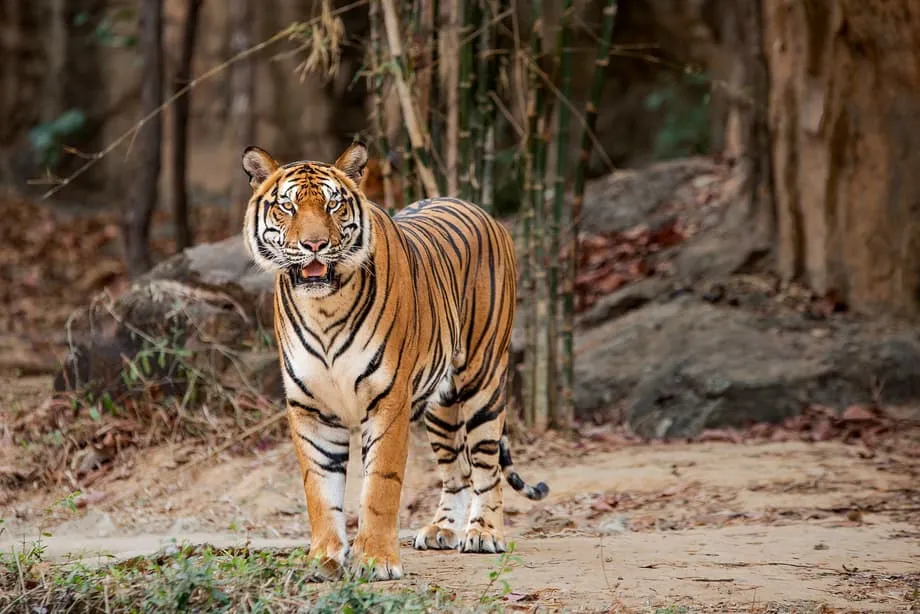
Three adult Indochinese tigers fitted with GPS collars in early 2025 are helping conservationists investigate why one of Thailand's remaining tiger populations is struggling to grow. In the Dong Phayayen-Khao Yai Forest Complex in eastern Thailand, just 20 to 30 tigers occupy about 6,000 square kilometers, and early tracking results point to scarce large prey and barriers that keep animals apart.
Contents
- Three collared tigers reveal the pressures inside an eastern stronghold
- Why smaller meals can slow recovery
- How hourly locations become evidence
- What movements can reveal about tiger relationships
- Western Thailand shows how recovery can happen
- The milestones behind the western gains
- Why Chantra has drawn attention to genetic risks
- Roads, construction and dams can narrow the options
- Patrols protect both tigers and their food
- Rebuilding the food supply in the east
- Turning the tracking results into practical action
- At a Glance
The collars, used for the first time on this population, record locations every hour. Those positions help researchers follow hunting trips, resting places, travel routes and road crossings. Field checks suggest that the monitored cats often hunt wild pigs and muntjac deer instead of larger animals such as sambar deer, banteng or gaur.
One female, nicknamed Chantra by the field team, has taken hog badgers and opportunistically fed on soft-shell turtles and water monitors. She is also smaller than her sister and has a kink in her tail, physical features that have drawn attention to the risks facing a small, isolated breeding population.
The findings present a difficult contrast with western Thailand, where tiger numbers have risen for more than a decade. Thailand has an estimated 179 to 223 adult tigers nationally and remains the last viable stronghold for Indochinese tigers. Yet recovery has been uneven: stronger numbers in the west sit alongside a much smaller population in the east.
For Dong Phayayen-Khao Yai, the immediate challenge is to understand how food shortages, illegal hunting and fragmented habitat work together. The collar project offers a way to identify where tigers still find food, where movement becomes dangerous and where conservation work could make the greatest difference.
Why smaller meals can slow recovery
Wild pigs and muntjac appear repeatedly among kills associated with the early collar data and carcasses located by patrols. Sambar, banteng and gaur appear less often. Researchers see that pattern as a warning that the forest may have too few large prey animals to support steady tiger population growth.
Large ungulates, hoofed animals such as deer and wild cattle, provide substantial amounts of meat. Across much of Asia, tiger diets center on sambar, banteng, gaur and large wild boar. A smaller animal can feed a tiger for a day, but a succession of small meals requires more frequent hunting.
A female needs enough energy to sustain pregnancy and produce milk for her cubs. When she must keep searching for smaller animals, she spends more time traveling and hunting, increasing her exposure to injury. Cubs then face a harder start, and fewer successful litters can keep a population from expanding.
Chantra's varied diet makes this concern especially visible. Hog badgers, soft-shell turtles and water monitors are unusual items for wild tigers in Thailand. Her feeding behavior sits within a broader pattern of cats ranging widely while often taking prey smaller than expected.
Wild pigs sometimes raid crops, while muntjac browse near forest edges. Following those animals can bring tigers closer to people. Widespread snaring and illegal hunting across Southeast Asian forests have reduced large prey, leaving predators with fewer substantial meals and potentially more dangerous journeys between them.
How hourly locations become evidence
Each collar creates a trail of hourly GPS positions that researchers can download when the device is recovered. Plotted on a map, the points show home range boundaries, river crossings, resting places and routes through the forest.
A cluster of positions in one small area over many hours can indicate that a tiger has stopped to feed. Researchers can visit that location to look for a carcass or other signs of a kill. Camera images associated with these clusters add information about feeding behavior.
Repeated feeding clusters along a ridge or in a valley may identify places with more prey than the surrounding forest. Areas with little activity can help teams investigate where food is scarce. Combining those patterns with patrol observations gives managers a more detailed picture than either movement records or carcass checks alone.
Roads and settlements also become visible in the movement data. Researchers can examine whether tigers avoid a road, cross at particular culverts or travel around inhabited areas. Over time, those routes can help identify the barriers separating animals and the passages they still use.
What movements can reveal about tiger relationships
Dozens of tigers in western Thailand have carried GPS units, giving researchers experience in interpreting overlapping home ranges. Analysts there have used a time geography approach, examining where animals are and when they are there, to distinguish different kinds of interaction.
Mothers traveling with older cubs often move closely together before the young leave to find their own territories. Neighboring females may avoid one another, meeting only rarely and briefly. An adult male may travel along the boundaries of several female territories and adjust his routes as those females change their ranges.
These relationships matter in a population with few potential mates. Increased human activity in a valley may cause females to abandon it, shrink their ranges or move into places with less prey. Young males unable to find routes out can remain near their mothers for too long, complicating breeding and increasing the chance of conflict.
Dong Phayayen-Khao Yai's collars can help researchers map those pressures. Tracking where animals overlap, avoid one another or stop moving between forest areas can guide decisions about habitat protection and connections between territories.
Western Thailand shows how recovery can happen
The Western Forest Complex, known as WEFCOM, held 143 tigers in 2023, compared with 41 in 2007. That is an increase of 102 animals, taking the count to more than three times its earlier level. Most of Thailand's estimated 179 to 223 adult tigers live in this western landscape, especially around Huai Kha Khaeng and Thung Yai wildlife sanctuaries.
WEFCOM covers about 18,000 square kilometers along the Myanmar border, three times the roughly 6,000 square kilometers of Dong Phayayen-Khao Yai. Its 11 national parks and six wildlife sanctuaries are managed in a coordinated way, providing a large connected landscape where young tigers can seek new territories within protected habitat.
Dong Phayayen-Khao Yai includes Khao Yai National Park and several wildlife sanctuaries near the Cambodian border. Its 20 to 30 tigers are spread thinly across a substantial area. The contrast with the west concerns both how much protected forest is connected and how much food that forest contains.
In WEFCOM, sustained patrols, arrests of poaching gangs and recovery of large prey have helped females raise litters. Government teams and conservation partners have also released sambar deer at key sites to rebuild the food supply, alongside natural recovery where patrols reduced snaring.
Camera traps, widely deployed from 2007, have built a long record of individual tigers. Their stripe patterns allow researchers to recognize each animal and follow births and survival. Together with patrol records, that monitoring lets managers assess whether protection is translating into recovery.
The milestones behind the western gains
Thailand's progress developed over years of protection and monitoring. Several dates show how that work unfolded, while the eastern collar project marks a newer effort to understand a population that has remained small.
- 2007: The western tiger count stood at 41, and camera traps began to be deployed widely.
- 2012: A crackdown on tiger poaching gangs marked a turning point in protection.
- Since 2013: No tiger poaching incidents have been detected in the core Huai Kha Khaeng and Thung Yai landscape.
- 2023: Scientific surveys placed the WEFCOM tiger count at 143.
- Early 2025: Three adult tigers in Dong Phayayen-Khao Yai received GPS collars, the first for this population.
Anak Pattanavibool, Thailand country director at the Wildlife Conservation Society, described patience and sustained law enforcement as central to the western recovery:
Conservation success takes time. At the beginning, we did not have much confidence that it would be possible to recover tiger numbers, but we have been patient.
Why Chantra has drawn attention to genetic risks
Chantra's smaller body size and kinked tail have added a genetic concern to the questions about food. Field teams sometimes encounter such features in isolated carnivore populations. They can be harmless variations, while also serving as clues that prompt concern about breeding among relatives.
Small populations offer fewer choices of mates. When related animals reproduce, rare harmful genes can become more common and health problems can appear more often. In a forest holding only 20 to 30 tigers, finding a suitable mate is already difficult, especially when animals are spread across a wide area.
Highways and settlements can restrict movement further. Gene flow, the movement of genes between groups through breeding, depends on animals being able to reach one another. Connected habitat therefore matters both for finding new territory and for maintaining a wider pool of potential mates.
The early collar findings leave the extent of any inbreeding unresolved. For managers, the practical task is to identify obstacles that isolate animals and protect routes through which tigers can travel and eventually breed.
Roads, construction and dams can narrow the options
Highways cut through forest blocks, while construction sites, quarries and power lines can restrict access to water or push animals into narrow strips with little cover. Proposed dams could flood river valleys that function as natural travel corridors.
Each obstruction changes the choices available to a tiger moving through the landscape. Several together can divide habitat into relatively safe areas separated by dangerous routes. Animals seeking food or mates may then approach farms, settlements or traffic.
GPS records can show which highway crossings tigers use and where they hesitate or turn away. Those details can guide decisions about fencing, changes to culverts and wildlife crossings, rather than relying only on the apparent connections visible on a map.
Wildlife overpasses and underpasses placed along natural travel routes can reconnect ranges and reduce collisions. Fencing can direct animals toward those passages. Collar data can also help agencies adjust transport and energy project routes and schedules to reduce risks to wildlife.
Restoring native vegetation beside streams is another option in important valleys. Shade and cover attract prey and can draw predators toward safer areas inside the forest. Smaller patches of habitat between reserves can also act as stepping stones, allowing movement without forcing animals through farms or towns.
Patrols protect both tigers and their food
About 20,000 staff guard protected areas across Thailand. Within the Huai Kha Khaeng and Thung Yai landscape, 52 ranger stations coordinate patrols. That sustained presence has been a central part of keeping threats low enough for tigers and large prey to recover.
Rangers use SMART, a system for recording patrol information, to log tracks, snares and signs of illegal activity in a consistent way. GPS units confirm where teams have traveled and reveal gaps in coverage. Managers can then direct effort toward places where threats are growing or patrols have been limited.
At Huai Kha Khaeng, a regional training center teaches rangers to use GPS equipment, cameras and data to plan patrols and monitor prey. In buffer zones, CCTV has helped catch poachers and seize weapons. These tools support the regular fieldwork needed to keep hunting pressure down.
Stuart Chapman, who leads the WWF Tigers Alive Initiative, described why preventing additional threats matters so much in a small population:
Every tiger counts, particularly when populations get to such low levels that recovery then depends on no additional threats coming in that can potentially wipe them out.
In the east, combining patrol records with collar locations can show where snares are concentrated, where large prey still survive and where protection needs to increase. Feeding sites and movement routes give patrol leaders specific areas to investigate.
Rebuilding the food supply in the east
Dong Phayayen-Khao Yai's immediate recovery priorities begin with prey. Removing snares, strengthening prosecutions for illegal hunting and restoring habitat that supports sambar and other large ungulates would help rebuild the food base on which breeding females depend.
Western Thailand provides experience with both natural prey recovery and releases of native animals. Where protection allows surviving herds to expand, numbers can recover naturally. Where that recovery stalls, managers can assess carefully planned releases, including the kind of sambar program already used in the west.
Collar maps can help focus those decisions. Valleys with repeated feeding activity may still hold small herds worth protecting. Other areas may warrant checks for hunting or snaring that has removed larger animals. The same information can guide habitat restoration and assessments of potential release sites.
Patrol coverage must remain strong enough to deter poachers before they enter the forest. Rebuilding prey while illegal hunting continues would leave the animals that tigers need exposed to the same pressure that reduced them.
Turning the tracking results into practical action
The team managing the collars plans a full threat analysis covering poaching, snares, highways and proposed dams. Combined with diet and movement findings, that assessment can help direct funding toward the places where protection, prey recovery or safer passage is most needed.
Infrastructure work could range from fencing and modified culverts to full wildlife crossings and changes to dangerous road sections. The strongest case for each intervention will come from knowing where the cats actually travel and where existing routes expose them to traffic or people.
Community programs form another part of the proposed response. Fences that keep wild pigs out of fields, secure places for livestock at night and ecotourism that rewards villages for healthy wildlife could help reduce conflict around forest edges.
Cooperation with neighboring reserves would allow teams to share data and management strategies, preparing for young tigers to disperse safely into new habitat. Better connections would support that movement while widening opportunities to find territory and mates.
Thailand's western recovery shows what sustained protection and a stronger prey base can achieve. In the east, the early collar results identify a more difficult starting point: few tigers, frequent small meals and obstacles between forest areas. The next task is to turn those locations into targeted protection, more food and safer movement.
At a Glance
- Three adult tigers received GPS collars in early 2025, the first used on the Dong Phayayen-Khao Yai population.
- About 20 to 30 tigers remain across roughly 6,000 square kilometers of eastern forest.
- Hourly locations and field checks show frequent feeding on wild pigs and muntjac, with larger prey appearing less often.
- Chantra has also taken hog badgers and opportunistically fed on soft-shell turtles and water monitors.
- Her smaller size and kinked tail have drawn attention to genetic risks in an isolated population.
- WEFCOM's tiger count rose from 41 in 2007 to 143 in 2023, supported by protection and prey recovery.
- Thailand holds an estimated 179 to 223 adult tigers, most in its western forests.
- Planned threat analysis will examine poaching, snares, highways and proposed dams to guide conservation work.