A crop that saves land can still put forests at risk
In Brazil's Pará state, the area planted with oil palm more than tripled between 2006 and 2014, reaching roughly 219,000 hectares. About 91 percent of new plantations replaced pasture. After Brazil launched its Sustainable Palm Oil Production Program in 2010, direct conversion of intact forests fell to below 1 percent of new planting, according to an independent assessment.
Contents
- A crop that saves land can still put forests at risk
- Why oil palm produces so much from so little land
- How Southeast Asia's deforestation record is changing
- Brazil's expansion offers a test of land use rules
- Certification and market rules raise the standard
- What companies can track, and what they must enforce
- Better trees and cleaner mills can reduce the footprint
- Wildlife and community rights remain central
- Climate stress threatens the gains from higher yields
- What to Know
Those figures capture the central challenge for an industry whose product appears in half of the packaged goods on supermarket shelves and in millions of household kitchens. Oil palm produces far more oil from a hectare of land than other major oil crops. Yet its expansion has also brought forest loss, drained peatlands, fires and damage to wildlife habitats, especially in Southeast Asia.
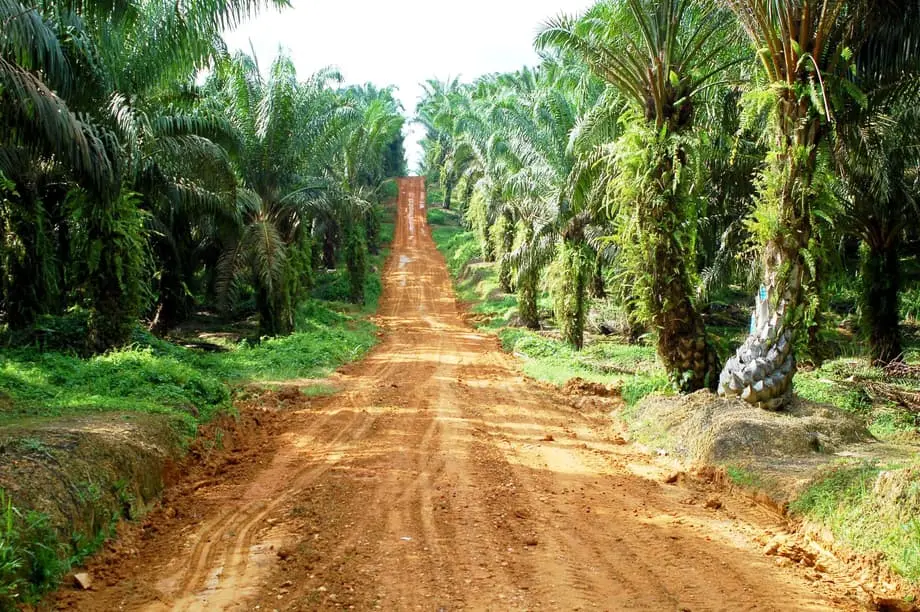
Mature oil palm typically produces 4 to 5 tonnes of oil per hectare in tropical regions, and trees keep producing for about 30 years. Globally, oil palm occupies around one tenth of the land planted with oil crops but supplies more than a third of the world's edible vegetable oils. That makes its productivity central to feeding a growing population from limited agricultural land.
Conservation groups estimate that palm oil accounts for about 5 percent of tropical deforestation and roughly 2.3 percent of deforestation worldwide. Its share is smaller than that of some other commodities and land uses, but damage can be severe where plantations replace forests rich in wildlife and stored carbon.
Brazil's growing role as a producer, changes in Indonesia and Malaysia, and new approaches to monitoring and production are testing whether more oil can be supplied without another wave of forest clearing. The practical task is to increase output on existing land while protecting forests, peatlands and the people who depend on them.
Why oil palm produces so much from so little land
Oil palm's advantage begins with its biology. Under stable tropical conditions, each tree produces large fruit bunches throughout the year. Efficient photosynthesis, the process through which plants use sunlight to grow, and fruit rich in oil give the crop much higher oil yields than temperate oilseeds.
A scenario analysis comparing oil palm in Indonesia, soybean in Brazil and rapeseed in Germany projected that, under ambitious improvement assumptions, oil palm could produce about 4.8 tonnes of crude oil per hectare by 2040. The corresponding projections were roughly 3.1 tonnes for soybean and 2.6 tonnes for rapeseed. The researchers linked those differences to millions of hectares of avoided land conversion if palm oil meets demand instead of the alternatives.
Oil palm's productive life of about 30 years also reduces the frequency of land turnover, soil disturbance and inputs compared with crops planted annually. Its canopy shades the ground, helping reduce erosion and evaporation. Better planting material, fertilization and harvesting can raise yields gradually within that established system.
The most productive estates already exceed 6 tonnes of oil per hectare. Closing the gap between average output and the results achieved with the best practices remains the largest opportunity to save land while increasing supply.
Conservation organizations therefore caution against blanket palm oil boycotts. Replacing it with soybean, sunflower or rapeseed would require several times more land and could move agricultural pressure into other forests, grasslands and savannas. Consumers still need vegetable oil. The environmental outcome depends on both how much land a crop needs and what happens on that land.
How Southeast Asia's deforestation record is changing
Indonesia and Malaysia experienced extensive forest conversion as oil palm plantations spread during the 1990s and 2000s. Fires on drained peatlands caused haze, while habitat loss threatened orangutans and other endangered species. Clearing forests and disturbing peat also increased greenhouse gas emissions.
Peatlands contain accumulated plant material that stores carbon. Draining them for cultivation exposes that material to conditions that release carbon and make the land vulnerable to fire. Protecting intact peat is therefore a major part of reducing palm oil's climate impact.
Deforestation linked to palm oil has since fallen to its lowest level in years in leading producer countries, including during periods of high prices. Governments introduced permanent or longstanding restrictions on clearing primary forests and peatlands. Certification became stronger, and corporate buyers adopted No Deforestation, No Peat and No Exploitation commitments, commonly called NDPE.
Buyers have backed those commitments with supplier checks and traceability, which means following oil through the supply chain to where it was produced. Satellite monitoring now provides alerts close to the time clearing begins in sensitive areas. Together, regulation, purchasing requirements and public scrutiny have helped separate growth in commodity production from forest loss.
Agriculture remains the leading driver of global deforestation. For palm oil, keeping new planting outside primary forests, intact peatlands and other conservation areas is the decisive boundary between production with lower impacts and production with much higher impacts. A relatively small share of global forest loss can still cause heavy ecological damage when it occurs in landscapes with unusually high biodiversity and carbon stocks.
Brazil's expansion offers a test of land use rules
Brazil has substantial potential for oil palm in parts of the eastern Amazon and suitable coastal belts. Its Sustainable Palm Oil Production Program, launched in 2010, used agroecological zoning to steer expansion toward land without forests. Zoning identifies where agricultural conditions are suitable and where environmental restrictions should prevent planting.
The assessment of Pará found that oil palm expanded mainly onto pasture during 2006 to 2014. Alongside the rise to roughly 219,000 hectares and the finding that pasture accounted for about 91 percent of new plantations, the decline in direct intact forest conversion after the program began showed how planning can influence where investment goes.
Brazil's experience also exposed constraints. Development fell short of estimates of suitable land because establishing plantations was expensive, local technical knowledge was limited and infrastructure had gaps. Land that looks suitable on a map does not automatically become a workable plantation.
Another study used a fuzzy geographic information system approach to assess environmental suitability. This mapping method allows suitability to vary by degree rather than classifying every location simply as suitable or unsuitable. It found that available sites were often fragmented. Improving existing plantations, restoring biodiversity and supporting smallholders could therefore deliver better results than developing large new estates.
Degraded pasture and previously farmed land are priority locations for expansion, provided they lie outside protected areas, zones of high conservation value and peatlands. Investment tied to strong environmental and social safeguards could create jobs and income while keeping forest pressure low. Pará's results show that this approach is feasible, with careful enforcement and monitoring.
Certification and market rules raise the standard
The Roundtable on Sustainable Palm Oil, or RSPO, sets criteria for growers and businesses handling palm oil through the supply chain. About one fifth of global palm oil production is certified under its system. National standards, including Malaysian Sustainable Palm Oil and Indonesian Sustainable Palm Oil, operate alongside RSPO and form part of public policy.
Malaysia made its national standard mandatory in 2020, with a cutoff date for new plantings at the end of 2019. Indonesia established a platform involving multiple groups to guide reform and a national action plan intended to improve governance and include smallholders.
The European Union Deforestation Regulation adds requirements for access to a major market. It prohibits placing palm oil on the market when it comes from land deforested after December 31, 2020, and requires proof of origin based on geographic location. That connects a product sold to a buyer with the land where its raw material was grown.
Several dates mark the development of these approaches:
- During the 1990s and 2000s, plantation expansion drove extensive forest conversion in Indonesia and Malaysia.
- Between 2006 and 2014, oil palm area in Pará more than tripled to roughly 219,000 hectares.
- In 2010, Brazil launched its Sustainable Palm Oil Production Program to guide expansion toward land without forests.
- At the end of 2019, Malaysia set its cutoff for new plantings under its national standard, which became mandatory in 2020.
- December 31, 2020, is the forest clearing cutoff specified by the European Union Deforestation Regulation.
- By 2040, research scenarios project possible changes in yields and emissions if ambitious production improvements are achieved.
Certification and regulation work best when buyers require certified oil or verified production without deforestation, authorities enforce land laws, and producers can obtain finance and technical support. A standard creates requirements; farmers and companies still need the resources and oversight to meet them.
What companies can track, and what they must enforce
Major traders and food companies have adopted NDPE policies, published progress dashboards and developed systems for handling grievances. One global trader says it will avoid suppliers that clear forests, drain peatlands or exploit workers, and regularly reports on compliance and corrective action.
A large food manufacturer reports that all the crude palm oil and palm kernel oil it purchases are covered by certification or credits. It reports traceability to mills of 99 percent and traceability to plantations of more than 90 percent. Following oil to a mill identifies where processing took place; following it to a plantation identifies where the crop was grown.
The manufacturer also uses satellite monitoring to check sourcing regions for recent deforestation, publishes supplier lists and runs programs addressing labor rights, land tenure and conservation in sensitive landscapes. Land tenure concerns who holds rights to own or use land, an issue that can determine whether plantation development respects local communities.
High resolution satellites, machine learning and public datasets have made clearing easier to detect, including under cloud cover. Governments in producer countries are building platforms that register plantations and connect permits, maps and supply records. These systems help businesses meet import requirements and allow auditors to check claims against independently observable information.
Monitoring must lead to action when problems appear. Civil society groups in West Africa have documented community rights violations and forest loss associated with plantation projects. They have pressed certification bodies to maintain moratoria, or pauses on activity, until remediation plans are completed. Those cases show the need for transparent checks, timely sanctions and meaningful participation by affected communities.
Better trees and cleaner mills can reduce the footprint
Genome mapping and selective breeding are producing planting material with higher yields. One large producer reports breeding lines that deliver about 20 percent more oil per hectare. More precise nutrient management, integrated pest management and improved harvesting routines can bring further gains.
Smallholders manage a large share of oil palm plantings, making access to these improvements essential. Training, finance and simpler routes to certification can help farmers produce more from existing plots instead of clearing additional land.
Palm oil's greenhouse gas footprint is dominated by land use change on peat and methane from mill effluent, the wastewater produced during processing. Ending new planting on peat and rehabilitating drained peatlands addresses the biggest source of emissions.
Methane capture systems at mills collect gas from wastewater and turn it into biogas for energy. This can reduce emissions per tonne of crude palm oil by large margins. Using other products and residues from production for energy or animal feed can also improve the balance.
Scenario modeling suggests that, if mills capture methane and peat conversion is phased out, palm oil's emissions intensity could approach or fall below that of competing oils by around 2040. Emissions intensity means the amount of greenhouse gas released for each unit produced. The result depends on those changes being implemented; the research describes a possible outcome under those conditions.
Wildlife and community rights remain central
Plantations need safeguards for wildlife corridors, vegetation along rivers and areas with high conservation value or high carbon stocks. Corridors connect habitats so animals can move between them. River buffers help protect water quality, while conserving carbon rich areas keeps stored carbon out of the atmosphere.
Land reserved for conservation and restoration within and around estates can maintain connections across a wider landscape. Producers in parts of Southeast Asia also participate in major conservation initiatives across borders that protect vast forested areas while supporting communities dependent on forests.
Certification needs enforcement to turn these commitments into lasting protection. The plantation grievances documented in West Africa demonstrate why community engagement, public monitoring and corrective measures belong alongside technical standards for growing and processing oil.
Smallholder support is another part of forest protection. While clearing associated with large industrial estates is declining, clearing by smaller operators has increased in some areas. Training that raises yields, access to legal land titles and fair purchasing contracts can reduce the pressure to expand into forests while improving livelihoods.
Climate stress threatens the gains from higher yields
Oil palm is sensitive to heat, water shortages and changes in rainfall timing. Reviews of recent science connect rising temperatures and erratic precipitation with lower yields, more pest and disease outbreaks and greater production risk. Smallholders face the heaviest burden.
Without adaptation, climate stress could reduce the area suitable for oil palm and make output more volatile. Improving productivity therefore requires protection against changing growing conditions as well as better planting material and routine management.
Breeding varieties resilient to climate stress is a priority. Water management investments, including drainage and irrigation controls, can help plantations handle heavier rain and longer dry periods. Mulching, ground cover crops, trees along plantation edges and more precise use of inputs can also strengthen resilience.
Public policy can support those practices through land use planning, forest and peat protection, and incentives for methane capture and renewable energy at mills. Research identifies gaps in information about smallholder adaptation and soil health over the long term.
Palm oil's land efficiency gives it a strong role in meeting demand for food and consumer goods. Brazil's experience and recent changes in Southeast Asia show practical ways to reduce the cost to forests. Sustaining those gains requires higher yields on existing land, cleaner processing, credible monitoring and protection for biodiversity and community rights.
What to Know
- Mature oil palm typically yields 4 to 5 tonnes of oil per hectare and produces for about 30 years.
- Oil palm occupies around one tenth of oil crop land but supplies more than a third of edible vegetable oils worldwide.
- Replacing palm oil with other major oils would require more land and could shift pressure to other habitats.
- Conservation groups estimate palm oil's share of tropical deforestation at about 5 percent and its global share at roughly 2.3 percent.
- In Pará, about 91 percent of new plantations replaced pasture, and direct intact forest conversion fell below 1 percent after Brazil's 2010 program began.
- Deforestation linked to palm oil has declined in leading producer countries alongside stronger rules, certification and corporate commitments.
- About one fifth of global palm oil production is RSPO certified. National standards and EU requirements also shape supply chains.
- Better planting material, improved farm management and methane capture can increase output and lower emissions.
- Forest protection depends on enforcement, wildlife conservation, community rights and practical support for smallholders.
- Climate stress threatens yields, making resilient varieties, water management and better information about adaptation essential.