Four Taiwanese universities gain a new route to U.S. study
Students at four leading Taiwanese universities are being offered a new way to apply to four U.S. partner institutions without submitting Test of English as a Foreign Language (TOEFL) scores. Instead, eligible applicants will use their performance in courses taught entirely in English to demonstrate that they can study in the language.
Contents
- Four Taiwanese universities gain a new route to U.S. study
- What the waiver changes for applicants
- How the trial will develop
- Why an English test has mattered
- What students actually do in EMI classes
- How much English coursework Taiwan already offers
- Officials see recognition of bilingual education
- What students and universities stand to gain
- How the pilot will check quality and access
- How applicants can prepare
- What to Know
Taiwan's Ministry of Education says the pilot depends on students completing a defined amount of English medium instruction (EMI) coursework. The participating Taiwanese institutions are National Sun Yat sen University, National Cheng Kung University, National Taiwan University and National Taiwan Normal University. Their U.S. partners are Arizona State University, New York University, Teachers College at Columbia University and the University of Maryland.
The initiative marks the first recognition by major American universities of such coursework from a country where English is not the primary language. It follows Taiwan's investment in bilingual higher education since 2021 and gives students a route based on their classroom experience, rather than a separate standardized language test.
The change is narrow but practical. Students who already write assignments, take examinations and discuss their subjects in English may be able to use that sustained work to meet an English proficiency requirement. They will still have to satisfy the academic requirements of their chosen U.S. program.
Eight students from the four Taiwanese universities are scheduled to travel to partner campuses in February 2026 for a short exchange. Their experience will help the institutions refine the waiver before the first application window, which is slated to open in August. Course eligibility, credit requirements, any minimum EMI grade average and the number of places are still being settled.
What the waiver changes for applicants
The pilot replaces the English proficiency test requirement for students who meet the agreed EMI criteria. It does not guarantee admission. U.S. partner institutions will check that applicants have completed the required coursework and performed to the specified standard, while continuing to assess the rest of each application.
Transcripts, recommendations, grade point average (GPA) expectations and program prerequisites remain relevant. GPA is a measure of a student's grades across courses. An applicant with qualifying English coursework will still need the academic preparation required for the subject they want to study.
Graduate programs may also require the Graduate Record Examinations (GRE), the Graduate Management Admission Test (GMAT), research proposals, portfolios or interviews. These serve different purposes from an English language test: they help programs assess academic preparation, proposed research or work relevant to a particular discipline.
Each U.S. partner retains control over admissions and can request additional evidence if needed. The arrangement therefore adds an accepted way to demonstrate English readiness within the pilot, while leaving other selection decisions with the receiving institution.
How the trial will develop
Delegations from the American partner institutions have visited Taiwan to observe EMI classes, meet faculty and examine syllabi and assessments. A syllabus sets out what a course teaches and how students are assessed. Reviewing it alongside classroom activity gives admissions staff a fuller picture of what an English course label means in practice.
The February 2026 exchange will allow U.S. faculty and admissions staff to see how students trained through EMI adapt to an academic setting where English is used throughout campus life. The small group will also give both sides experience with placement, advising and academic support.
Chen Hao hui, a director at the Ministry of Education's Department of Higher Education, explained that the initial delegation will help refine selection criteria, the EMI credit threshold and the number of places available at each partner institution before applications open more widely.
The sequence outlined for the initiative is:
- 2021: Taiwan began its bilingual higher education push, seeking greater international mobility and stronger preparation for global academic and professional settings.
- Before the pilot's launch: U.S. university delegations visited Taiwan to review English instruction, faculty work, syllabi and assessments.
- February 2026: Eight students from the four Taiwanese universities are scheduled to join a short exchange at partner campuses.
- August: The first application window under the EMI pathway is slated to open, with places negotiated among the eight institutions.
- The next academic year: Officials expect a broader rollout if the trial proceeds as planned.
Feedback from the exchange and classroom observations will guide which course types qualify, how much coursework students must complete and whether a minimum GPA in EMI courses is required. The pilot's development depends on both the academic evidence gathered in Taiwan and the students' experience in the United States.
Why an English test has mattered
U.S. colleges and universities have long required many international applicants to demonstrate English proficiency through standardized tests. TOEFL and the International English Language Testing System (IELTS) are among the most common options. Requirements vary by institution and degree level, but applicants whose previous degrees come from places where English is not the primary language generally need an approved score.
The University of California, Berkeley illustrates the graduate admissions threshold: a common minimum is around TOEFL iBT 90 or IELTS 7. TOEFL iBT is the internet based version of the test. Many selective institutions use similar or higher requirements for graduate study.
Clemson lists a TOEFL iBT minimum of 80 or IELTS 6.5 for first year undergraduate admission. Across campuses and majors, undergraduate TOEFL iBT minimums can range from 70 to 100. Some institutions accept alternatives such as the Duolingo English Test, but still set minimum scores and may require additional screening or coursework after admission.
Traditional exemptions usually apply to applicants who earned a full degree at an institution in a country where English is the primary language, or who completed substantial recent study in the United States. Some policies specify recent study at accredited U.S. institutions. Taiwanese applicants have usually needed a test score even when their home university offered many classes in English, unless they had qualifying study abroad.
The pilot addresses that situation by evaluating the learning environment in Taiwan itself. For qualifying students, the evidence will come from assessed academic work completed in English across courses, rather than from their country's usual language or a separate examination.
What students actually do in EMI classes
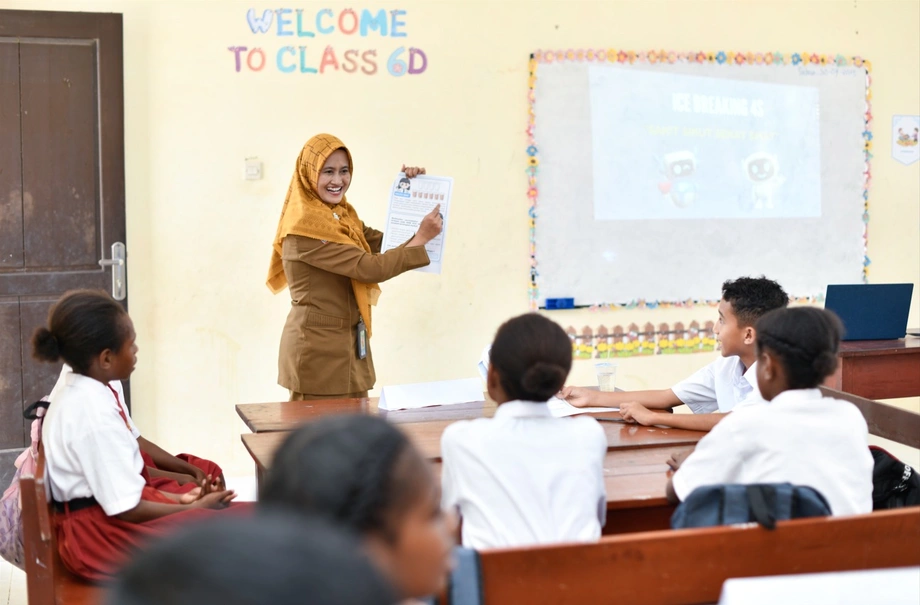
English medium instruction means that teaching, discussion and assessment take place in English. Faculty deliver lectures in the language, students complete assignments and examinations in it, and classroom interaction is expected to use it too. English slides or reading materials alone are not the full model described by the pilot.
Students learn a subject while practising the language needed to work in that field. They may read critically, explain an idea, present findings or collaborate with classmates in English. Quality EMI connects subject teaching with communication goals, so language use becomes part of learning the discipline rather than a separate exercise.
Presentations, laboratories and seminar discussions give admissions staff observable examples of how students use English. A graded report shows written communication; a presentation shows how a student explains ideas aloud; group work gives evidence of interaction. These activities help partners assess readiness for classes that require active participation.
Course design also matters. Classes with regular graded writing and discussion can provide richer evidence than lectures alone. Capstone projects, lab reports and seminar presentations show students applying English to their discipline. A transcript with EMI credits spread across several semesters shows sustained engagement.
Faculty observations add context to grades and credits. U.S. visitors can assess teaching quality and student participation, while the exchange will provide further information about adapting to campus life in English. Together, these checks will help the partners decide how much and what kind of coursework should qualify.
How much English coursework Taiwan already offers
National Sun Yat sen University reports more than 1,340 EMI courses over the past five years, representing roughly 30 percent of its course catalog during that period. That is about three in every 10 courses. Administrators say more programs are moving core classes into English.
National Taiwan Normal University says every undergraduate department offers at least 18 credits of EMI courses. Credits measure the amount of coursework a student completes. Having courses available in every department makes it easier for students to plan a sequence of English study within their own subject.
The two figures describe different aspects of capacity. National Sun Yat sen University's total shows the scale and share of its English course catalog, while National Taiwan Normal University's minimum shows availability across departments. Both help explain why the pilot begins with universities that have established bilingual initiatives.
Students describe benefits extending beyond admissions. A senior studying applied mathematics at National Sun Yat sen University said that using English to host international visitors and tutor mathematics had increased his income and strengthened his confidence about future career options.
A student at National Taiwan Normal University said EMI had broadened his academic horizons and helped him secure an exchange opportunity in Germany. Students also report greater confidence in interviews, stronger presentation skills and more opportunities for exchanges during their studies.
Officials see recognition of bilingual education
Taiwan's Ministry of Education presents the pilot as recognition of progress in bilingual higher education and a way to reduce costs and preparation time for students who already study intensively in English. Ministry leaders say EMI is widespread across flagship campuses, with more departments redesigning their teaching to support learning in English.
Education Minister Cheng Ying yao said the initiative reflects international confidence in Taiwan's bilingual reforms. He urged universities to continue expanding high quality EMI courses.
This milestone program shows that Taiwan's bilingual education has gained international credibility.
Fulbright Taiwan, an educational exchange foundation and Taiwan's partner in the pilot, has encouraged students to consider EMI pathways. Its involvement includes engagement with the U.S. institutions through visits and joint reviews of classes to confirm standards.
Randall Nadeau, executive director of Fulbright Taiwan, described bilingual education as a benefit for graduates working across borders and for Taiwan's international recognition.
Bilingual education strengthens the competitiveness of young Taiwanese and enables more countries to recognize Taiwan's contributions and value.
Taiwan's higher education effort began in 2021 with goals that included making campuses more competitive and preparing graduates to participate in international research and industry networks. Recognition by large U.S. universities provides external validation of that work and an incentive for departments to keep refining their courses.
What students and universities stand to gain
TOEFL or IELTS preparation can take months and requires a paid test appointment. Students may make repeated attempts to reach a required score. For applicants already presenting, writing and taking examinations in English, a qualifying EMI record could free time for coursework, research or internships.
U.S. partners could also gain access to a broader applicant pool. A standardized test captures performance at one point, while EMI records can show cumulative grades, participation and project work over time. Those classroom signals may help faculty identify applicants prepared for seminars with frequent discussion or laboratories where teamwork matters.
Taiwanese universities could gain stronger relationships with U.S. campuses that recognize their English instruction. Joint reviews, visiting delegations and targeted exchanges can support new research links and programs developed together. Departments also receive feedback from international peers on course design and student outcomes.
Students gain another possible route to study abroad, while their universities have a reason to make English coursework coherent and rigorous. External review connects the expansion of EMI with how well students actually perform, both at home and after arrival on a U.S. campus.
How the pilot will check quality and access
The eight institutions are working toward a shared understanding of what counts as EMI, how many credits show sustained learning in English and which grade thresholds relate to successful performance after arrival. U.S. partners observed classes before agreeing to the waiver and will review outcomes during and after the February exchange.
The initial arrangement covers only four Taiwanese universities and four U.S. partners. Its negotiated places and performance requirements make it a controlled trial rather than a general exemption for everyone studying in Taiwan. Students outside those institutions will continue to follow the English proficiency policies of the universities they apply to.
Access to EMI also varies within Taiwan. Some campuses already have extensive English course catalogs, while others are still expanding them. Beginning with established bilingual universities gives the partners a setting in which to develop standards, but also concentrates the initial opportunity at those campuses.
Officials have said they would explore participation by more institutions if the model works, using common standards to protect quality. Continued review of student progress and teaching outcomes will guide the trial and any expansion.
How applicants can prepare
Students at the four participating Taiwanese universities can begin planning their coursework and organizing evidence of their performance. Campus advising offices and international affairs units can help interpret the final criteria and eligible course lists when they are published.
Courses in which lectures, group work and assessments all take place in English are central to the pathway. Feedback on writing and presentations can help students build the academic vocabulary needed in their field. Syllabi, graded assignments and project summaries may also help referees describe a student's English performance in detail.
- Plan EMI courses early so the required credits can be completed before the intended application date.
- Work toward consistently strong grades in English coursework.
- Consider recommendations from faculty who can describe classroom interaction, writing and presentations in English.
- Check the chosen U.S. program's academic prerequisites, including any GRE, GMAT, writing sample, portfolio, research or interview requirements.
- Keep a test option available when another target institution or program requires an English score, and allow enough time to meet its deadline.
Students outside the pilot universities can still use EMI to build fluency for language tests, interviews and research collaboration. Many Taiwanese universities continue to expand their English coursework, and the visibility of the admissions pilot may encourage further growth.
The practical task for applicants is to connect course planning with the requirements of their intended program. Strong English coursework supplies evidence of language readiness; subject preparation, grades and the other application materials remain part of the admissions decision.
What to Know
- Eligible students at four Taiwanese universities will have a pilot route to four U.S. partners without submitting TOEFL scores.
- The Taiwanese participants are National Sun Yat sen University, National Cheng Kung University, National Taiwan University and National Taiwan Normal University.
- The U.S. partners are Arizona State University, New York University, Teachers College at Columbia University and the University of Maryland.
- Eight students are scheduled for a short exchange in February 2026, followed by an application window slated for August.
- Final criteria will address qualifying courses, EMI credits and any minimum grade requirements; the institutions will negotiate available places.
- The waiver covers the English proficiency test requirement. Academic prerequisites and other admissions requirements remain in place.
- National Sun Yat sen University reports more than 1,340 EMI courses over five years, about 30 percent of its catalog; National Taiwan Normal University offers at least 18 EMI credits in every undergraduate department.
- Officials expect a broader rollout in the next academic year if the trial proceeds as planned and may explore participation by more institutions.