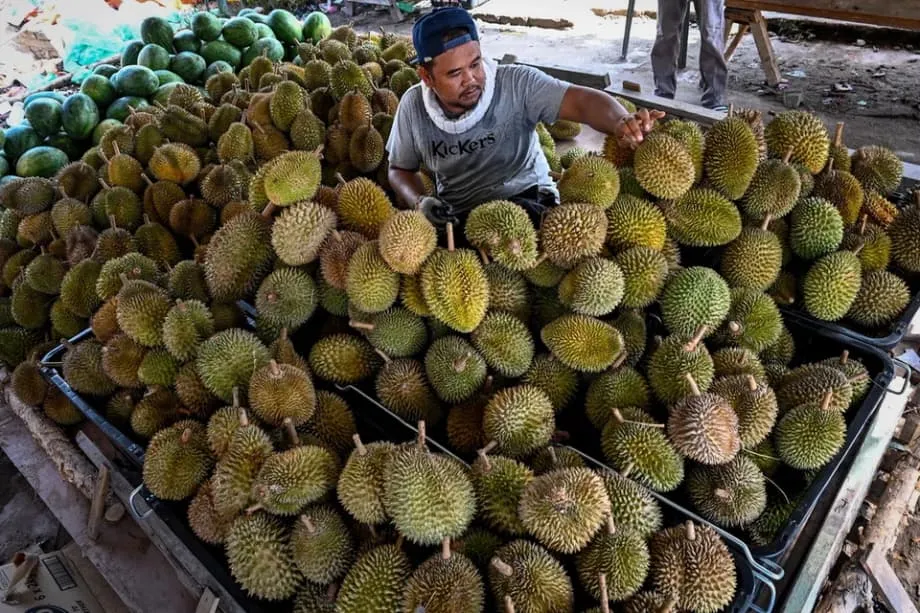
Two countries put their durian credentials on the table
Indonesia harvested about 1.96 million tonnes of durian in 2024, its largest crop in five years. That figure is now part of a contest over national identity, with Indonesian Coordinating Minister for Food Affairs Zulkifli Hasan challenging a Malaysian industry proposal to make durian Malaysia's national fruit.
Contents
- Two countries put their durian credentials on the table
- What Malaysia has requested
- Indonesia makes its case through scale and diversity
- Why durian carries so much cultural weight
- Different strengths in the same regional market
- What national status and name protection mean
- Exports depend on more than a national label
- Land disputes bring the debate back to farmers
- Flavor, food traditions and health claims
- Room for shared recognition and cooperation
- What comes next for the proposals
- Key Points
Malaysia's Durian Manufacturer Association wants the Agriculture and Food Security Ministry to grant that recognition and designate July 7 as National Durian Day. Malaysia has also renewed the geographical indication for Musang King, its best known durian variety, through March 2034, strengthening protection for a name central to its premium export business.
As of November 20, 2025, Malaysia had made no official decision on either national fruit status or the proposed celebration. The association's president, Eric Chan, presents the campaign as a matter of heritage and branding rather than ownership. Indonesia's response centers on the size of its harvest and the diversity of durian grown across its islands.
The dispute is friendly, but the interests behind it are substantial. Durian supports farmers, processors, exporters and dessert businesses. Its strong cultural following also gives both countries a way to shape how they are seen abroad, a form of soft power built through food and reputation.
Both countries can choose the same national fruit. National recognition expresses a country's identity, while legal protection for a particular durian name serves a different purpose. Understanding those two ideas helps explain why a debate over pride also reaches into trade, orchard management and farmer incomes.
What Malaysia has requested
The Durian Manufacturer Association's request is described as having been filed on November 10. Malaysia's Department of Agriculture director general, Nor Sam Alwi, said the ministry received the application on September 8. Those dates leave the timing of the submission unclear, while her statement confirms that neither proposal has received an official decision.
The main dates attached to the campaign and brand protection are:
- September 8, 2025: Nor Sam Alwi said the ministry received the application.
- November 10, 2025: The association's request is described as having been filed.
- July 7: The association's proposed date for an annual National Durian Day.
- March 2034: The renewed Musang King geographical indication runs through this month.
Chan argues that durian is woven into Malaysian life and livelihoods. Formal recognition, in his view, would support growers and exporters by reinforcing Malaysia's reputation for premium fruit. He also acknowledges the deep cultural ties that both Malaysia and Indonesia have with durian, and each country's freedom to choose it as a national symbol.
Indonesia makes its case through scale and diversity
Zulkifli Hasan's objection draws heavily on Indonesia's production figures. The country's statistical agency, BPS, recorded about 1.96 million tonnes of durian in 2024, the highest output in half a decade. Large volumes came from Java, Sumatra, Kalimantan and Sulawesi.
Indonesia's crop is spread across a broad geographic area. That gives its durian industry several important growing regions, helping it maintain supply and providing resilience when conditions vary between places. Favorable conditions in key provinces also contributed to the strong recent harvests.
Indonesian officials point to the country's wealth of durian species and registered superior varieties alongside the headline production figure. Their argument is that Indonesia's connection to the fruit rests on both the amount it grows and the range of durian found within the archipelago.
Industry planners in Jakarta have discussed developing a Nusantara Durian brand, improving farm standards and increasing exports of processed products. Pulp, paste and snacks are among the products that could carry more of the crop into markets beyond the fresh fruit trade.
Indonesia also has a vast domestic market. Much of its broad production base supplies consumers at home, while a growing processing industry creates other outlets for local varieties. Its national fruit argument is therefore tied to an existing agricultural strength, as well as ambitions to build a more recognizable international brand.
Why durian carries so much cultural weight
Durian is native to Borneo and Sumatra and has been cultivated for centuries across the Malay world. Its roots help explain why people on both sides of the Strait of Malacca see it as part of their food heritage.
Botanists recognize dozens of species in the Durio genus, the group of related plants to which durian belongs. Many produce edible fruit. The species most widely traded, Durio zibethinus, has hundreds of named cultivars, or cultivated varieties selected for particular qualities.
The fruit's creamy flesh and powerful smell make it immediately recognizable. Sulfur compounds and other substances that readily enter the air contribute to its aroma. Fans find that smell irresistible, while some newcomers find it unpleasant. Some hotels and trains in the region restrict durian because of the odor.
Rising incomes in Asia have helped turn a seasonal local favorite into a regional export attraction. The fruit's status as the king of fruits across much of Southeast Asia now sits alongside a growing commercial market, giving national branding a practical value beyond the symbolism.
Different strengths in the same regional market
Malaysia produces less durian than Indonesia, but has built a position at the premium end of the market. Its output is smaller even as premium varieties have increased export value. The production information gives Indonesia's total but no corresponding Malaysian tonnage for a numerical comparison.
Orchards in Malaysian states such as Pahang and Johor focus on varieties including Musang King, D24 and Black Thorn. Buyers seek consistent taste and texture, and recognizable variety names help growers and exporters connect particular fruit with those expectations.
Musang King and Black Thorn have especially strong followings among durian enthusiasts. Indonesia's strengths lie in its much broader production base and wide range of local varieties, which supply domestic consumers and a growing processed durian industry.
The two business models can complement each other. Indonesia supplies at scale and serves a large home market, while Malaysia seeks higher value per kilogram through premium export channels. A national fruit label would give each country another way to present those different strengths.
China is a key buyer in the expanding durian trade. Thailand leads global durian exports to China, where demand for high grade fresh and frozen fruit has grown quickly. Malaysia and Indonesia both participate in that growth, although their commercial positions and products differ.
What national status and name protection mean
A national fruit is a political and cultural choice. It allows a country to recognize a crop as part of its identity and can support promotion at home and abroad. Indonesia and Malaysia could each give durian that status without a legal conflict.
A geographical indication, often shortened to GI, is a legal protection for a product name connected to a particular place and production standard. Malaysia's renewed Musang King GI protects the name against use outside its defined criteria, including use by producers in other countries.
That protection concerns a named product. Growers elsewhere can still cultivate durian itself. For producers and exporters working within the Musang King criteria, protecting the name helps defend the identity and standards attached to the fruit they sell.
Online lists sometimes describe durian as the national fruit of several countries, which can make the status appear confusing. Formal national recognition is a domestic decision reflecting cultural or marketing goals. The geographical indication operates through rules for a specific product name.
Chan's position leaves space for both countries to celebrate their connection to durian. Malaysia's proposal can support its heritage and premium reputation, while Indonesia can recognize the breadth of its harvests and varieties. Neither national choice prevents the other country from making its own.
Exports depend on more than a national label
Chinese demand is helping shape farm and trade policy across the region. Vietnamese and Thai ports handle large durian shipments, while improvements in cold storage and transport have expanded trade in frozen fruit. Keeping products cold allows more durian to reach distant buyers in usable condition.
Malaysia has pursued premium customers who want specific flavors and textures consistently. Indonesia is promoting processed durian to increase the value earned from its crop and reduce waste when harvests are especially large. Pulp, paste and snacks provide uses for fruit beyond immediate fresh sales.
Orchard management, plant health programs and handling standards matter throughout that trade. Bruising and control of ripeness can determine whether a shipment reaches buyers in good condition. A famous variety name or national symbol still depends on growers and traders delivering the quality customers expect.
Indonesia's proposed Nusantara Durian branding and Malaysia's protection of Musang King address different parts of that task. One seeks a stronger identity for a broad national industry, while the other protects an established premium name. Both countries also need dependable supply and effective export arrangements to turn recognition into income.
Land disputes bring the debate back to farmers
Malaysian durian growers also face questions about land status and licensing. Disputes have become public through enforcement actions against orchards without formal tenure, meaning recognized rights to occupy or use the land.
Some farmers say their families have cultivated durian for decades. State agencies insist on regularizing land use and directing supply through approved buyers. The disagreements involve property rights and price control as well as the fruit itself.
Those pressures affect smallholders and larger agricultural businesses. A stronger national brand may help promote sales, but growers also need clarity about the land they cultivate and the channels through which they can sell their harvests.
The national fruit debate therefore sits beside more immediate questions of livelihood. Farm rules, licensing arrangements and access to buyers can shape supply and earnings, even when consumers are willing to pay premium prices for a well known variety.
Flavor, food traditions and health claims
Fresh durian is a major attraction in dessert shops during the peak season, and its flesh is used in ice cream and pastries. Its culinary reach also includes savory dishes, linking the fruit to everyday cooking as well as specialist tasting and seasonal treats.
Tempoyak, fermented durian eaten in parts of Malaysia and Indonesia, contains lactic acid bacteria with potential probiotic qualities. Probiotics are microorganisms studied for possible benefits to health. Fermentation gives durian another role in the food traditions shared across the region.
Musang King is prized for its thick, creamy texture and balance of sweet and bitter flavors. Black Thorn and D24 have their own loyal customers. Differences between varieties, along with the appeal of seeking fruit from favorite orchards, help explain why consumers care about names and why growers value brand protection.
Durian is also rich in energy. It contains carbohydrates, fiber and fat, together with vitamins and minerals. Researchers have identified antioxidant compounds, including polyphenols and carotenoids, in the fruit.
Animal and cell studies suggest possible benefits for blood lipids and glucose control. Blood lipids are fats in the blood, while glucose is a form of sugar the body uses for energy. More human trials are needed before firm health claims can be made.
Durian's fiber and fat can slow sugar absorption. That helps explain why some varieties have a lower glycemic index than other sweet snacks. The glycemic index describes how quickly a food raises blood sugar.
The fruit is rich in potassium, so people with kidney disease or those taking certain medications should seek medical advice about eating it. Its nutritional qualities are part of its appeal, alongside flavor, texture and cultural familiarity.
Room for shared recognition and cooperation
Indonesia and Malaysia have room to honor the same fruit while telling different national stories. Indonesia can celebrate the range and scale of its archipelago harvests. Malaysia can recognize the crop's place in its culture and its reputation for premium varieties.
Cooperation within the Association of Southeast Asian Nations, or ASEAN, could support stronger standards for registering varieties, protecting plant health and tracing fruit through the supply chain. Traceability means being able to follow a product back through its handlers to its origin.
Shared research on disease resistance and orchard ecology could also help durian production adjust to changing weather. Orchard ecology concerns how trees interact with their surrounding environment, including the conditions that support healthy growth.
Both countries have reason to guard against environmental damage from rapid plantation expansion. Durian grows best when genetic diversity and surrounding forests are preserved. Protecting a wide range of trees and varieties is therefore part of sustaining the crop, alongside efforts to increase production and sales.
What comes next for the proposals
Malaysia's agriculture authorities will study the association's request, weighing cultural support, export prospects and public views. Consultations with growers, state agencies and consumer groups could precede a decision on national fruit status and National Durian Day. No decision date has been given.
Indonesia appears set to keep strengthening its domestic brand and may formalize its own national recognition while pursuing better standards and export arrangements. Its production figure gives officials a strong basis for promotion, while its processing plans offer a way to earn more from large harvests.
Markets will continue to reward consistent quality. Stronger branding, reliable supply and sound farm practices could give buyers more choice and growers on both sides of the Strait of Malacca better opportunities. The immediate contest is about recognition, but the lasting commercial value rests with the fruit that reaches customers.
Key Points
- Indonesia produced about 1.96 million tonnes of durian in 2024, its highest harvest in five years, according to BPS.
- Zulkifli Hasan challenged Malaysia's national fruit proposal by pointing to Indonesia's production scale and diversity.
- Malaysia's Durian Manufacturer Association seeks national fruit status and an annual National Durian Day on July 7.
- As of November 20, 2025, Malaysia had made no official decision on either request.
- Musang King's geographical indication has been renewed through March 2034.
- National fruit recognition is a domestic symbolic choice; geographical indications protect specific product names and standards.
- China is a key market, with Thailand leading durian exports there, Malaysia pursuing premium buyers and Indonesia developing processed products.
- Land and licensing disputes affect Malaysian growers, while production standards and environmental protection matter to both countries.
- Durian contains nutrients and antioxidant compounds, but potential health benefits require more human research.
- Both Indonesia and Malaysia can recognize durian nationally without legal conflict.